Description
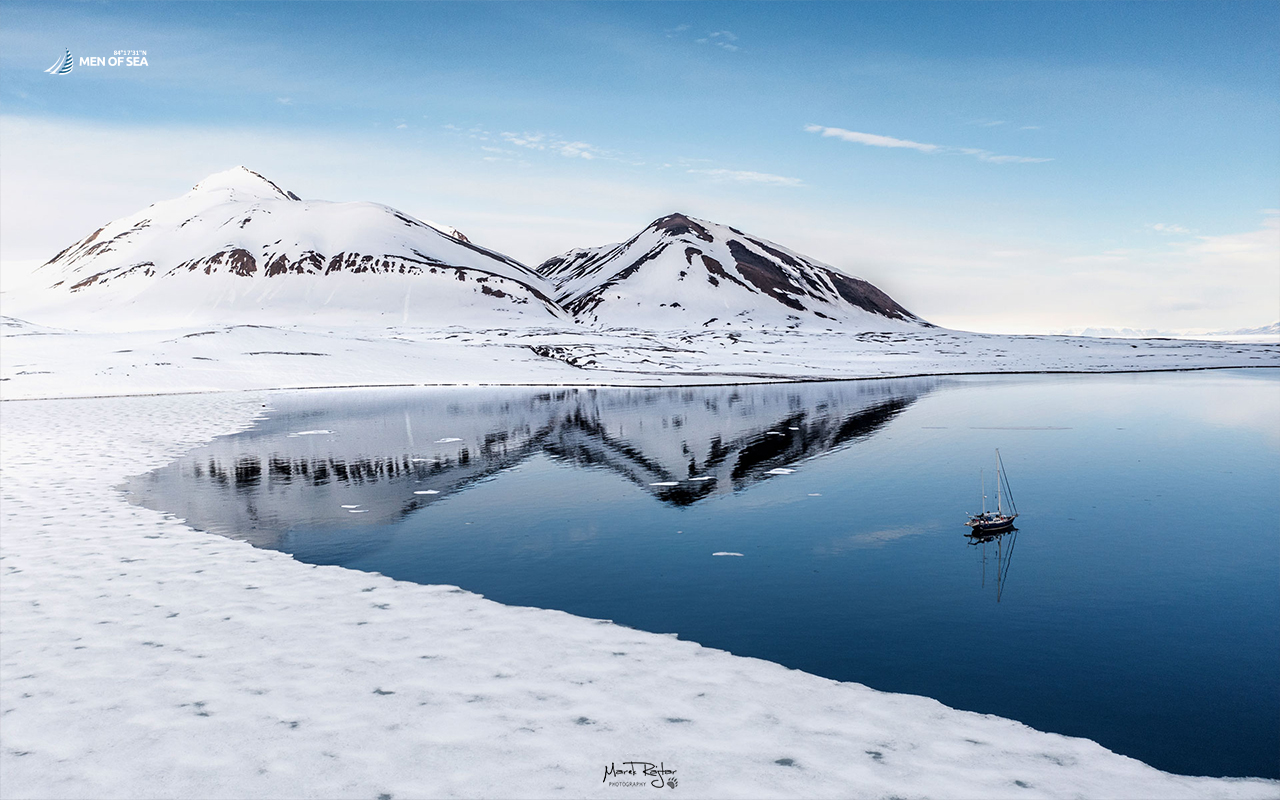
The goal of this expedition is simple: to try to find the polar bear — the King of the northern wilderness. Region: Isfjorden, western and north-western Spitsbergen and the ice edge. These are accessible areas where there is a real chance of encountering the most magnificent animals of the Arctic. Photography opportunities, an intensive program and a winter-spring adventure.
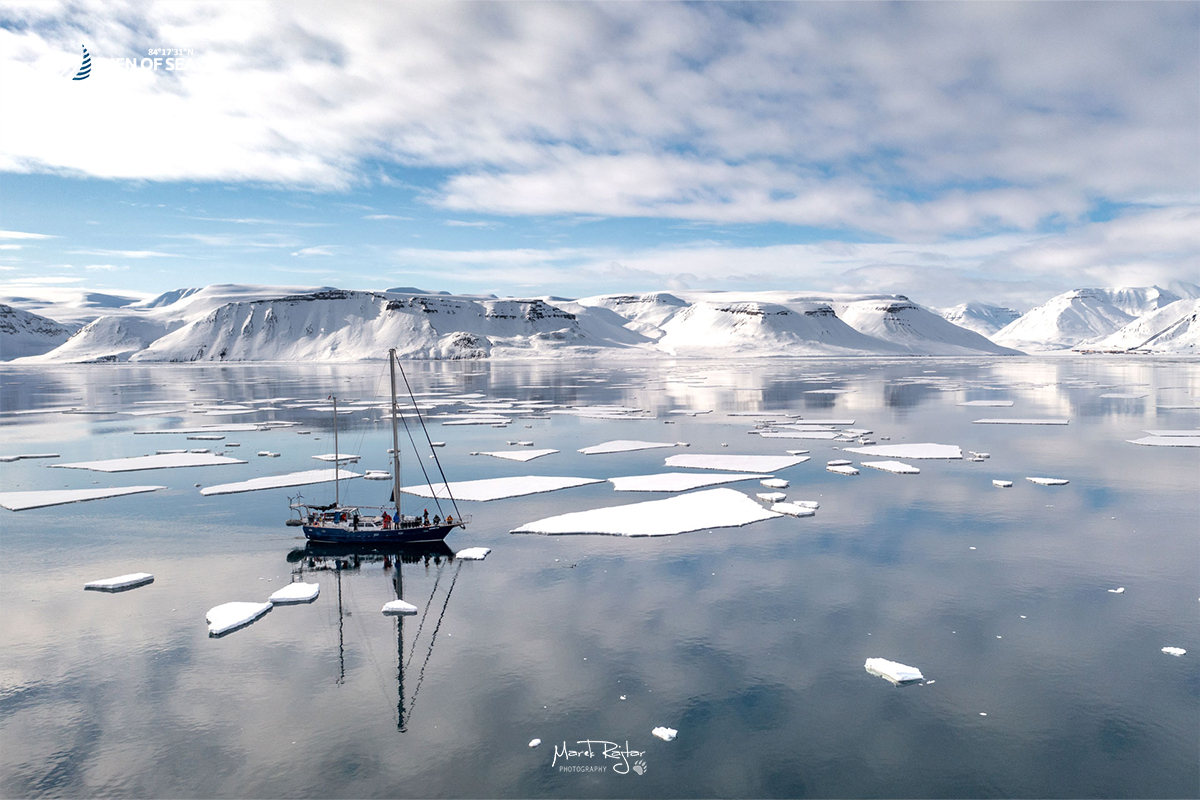
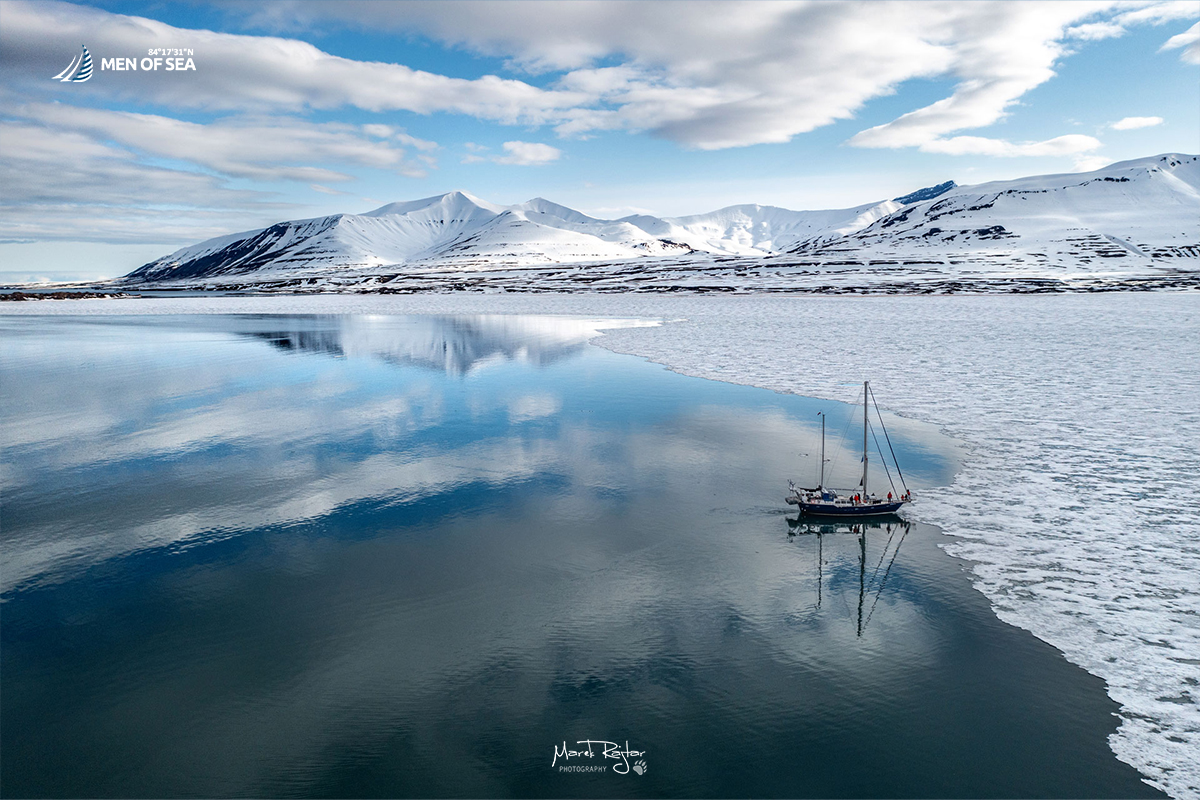
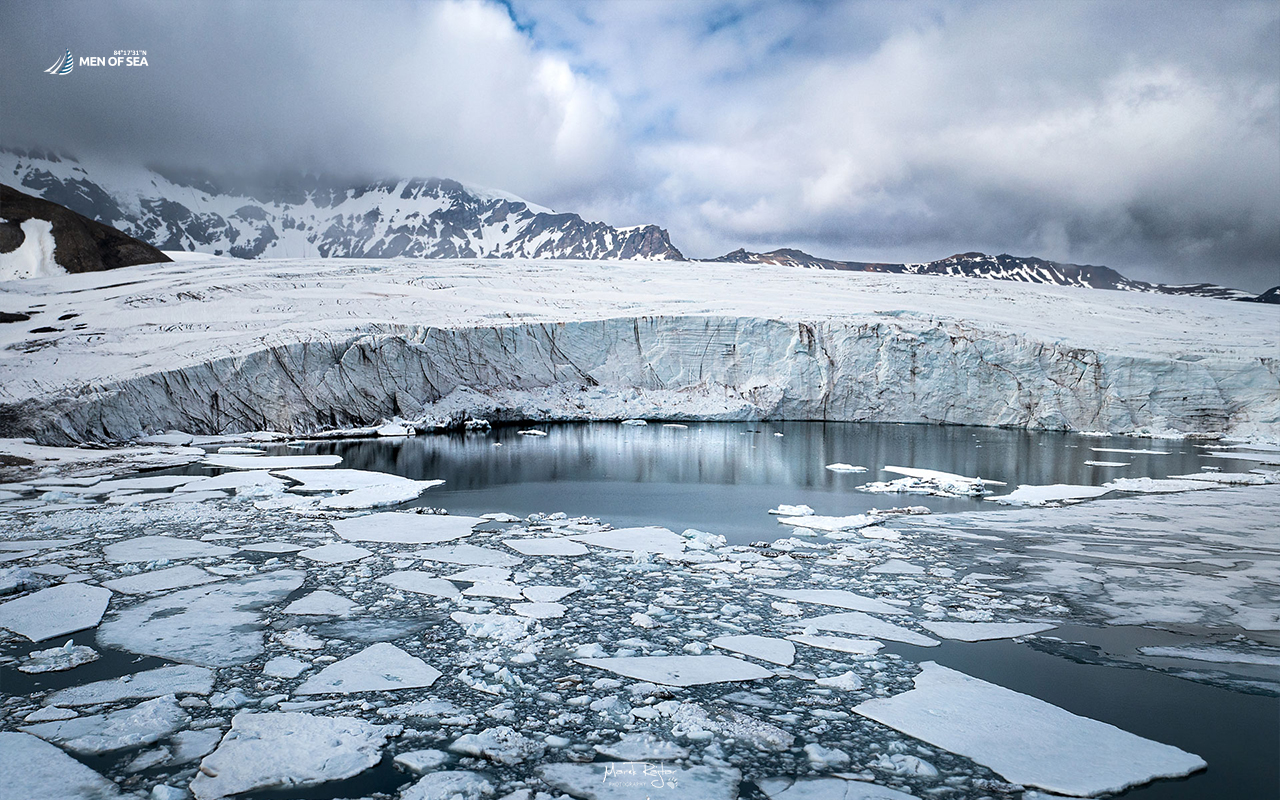
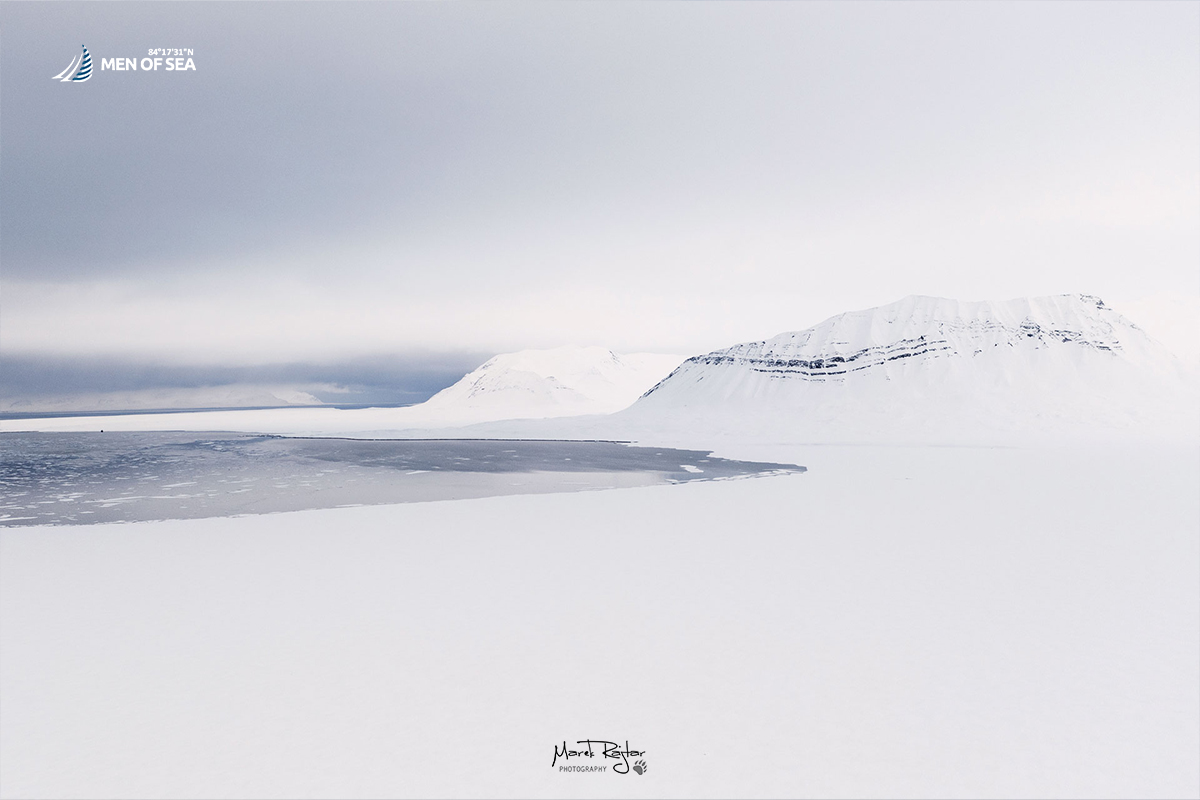
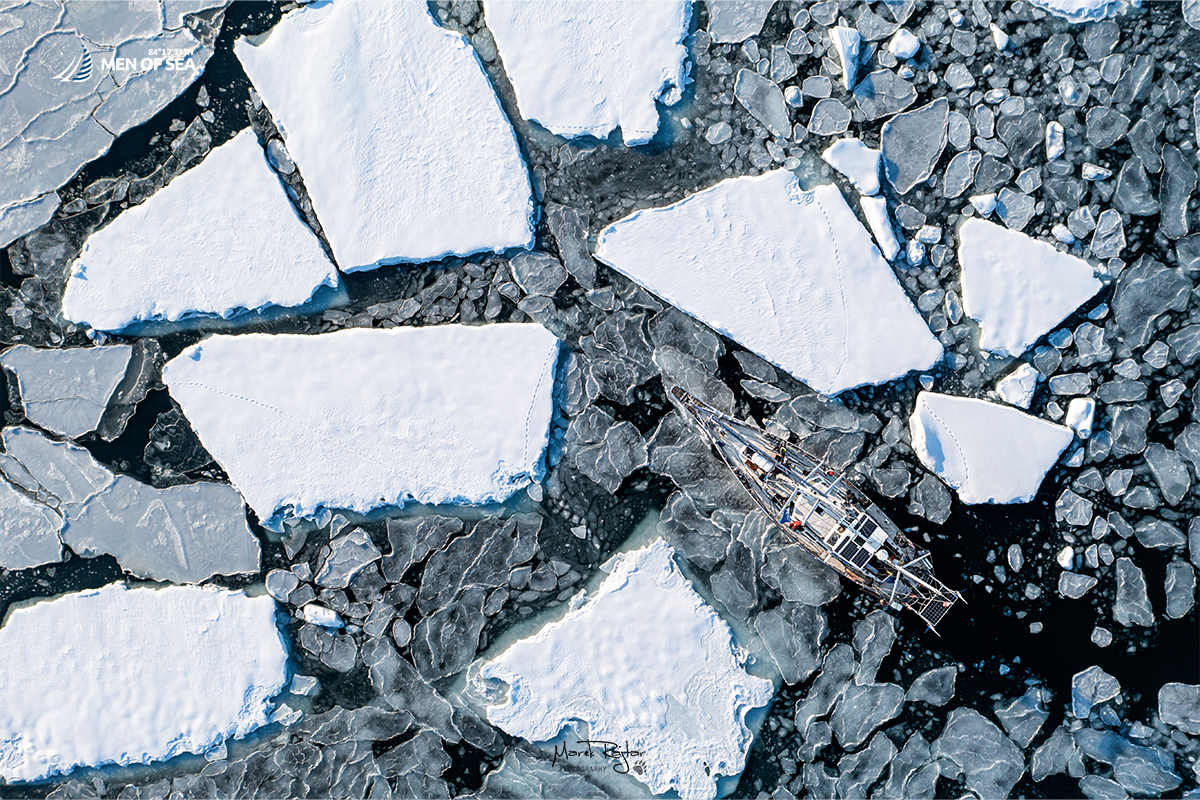
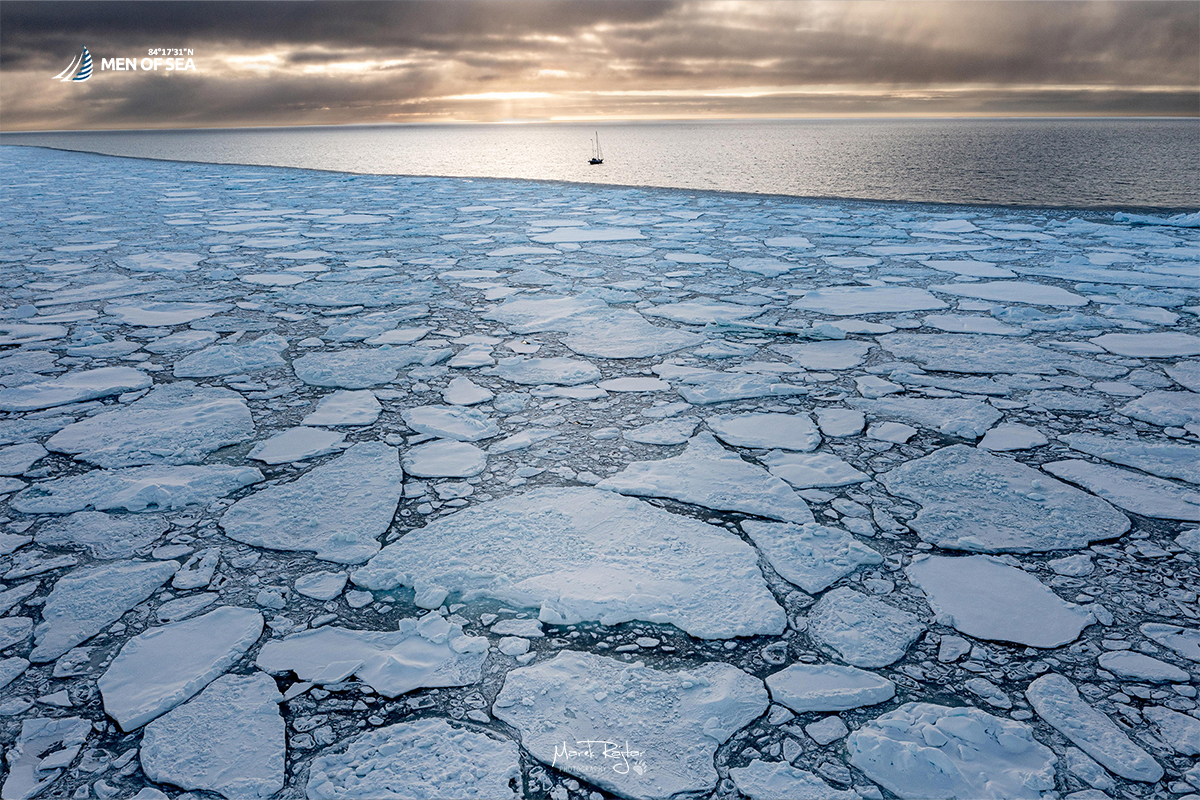
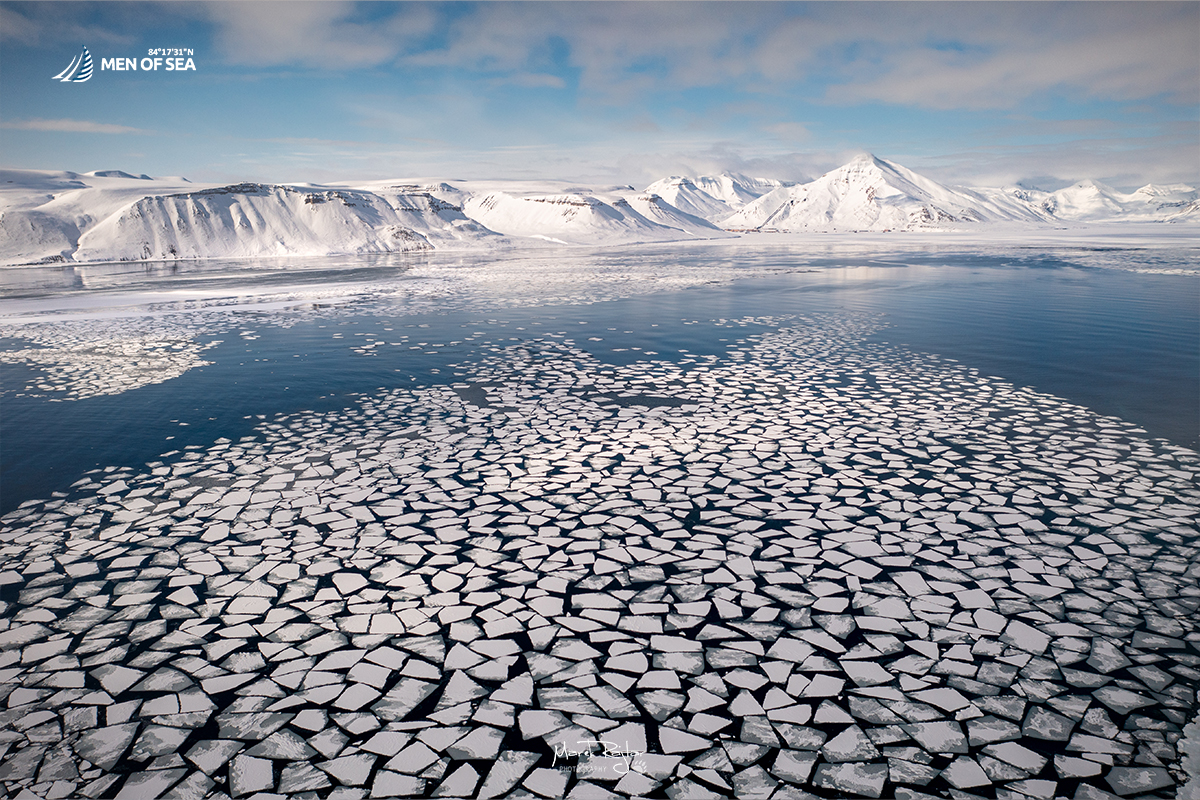
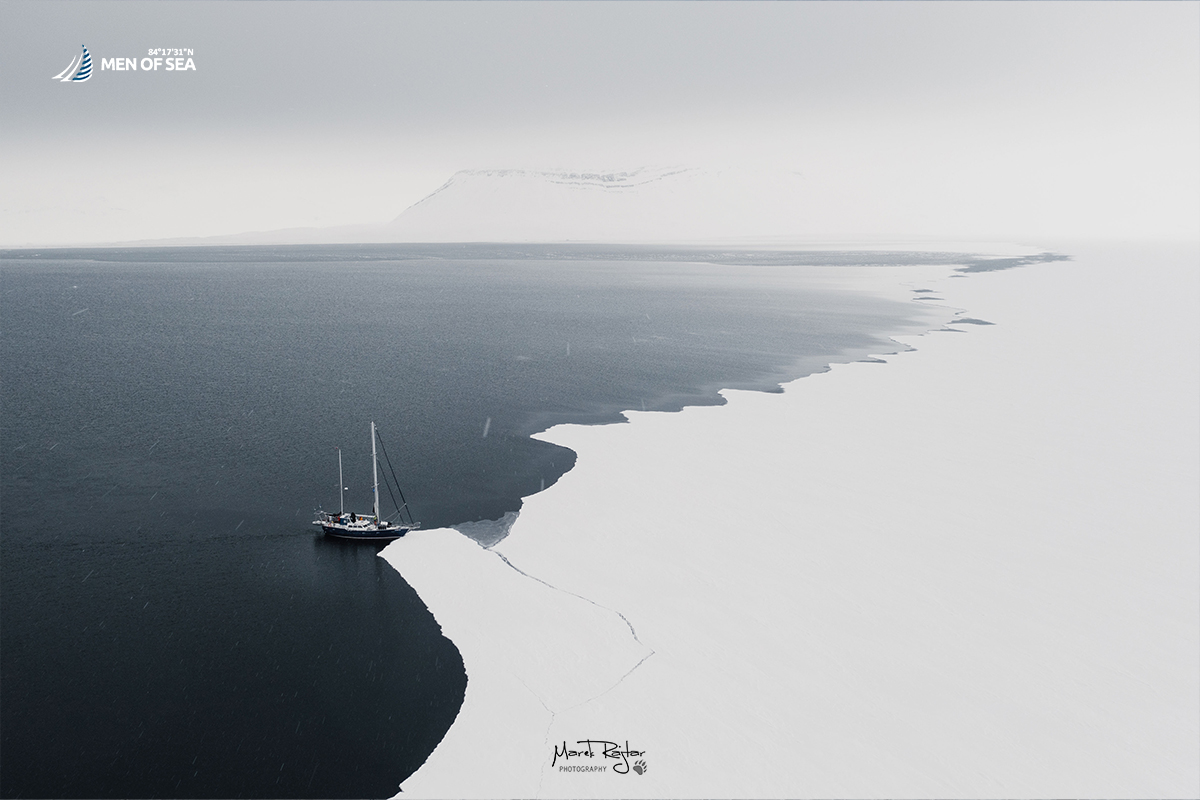
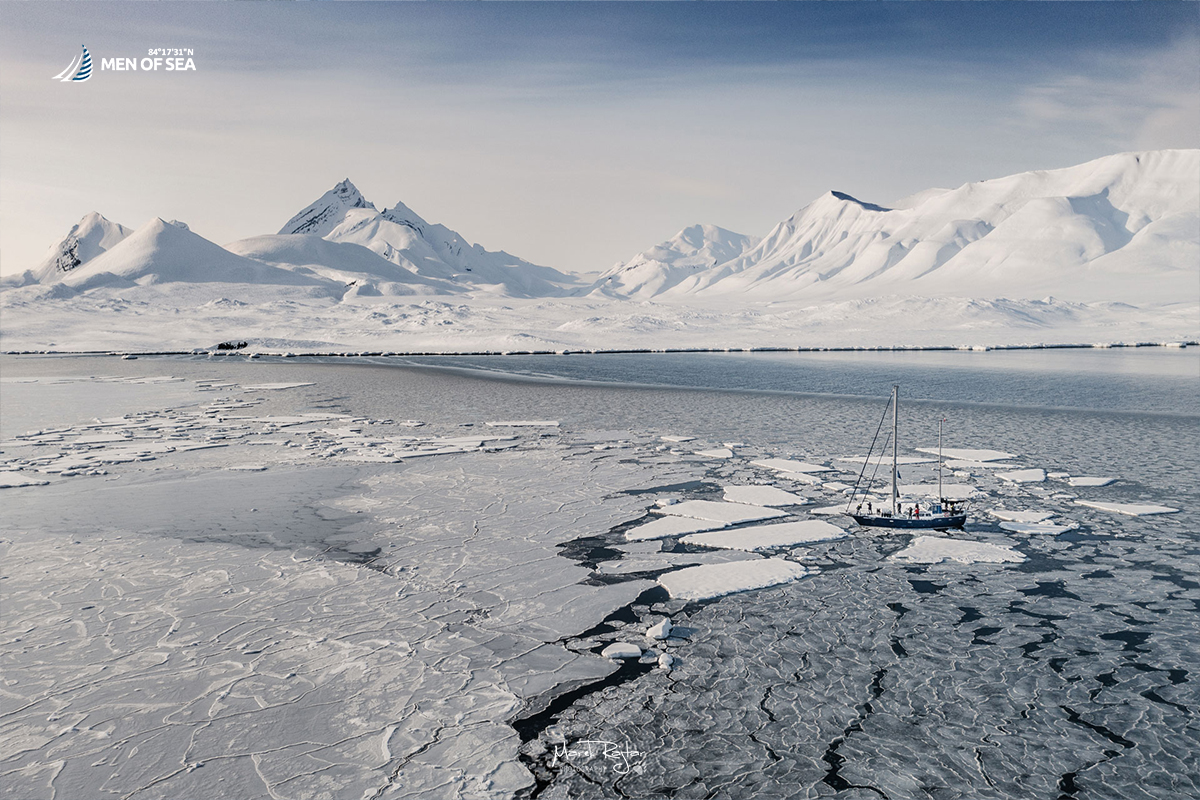
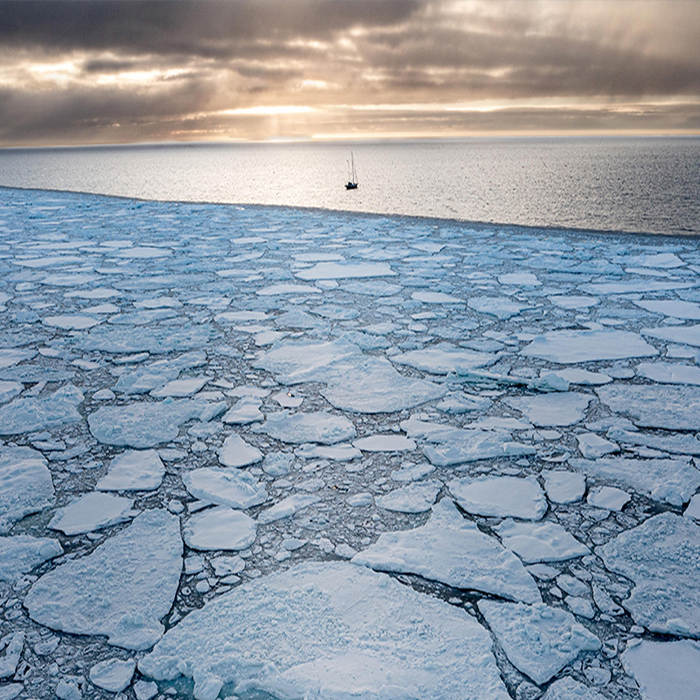
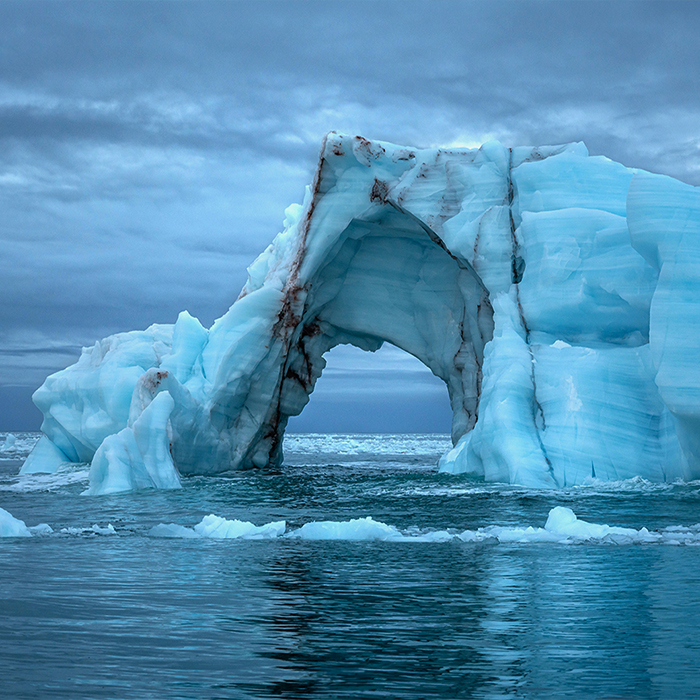
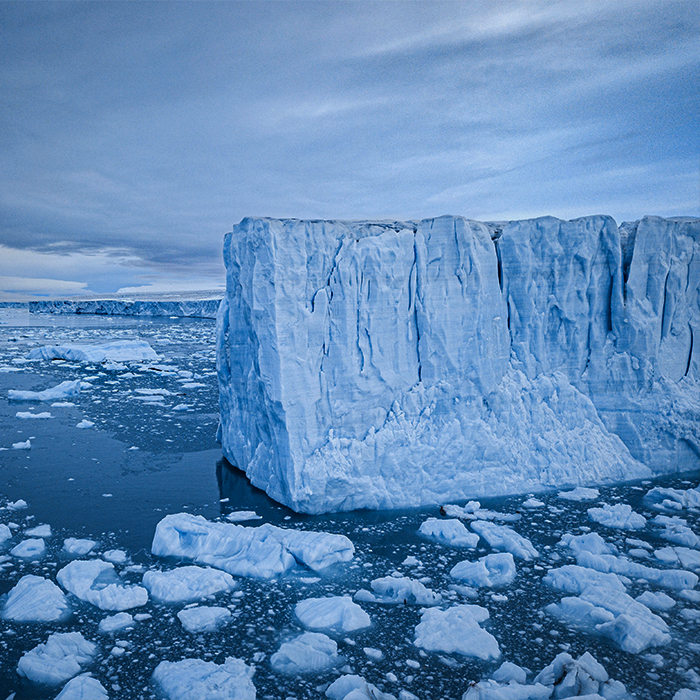
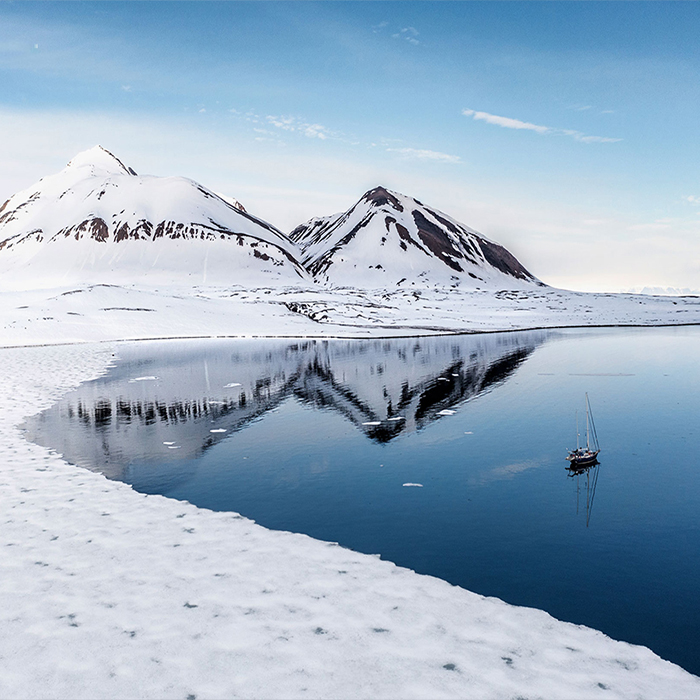
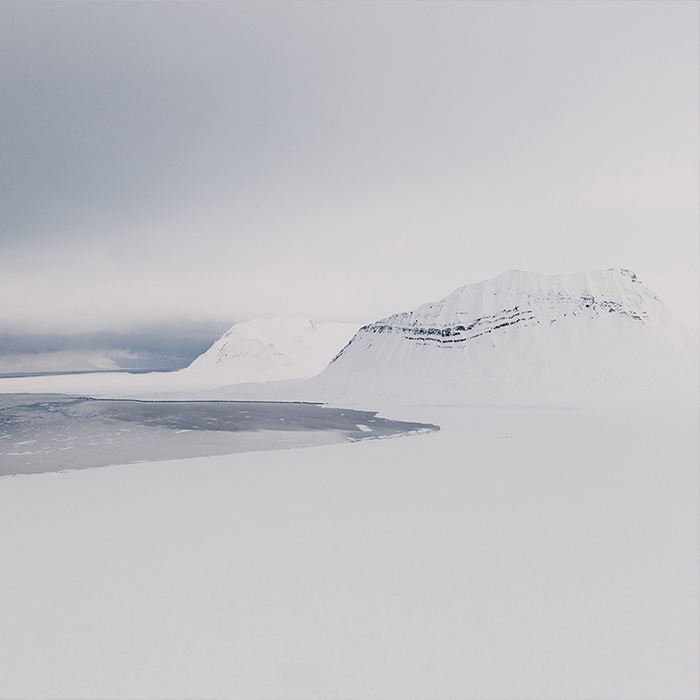
This expedition is designed for people whose main objective is to search for Arctic wildlife, especially polar bears. That will be our primary mission. We intend to explore the ice edge within Isfjorden and its side fjords and if conditions and opportunities allow (which we expect they will), we will head further out towards the pack ice. Sea ice and drifting ice fields are the natural habitat where these wild animals live, hunt and travel.
It is recommended that participants have previously visited Svalbard, as the main purpose of this expedition will not be the exploration of Svalbard itself (although that will naturally be part of the journey), but rather persistent and sometimes demanding wildlife searching.
The King of the Arctic
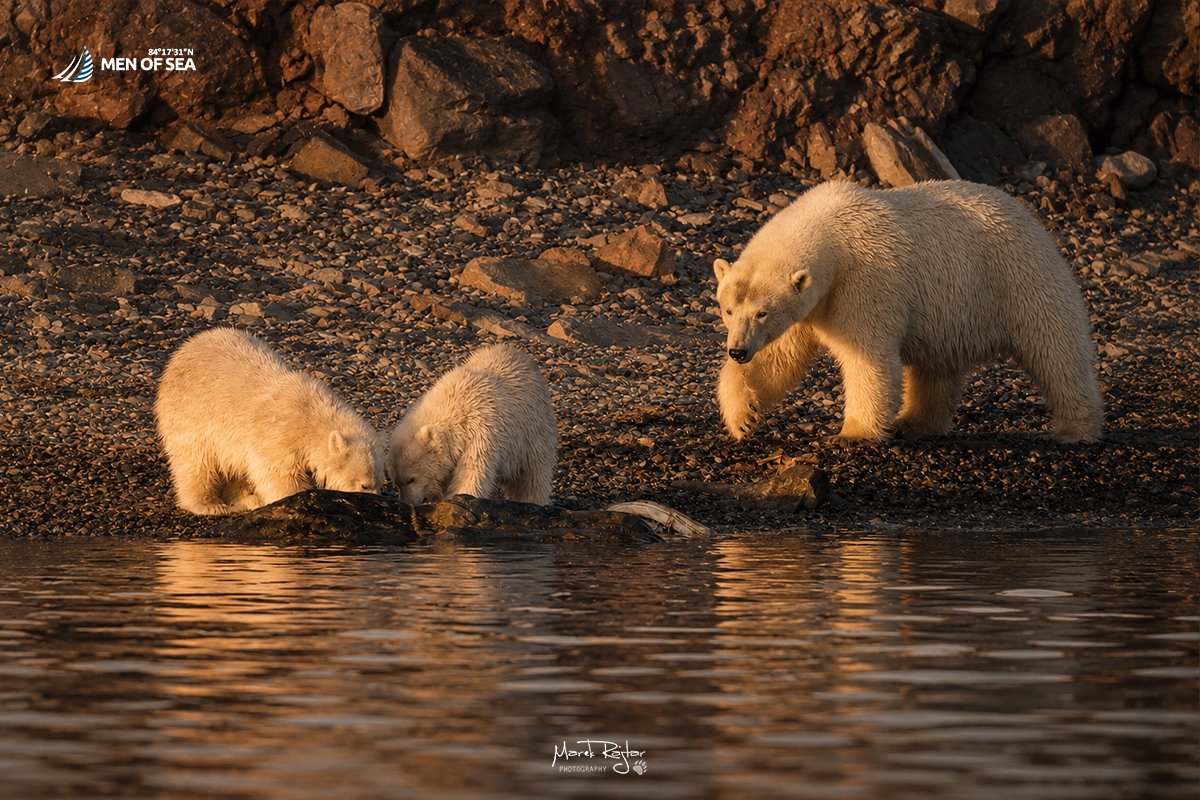
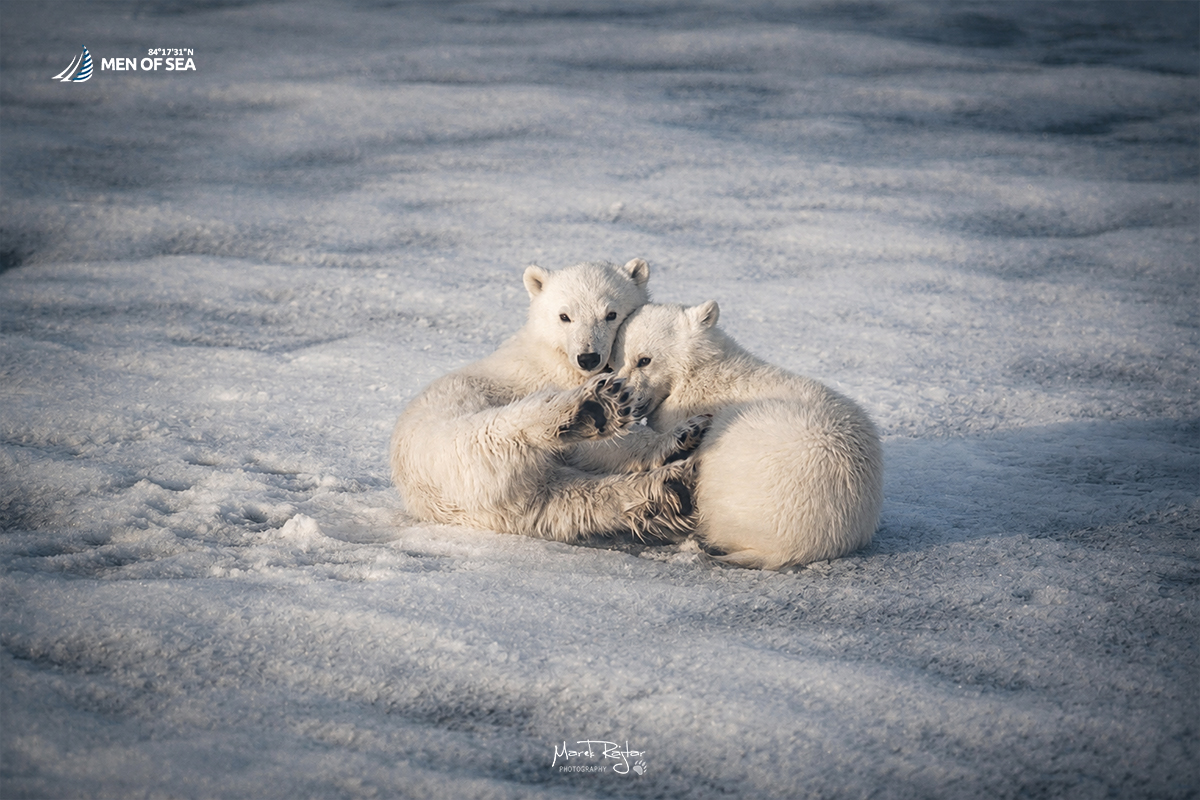
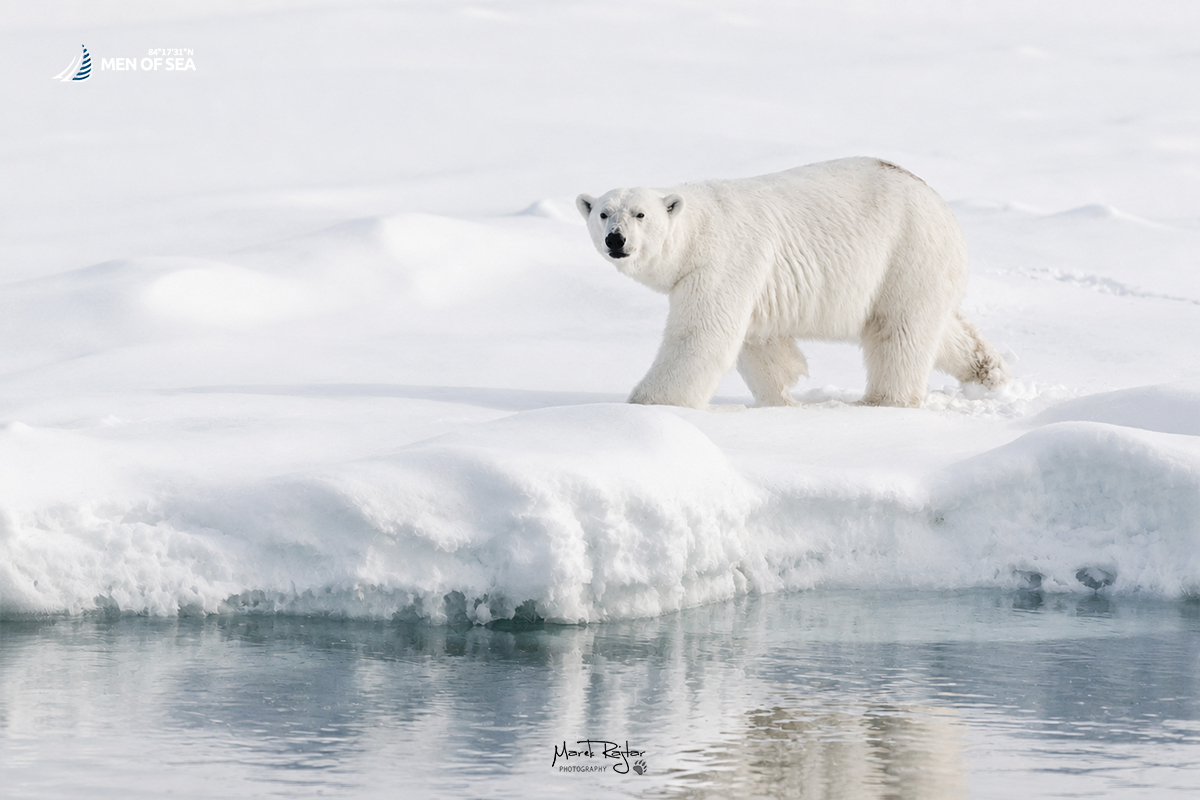
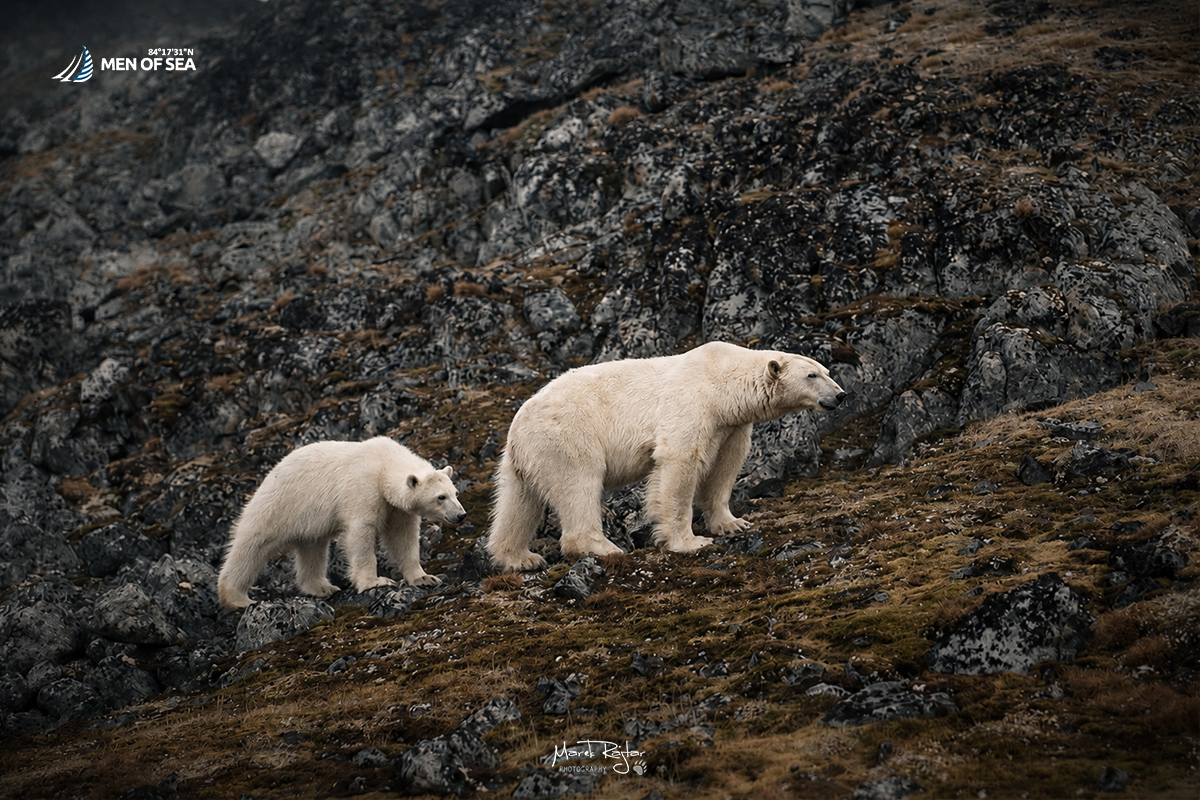
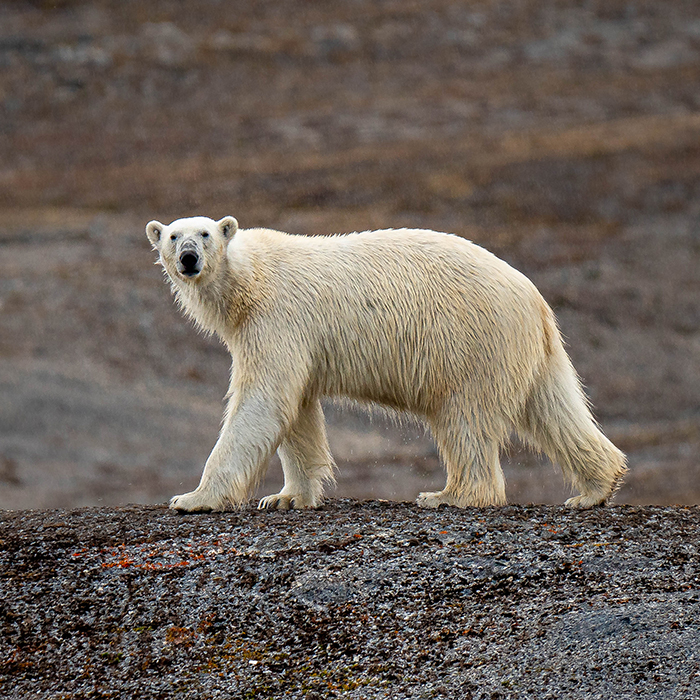
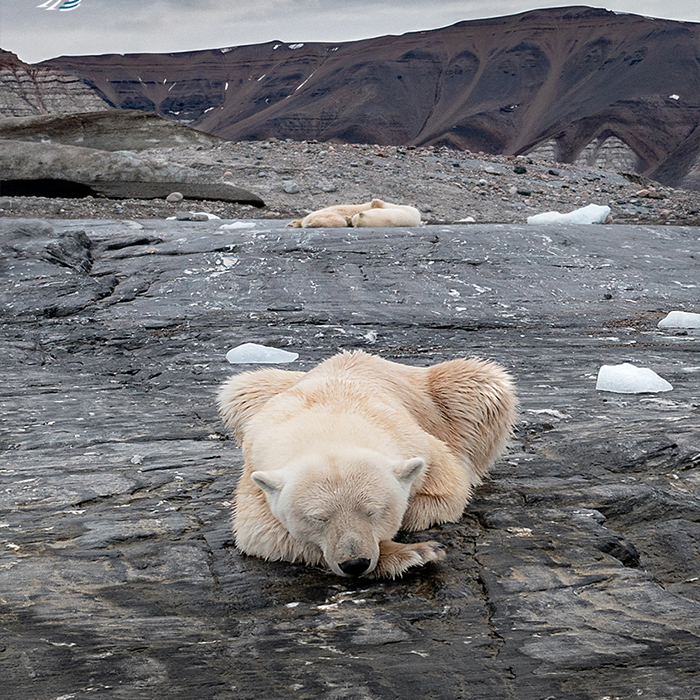
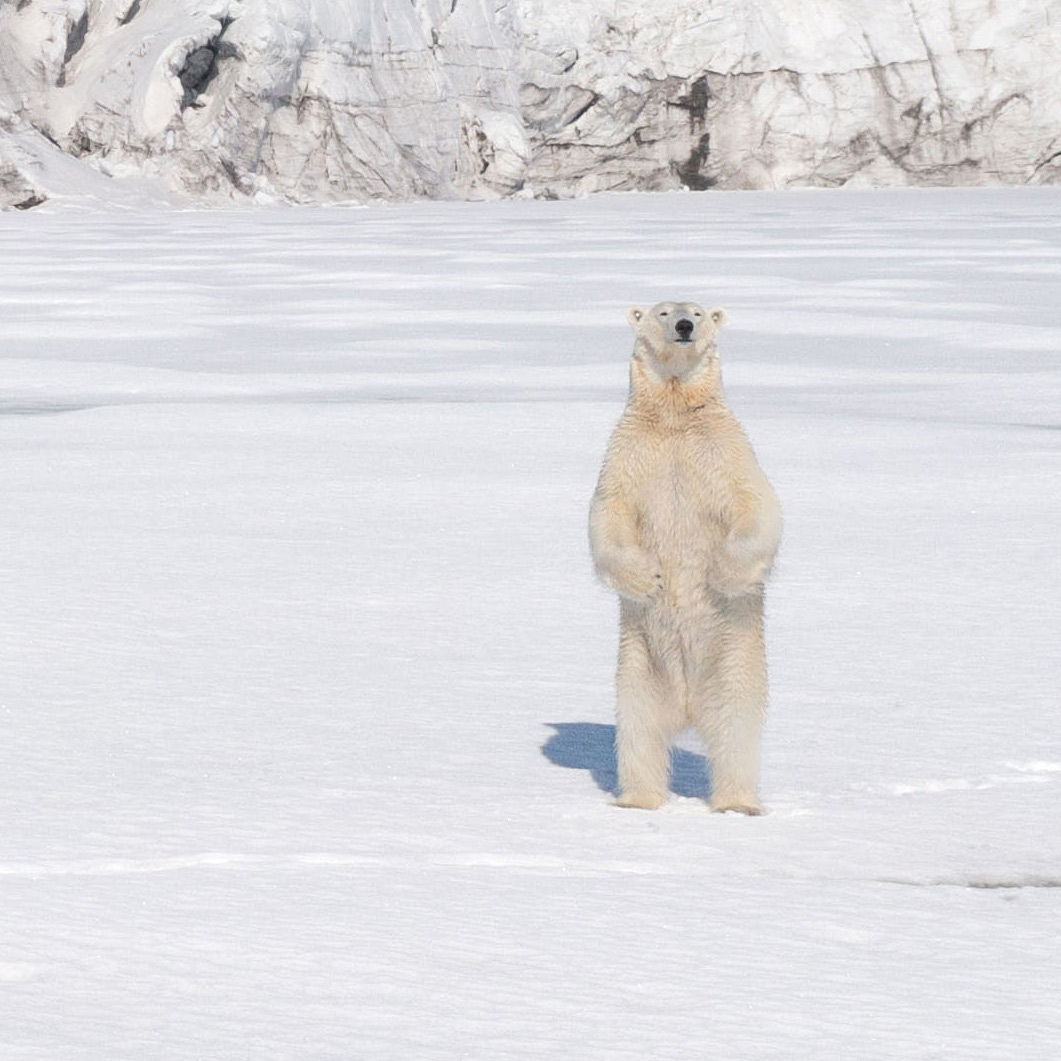
The polar bear is the symbol of Svalbard and one of the most fascinating animals on our planet. Powerful, intelligent and perfectly adapted to life in the world of ice, it has inspired awe and admiration among Arctic travellers for centuries.
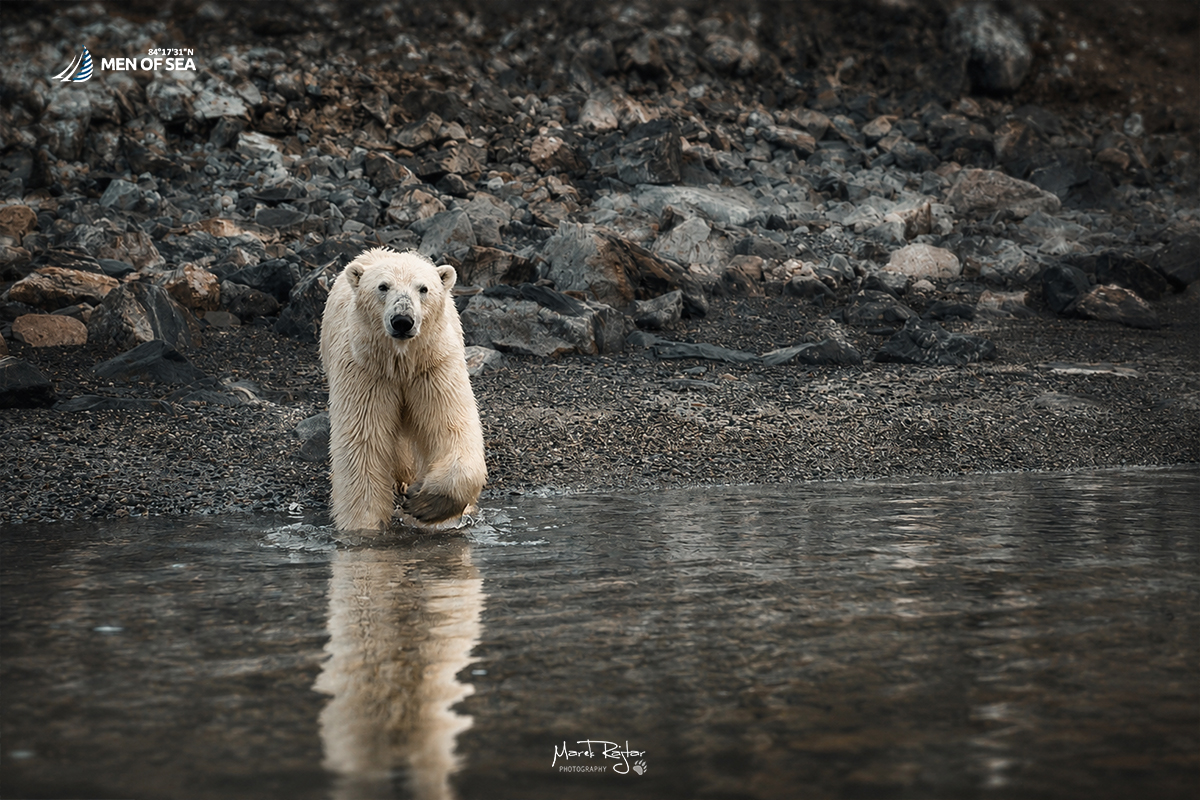
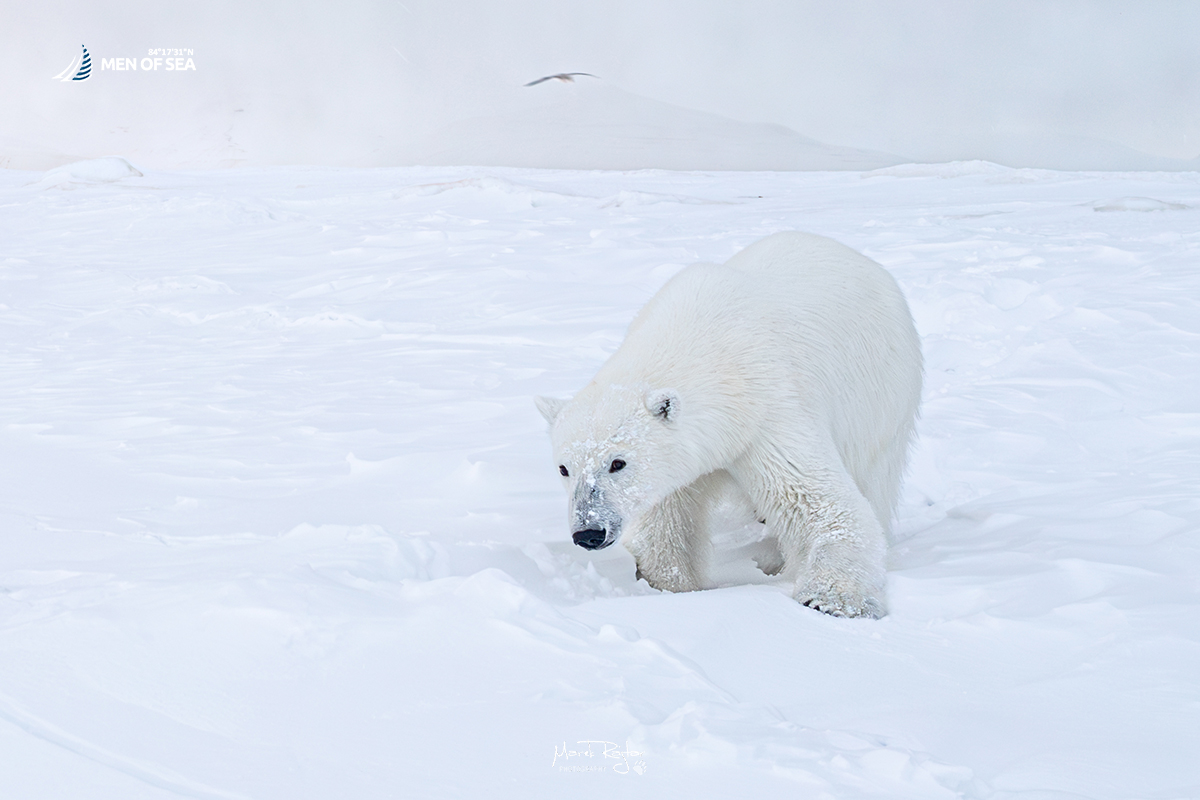
It is the largest land predator in the world. An adult male can exceed 3 meters in length and weigh more than 700 kilograms. Despite its enormous size, the polar bear can move with remarkable silence and surprising lightness across ice, snow and the rocky shores of the Archipelago.
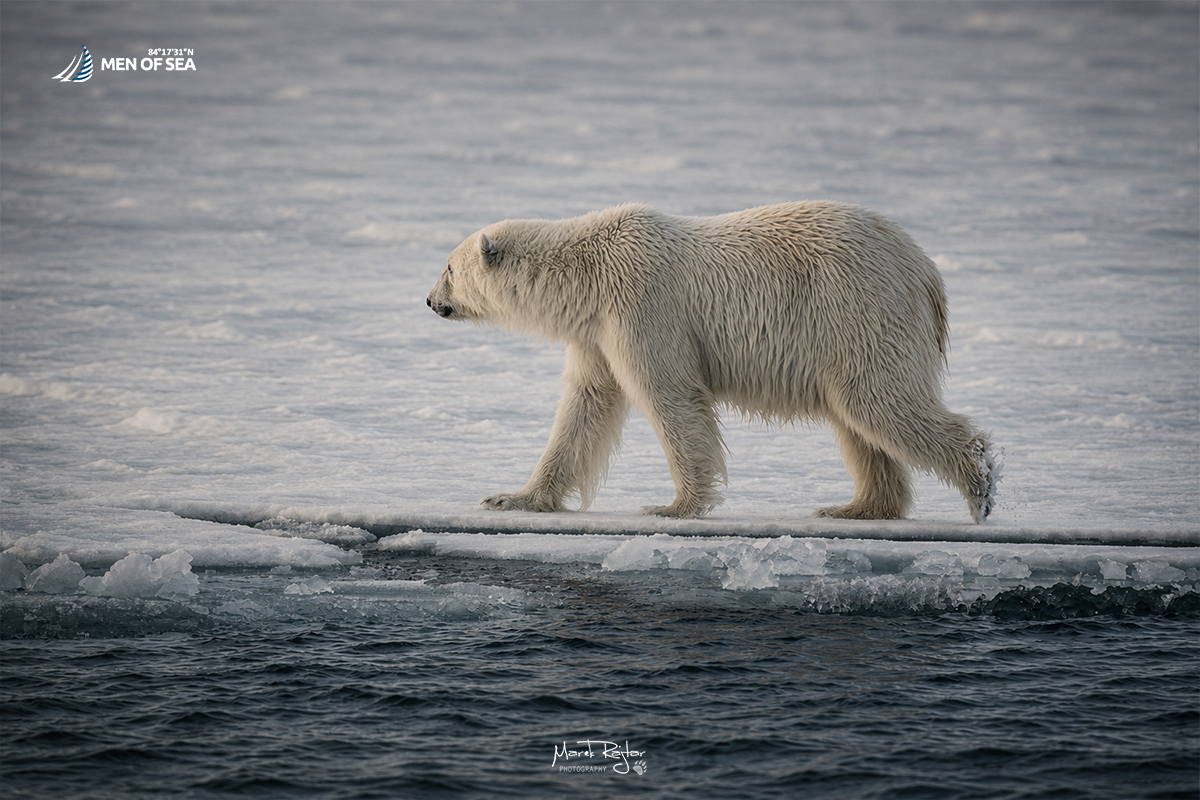
The polar bear is perfectly adapted to life in extreme conditions. A thick layer of fat, dense fur and dark skin beneath its coat help it retain warmth even during the harshest cold. Its enormous paws act like natural snowshoes and assist both in walking across thin ice and in swimming. An extraordinary sense of smell allows it to detect seals from very long distances.
Although the polar bear appears majestic and calm, it must always be remembered that it is a wild, dangerous and immensely powerful animal whose natural environment demands great respect and absolutely no interference.
Svalbard – The Land of Polar Bears
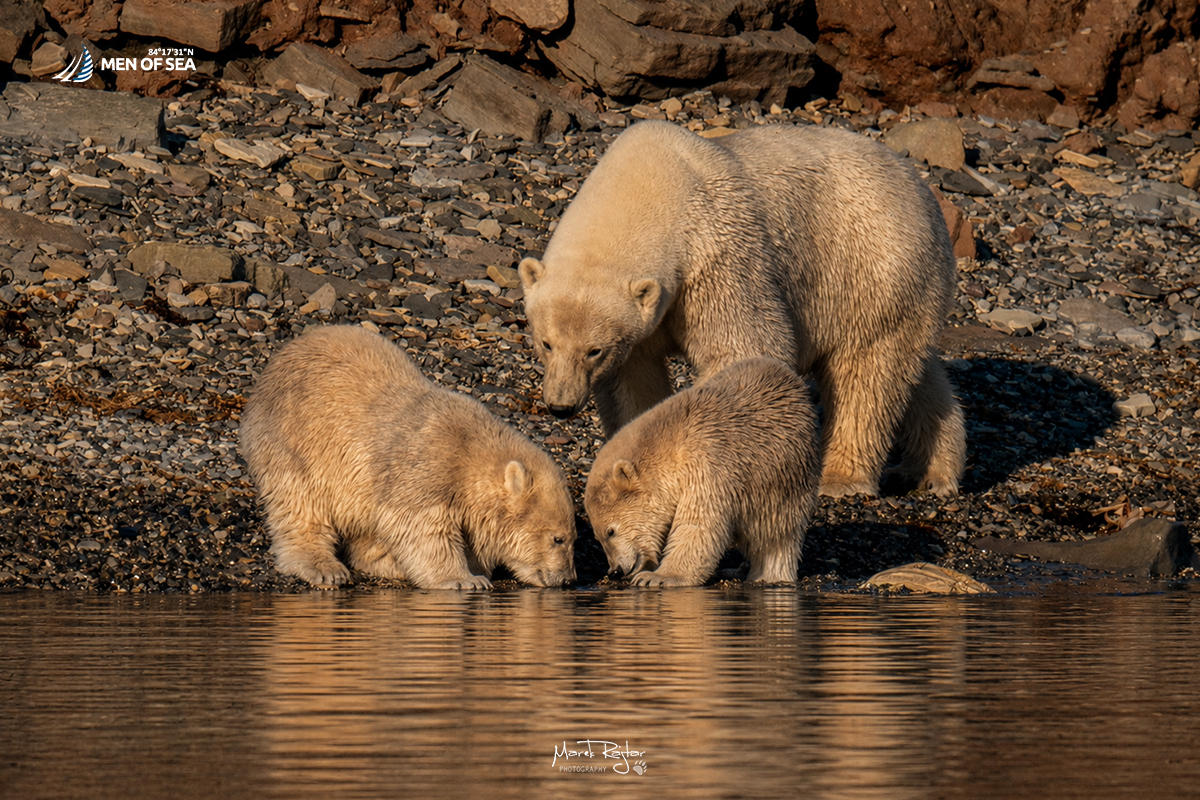
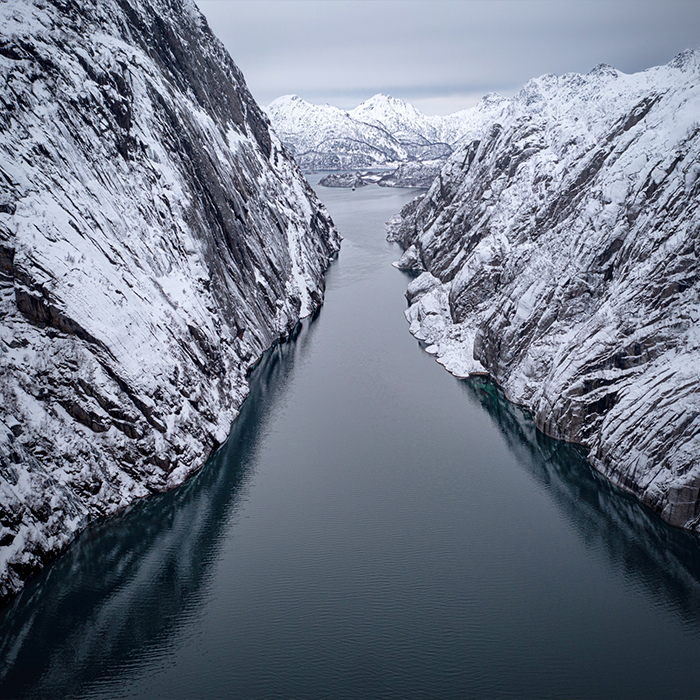
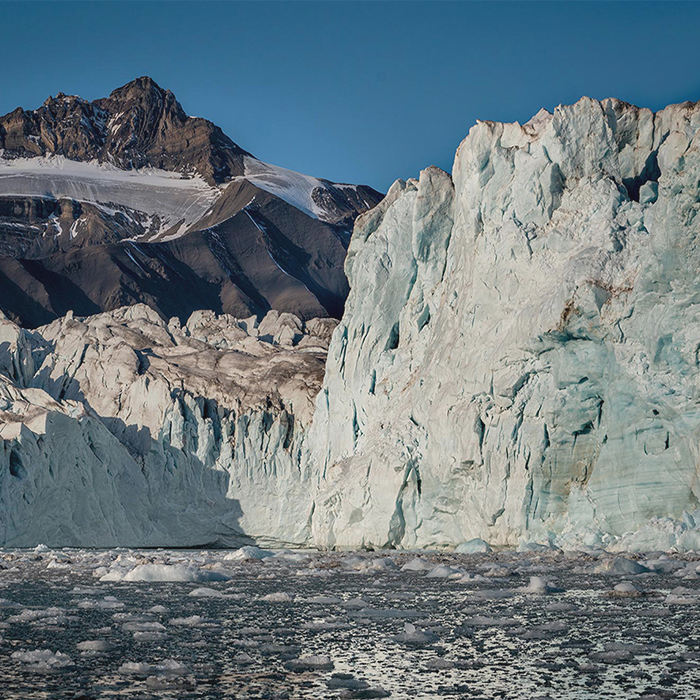
Svalbard is one of the most important polar bear habitats in the entire Arctic. These animals can be encountered throughout almost the entire archipelago – from fjord coastlines and glaciers to sea ice and the remote northern regions of Nordaustlandet. They roam along fjord shores and travel across the ice searching for food.
Polar bears are excellent swimmers. They can cover dozens of kilometres in icy water while searching for food or moving between ice fields. Their primary prey are seals, but in the Arctic every day is different and these animals are highly opportunistic when it comes to finding food.
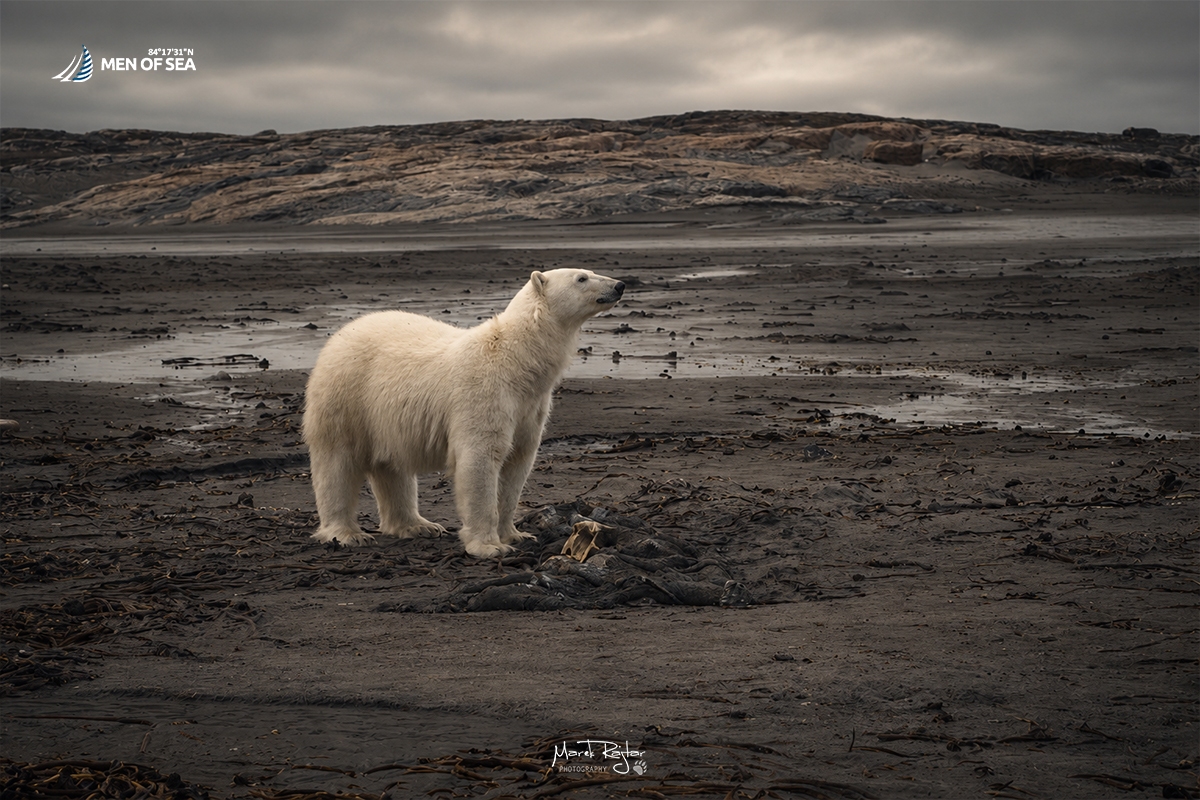
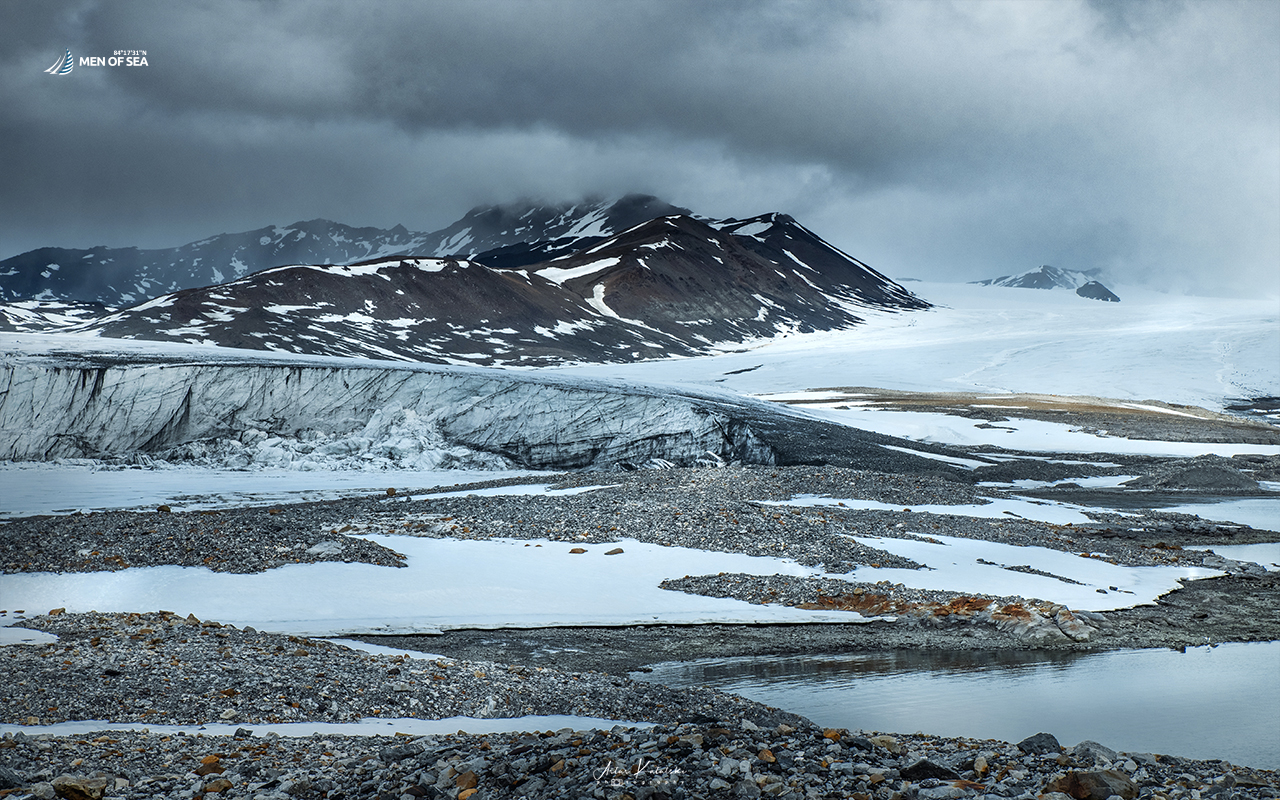
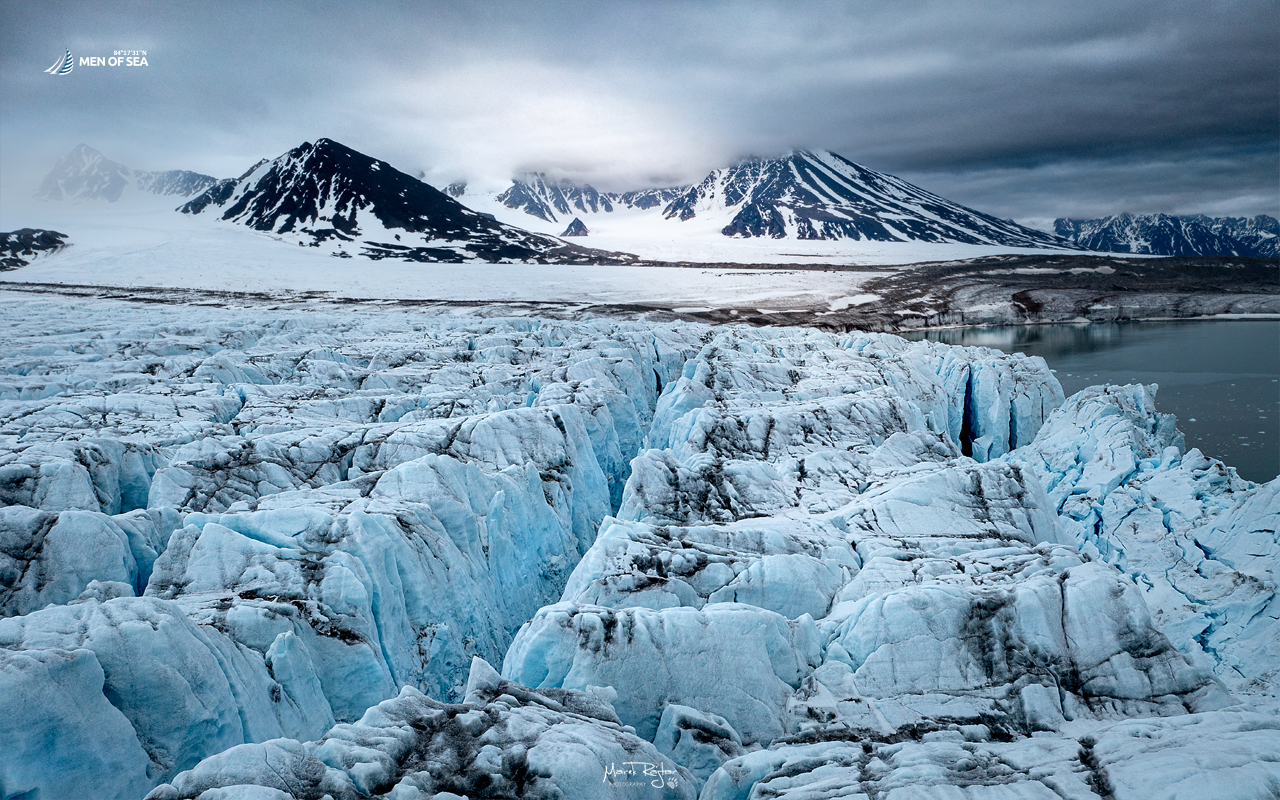
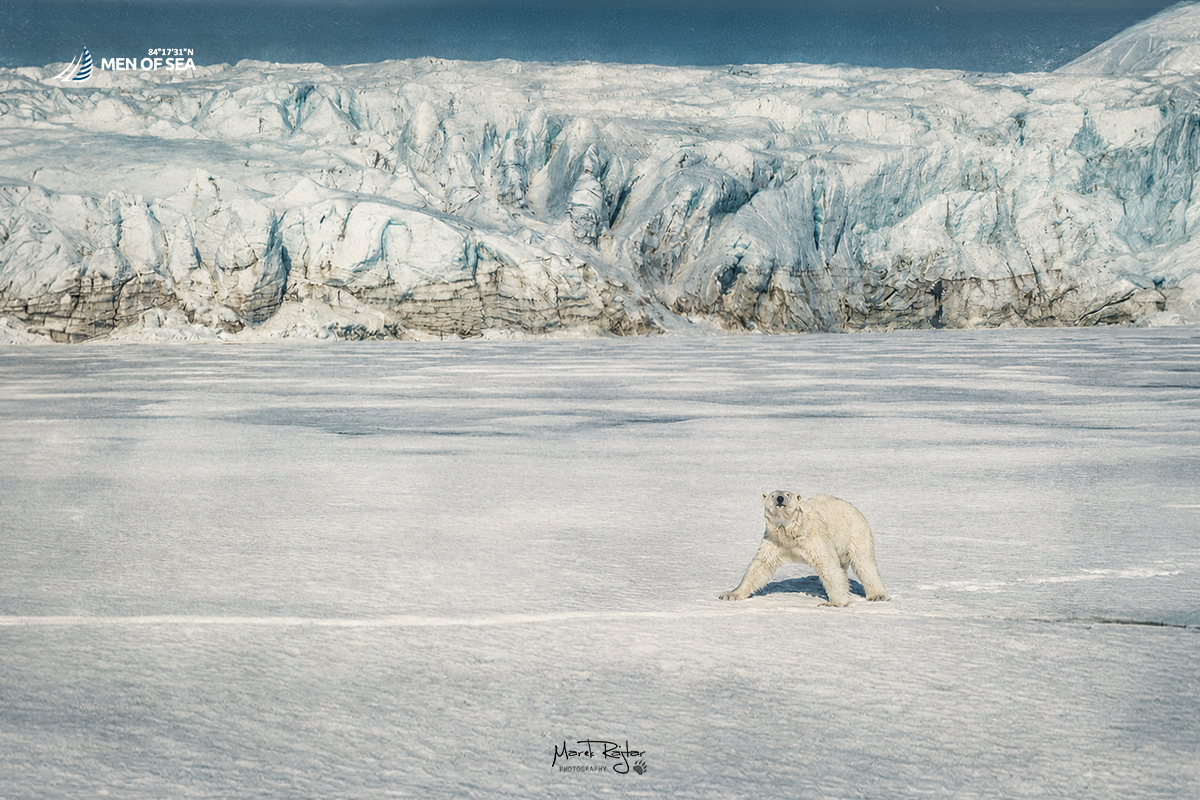
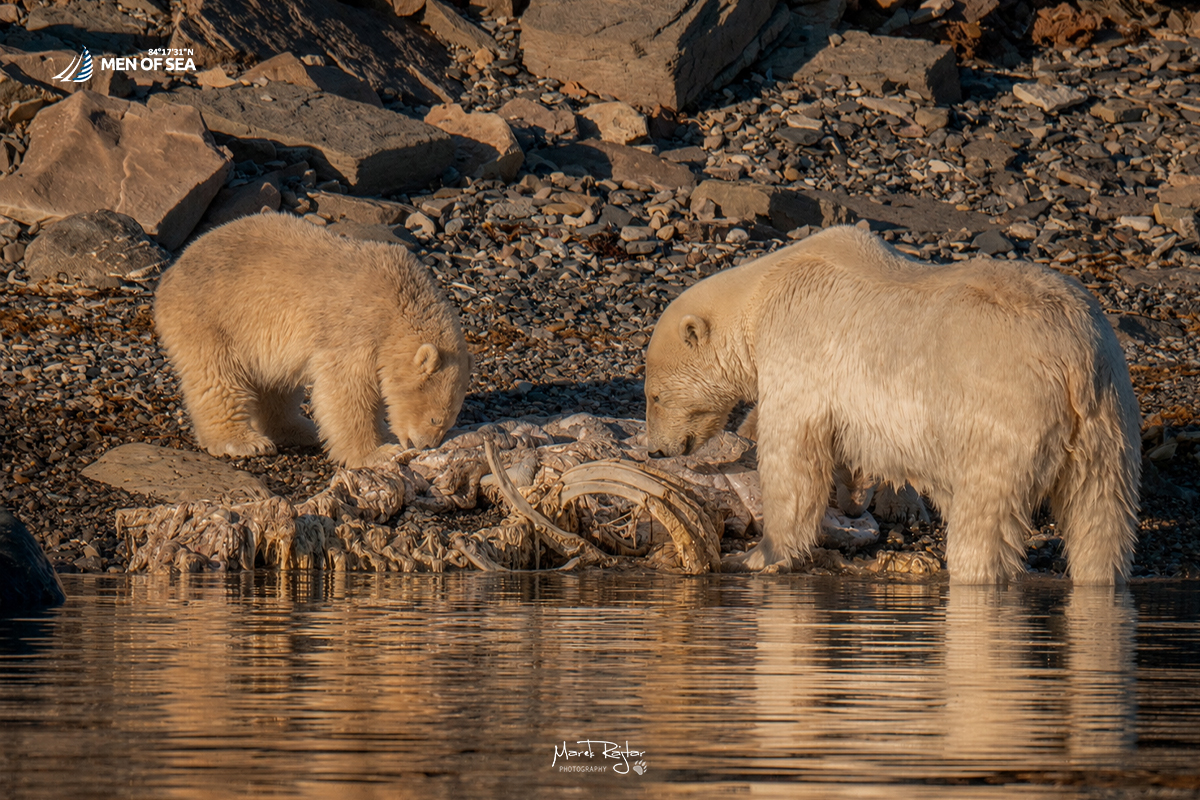
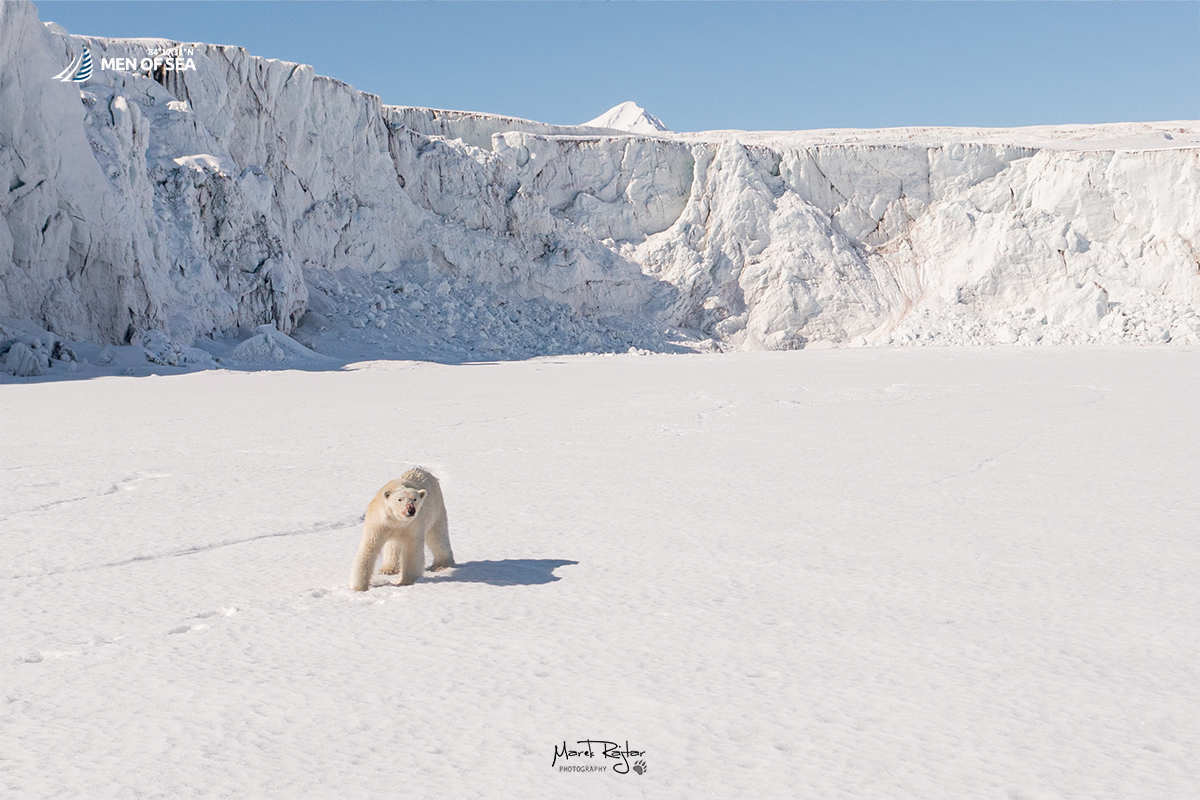
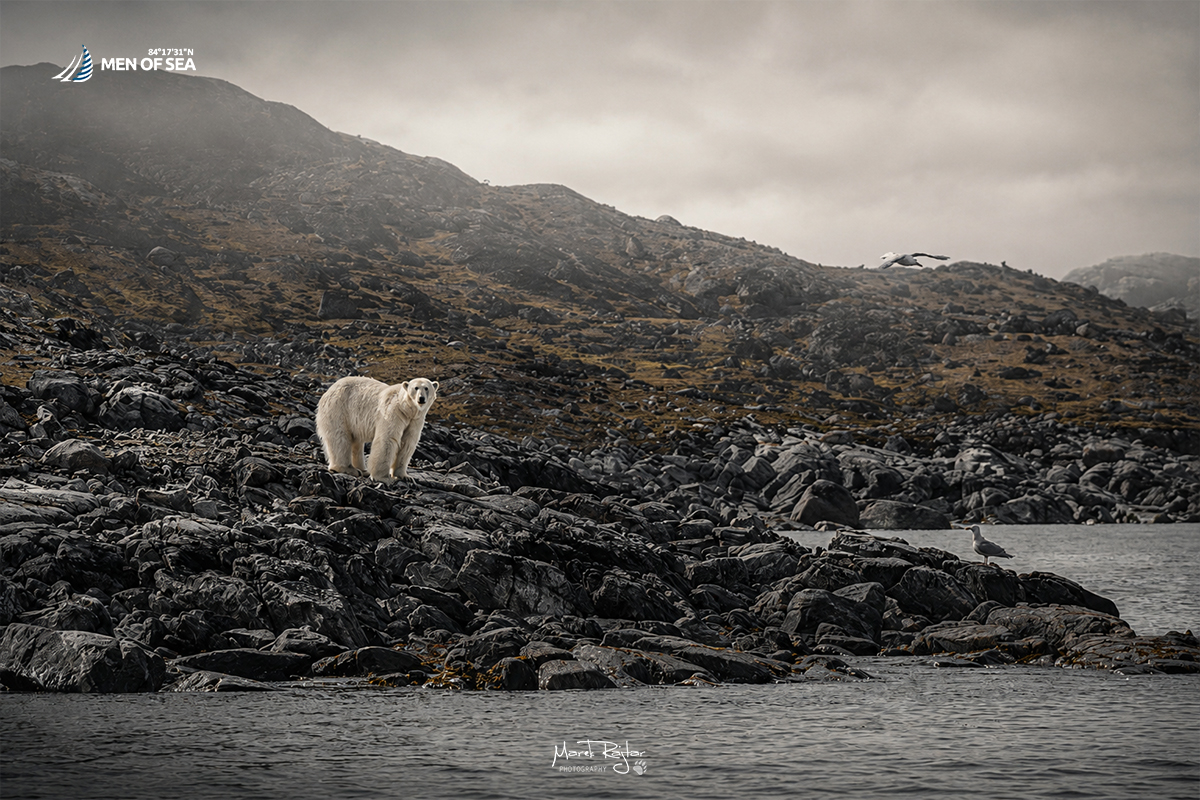
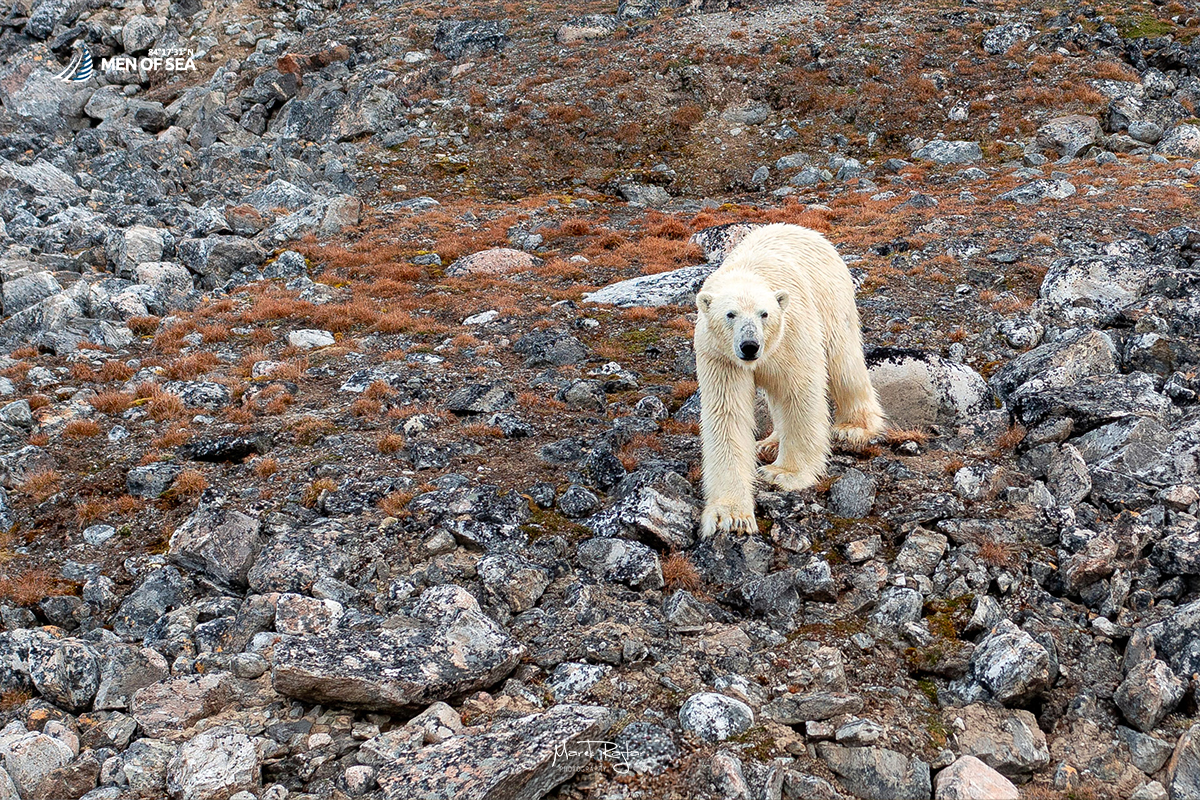
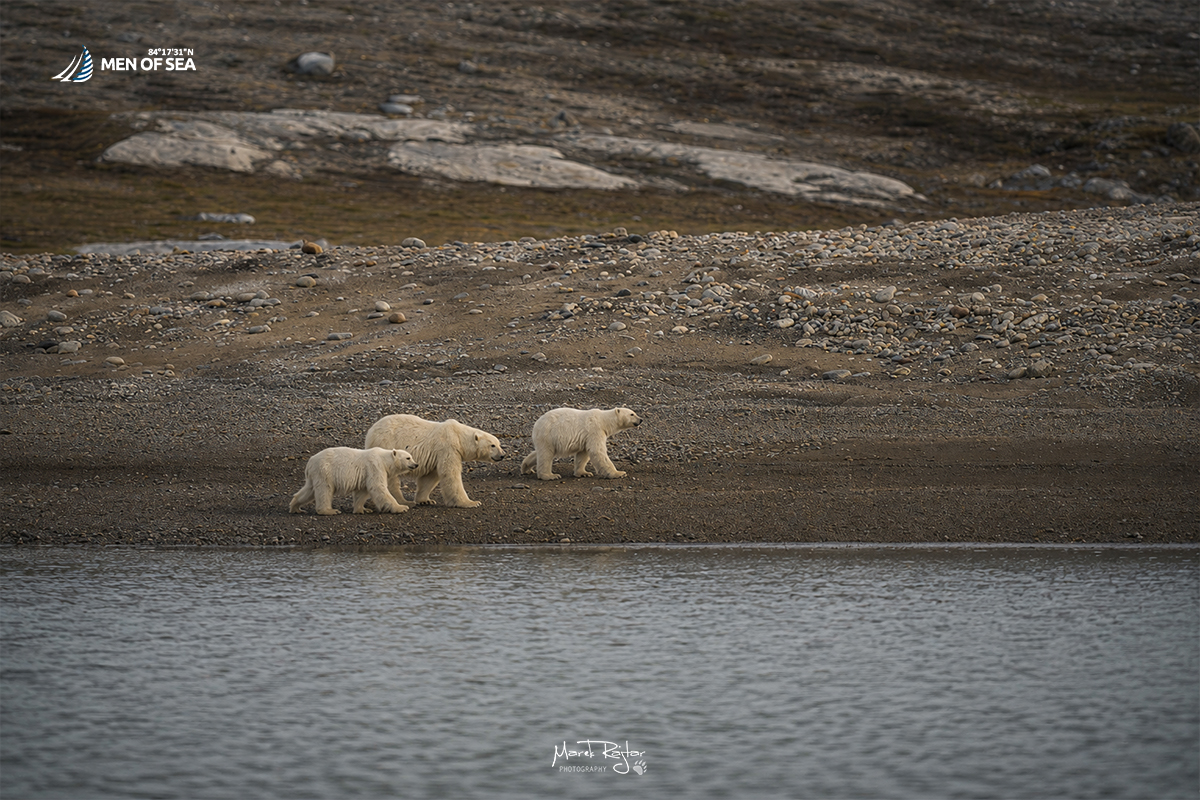
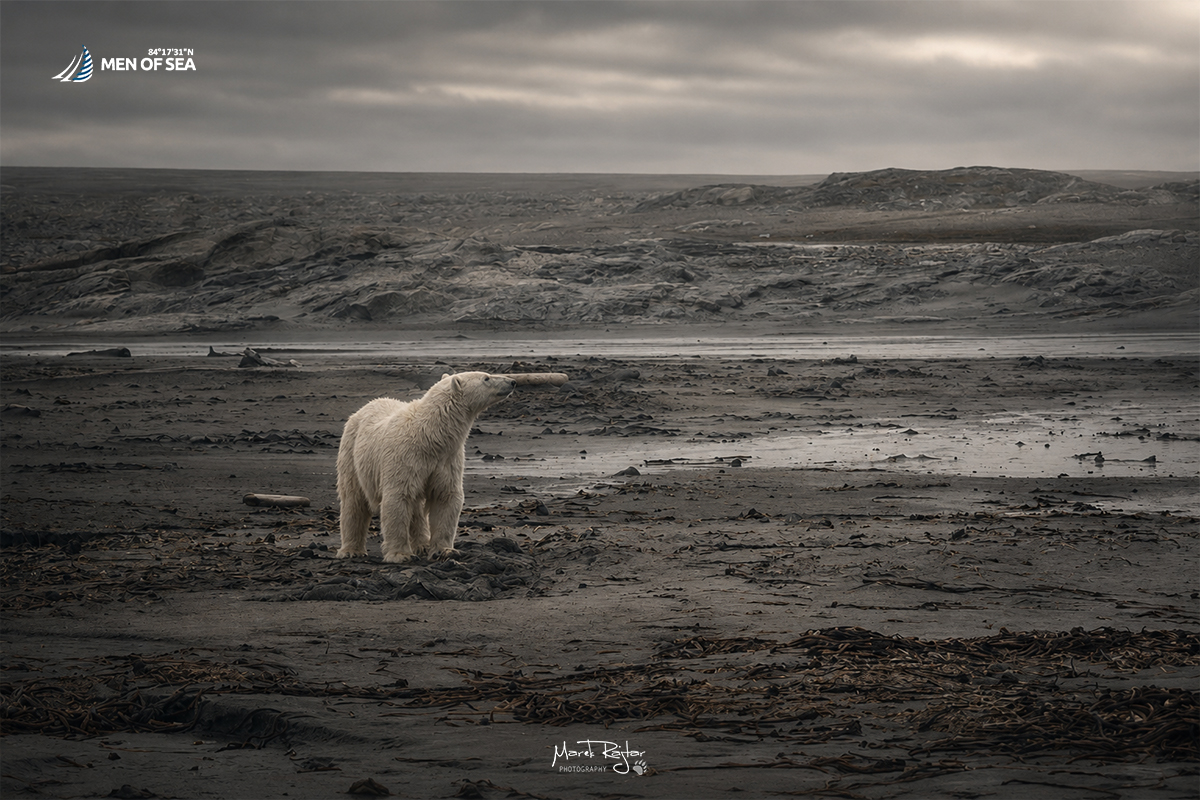
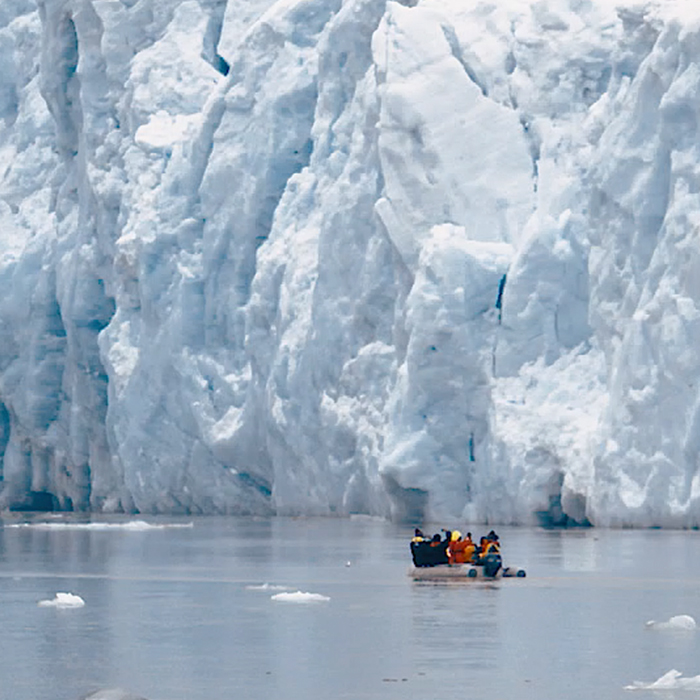
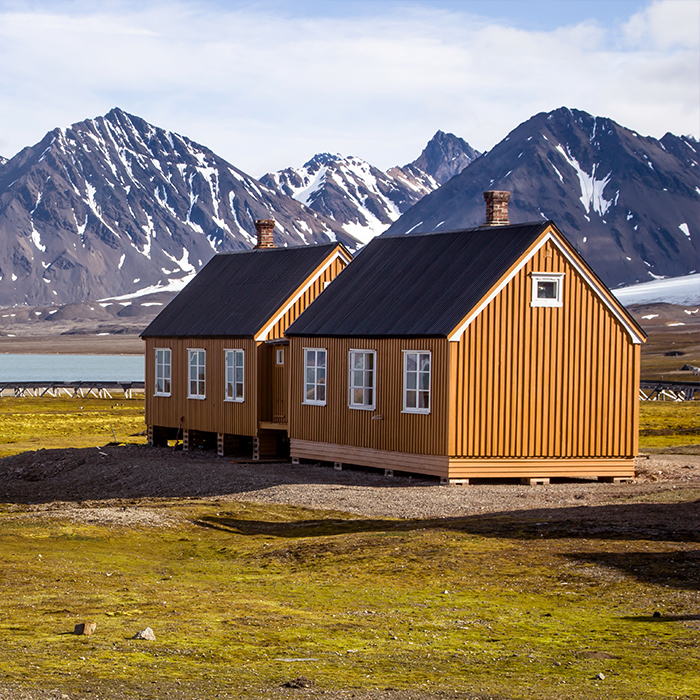
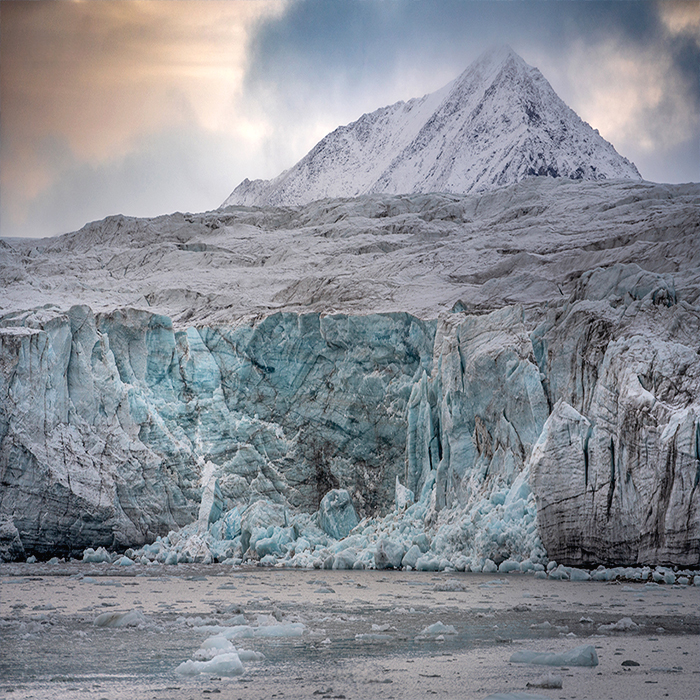
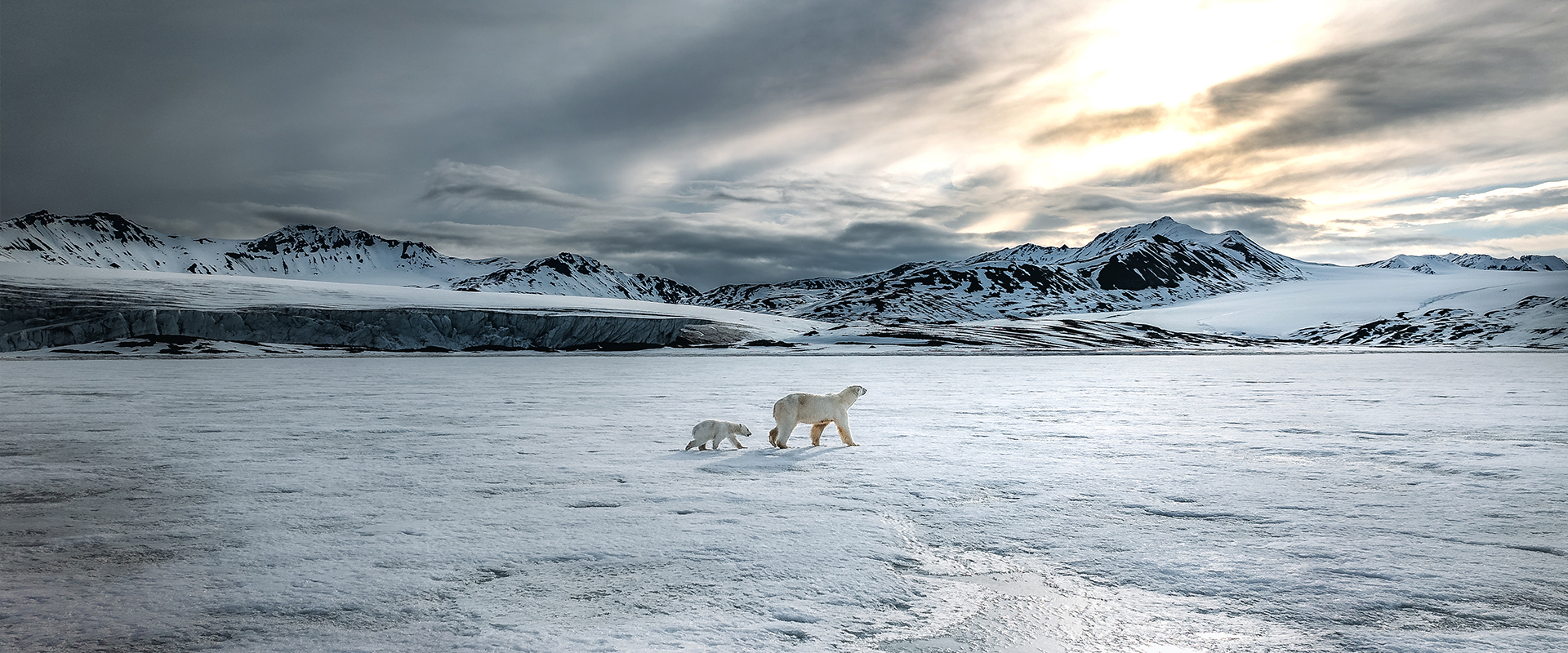
On Svalbard, polar bears are most often observed: on sea ice, along fjord coastlines, near bird colonies, on glaciers descending into the sea, sometimes near abandoned settlements and beaches where the sea washes animal remains ashore.
Encountering a Polar Bear
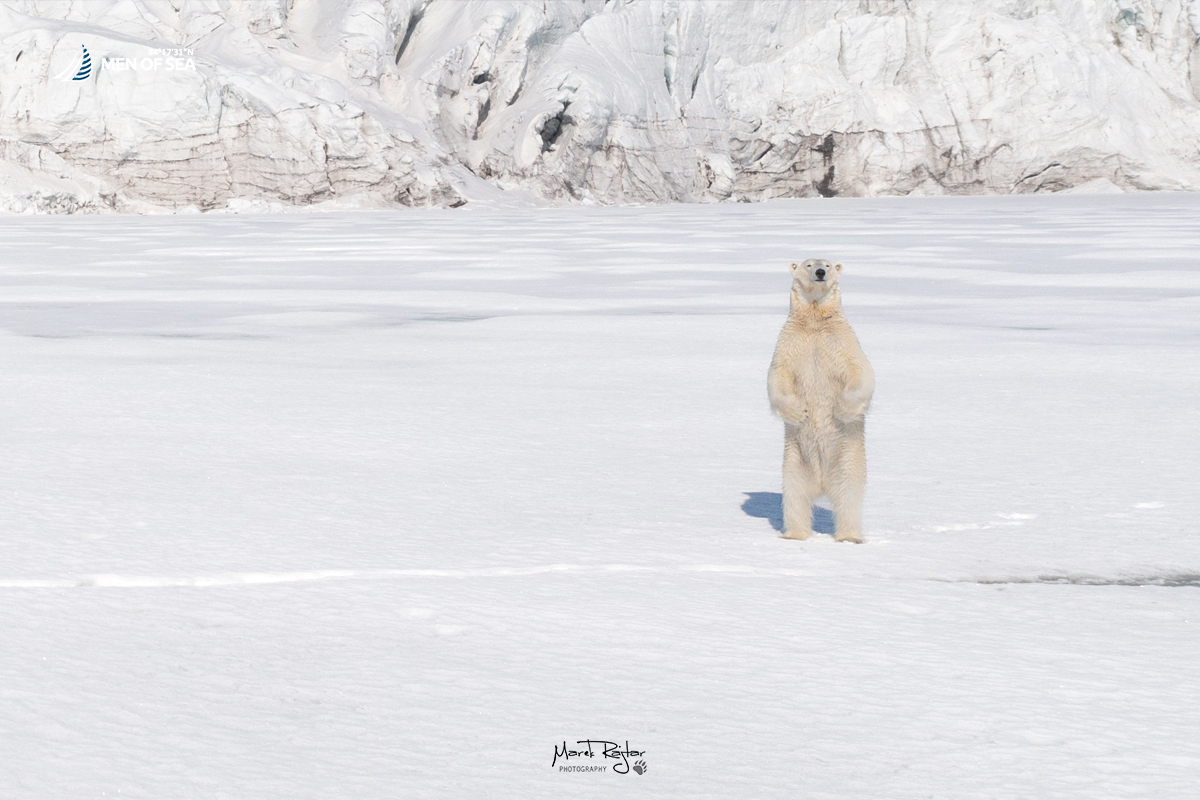
Encountering a polar bear in its natural environment is one of the most extraordinary experiences the Arctic can offer. It is a moment that remains in memory forever.
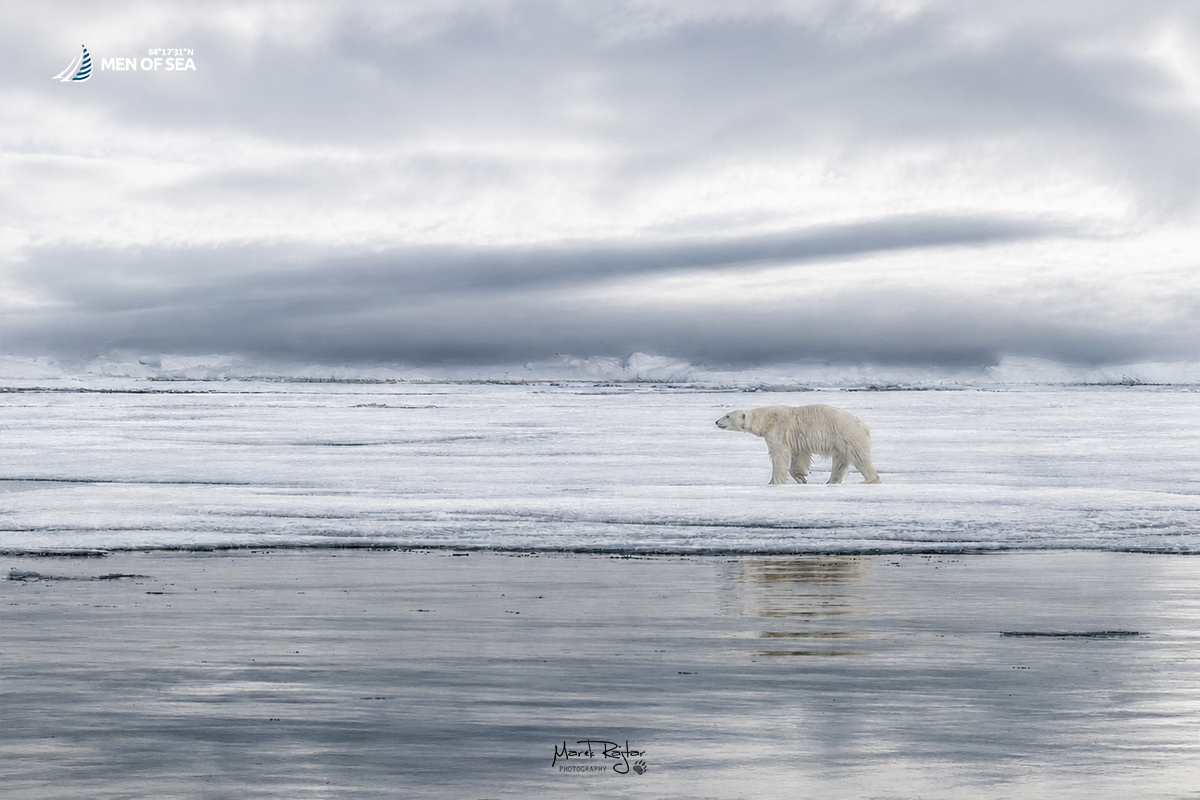
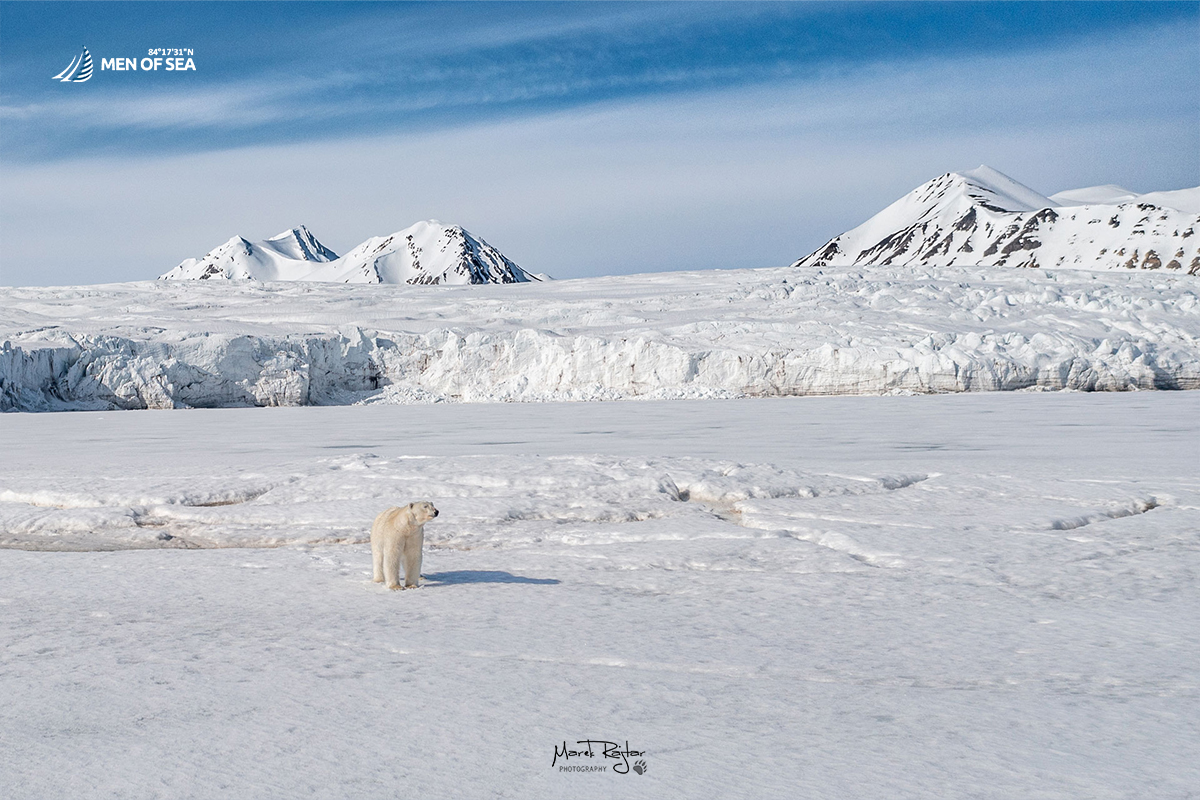
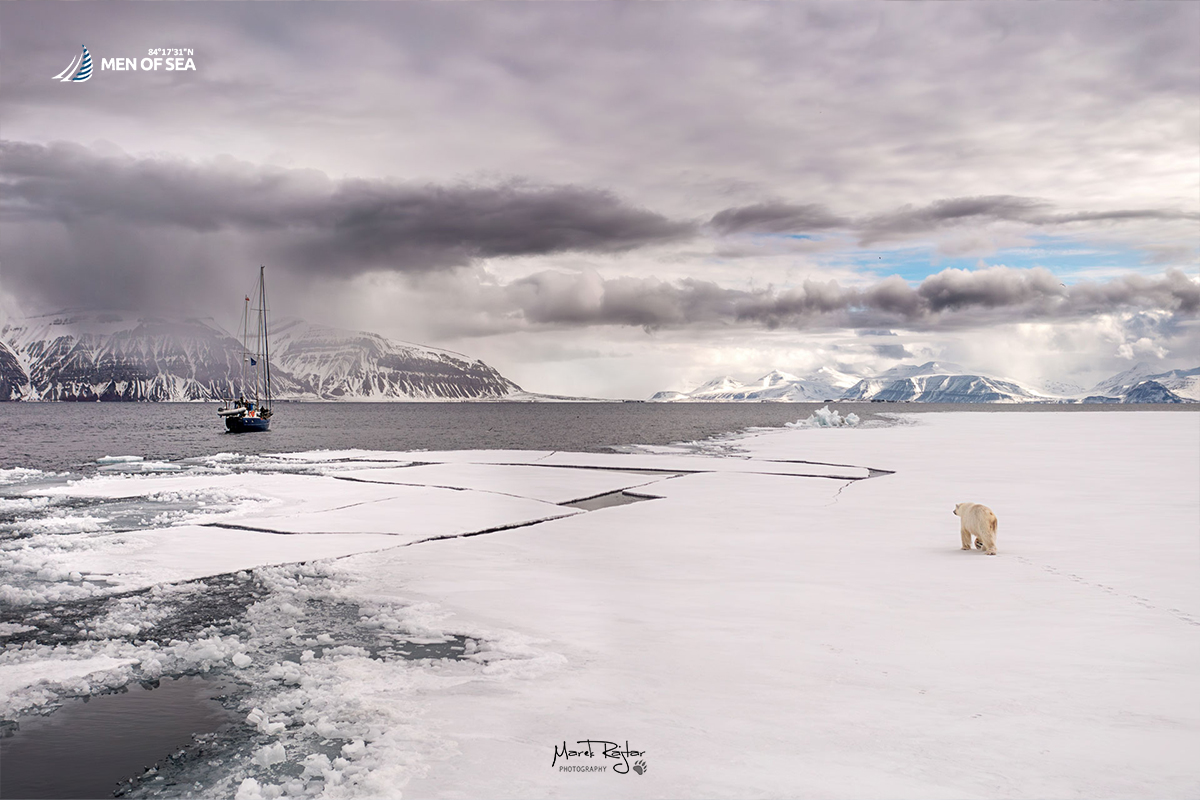
Every observation is different. Sometimes the bear appears far away on the ice as a tiny white dot. Most often, after a long observation, it turns out to be the hundred-and-first reindeer – but occasionally the observer suddenly confirms with excitement: “We’ve got one!”
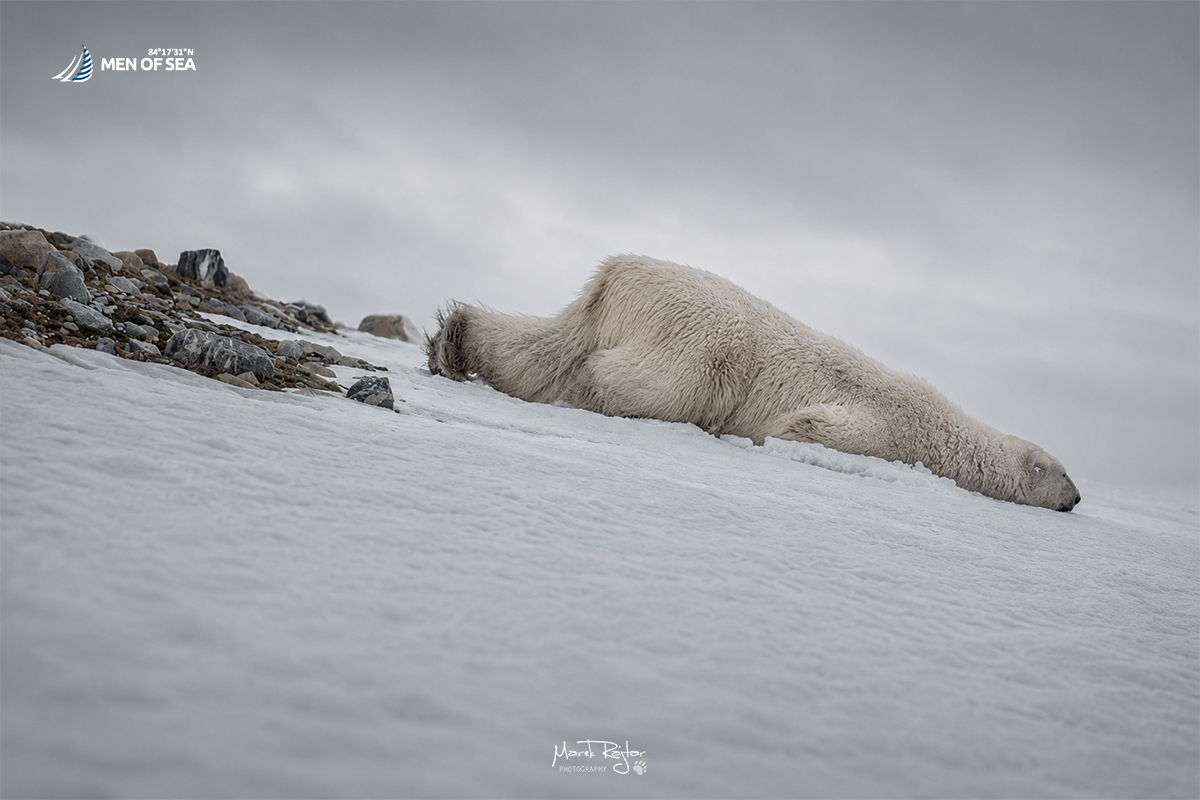
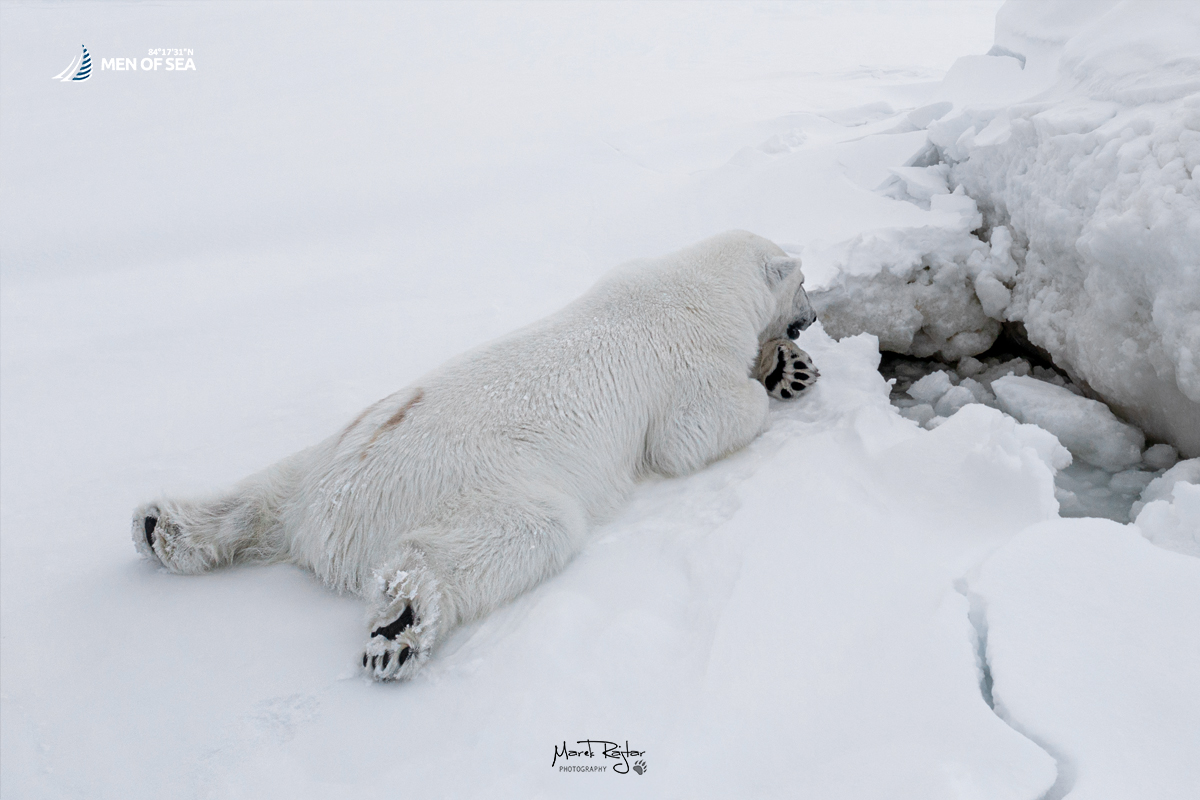
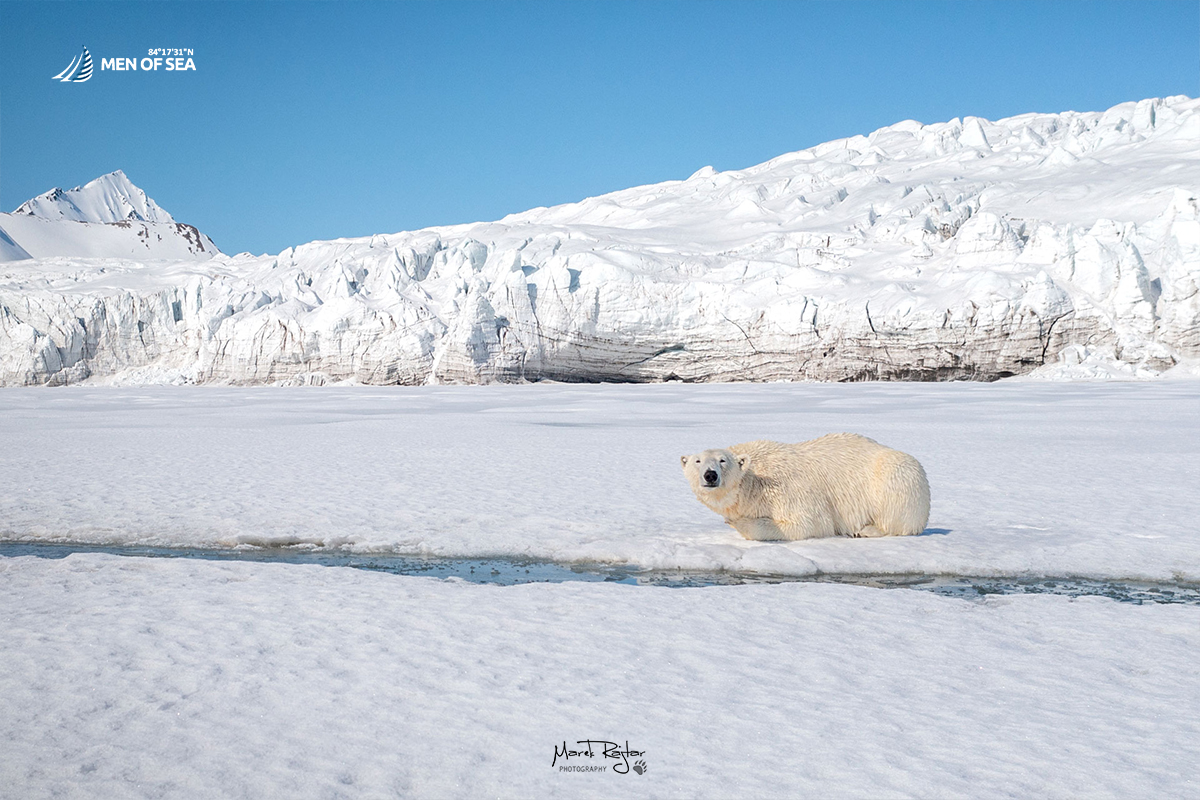
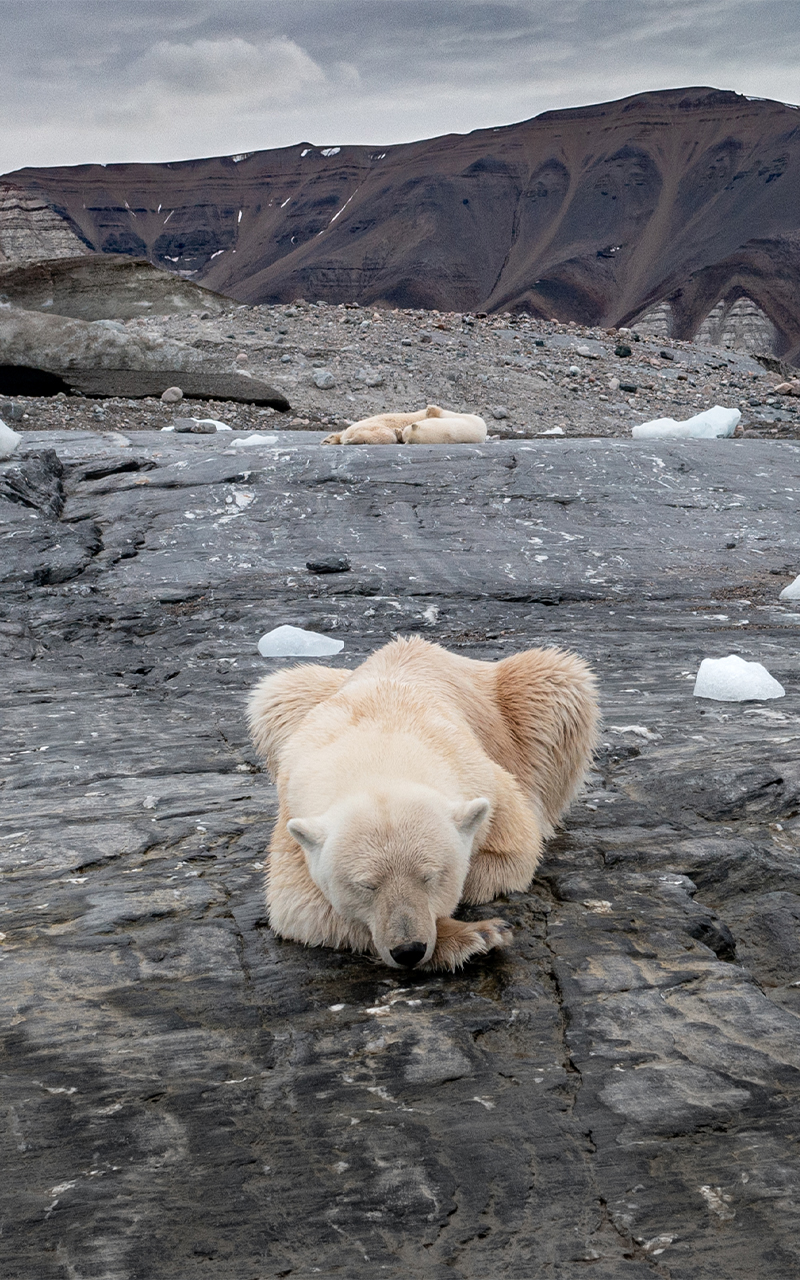
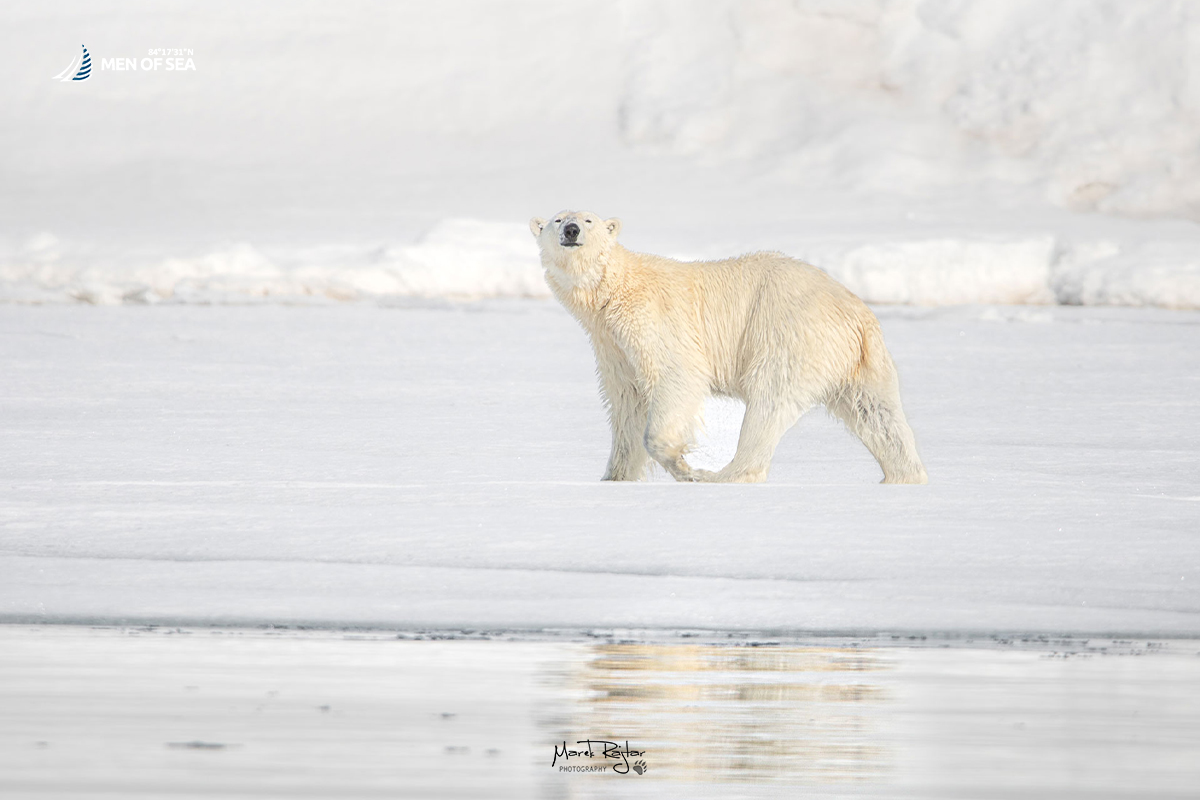
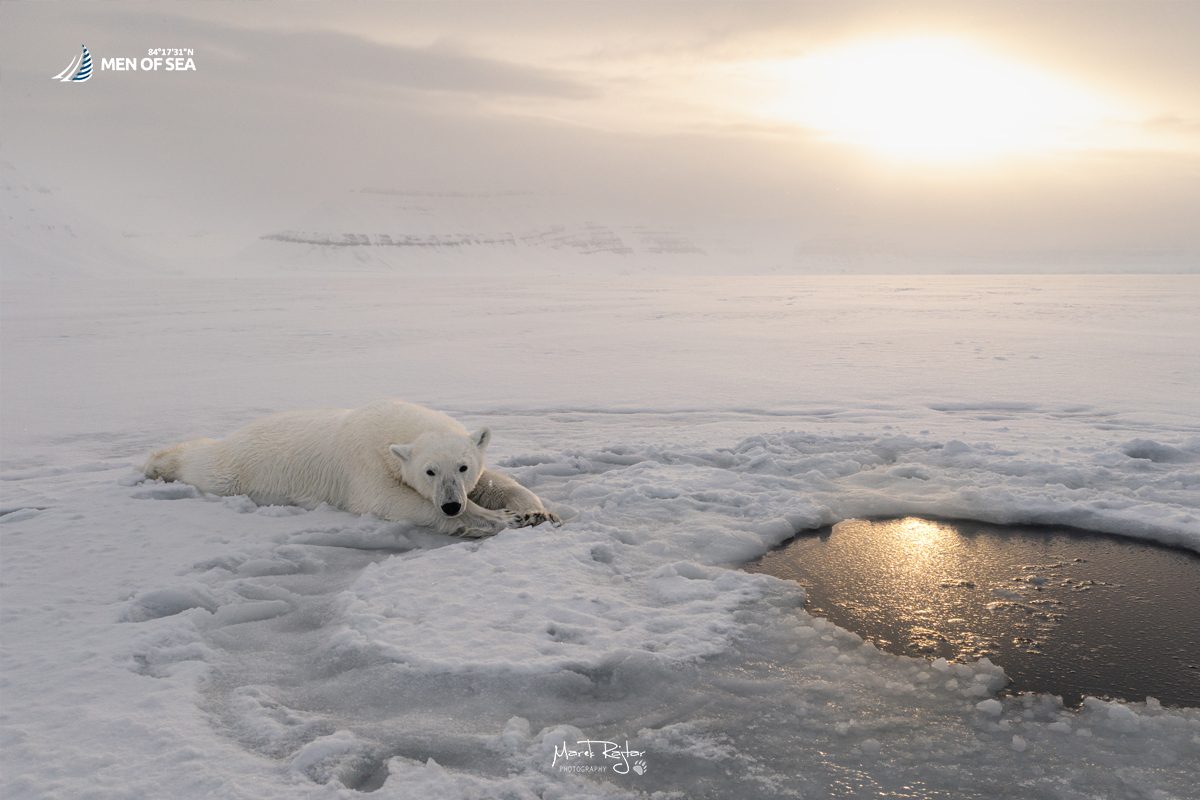
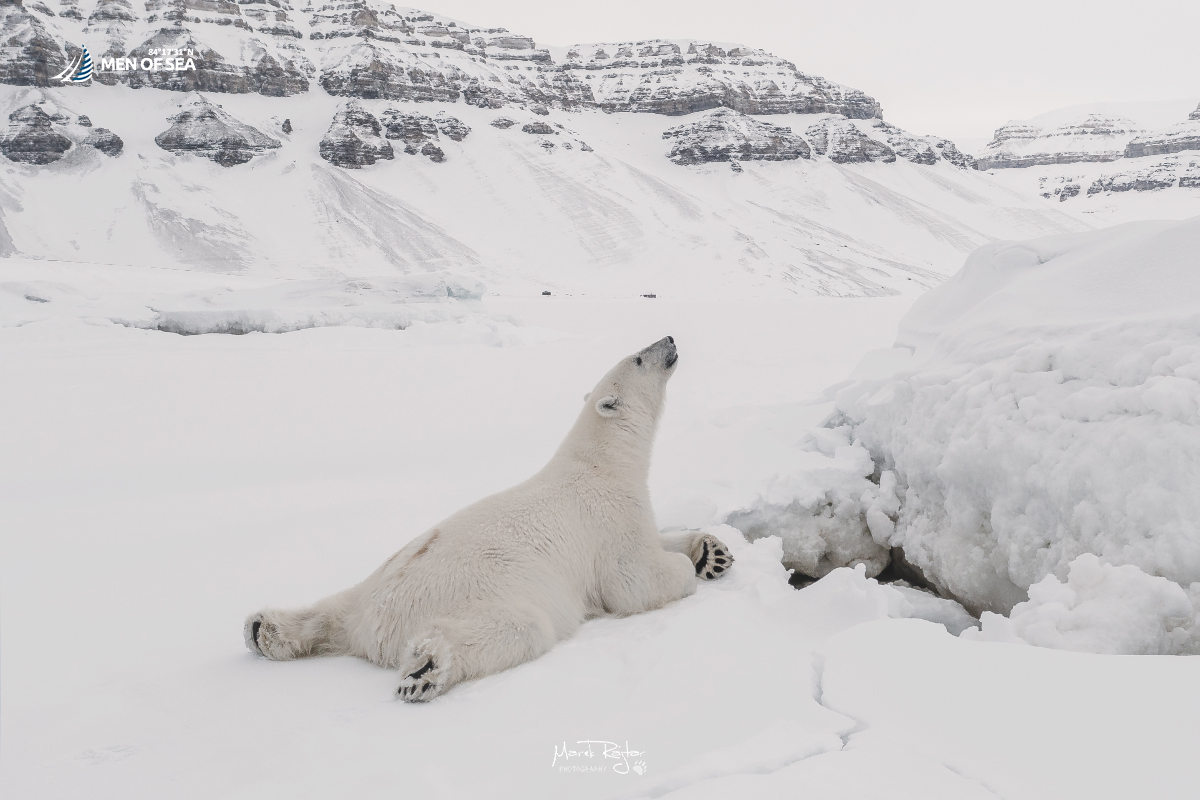
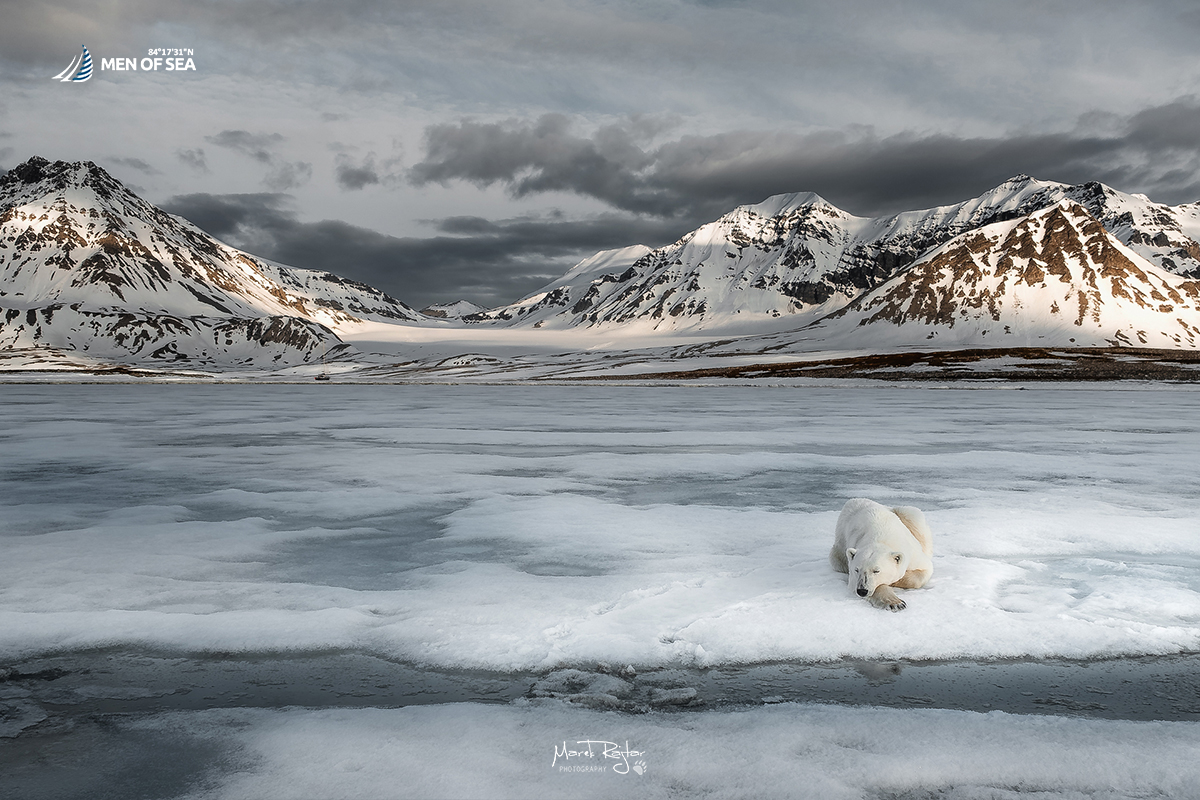
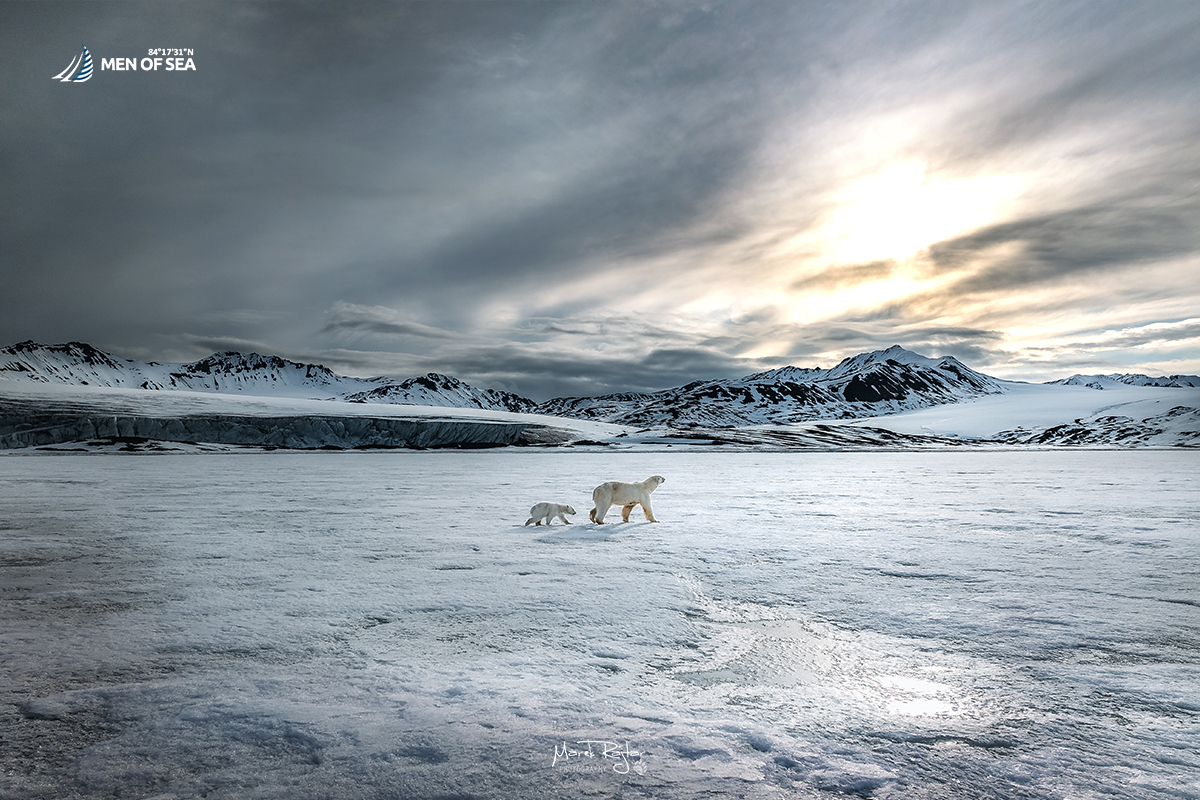
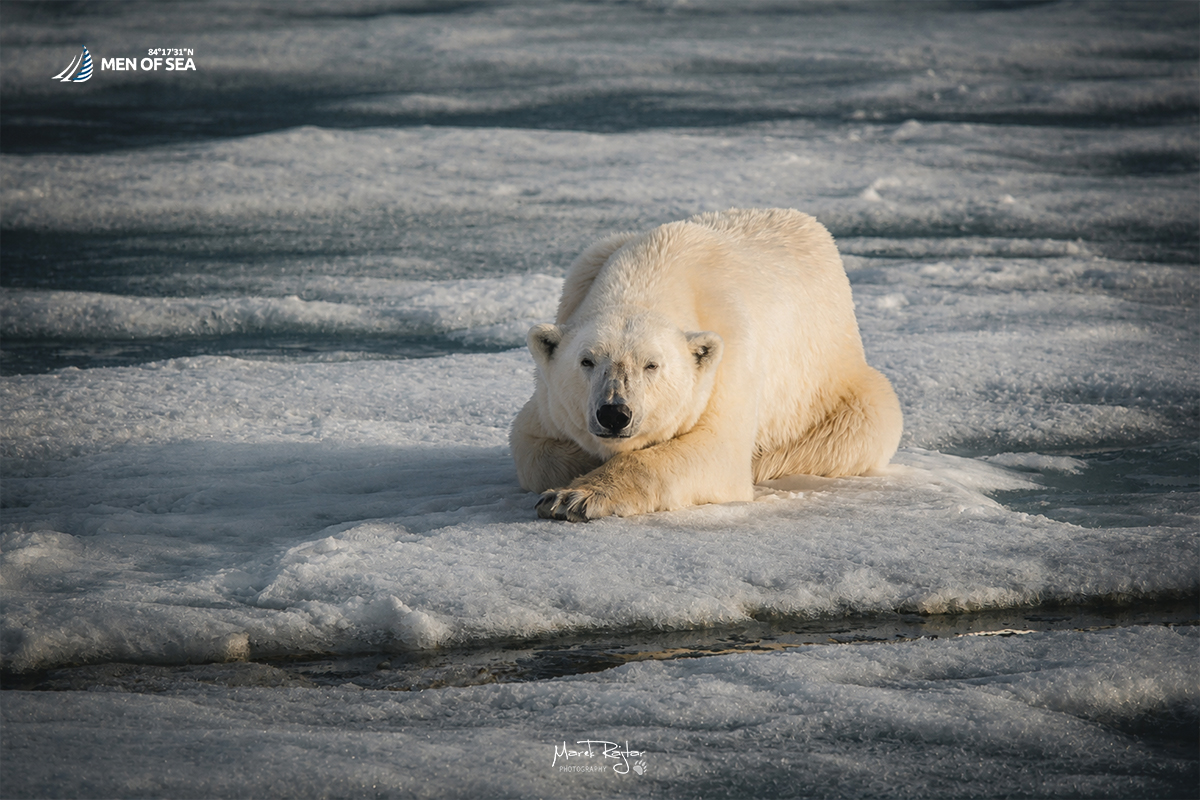
At other times, the bear may calmly walk along the fjord shoreline or rest on the snow. Occasionally, it can even be observed swimming among drifting ice floes.
What are the chances of seeing polar bears? We estimate around 50%. But we must admit that we ourselves have already seen them at least a hundred times.
During our expeditions, we always observe polar bears with complete respect for the animals and in full accordance with the strict environmental protection regulations of Svalbard. Our goal is responsible and ethical wildlife observation without influencing the animals’ natural behaviour.
An Arctic Full of Life
Although Svalbard is most associated with polar bears, the Archipelago is home to many other extraordinary Arctic animals. During our expeditions, we frequently observe a rich world of wildlife living in its natural environment.
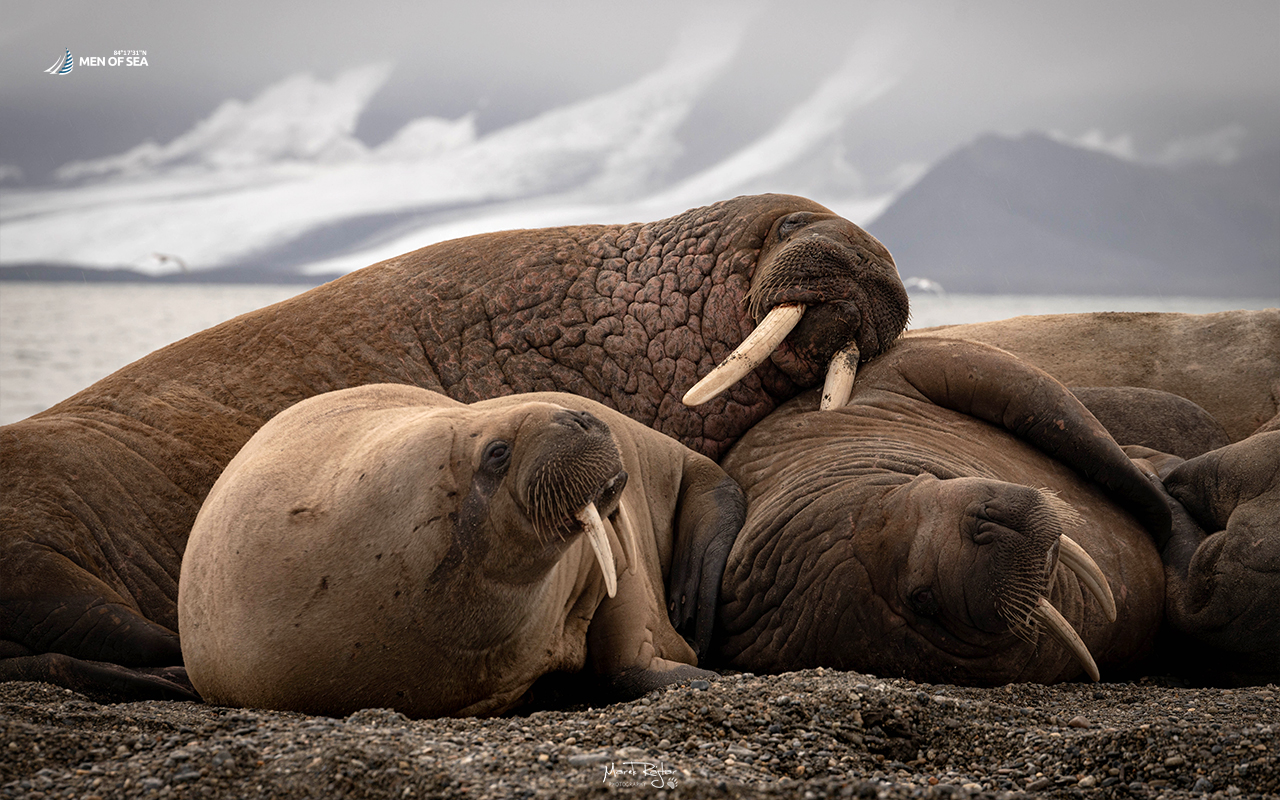
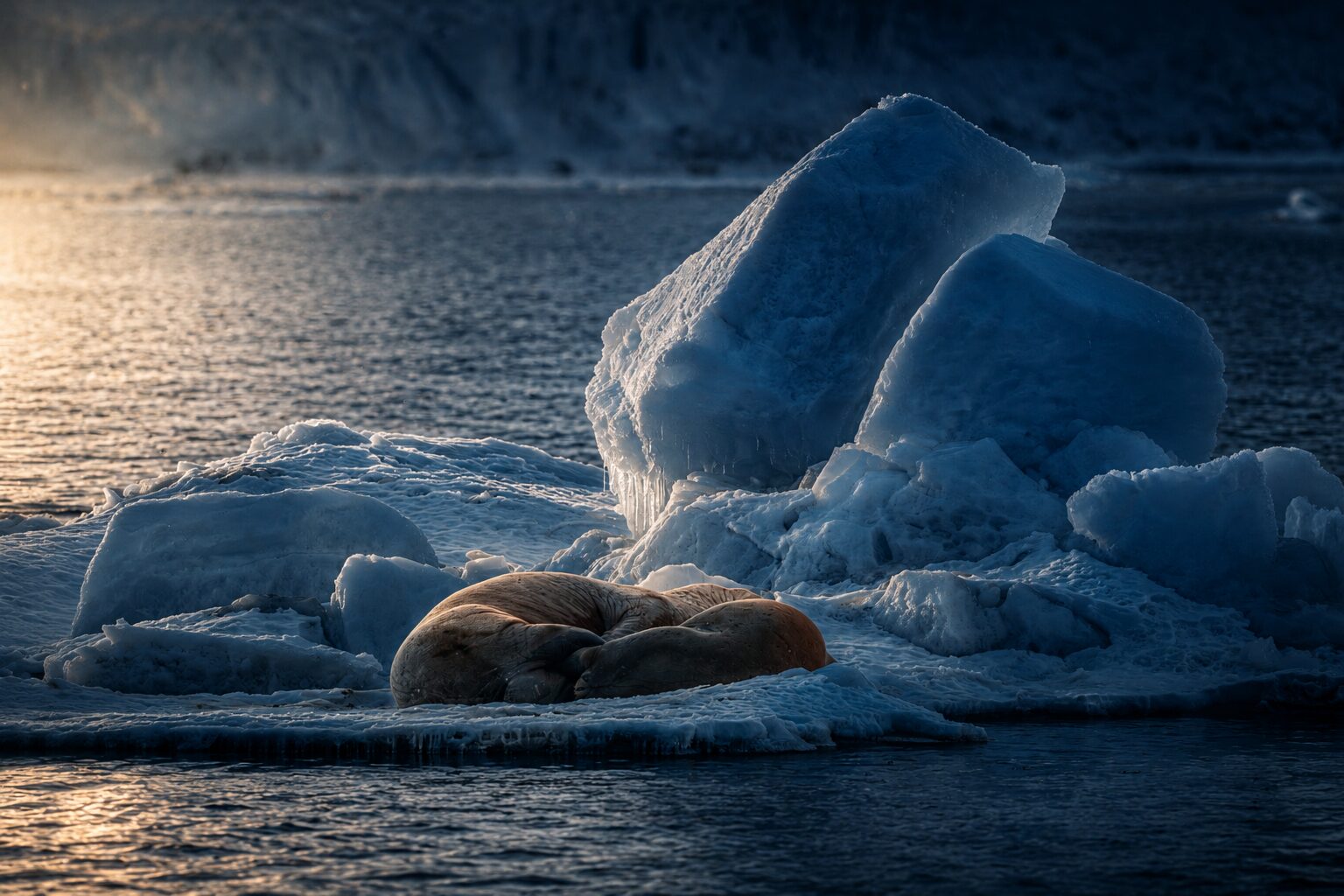
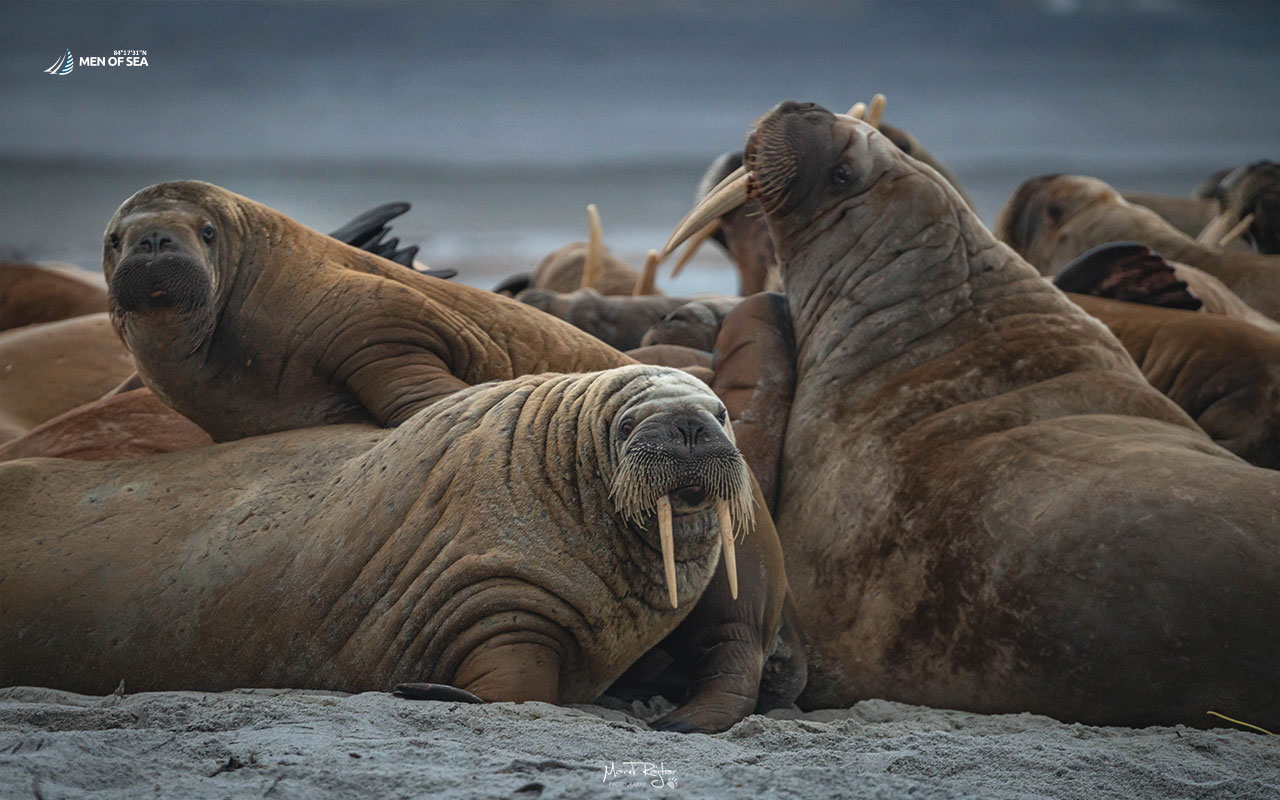
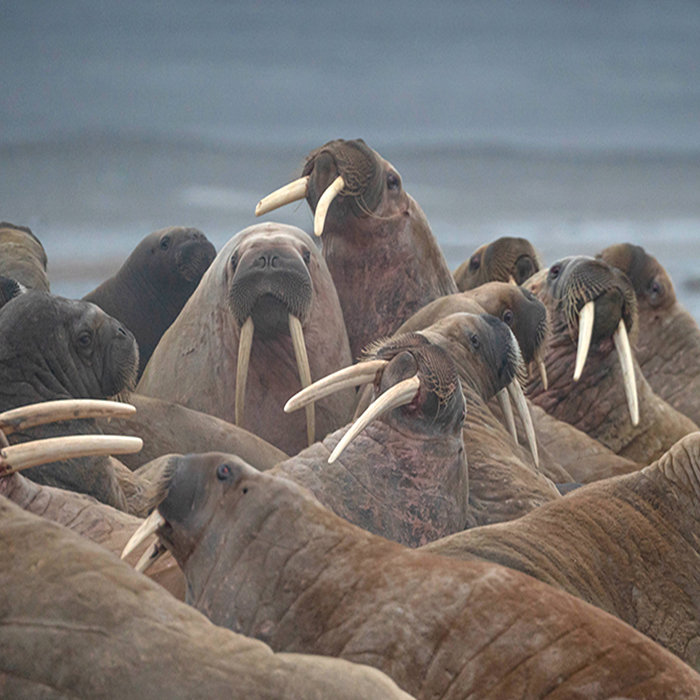
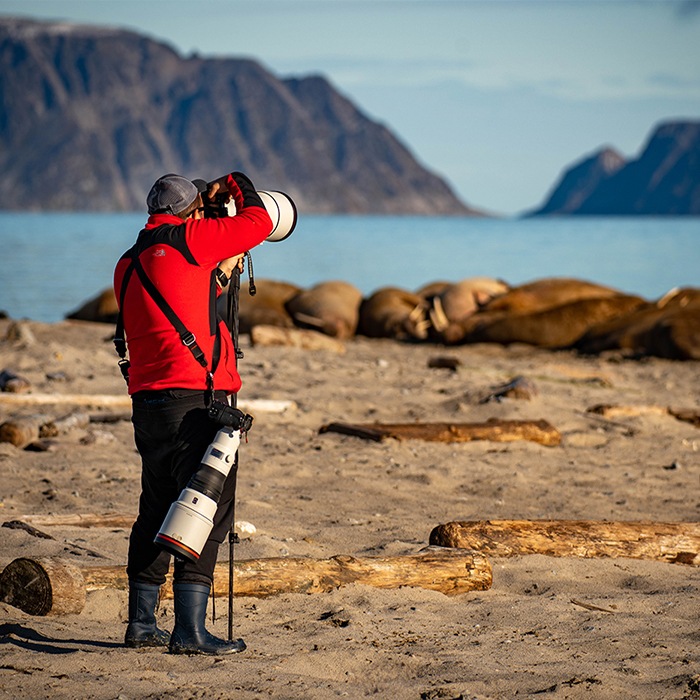
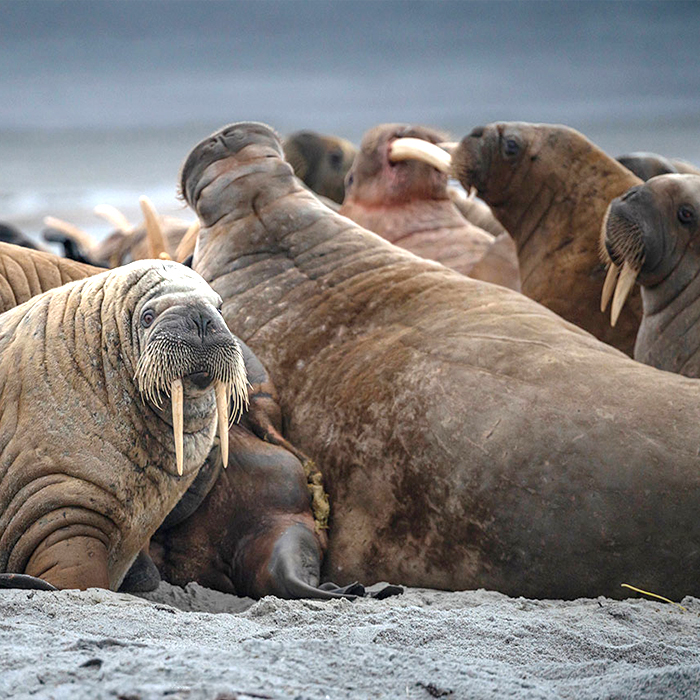
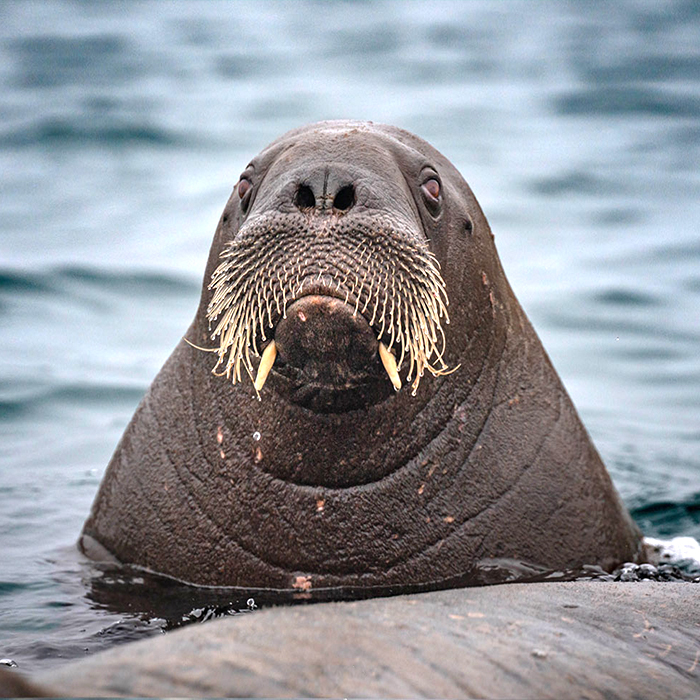
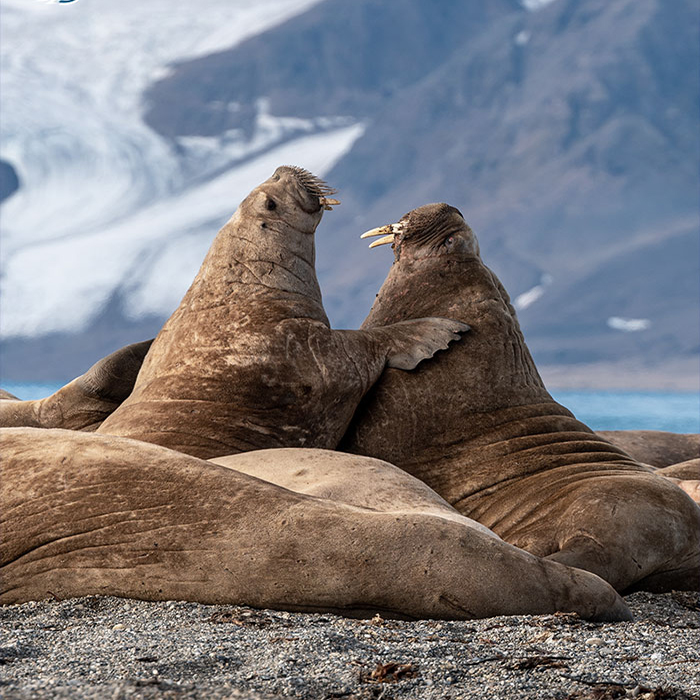
Among the most common inhabitants of Svalbard are Arctic walruses. Huge groups of these powerful animals rest on beaches, small islands and drifting ice. Encounters with them are always impressive – especially when multi-ton animals move through the water with surprising grace.
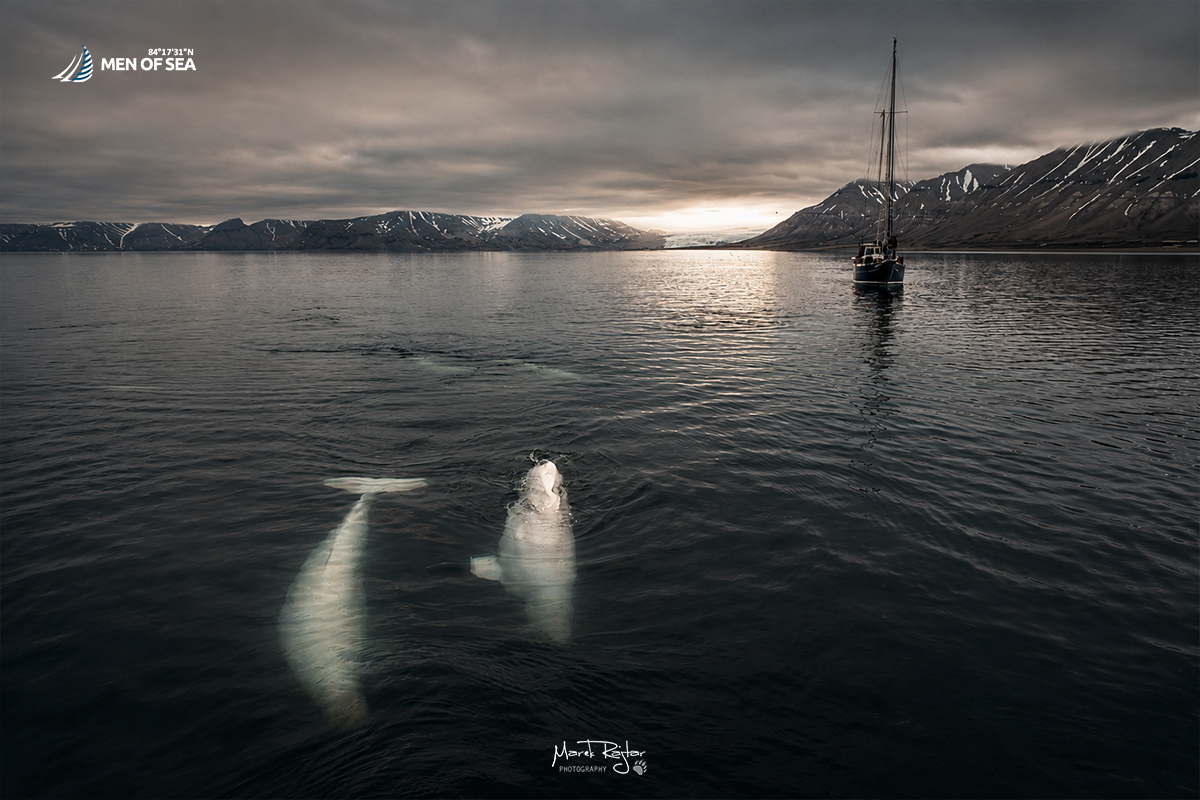
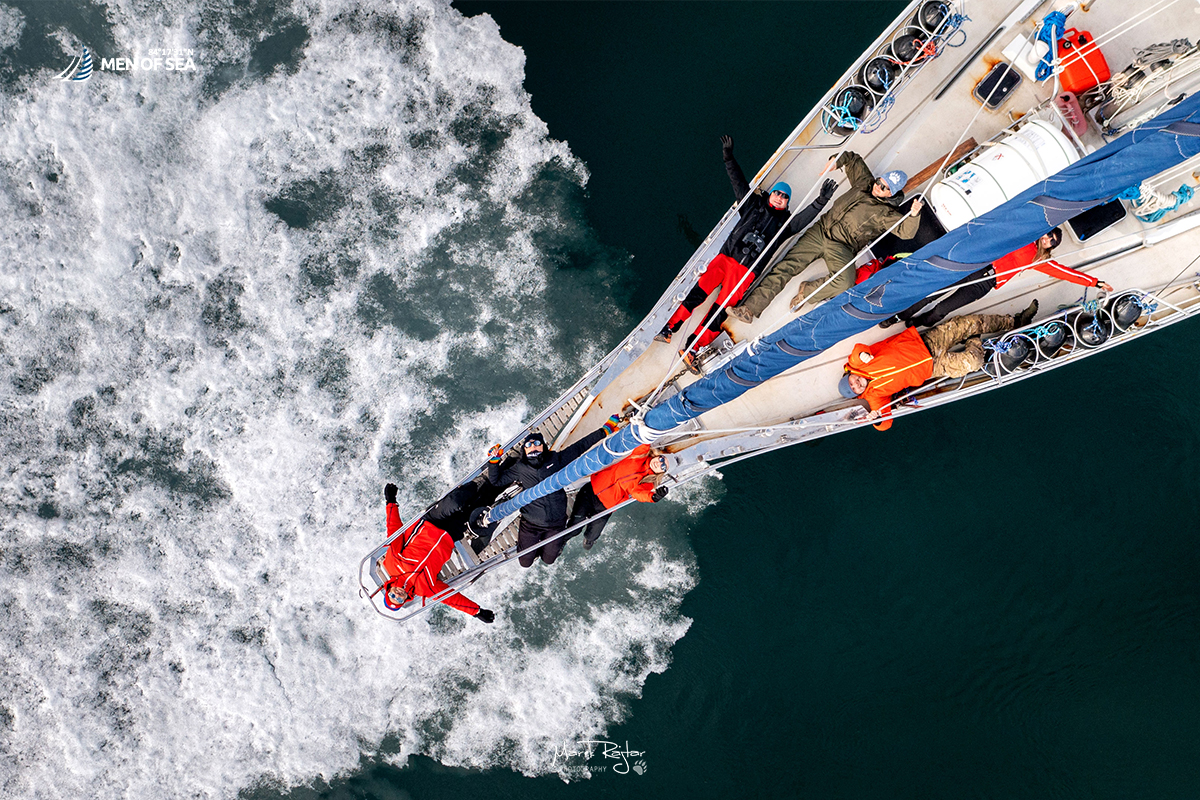
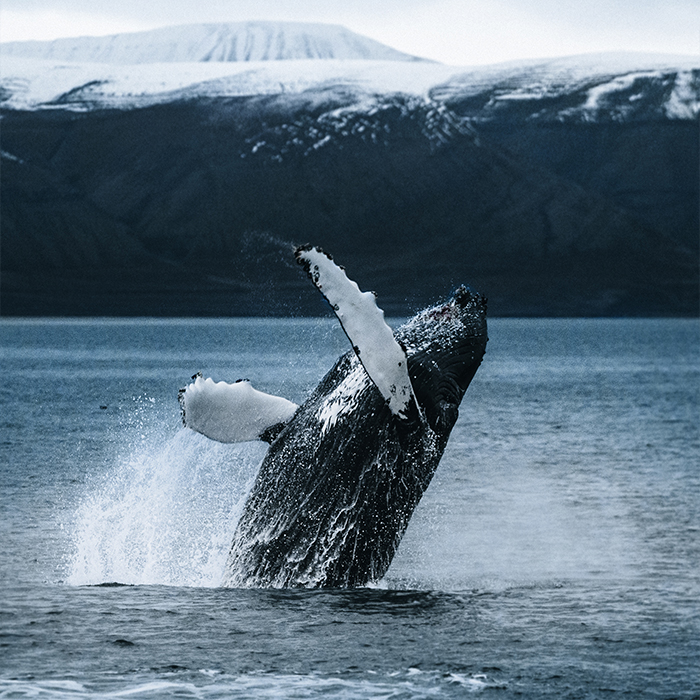
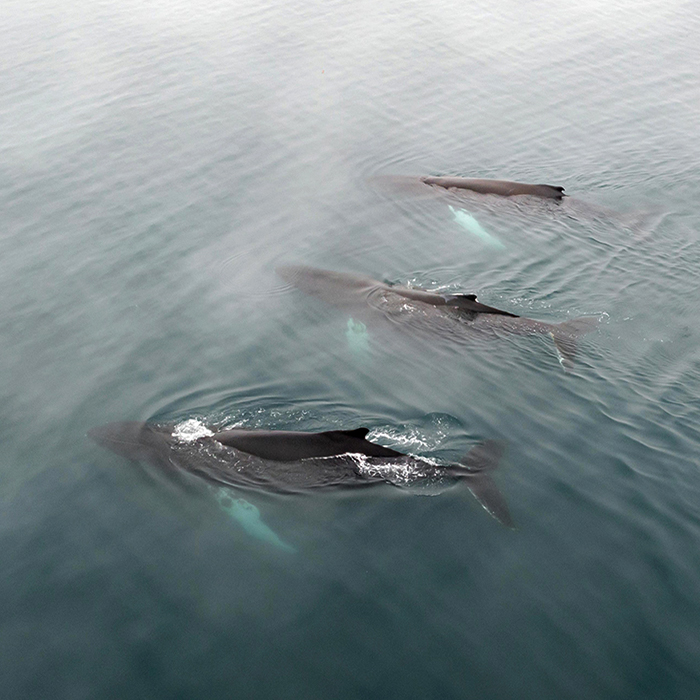
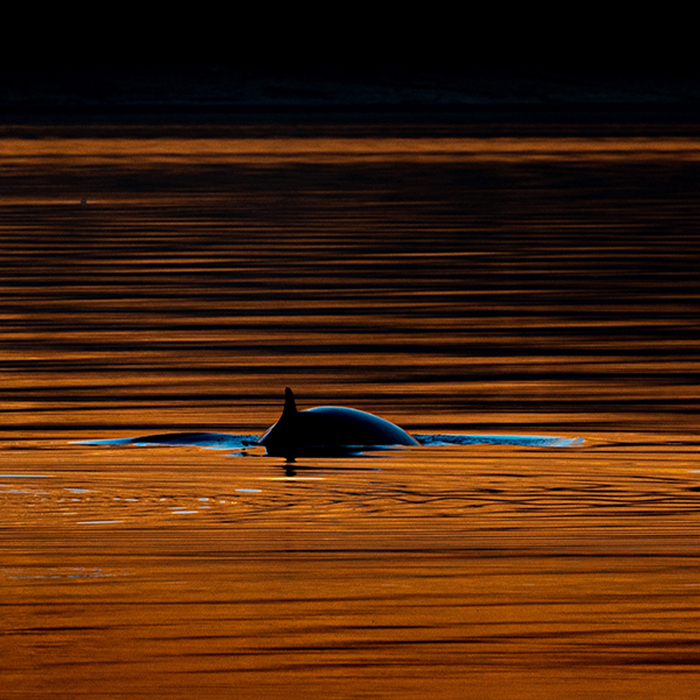
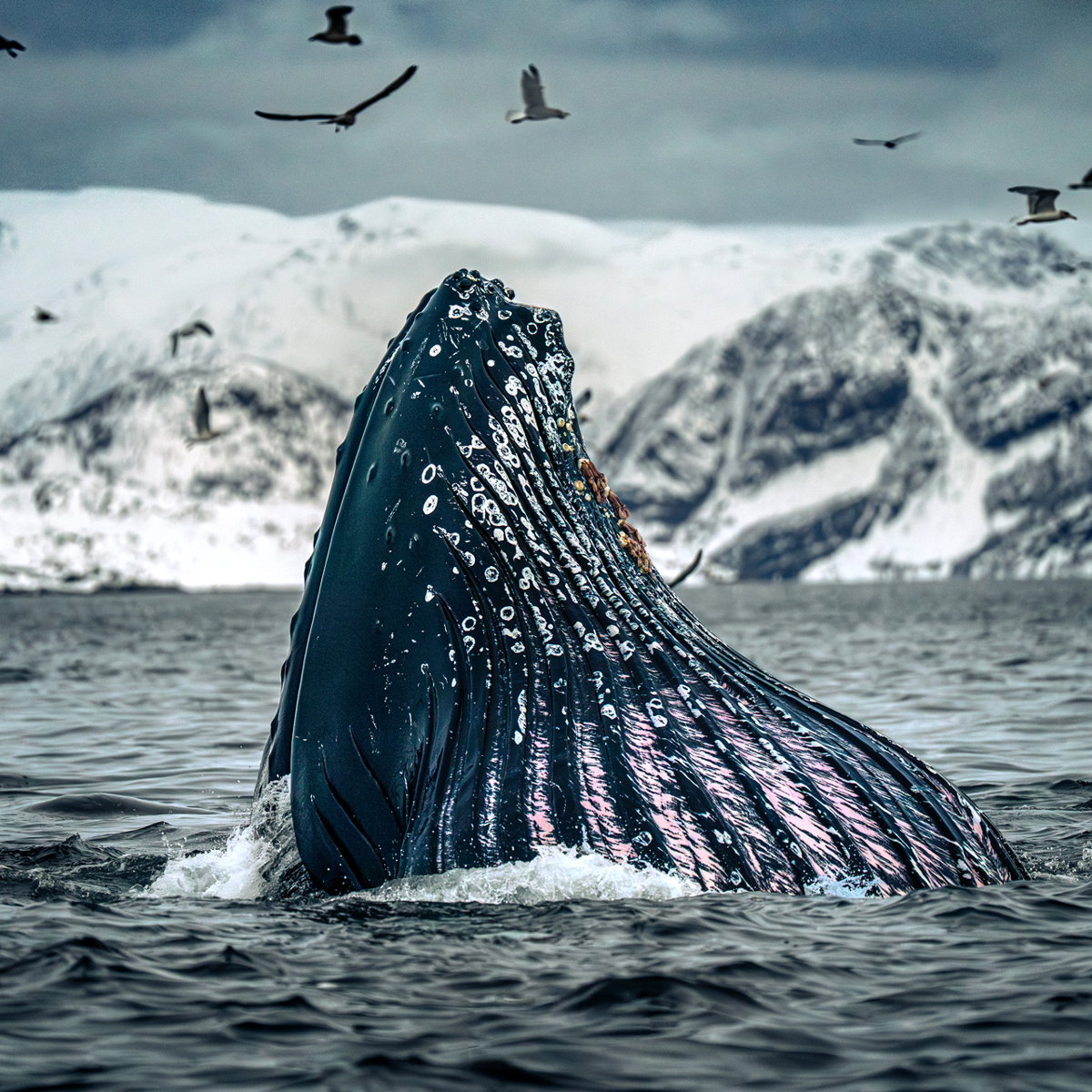
Whales also often accompany us. Humpbacks, minke whales and Arctic belugas regularly appear in Svalbard waters. Sometimes whales approach very close to the yacht Azimuth, allowing us to observe their calm and majestic world from a short distance.
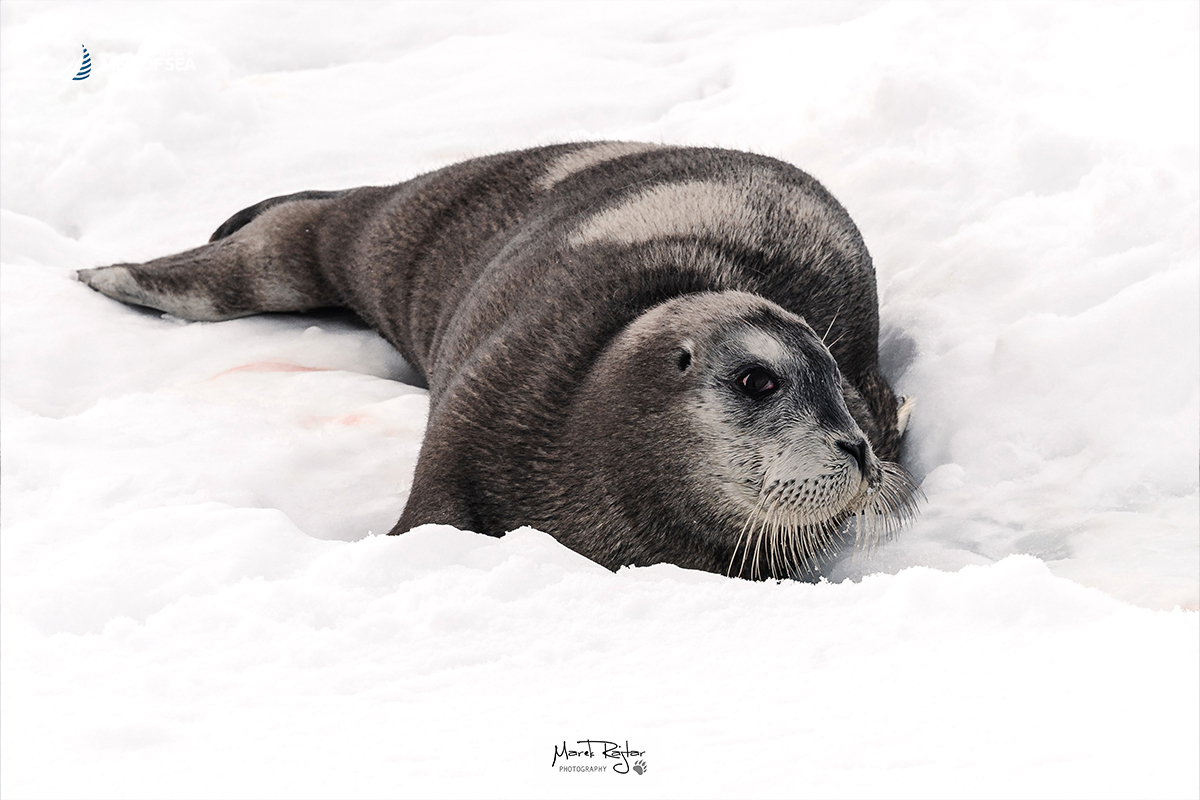
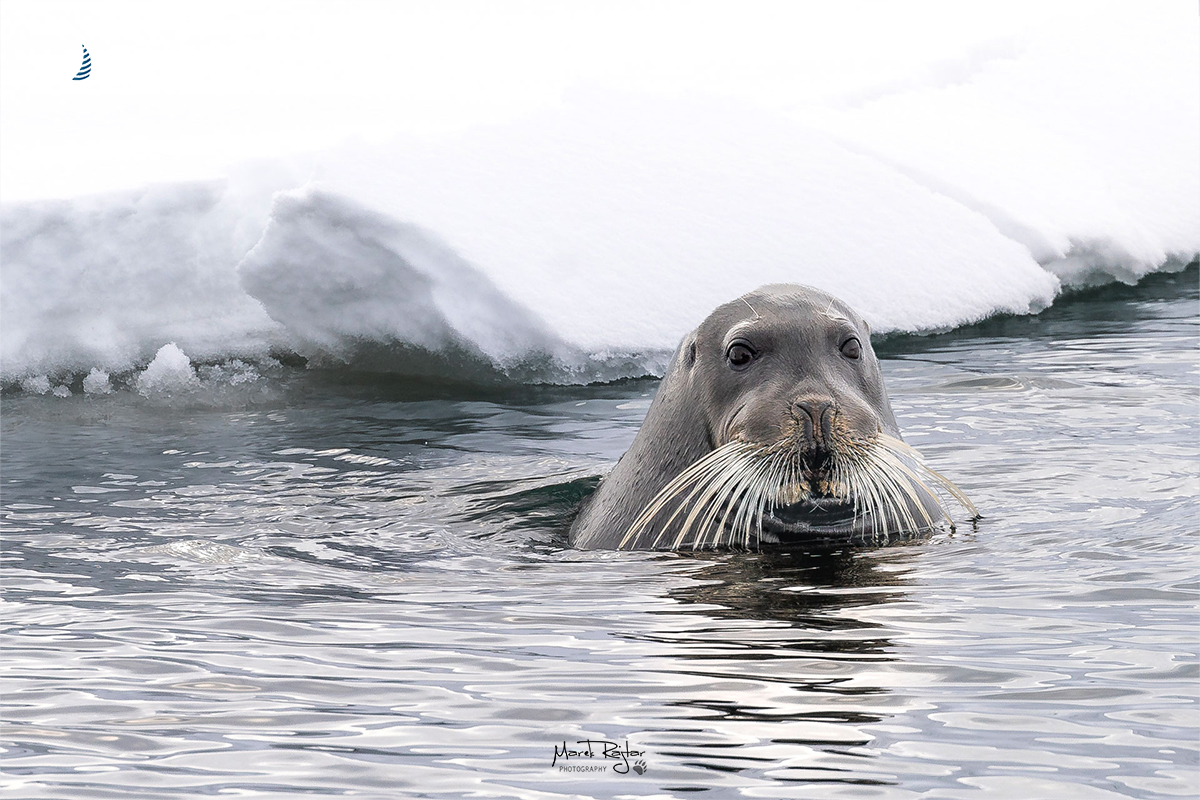
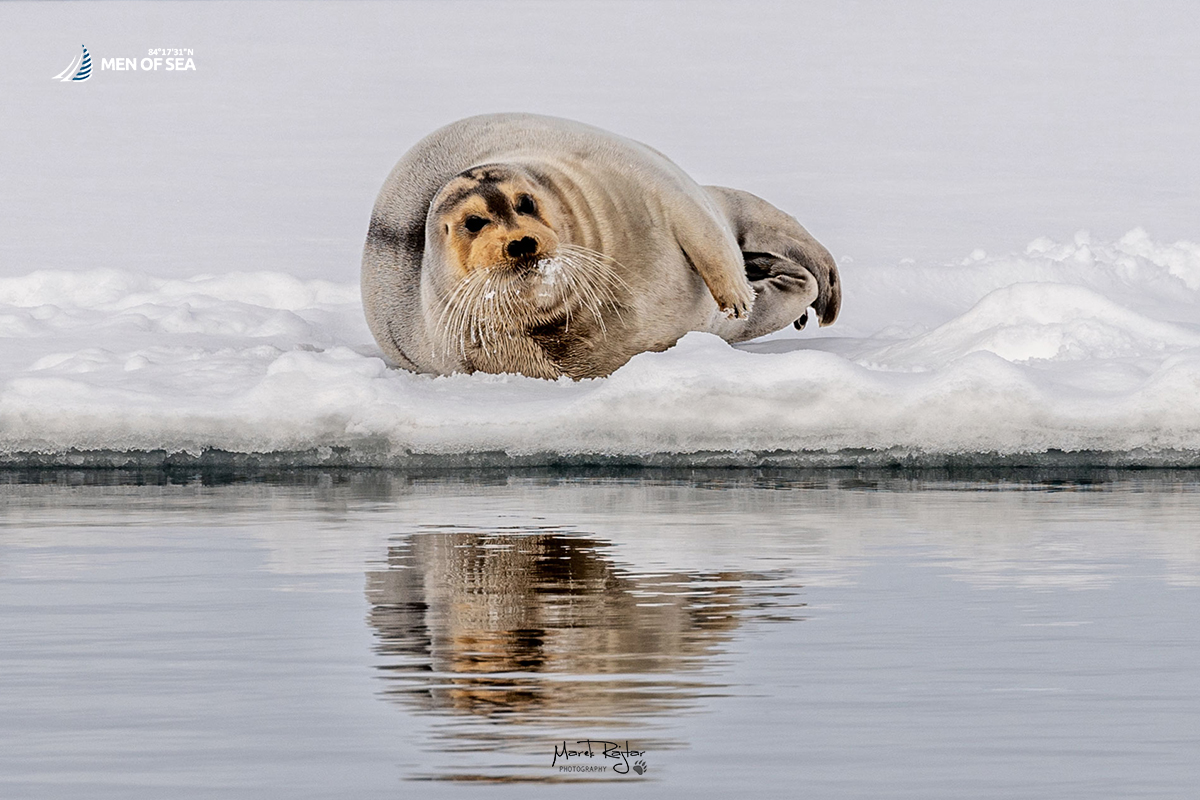
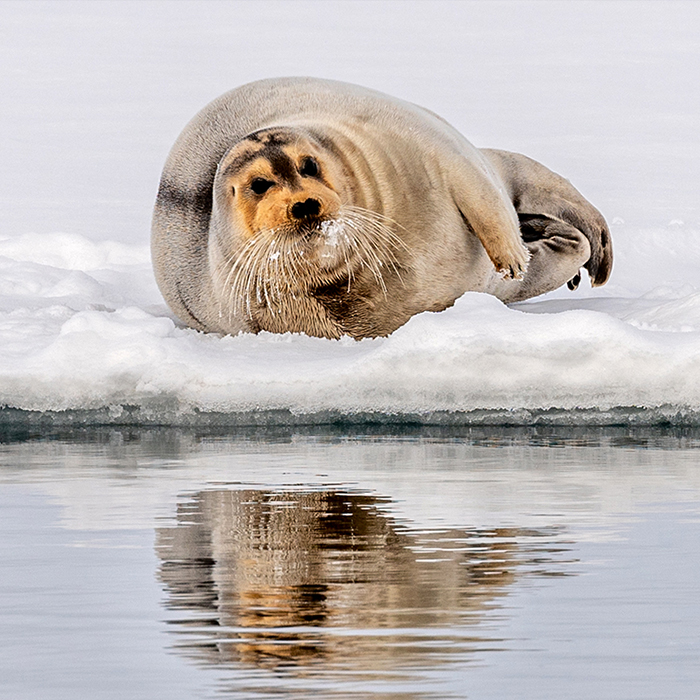
Along fjord coastlines, we encounter seals – mainly ringed seals and bearded seals. They often rest on ice floes or curiously observe the passing yacht.
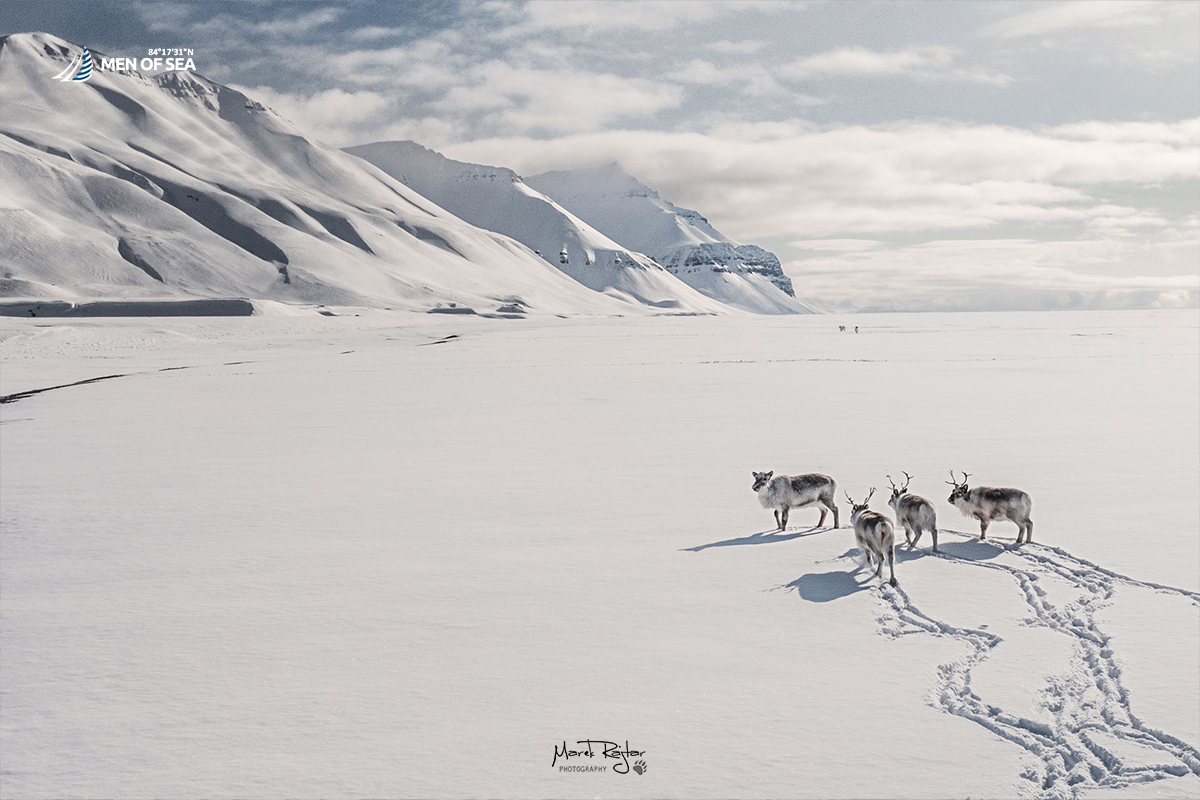
In tundra valleys and coastal areas, it is possible to observe Svalbard reindeer — a unique subspecies perfectly adapted to Arctic conditions. These animals often graze peacefully near our landing sites.
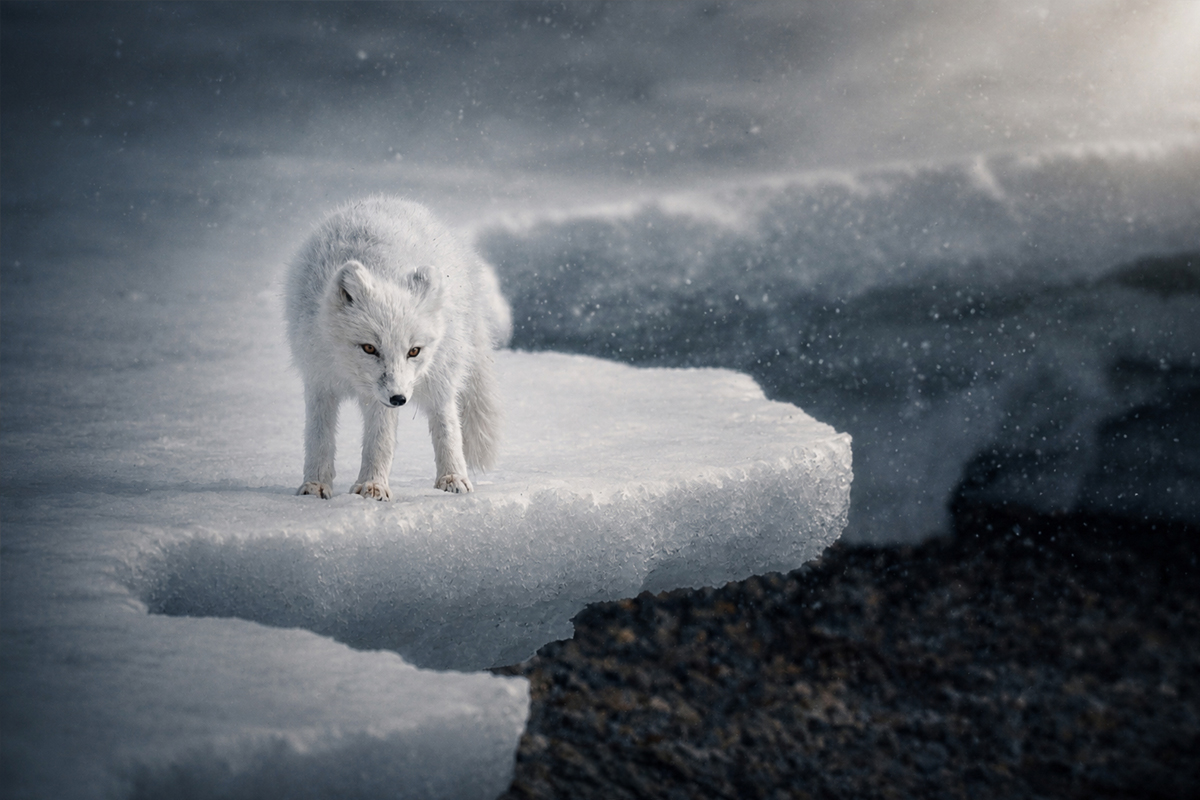
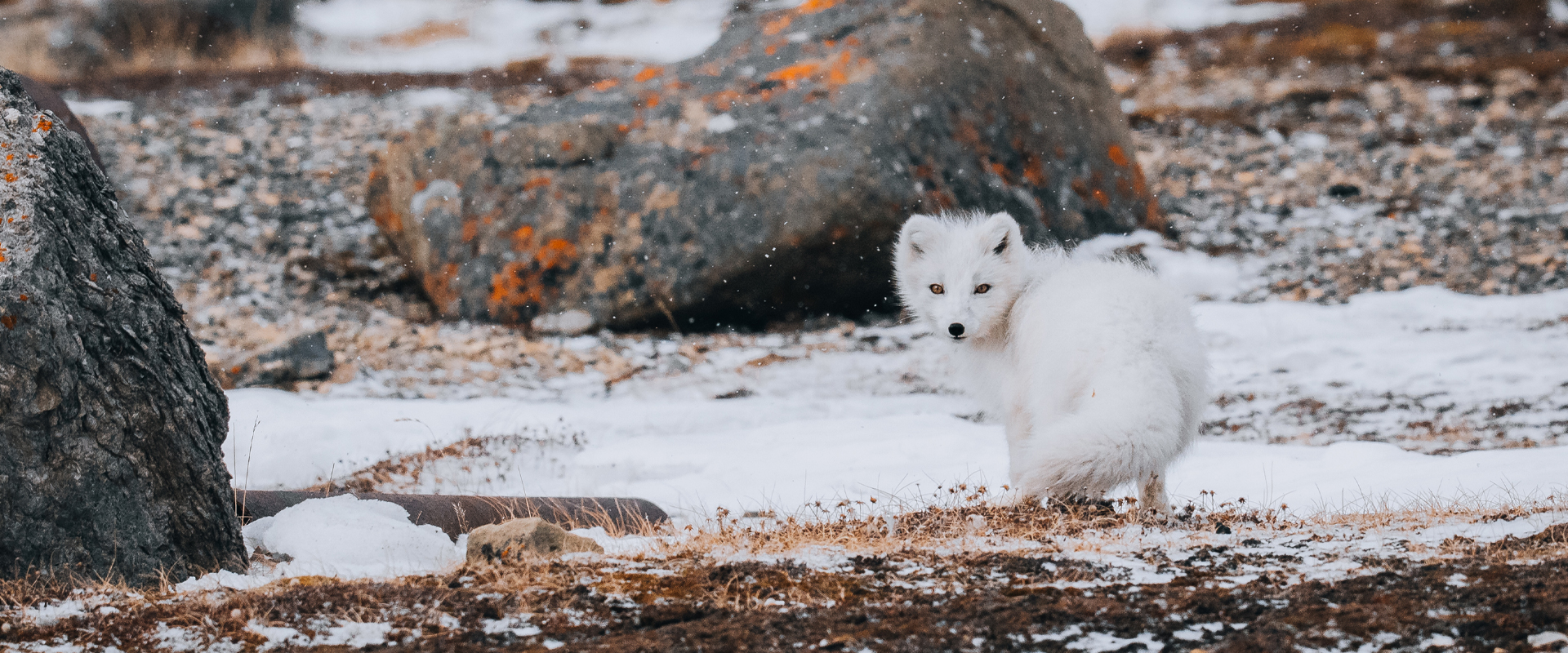
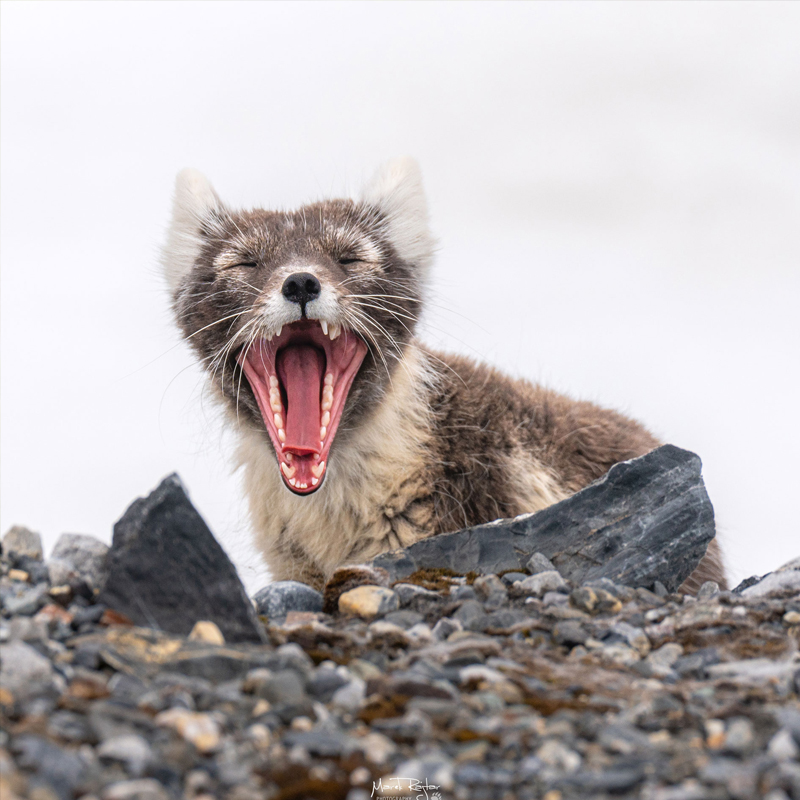
Another true symbol of Arctic wilderness is the Arctic fox. Intelligent, fast and remarkably curious, it may suddenly appear near bird colonies or silently move among rocks and tundra almost unnoticed.
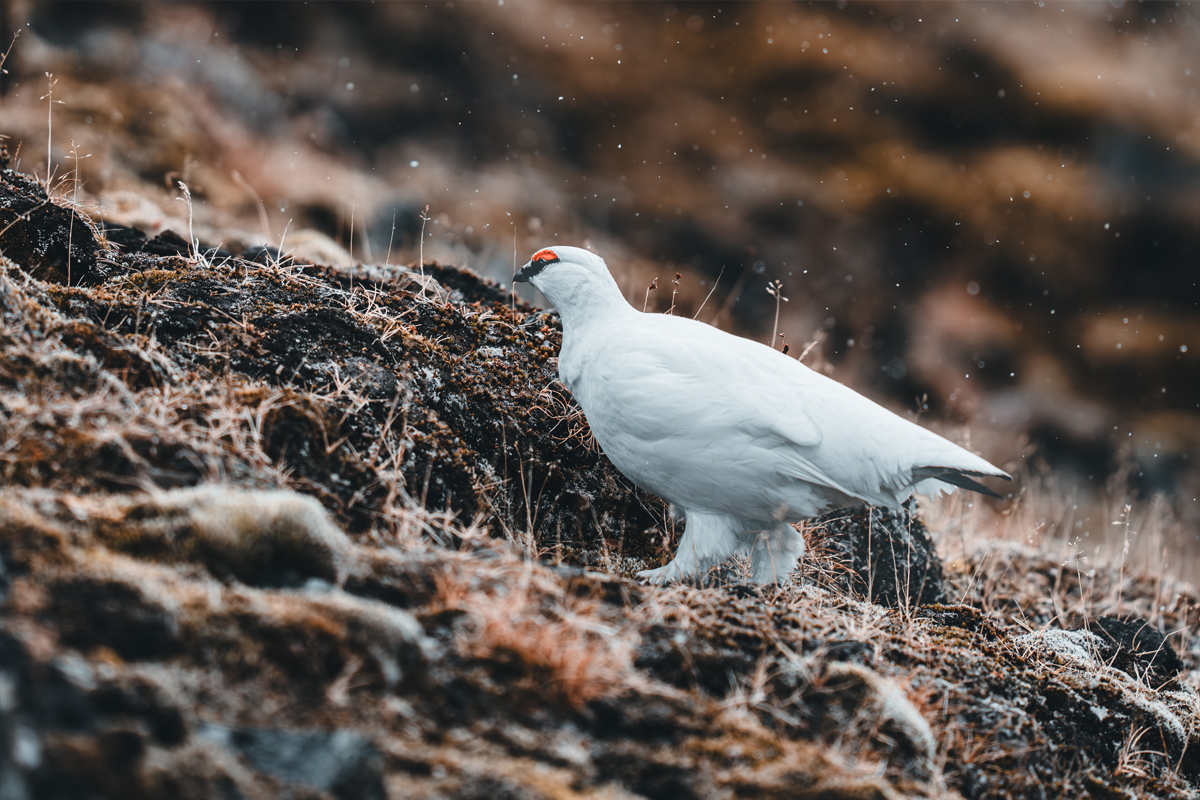
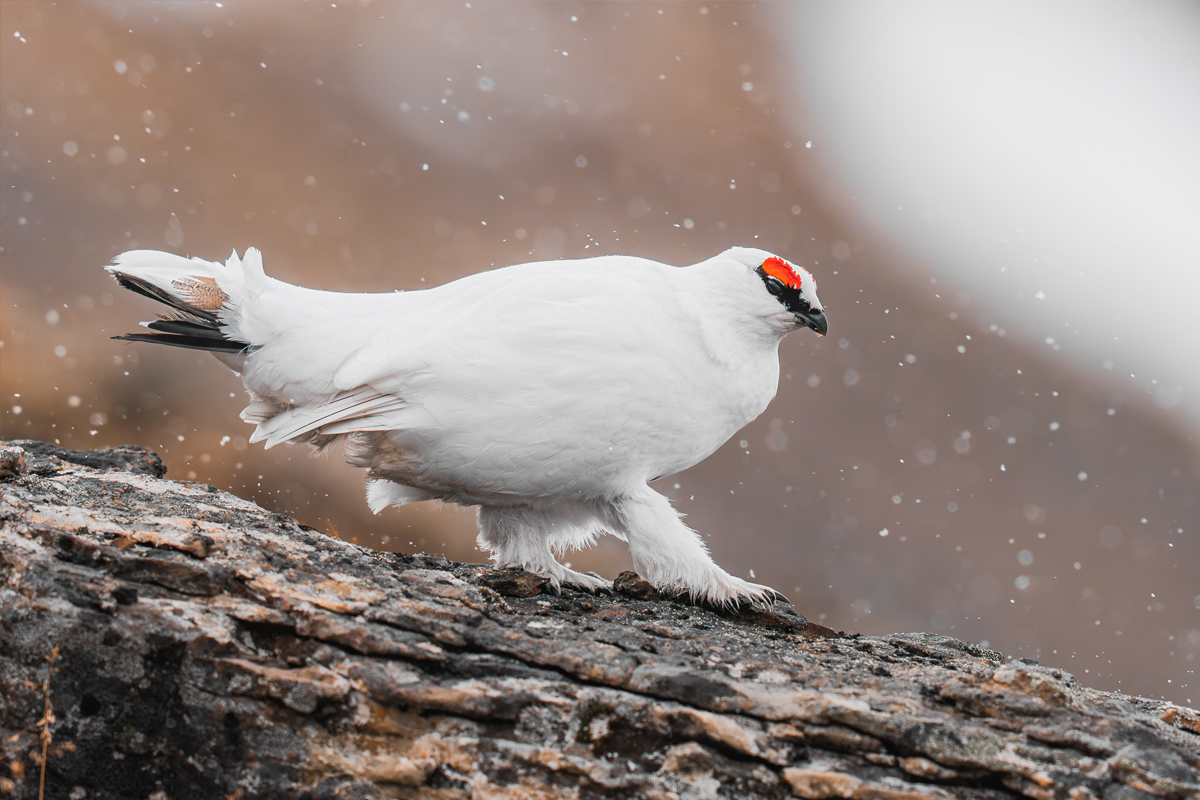
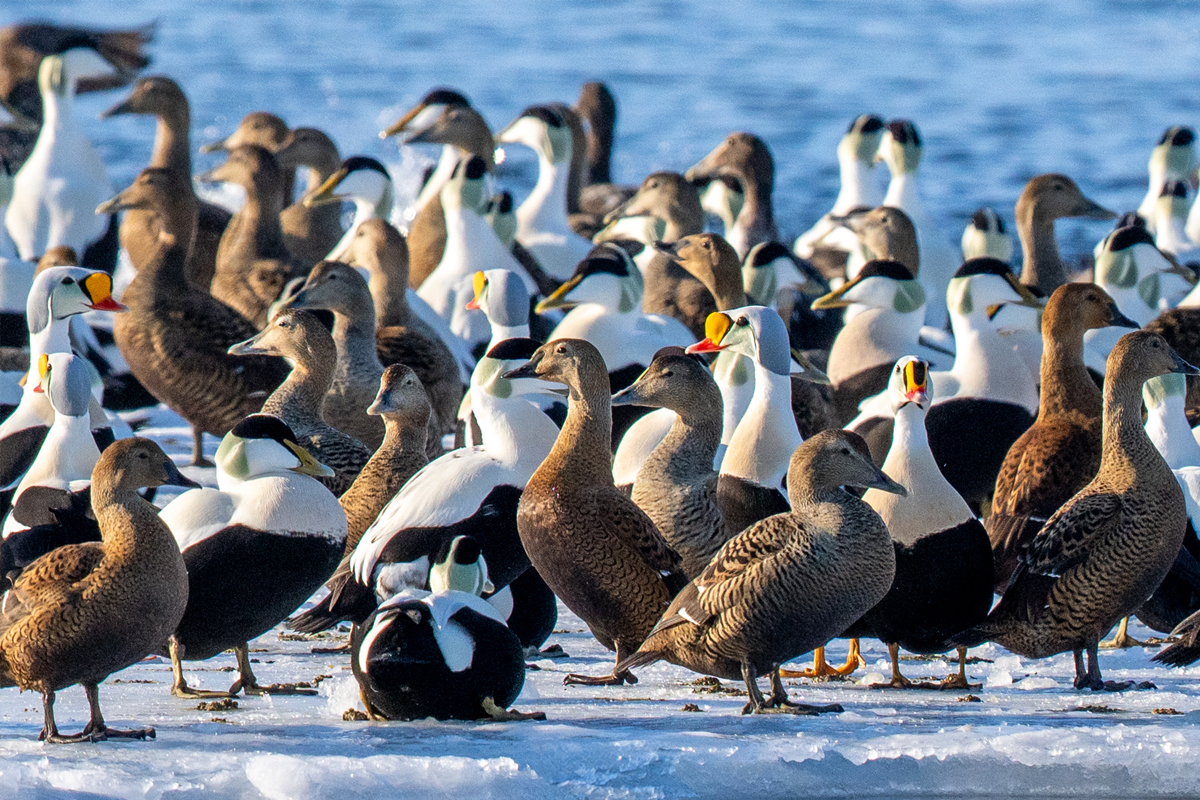
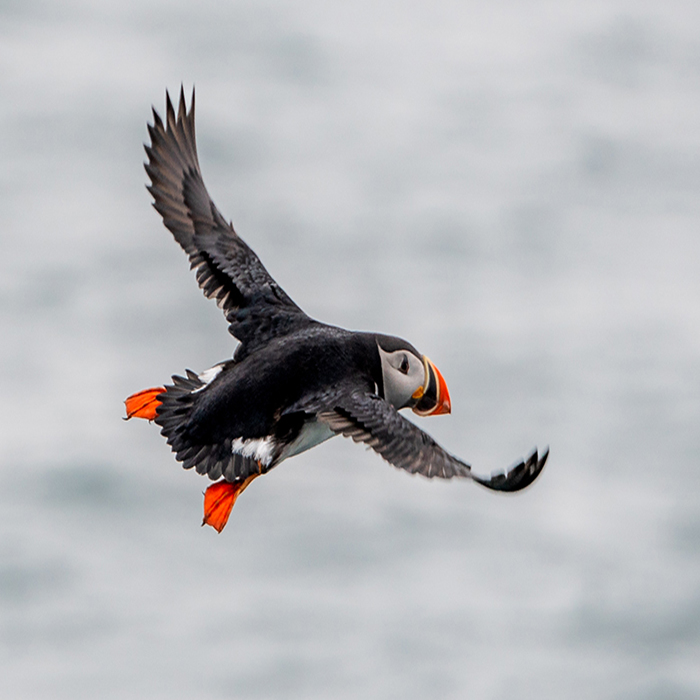
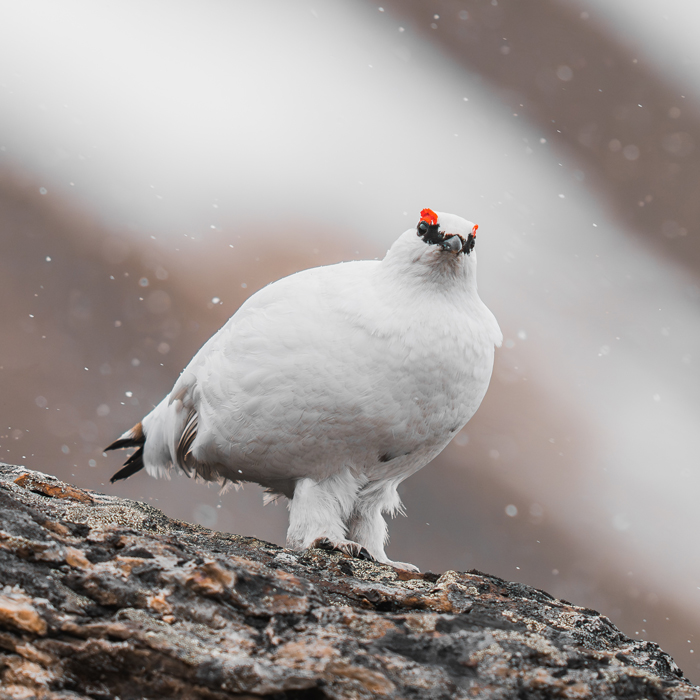
Svalbard is also a land of birds. During our voyages, we observe huge colonies of puffins, guillemots, kittiwakes, fulmars and Arctic terns. Arctic cliffs are filled with life, noise and the constant movement of wings.
Every expedition is different and we can never guarantee encounters with every species. Yet it is precisely this unpredictability that makes the Arctic so fascinating. Every day may bring a new encounter and another extraordinary story from the far North.