TROLLFJORDEN
One of the most distinctive fjords in Northern Norway
Trollfjord (Trollfjorden) in Lofoten – One of Northern Norway’s Most Spectacular Fjords
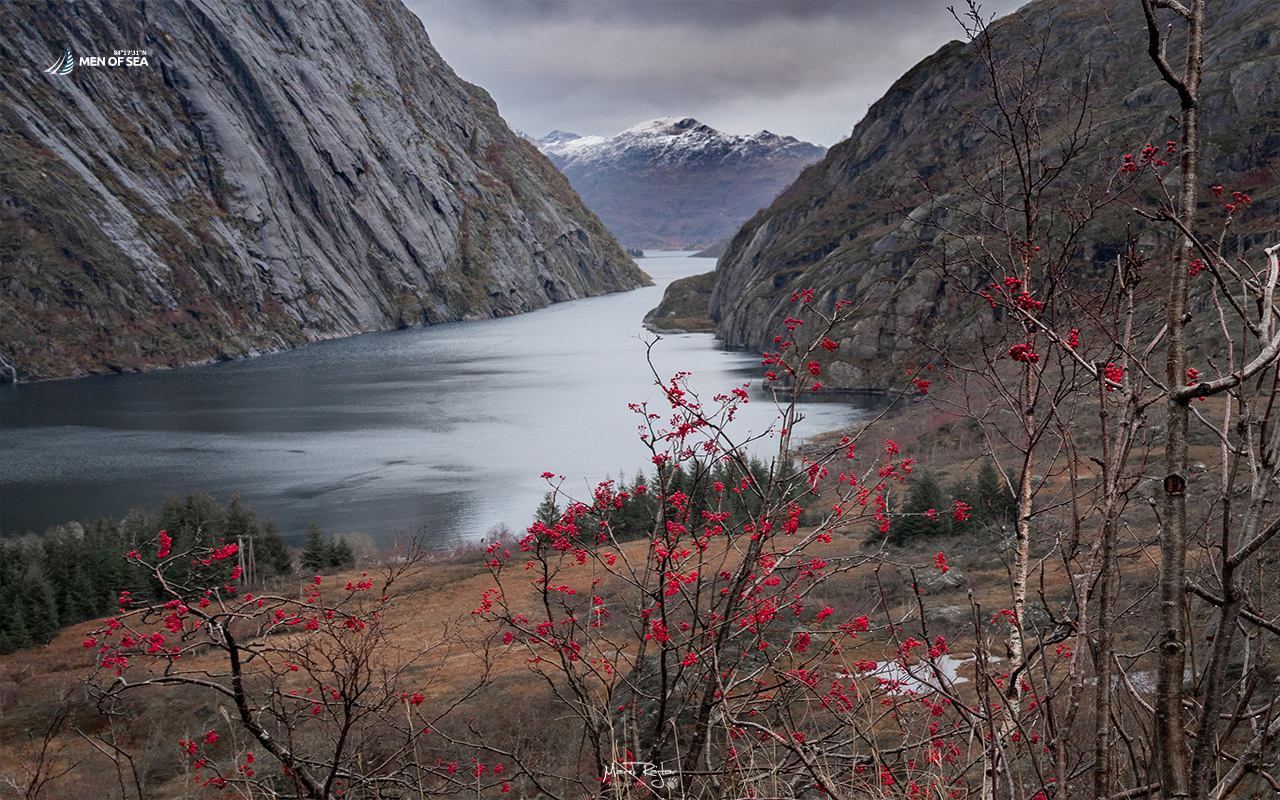
Trollfjord, known in Norwegian as Trollfjorden, is one of the most distinctive fjords in Northern Norway and one of the places we most enjoy returning to during our Lofoten expeditions.
We have visited Trollfjord many times, sailing into the fjord by yacht, mooring deep inside it, fishing, watching white-tailed eagles and hiking into the surrounding mountains. Despite numerous visits, Trollfjorden still makes a powerful impression on us.
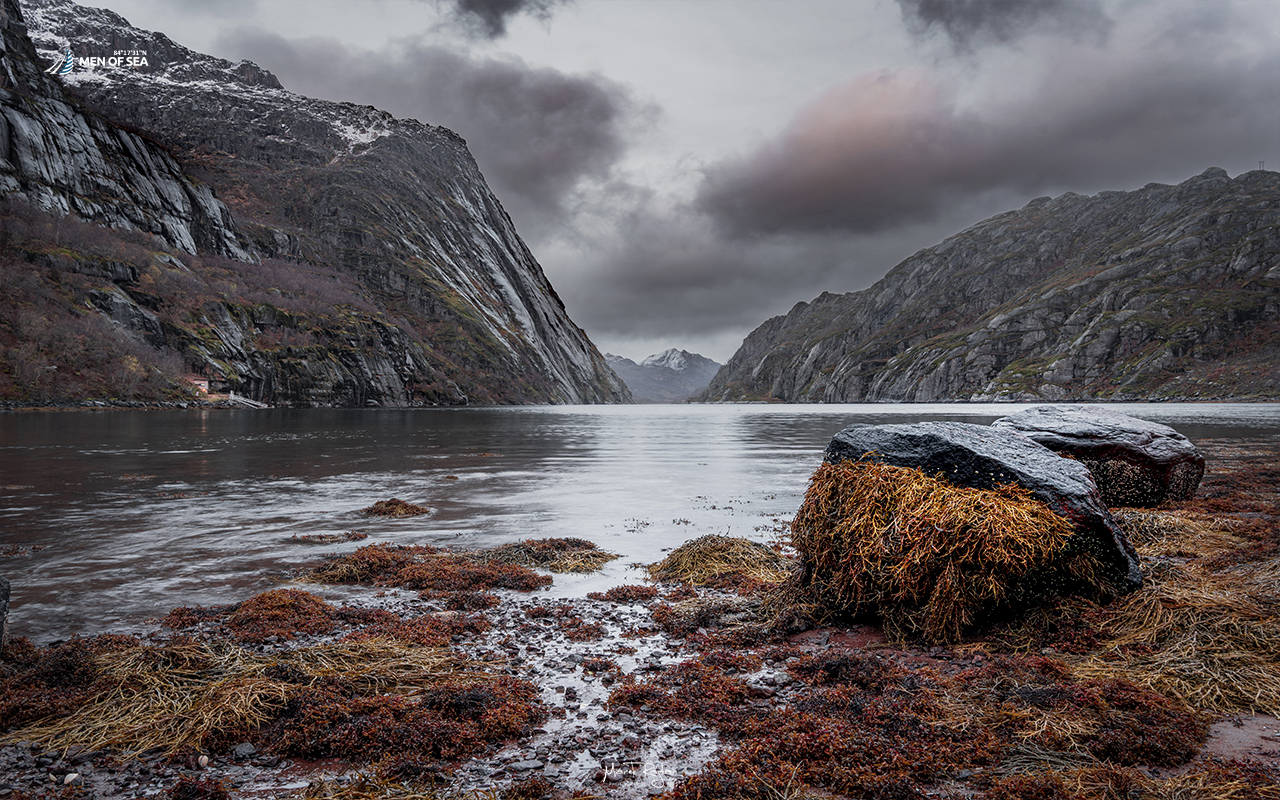
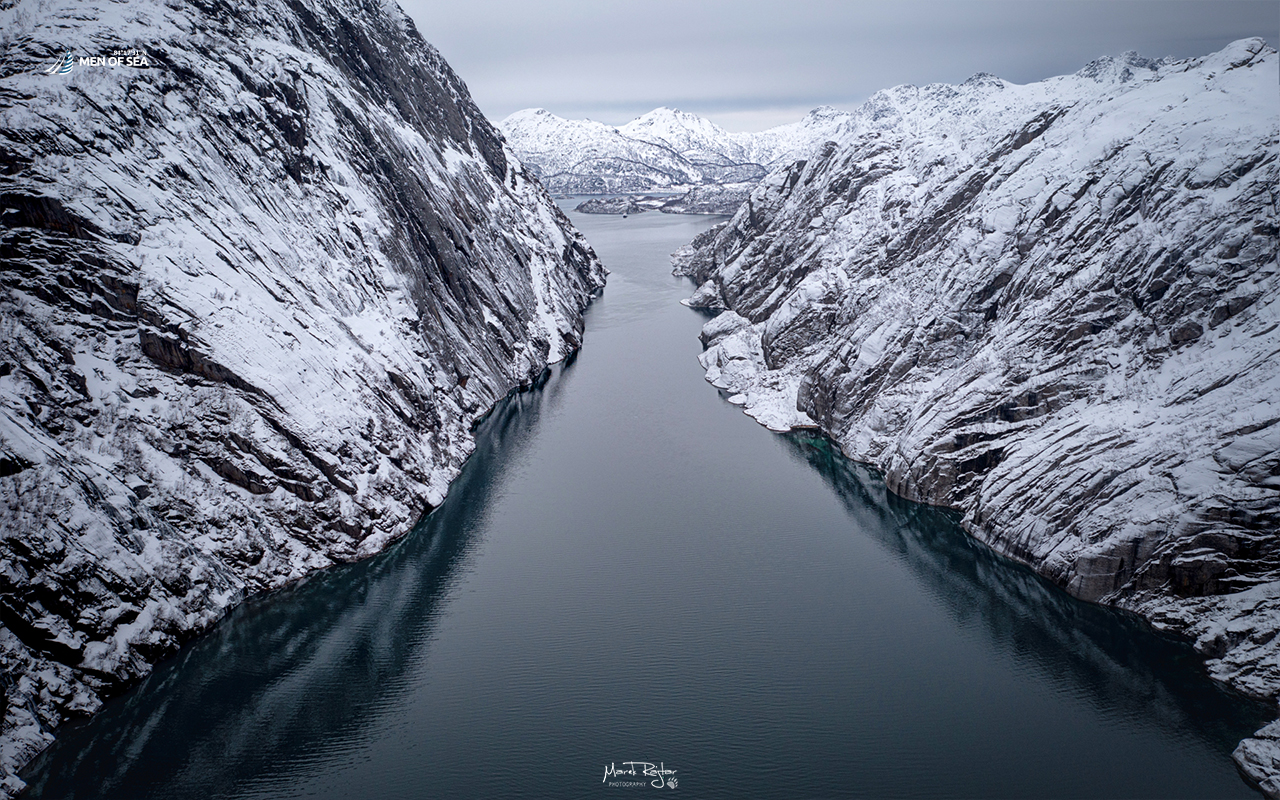
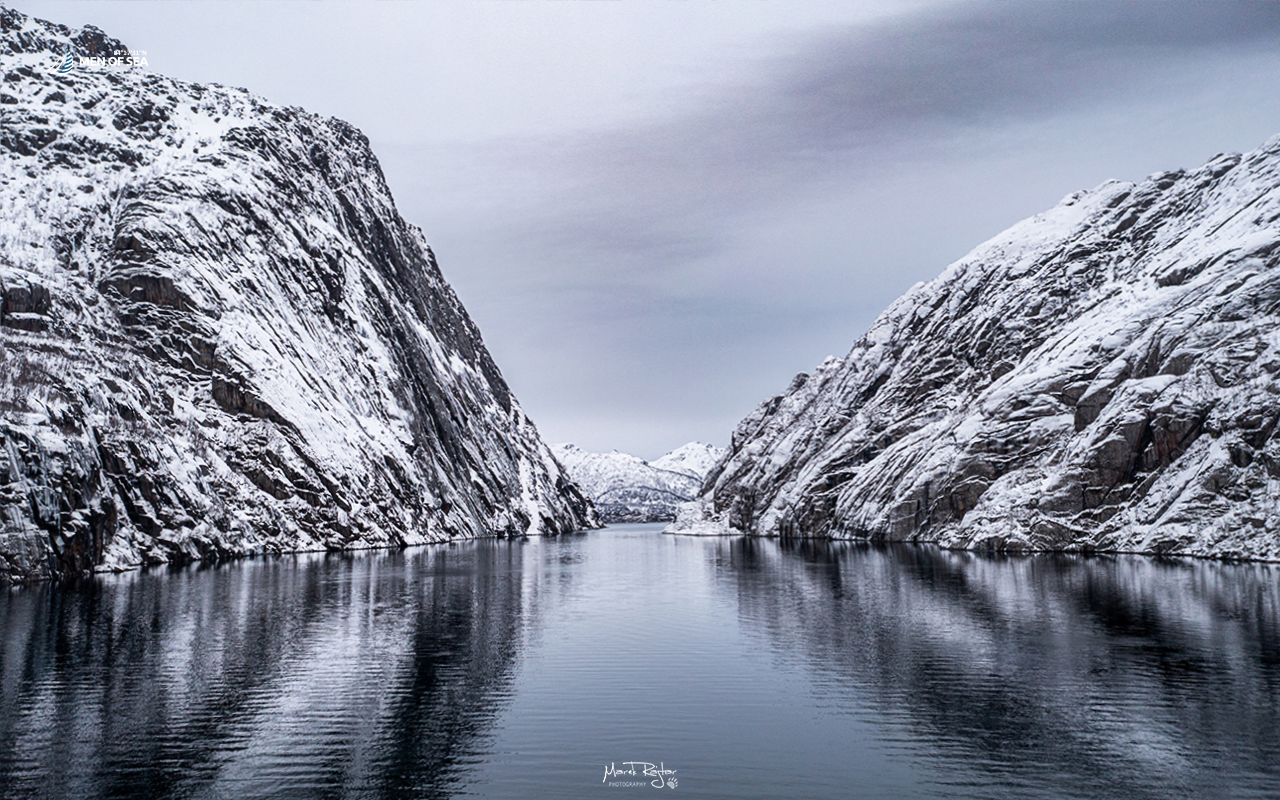
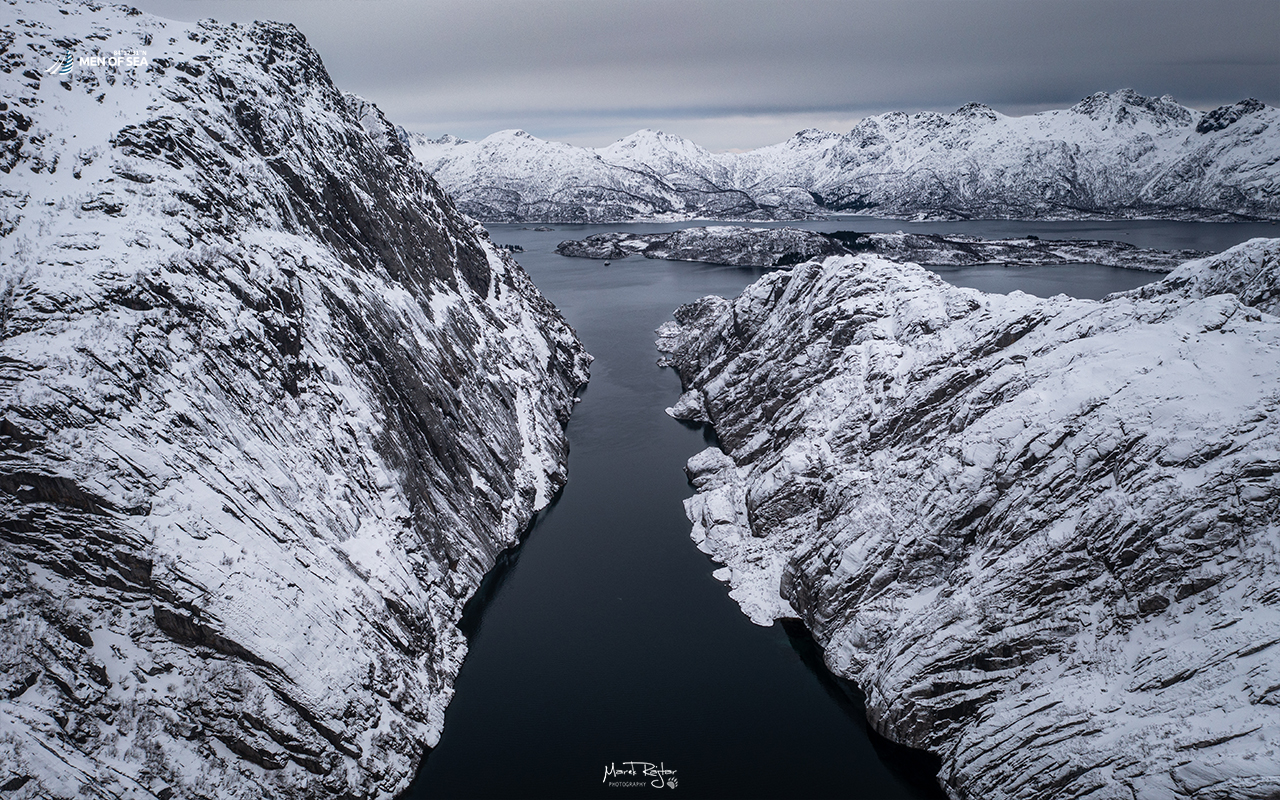
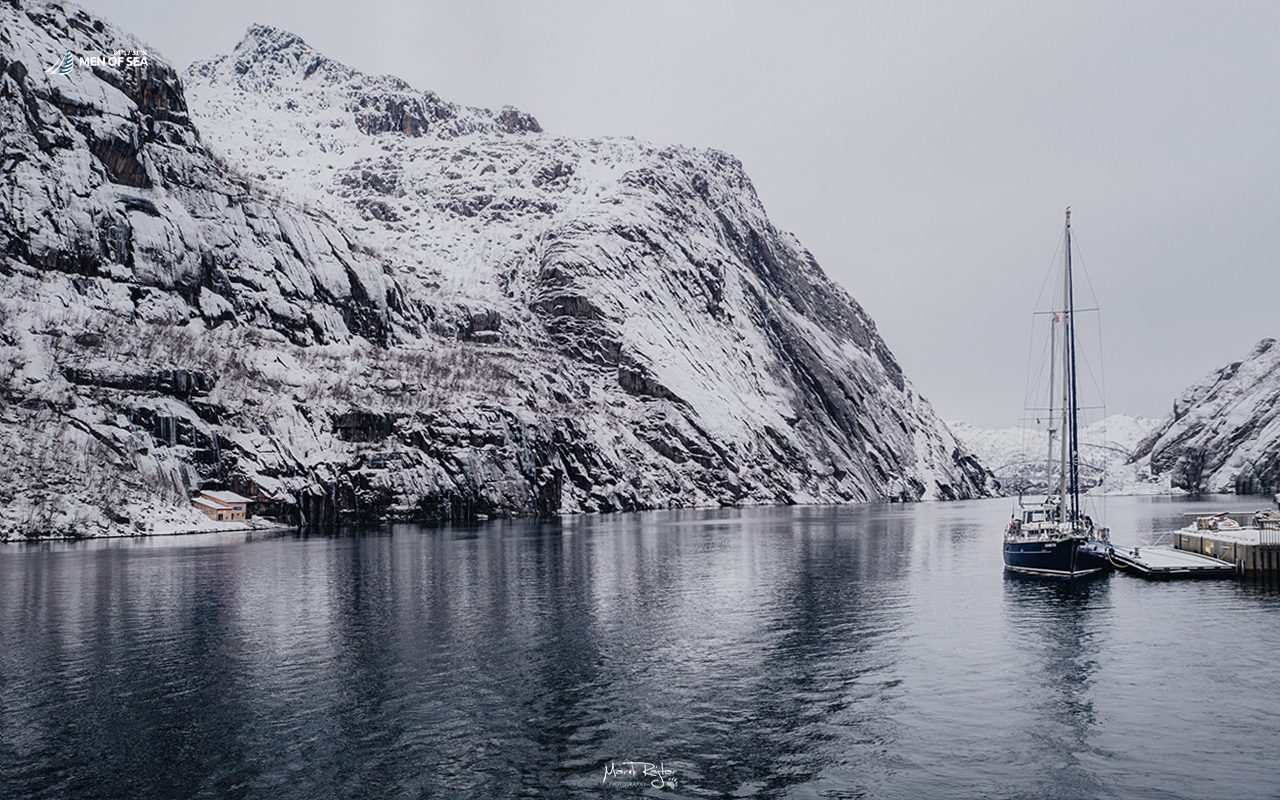
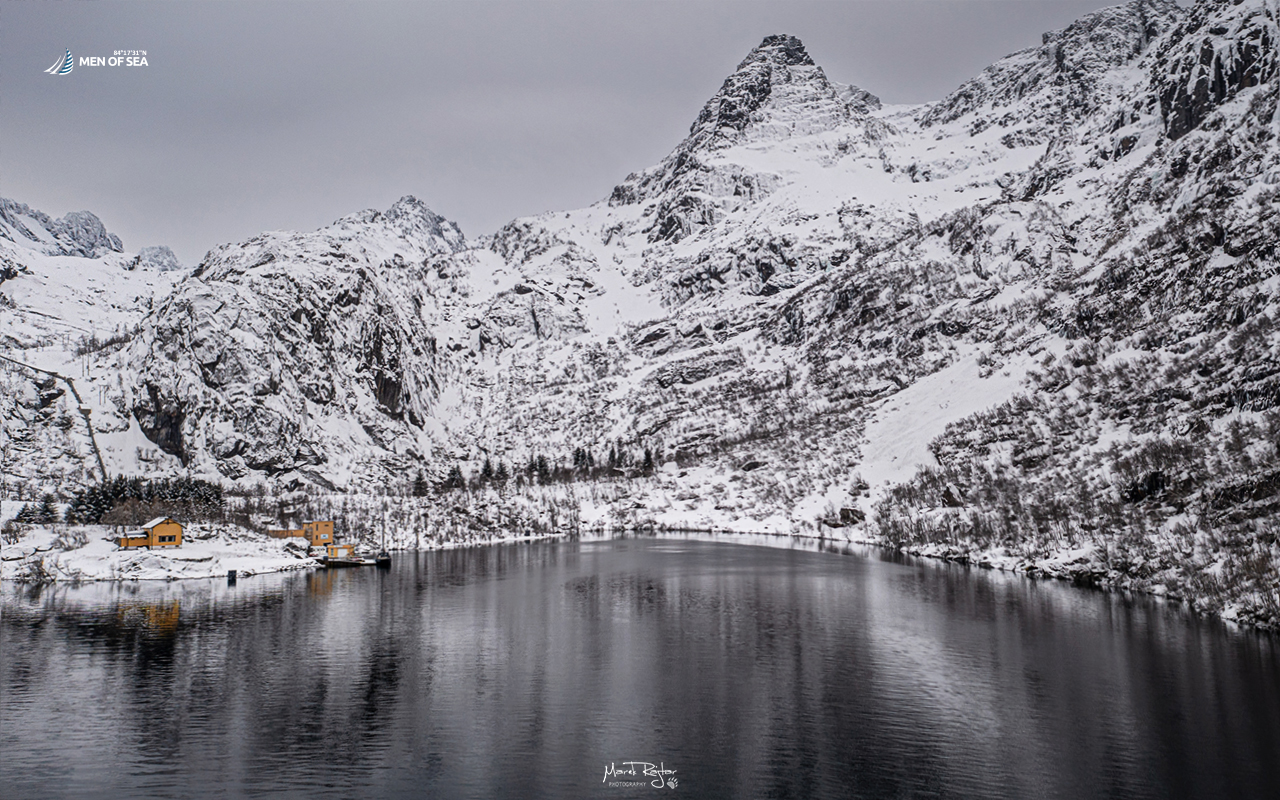
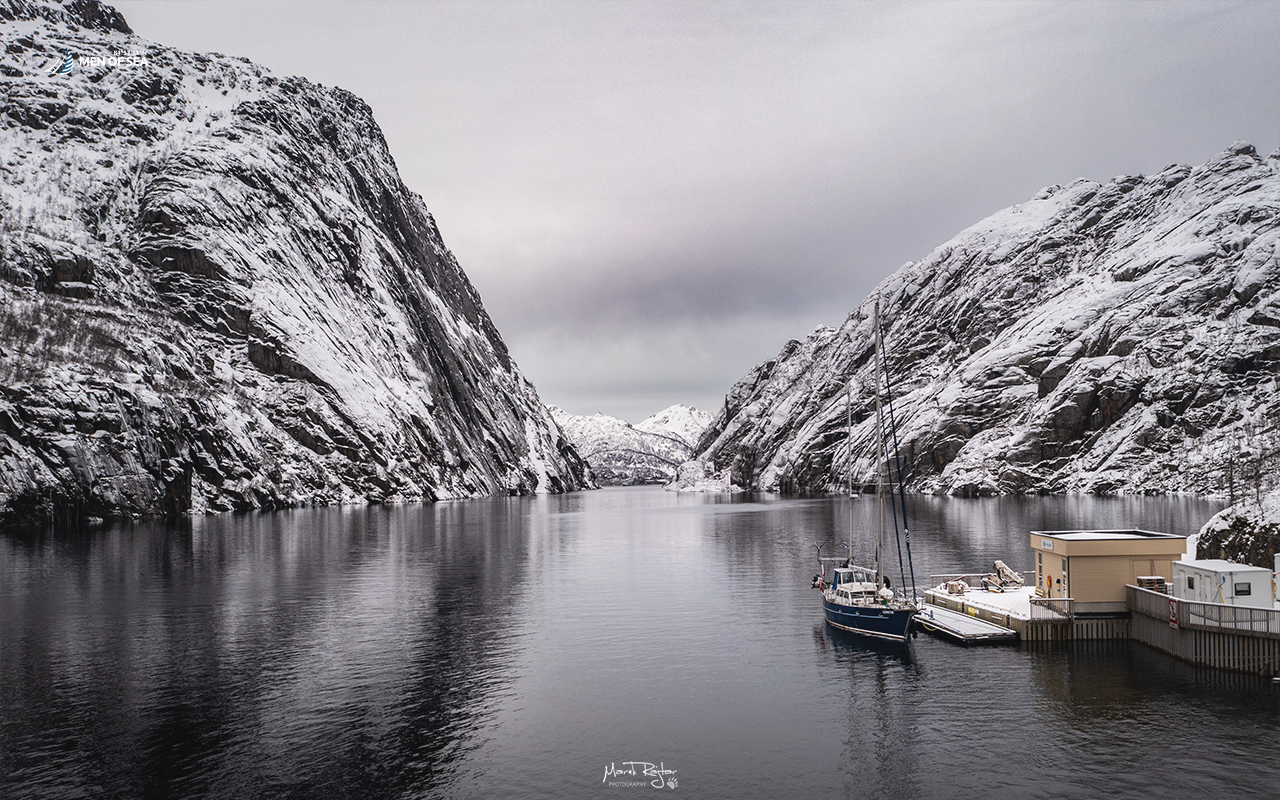
It is not one of Norway’s largest fjords. Quite the opposite. It is only around 2.5 km long, and its entrance is approximately 100 metres wide. What makes it exceptional is the combination of this narrow scale with mountains rising more than 1,000 metres directly above the water. When you enter Trollfjord by yacht, the proportions become immediately clear. A boat that seemed substantial only minutes earlier suddenly looks tiny between the steep mountain walls.
For us, Trollfjord is one of the most beautiful places in Lofoten.
Trollfjord at a glance
Trollfjord is a narrow side fjord branching off Raftsundet and cutting deep into the mountainous island of Austvågøya. It is best reached from the sea and is especially known for dramatic mountain scenery, sailing, hiking, white-tailed eagles, fishing and photography.
| Information | Details |
| Name | Trollfjord / Trollfjorden |
| Location | Austvågøya, Raftsundet |
| Length | approx. 2.5 km |
| Width at the entrance | approx. 100 m |
| Surrounding mountains | over 1,000 m |
| Road access | none |
| Main access | boat, yacht, RIB or cruise vessel |
| Nearest major port | Svolvær |
| Wildlife | mainly white-tailed eagles and seabirds |
| Main activities | sailing, hiking, photography, eagle watching, fishing |
Trollfjorden branches off Raftsundet and cuts into mountainous Austvågøya.
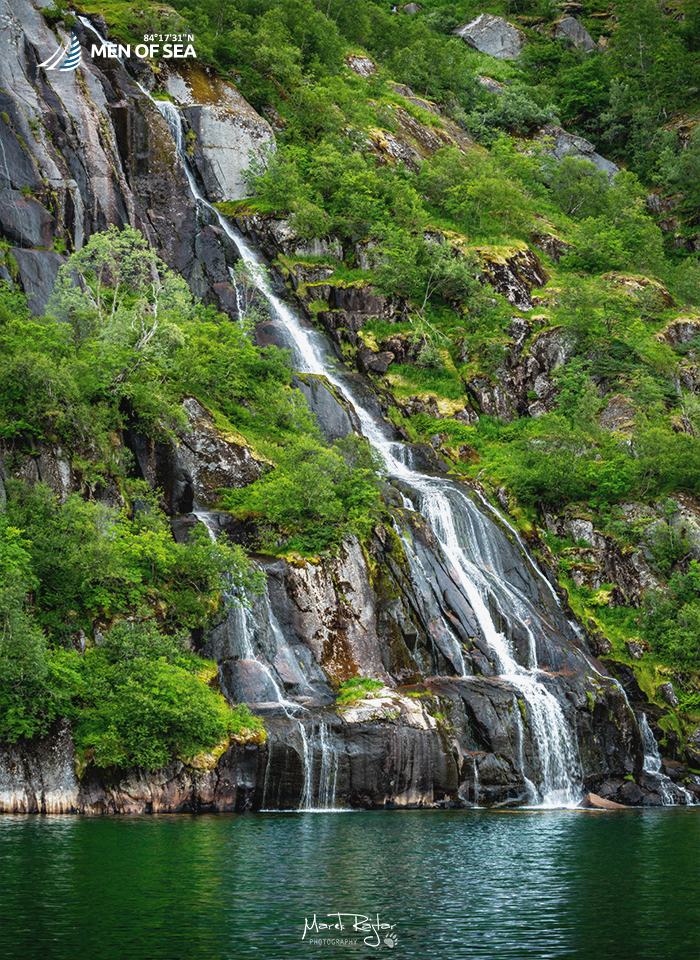
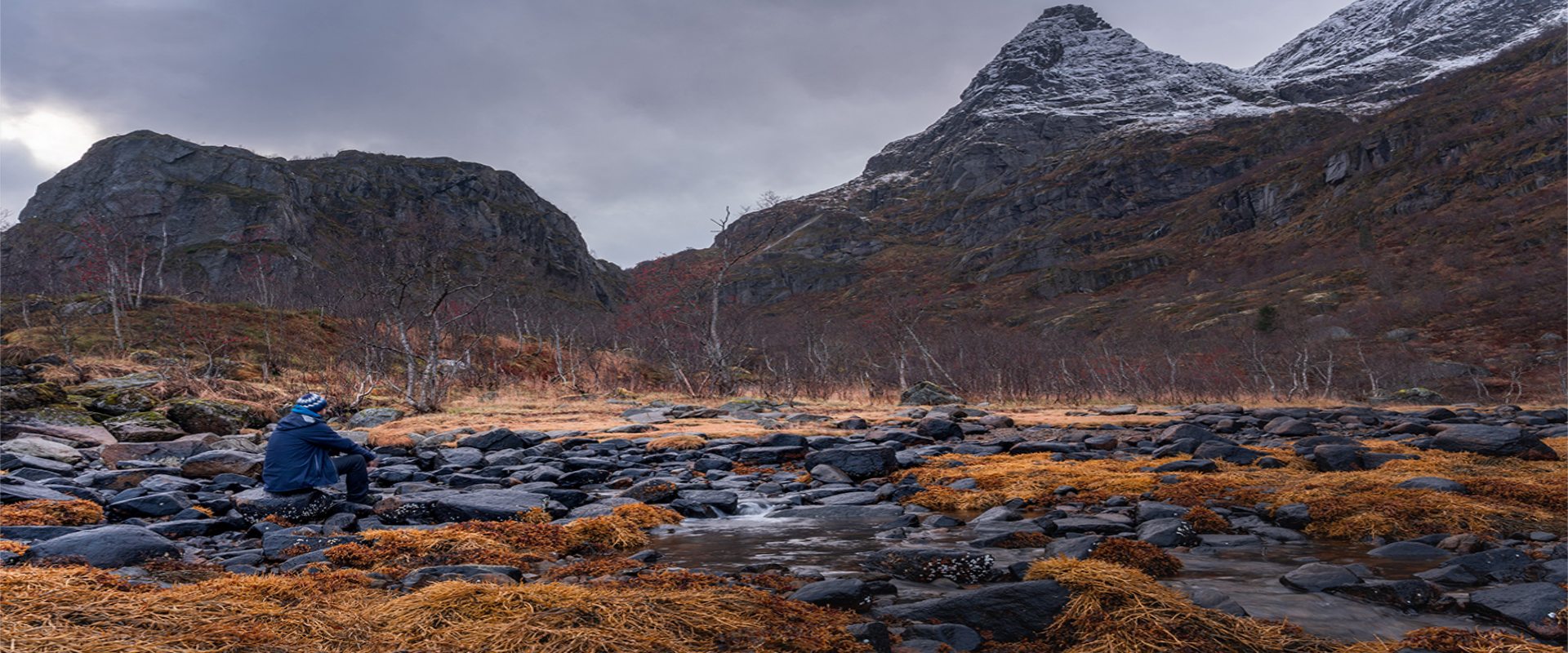
The fjord is surrounded by steep mountain ranges, including peaks rising more than 1,000 metres above sea level. Small glaciers and numerous waterfalls can also be found in the surrounding area.
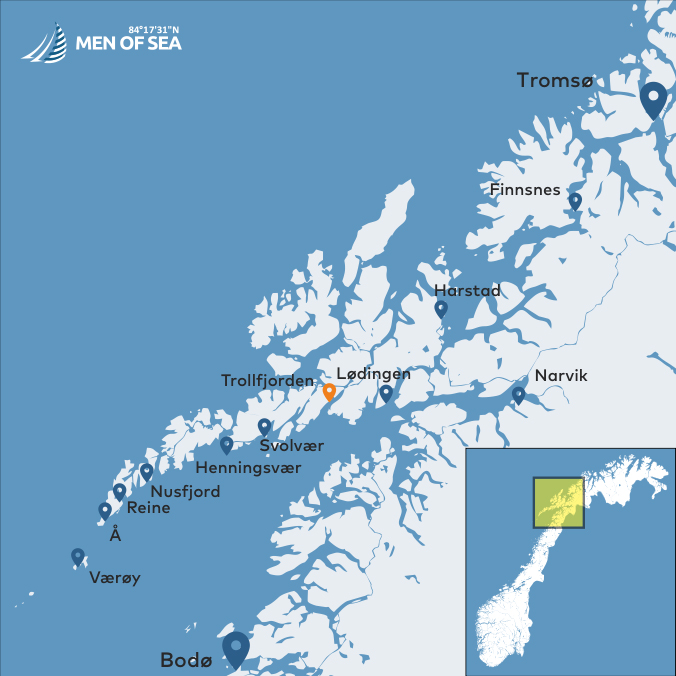
Where is Trollfjord – Lofoten or Vesterålen?
This question appears surprisingly often. Geographically, Trollfjorden cuts into Austvågøya, an island normally associated with the Lofoten archipelago. Administratively, however, Trollfjord lies within Hadsel municipality, which belongs to the Vesterålen region. That is why some guides describe Trollfjord as part of Lofoten while others associate it with Vesterålen.
Austvågøya itself is divided between Vågan municipality on the Lofoten side and Hadsel municipality on the Vesterålen side. Trollfjorden lies in the Hadsel part. From a tourism perspective, however, Trollfjord is strongly associated with Lofoten, and particularly with Svolvær, from where most sightseeing trips to the fjord depart.
How to get to Trollfjord
The most important fact is simple: there is no road to Trollfjord. This is one of the reasons the fjord has retained such a distinctive atmosphere. There is no large car park, busy road or village built around a viewpoint.
The standard way to reach Trollfjord is from the sea — by yacht, boat, sightseeing vessel or RIB. Regular Trollfjord cruises, RIB safaris and wildlife trips operate from Svolvær. Hurtigruten vessels also enter the fjord.
There are demanding hiking approaches through the mountains, but these should not be considered a simple alternative to travelling by boat. The terrain is mountainous, steep in places, rocky and often wet.
In practical terms, Trollfjord is a place that is best explored from the sea.
Entering Trollfjord by yacht – why is it so impressive?
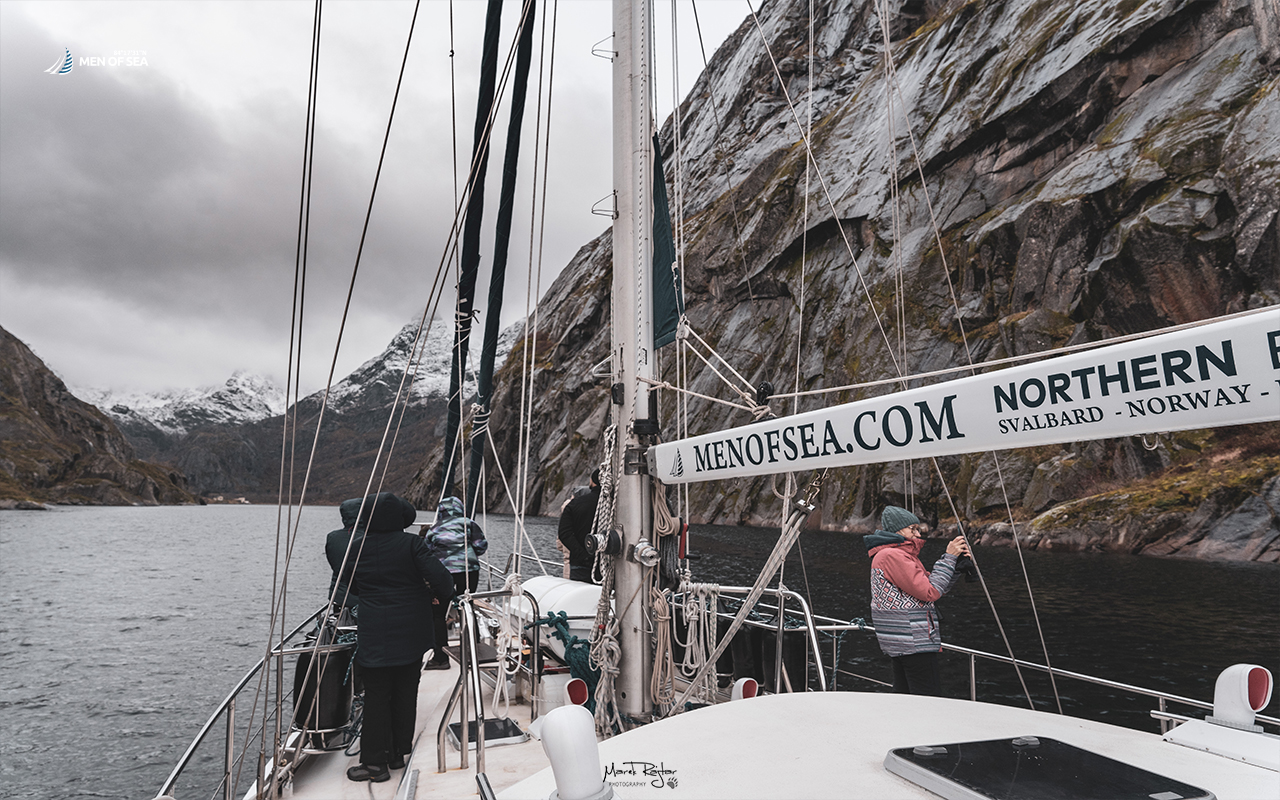
The experience begins while you are still sailing through Raftsundet. From a distance, the entrance to Trollfjord can look almost like a narrow crack in the mountains. Only as the yacht approaches does the passage become clearly visible. Rock walls begin to rise on both sides and the perspective becomes increasingly enclosed.
At the entrance, the fjord is only around 100 metres wide. Farther inside, it widens enough for much larger vessels to turn around. Hurtigruten regularly enters Trollfjorden, and one of its ships is even named MS Trollfjord.
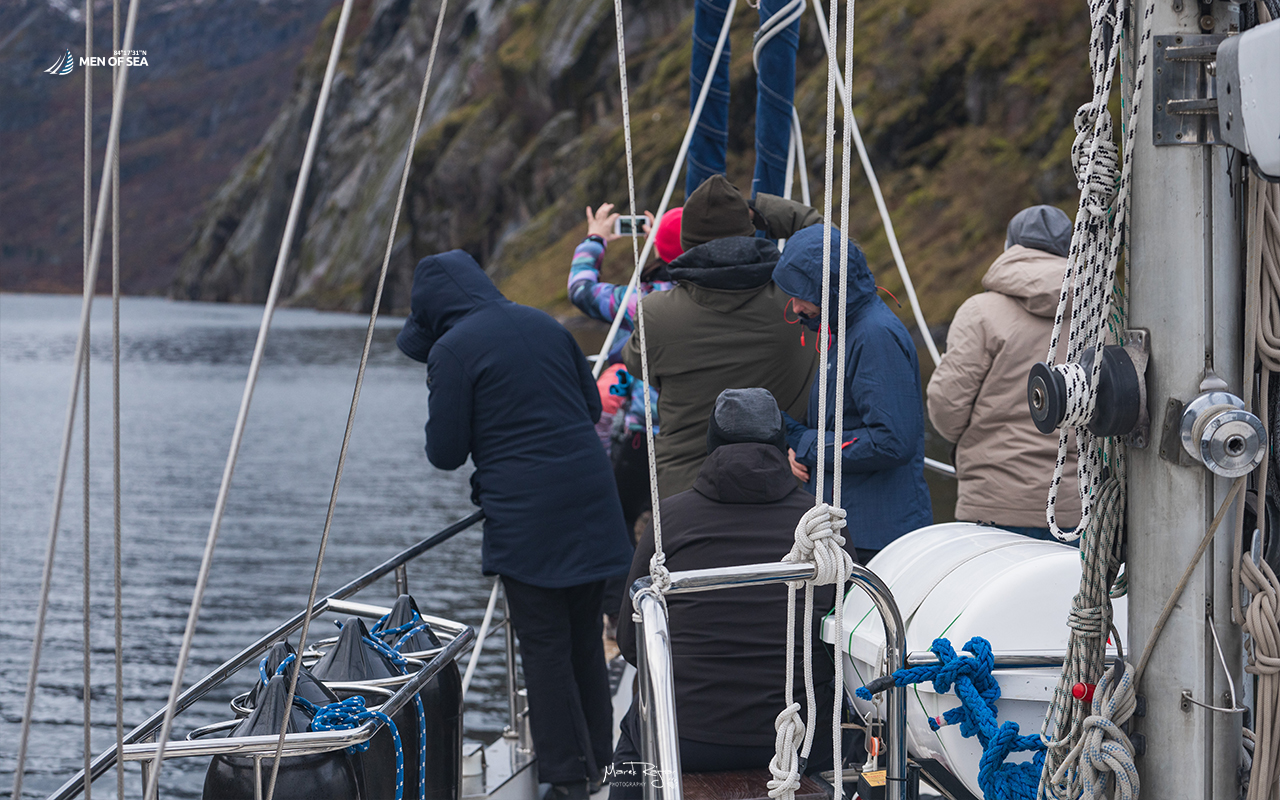
From the deck of a relatively small yacht, however, the effect is much stronger. You are not looking at Trollfjord from a roadside viewpoint. You sail directly between its mountain walls.
That is one of the reasons we include Trollfjord so often in our Lofoten yacht expeditions.
Trollfjorden – a place that can feel like the edge of the world
Deep inside the fjord, most of the elements associated with the more developed parts of Lofoten disappear. There is no town, no shops and no busy E10 road. Instead, there are mountains, water, a small amount of technical infrastructure, a jetty and very little artificial light. During some of our visits, mobile-phone reception has been weak or completely unavailable.
Combined with the high mountains enclosing the fjord, this creates a strong sense of isolation. Trollfjord is obviously not literally at the end of the world. But it can genuinely feel that way, particularly in the evening, outside the main season, once the larger sightseeing vessels have left and only a yacht remains inside the fjord.
Hiking above Trollfjord
One of the most interesting aspects of Trollfjord receives surprisingly little attention: it is possible to hike high above the fjord.
A mountain trail leads from the inner part of Trollfjorden towards Trollfjordhytta, a mountain cabin located at around 400 metres above sea level. The route is approximately 5.3 km, involves around 405 metres of ascent and usually requires approximately 3–4 hours for the return journey to Trollfjordhytta. Parts of the trail are steep, rocky and wet.
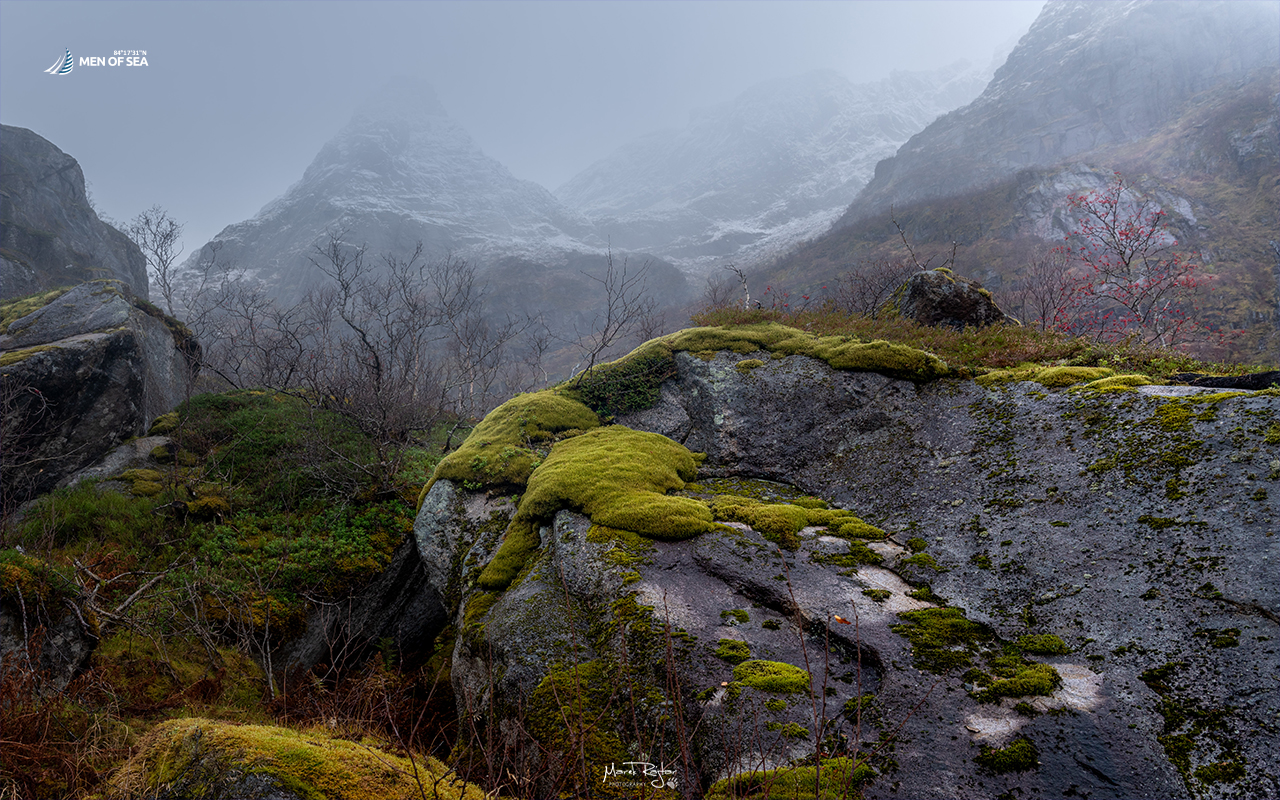
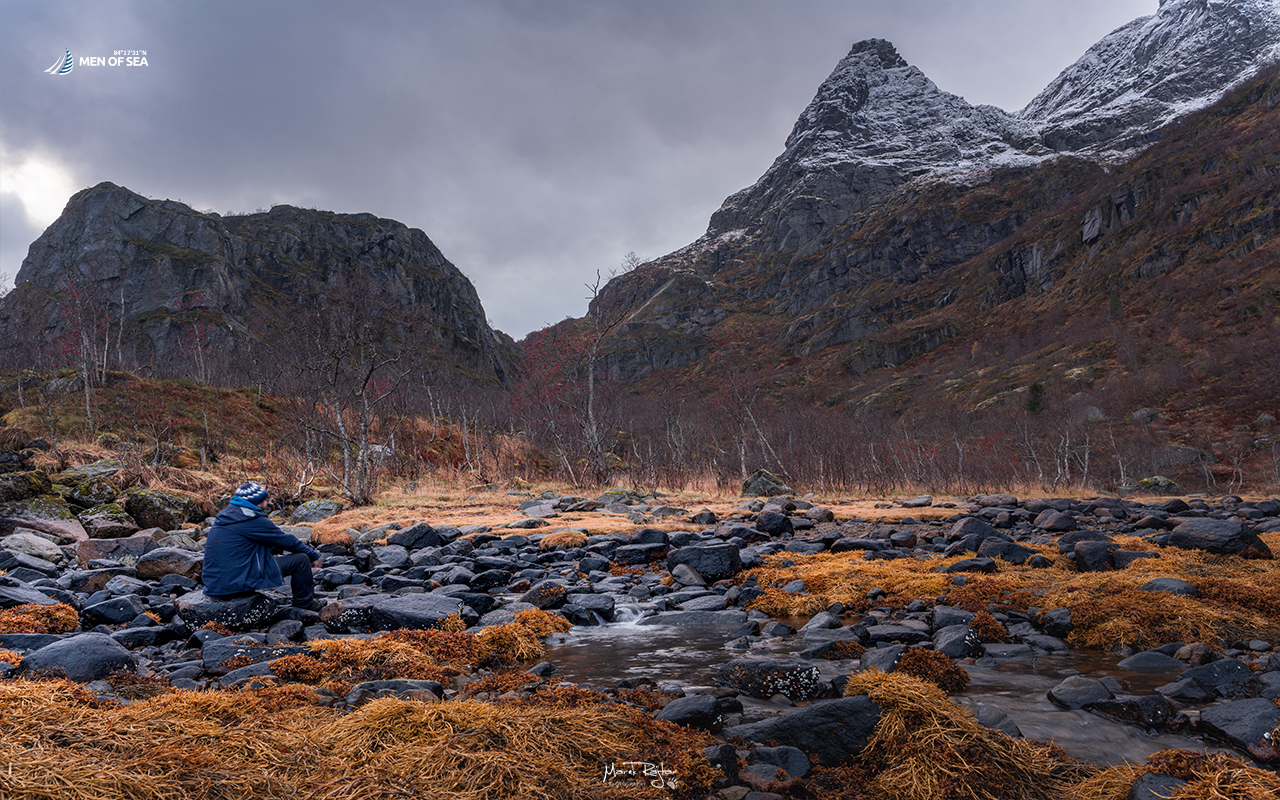
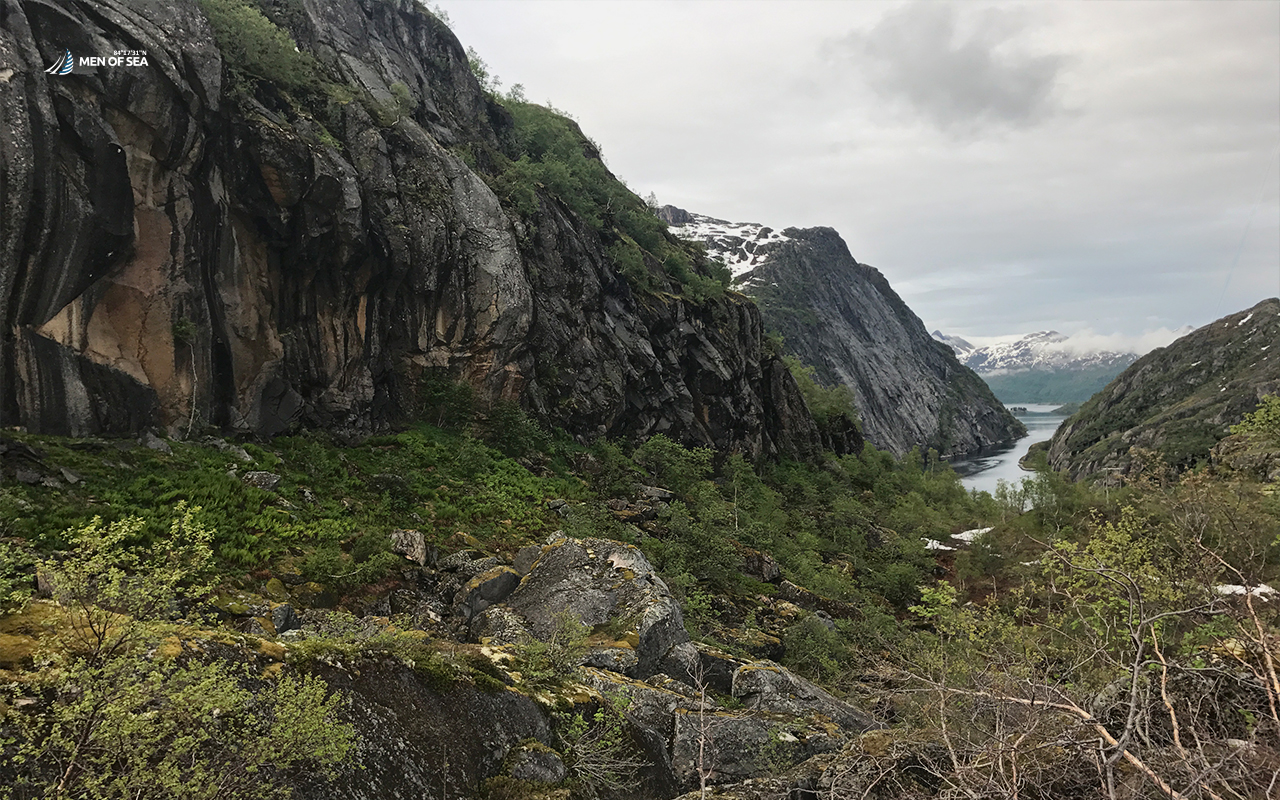
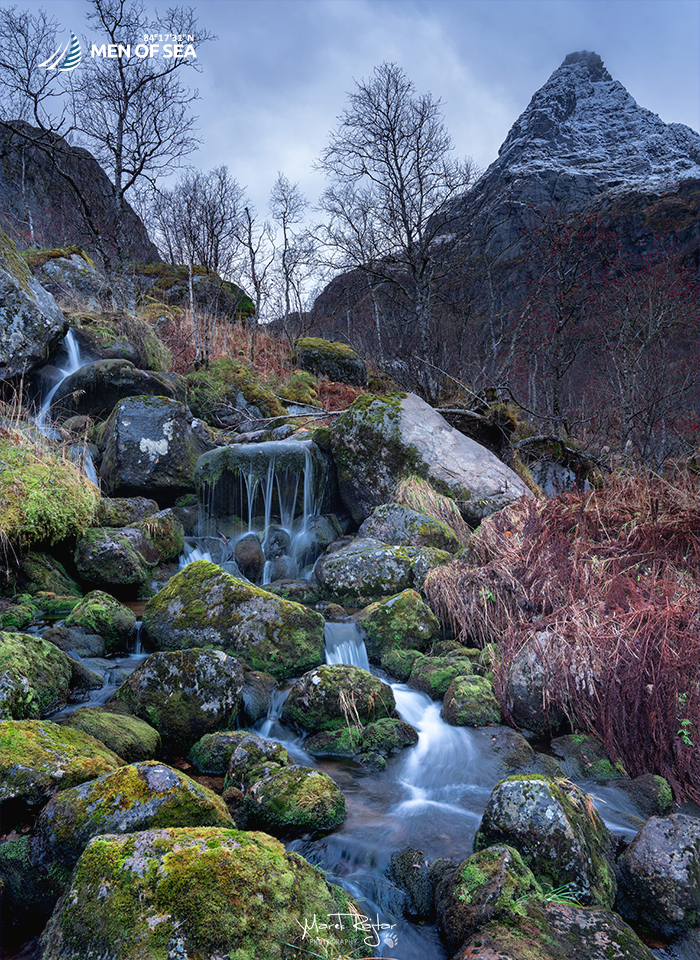
The landscape itself is exceptional. The route follows streams, passes wet valleys, rocks and boulder fields, and enters terrain that feels almost alpine despite being only a few hundred metres above sea level.
Isvasshaugen – Trollfjord from above
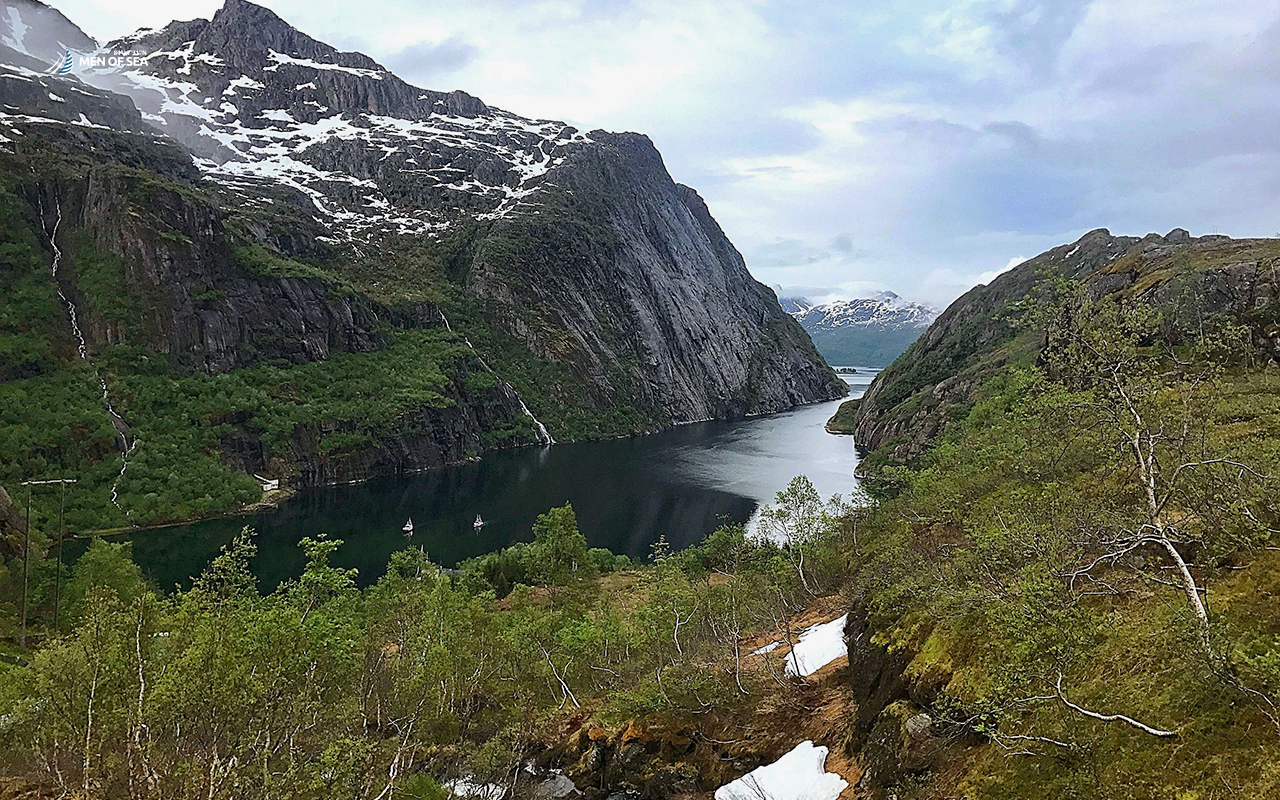
From Trollfjordhytta, it is possible to continue towards Isvasshaugen, approximately 504 metres above sea level. The additional ascent is relatively modest, while the view back over Trollfjord is excellent. For us, this is one of the most interesting parts of the entire visit.
First, we enter Trollfjorden at sea level, looking upward at the mountains. A few hours later, we may be looking down at the same fjord from several hundred metres above. It completely changes the perspective.
Is hiking above Trollfjord easy?
No. Even though the elevations may not sound extreme, the terrain is typical of Northern Norway:
- steep,
- wet,
- rocky in places,
- very slippery after rain,
- and in autumn there may be ice or deep lingering snow.
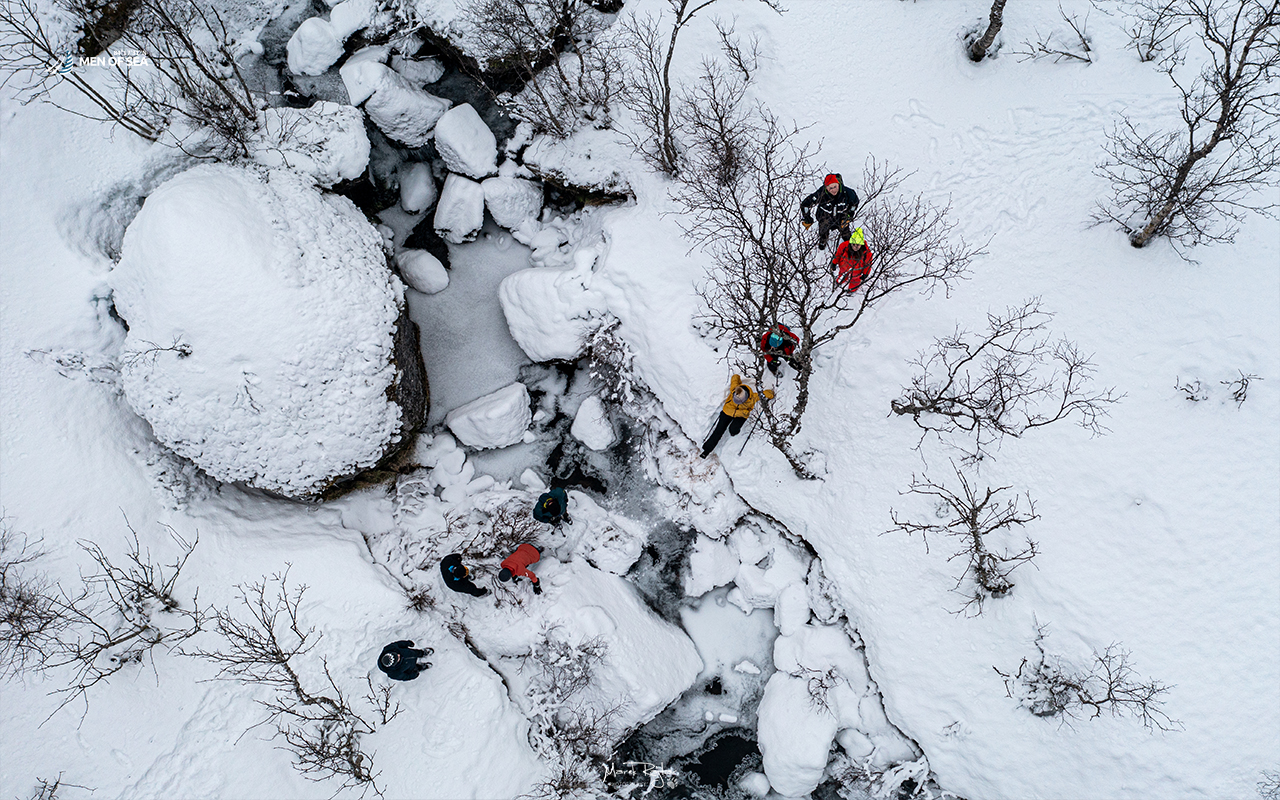
In winter, we would not treat this route as a normal tourist hike. Winter conditions can introduce additional hazards, including avalanche and landslide risk.
White-tailed eagles in Trollfjord and Raftsundet
The Raftsundet and Trollfjord area is one of the best places in Lofoten for seeing white-tailed eagles.
It is no coincidence that many trips from Svolvær combine Trollfjord with a Sea Eagle Safari. White-tailed eagles are frequently seen around Raftsundet, and the chances of observing them during a boat trip are good.
We see them here regularly. They often patrol the shoreline or appear above the water while feeding. On several occasions, we have watched them at very close range from our yacht.
For photographers, the combination of: white-tailed eagle + steep mountains + narrow fjord + sea-level perspective creates one of the most characteristic wildlife scenes in northern Lofoten.
Fishing in Trollfjord and Raftsundet
The history of Trollfjord is closely connected with fishing. Competition for access to the fishing grounds led to the famous Battle of Trollfjord in 1890.
Today, Raftsundet and the waters around Lofoten remain strongly connected with both marine life and fishing culture. During our stays in Trollfjorden, we have repeatedly caught fish directly from the yacht or from the jetty. On several occasions, white-tailed eagles appeared above us while we were fishing — it is difficult to imagine a scene more characteristic of Lofoten.
We would not, however, describe Trollfjord as a “guaranteed fishing spot”. As everywhere in Northern Norway, fishing success depends on the season, weather, tide and the current location of the fish.
Nevertheless, Raftsundet and the surrounding waters remain deeply connected with the fishing culture of Lofoten, and our own observations during repeated yacht expeditions confirm the richness of marine life in this area.
Northern Lights in Trollfjord – an exceptional photography location
Trollfjorden is also one of the most interesting places where we have photographed the Northern Lights. It has two major advantages.
The first is very little artificial light compared with places such as Svolvær or Henningsvær.
The second is the landscape itself. The steep mountain peaks surrounding the water form a natural frame for the night sky. When the water is calm, the Aurora may also reflect in the surface of the fjord.
Lofoten lies beneath the auroral oval, and the Northern Lights season generally extends from late August until around mid-April. There is, however, one important limitation. Trollfjord is extremely narrow. The surrounding mountains obscure a large part of the low horizon. This makes it less suitable for weak Aurora activity that remains low above the northern horizon.
When the Northern Lights spread across a larger part of the sky or become active overhead, however, Trollfjord offers exceptionally strong photographic compositions. The combination of darkness, water and high mountains is one of the main reasons we enjoy staying here after sunset.
The history of Trollfjord – the Battle of Trollfjord
The most important historical event associated with the fjord is the Trollfjordslaget — the Battle of Trollfjord — in March 1890. This was not a military battle. It was a conflict between traditional fishermen using small open boats and owners of modern steam-powered vessels using newer fishing methods. The steamships attempted to block part of the fjord with nets and restrict access to large concentrations of skrei, the migrating Arctic cod. On 6 March 1890, thousands of fishermen broke through the blockade.
The conflict became a symbol of traditional fishermen resisting the growing industrialisation of fishing. Norwegian author Johan Bojer later used the story of Trollfjordslaget in his novel “Den siste Viking” — “The Last Viking”, while painter Gunnar Berg immortalised the event in his famous painting Trollfjordslaget.
Kaiser Wilhelm II and the beginnings of tourism
Trollfjord attracted travellers long before Lofoten became a modern tourism destination. German Emperor Wilhelm II first visited Lofoten in 1889, and Trollfjorden and the surrounding Digermulen area became among the places he particularly appreciated. His journeys to Northern Norway helped increase the region’s visibility elsewhere in Europe.
More than a century later, the fjord again appeared in front of the cameras. In 2016, scenes for the film “Downsizing”, starring Matt Damon, were filmed here.
Hydroelectric power in Trollfjorden
Modern Trollfjord is not completely without infrastructure. Two small hydroelectric power stations — Trollfjord I and Trollfjord II — are located in the inner part of the fjord. They use water flowing from Trollvatnet and Botnvatnet respectively. Their combined installed capacity is approximately 4 MW.
This also explains why the landscape at the very end of the fjord is slightly different from the otherwise extremely wild surroundings.
What is the best way to see Trollfjord?
If you have only a few hours and are staying in Svolvær, the easiest option is an organised: boat tour, RIB safari or sightseeing cruise.
If, however, you have the opportunity to enter Trollfjord in a small yacht and stay for longer, the experience is completely different. A short cruise shows you the fjord.
A longer stay allows you to experience it. You can:
- arrive in the afternoon,
- remain after the sightseeing boats leave,
- fish,
- watch white-tailed eagles,
- hike into the mountains,
- photograph the peaks in changing light,
- wait for the Northern Lights in suitable conditions,
- and wake up the next morning inside the fjord.
This is the way of experiencing Trollfjord that best reflects the philosophy of our Men of Sea Lofoten expeditions.
Why do we consider Trollfjord one of the most beautiful places in Lofoten?
Even after many visits, we still do not treat Trollfjord as an attraction to simply “tick off”.
It is small, but it concentrates many of the features that define Northern Norway in one place: sea, very steep mountains, isolation, fish, white-tailed eagles, hiking, fishing history, exceptional light and the possibility of seeing the Northern Lights.
And unlike many famous viewpoints in Lofoten, you cannot simply drive here.
You have to arrive by sea or hike through the mountains. That changes the experience. On a calm evening, once the larger sightseeing vessels have left and we remain alone inside the fjord, Trollfjorden can genuinely feel like a place somewhere at the edge of the world. That may be one of the reasons we keep returning.
FAQ – Trollfjord / Trollfjorden
Where is Trollfjord located?
Trollfjorden branches off Raftsundet and cuts into Austvågøya. Geographically it is strongly associated with Lofoten, while administratively it lies within Hadsel municipality in Vesterålen.
How long is Trollfjord?
Trollfjord is approximately 2.5 km long.
How wide is the entrance to Trollfjord?
At its narrowest point near the entrance, Trollfjord is approximately 100 metres wide.
Can you drive to Trollfjord?
No. There is no road into Trollfjord itself. The standard way to reach the fjord is by boat or yacht, although demanding hiking approaches through the mountains also exist.
Where do Trollfjord tours depart from?
Most tourist cruises, RIB safaris and wildlife tours to Trollfjord depart from Svolvær.
Can you see white-tailed eagles in Trollfjord?
Yes. Raftsundet and the Trollfjord area are known for white-tailed eagles and are among the popular places in Lofoten for observing them from the sea.
Can you hike above Trollfjord?
Yes. One of the most interesting routes leads from the inner part of Trollfjorden to Trollfjordhytta, with an optional continuation towards Isvasshaugen. The basic route is around 5.3 km with approximately 405 metres of ascent.
Is Trollfjord a good place to see the Northern Lights?
Yes, especially because of the very low level of artificial light and the dramatic mountain scenery. The main limitation is that the surrounding mountains restrict views of the low horizon.
When can you see the Northern Lights in Trollfjord?
In the Lofoten region, the Northern Lights can generally be seen from late August until around mid-April, provided that the sky is sufficiently dark and clear and there is auroral activity.
What happened during the Battle of Trollfjord?
In 1890, traditional fishermen resisted steamship owners attempting to restrict access to valuable skrei fishing grounds. The conflict became known as Trollfjordslaget — the Battle of Trollfjord.
Is Trollfjord worth visiting?
Yes, particularly if you want to experience one of the most dramatic maritime landscapes in the Lofoten region. The fjord combines sailing, mountain scenery, hiking, white-tailed eagles, fishing history and Northern Lights photography in a location that cannot be reached by road.
See also
Lofoten – the Most Beautiful Places and Attractions. What Is Worth Seeing by Car and from the Sea?
Lofoten Practical Guide – When to Visit, Weather, How to Travel and How to Prepare