For many people travelling to Svalbard, seeing a polar bear in its natural habitat is one of their greatest dreams. The polar bear is an iconic symbol of Spitsbergen and the High Arctic, but encountering one in the wild is never guaranteed.
The Arctic is vast, and even such a large white animal can be surprisingly difficult to spot in Svalbard’s immense landscape. Sometimes it takes many days of patient searching. And sometimes, an entire expedition can pass without a single polar bear sighting.
This time, however, our patience was rewarded in an extraordinary way.
After several days of searching, we spotted not one, but three polar bears – a mother and her two cubs. And we were about to witness a scene we will remember for a very long time.

The Sea Bear – Ursus maritimus
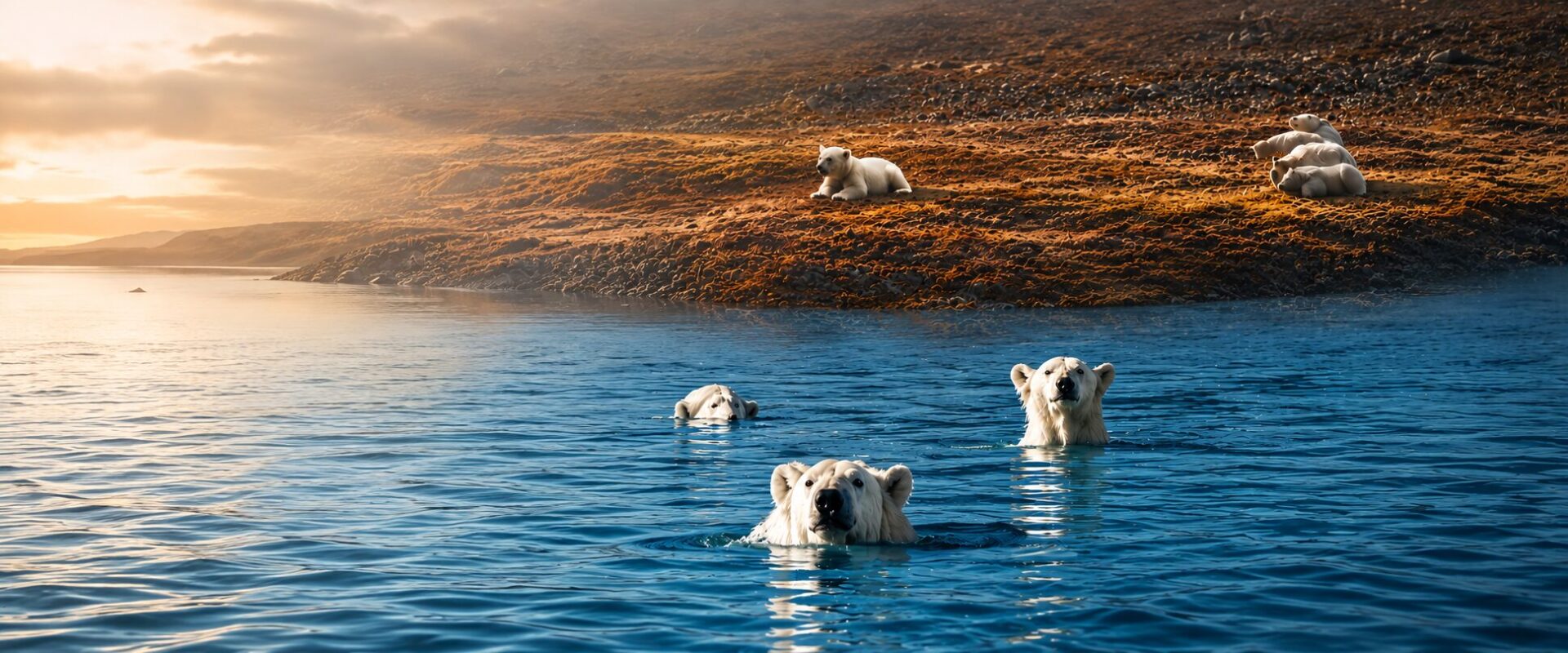
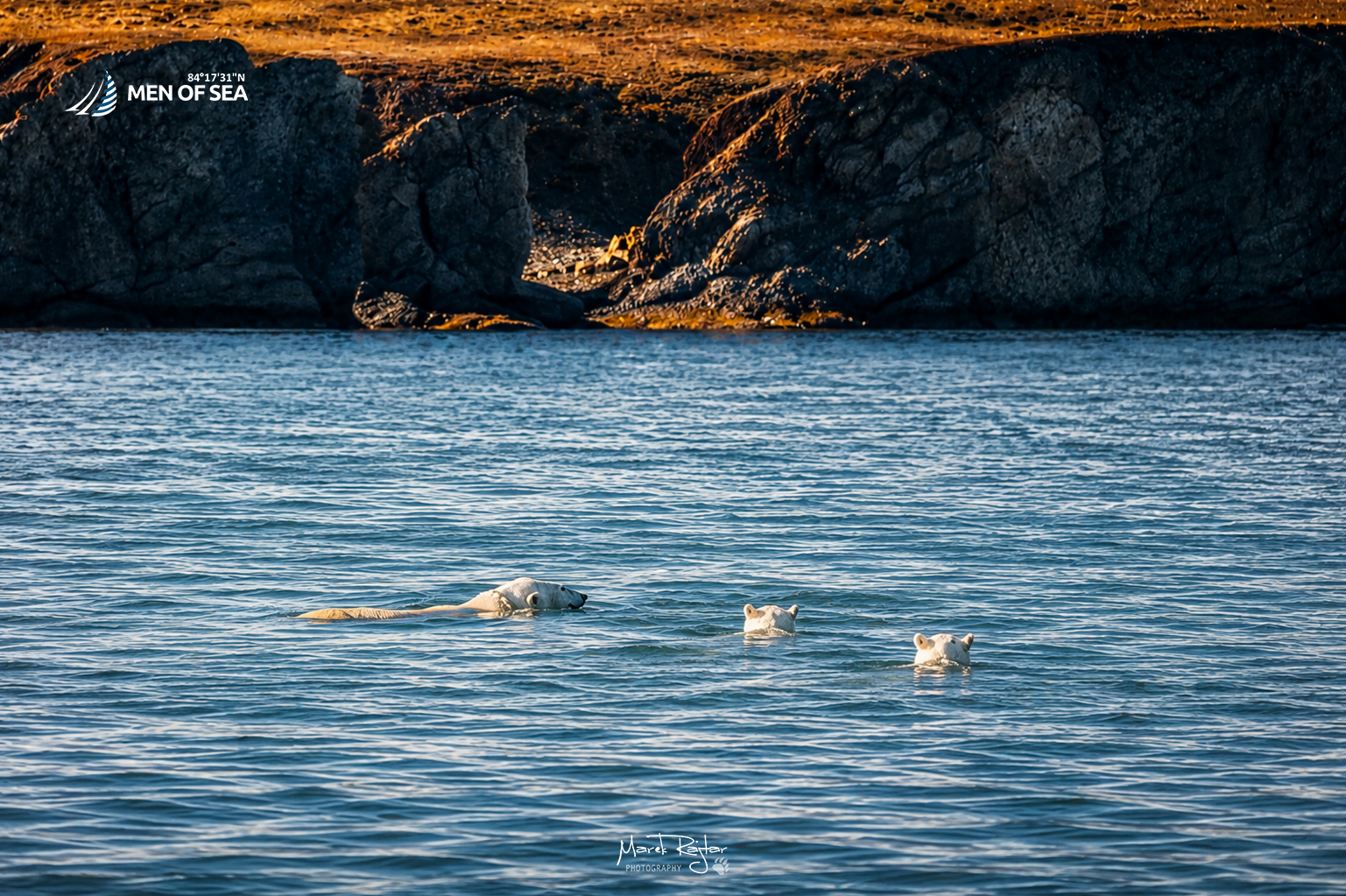
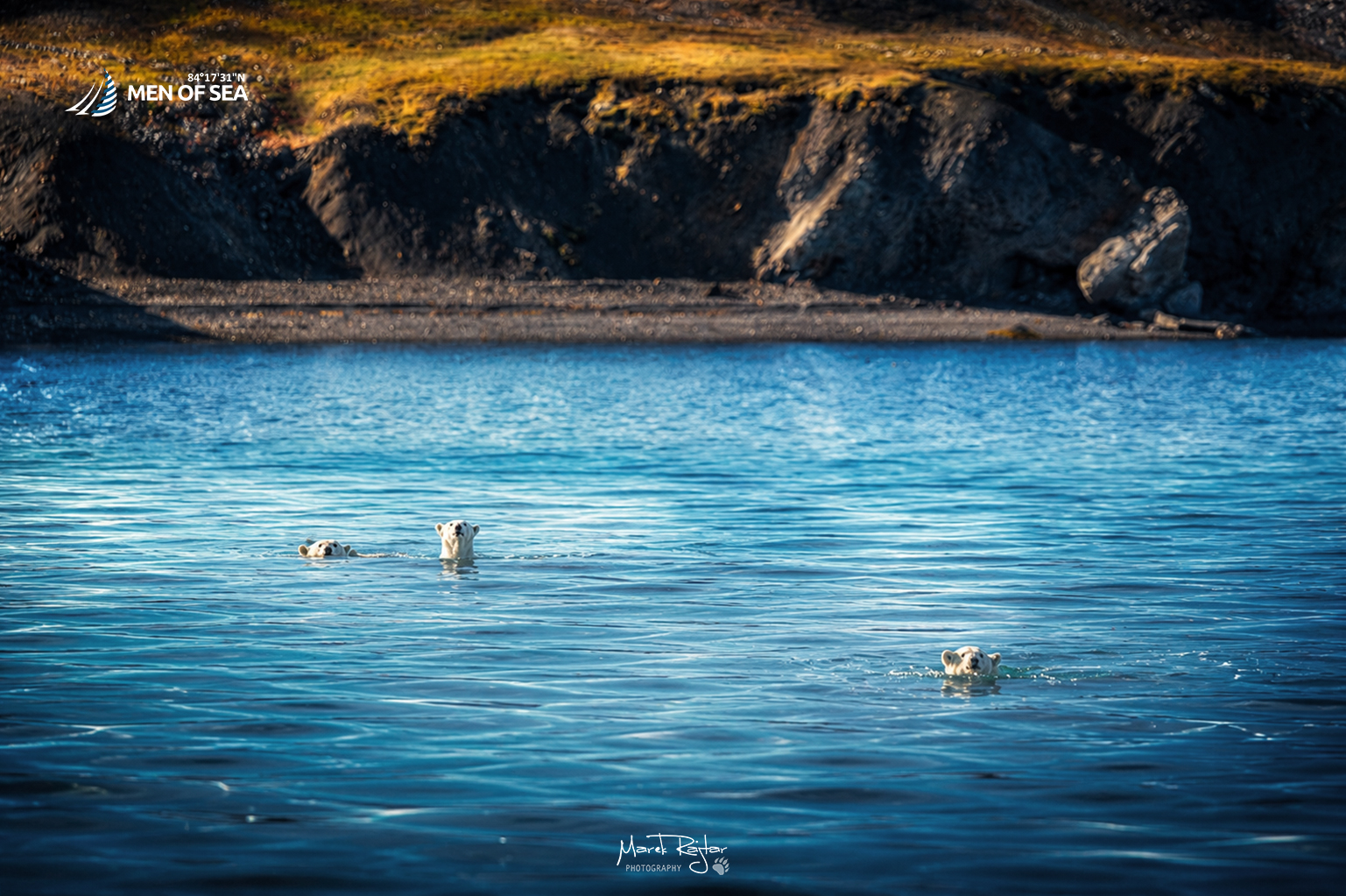
We first spotted the three bears in the water. The mother was swimming towards the shore with her two cubs following her.
Polar bears are excellent swimmers. They propel themselves through the water mainly with their powerful front paws, while their hind legs help them steer.
It is no coincidence that the polar bear’s scientific name is Ursus maritimus, meaning “sea bear”. It is an animal perfectly adapted to a world where sea, ice and land constantly meet.
Although we often associate polar bears primarily with sea ice, they are also powerful swimmers and move easily across land. That made watching this mother and her cubs make their way from the sea onto the shore particularly special.
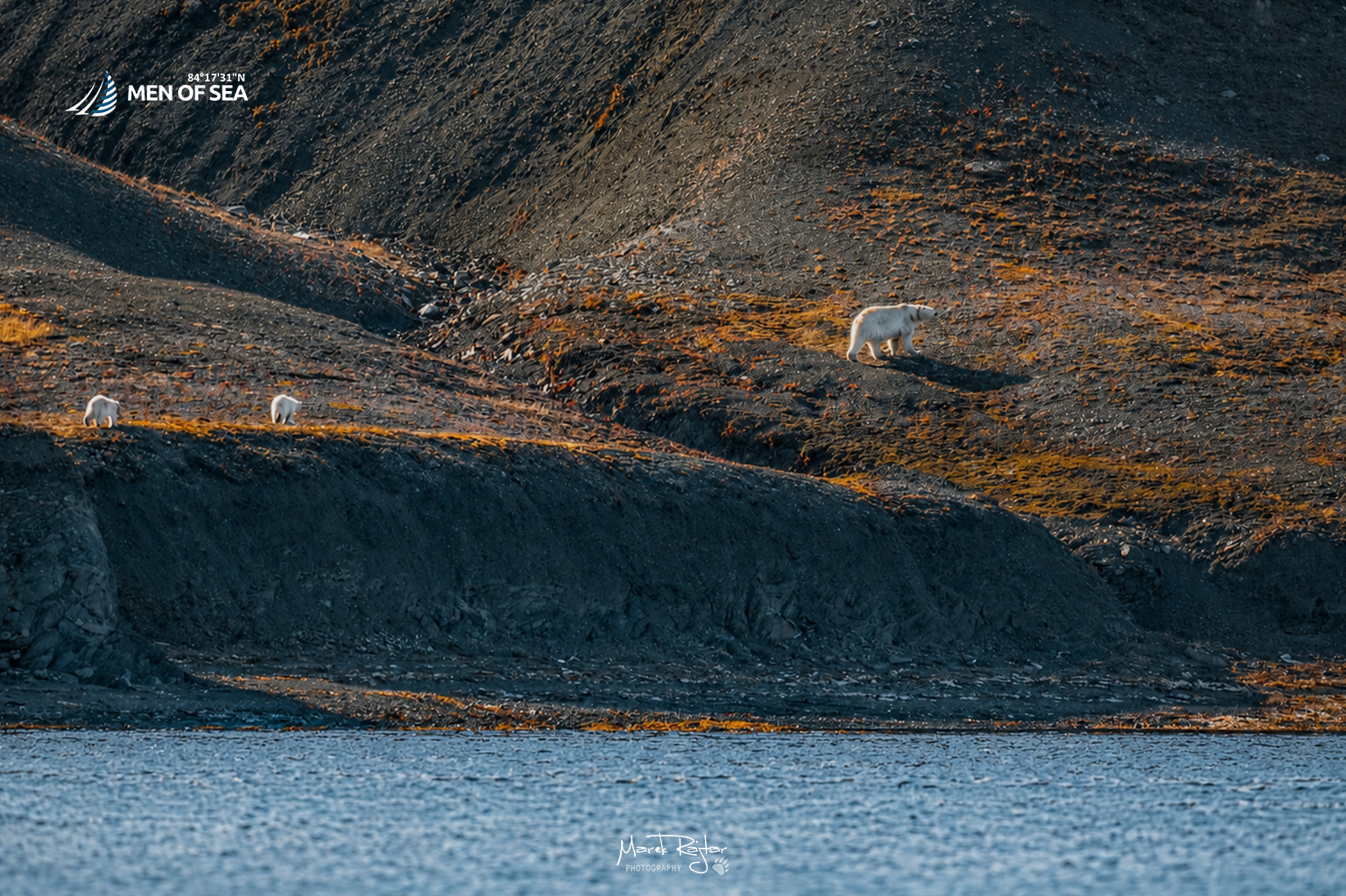
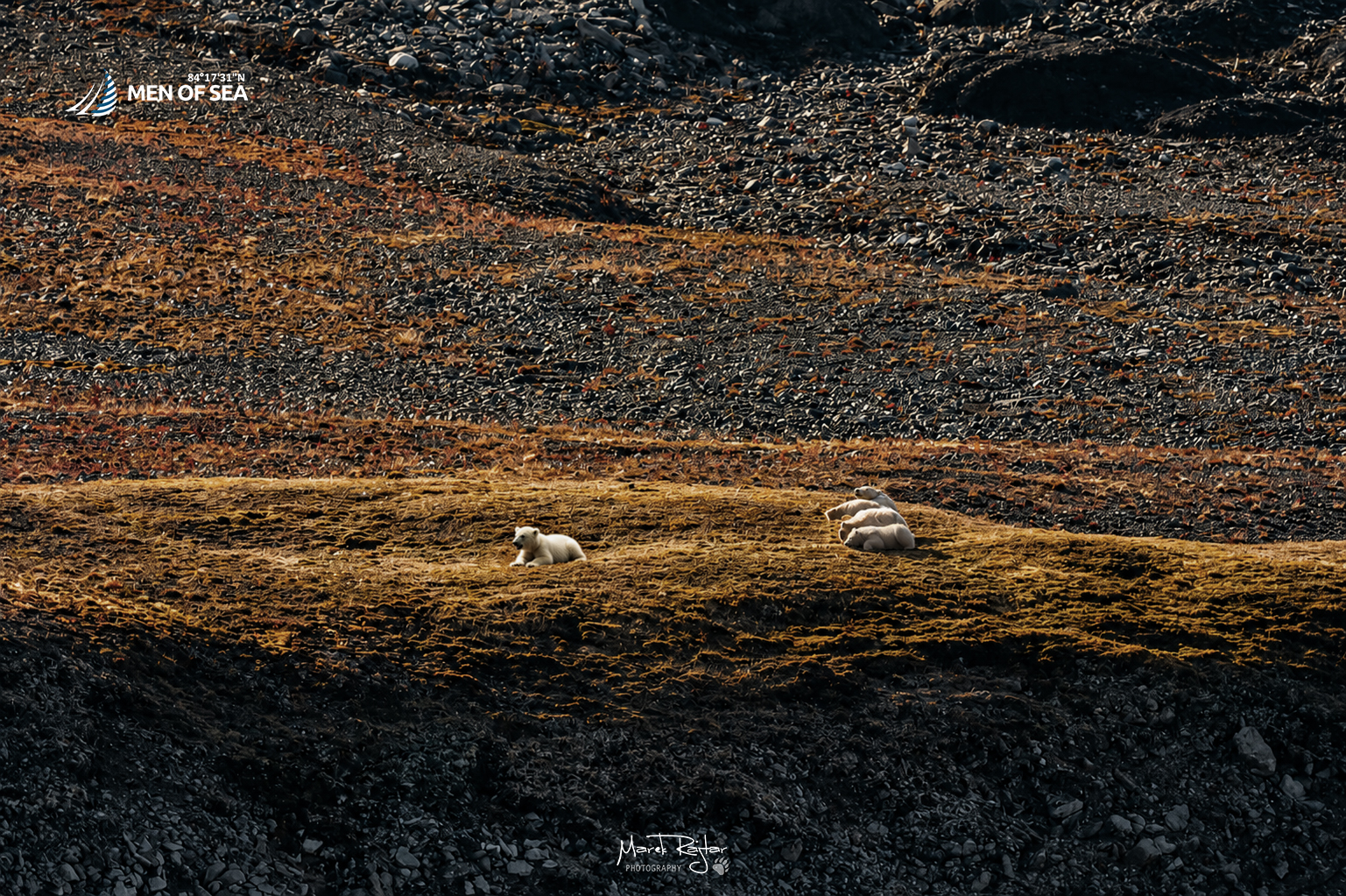
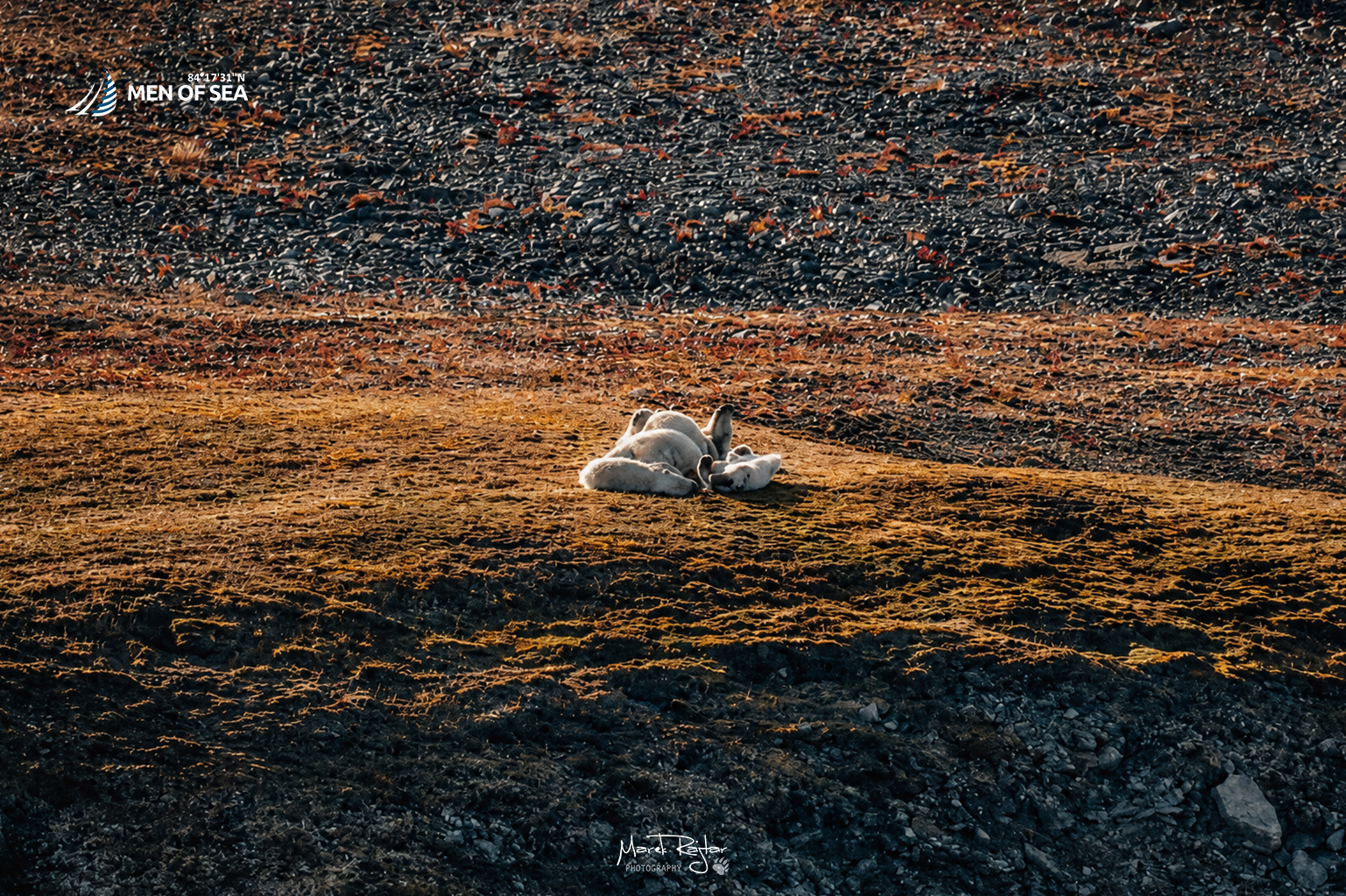
Once they reached land, all three bears came out of the water. The cubs began resting and playing while staying close to their mother. We were able to watch the entire scene from a safe distance from the deck of our yacht.
Three Polar Bears Instead of One
The excitement on board was incredible.
Our guests come on Svalbard and Spitsbergen expeditions for many reasons – glaciers, spectacular Arctic landscapes, sailing, wildlife and the extraordinary feeling of travelling far beyond the familiar world.
But for many of them, one dream stands above all others: seeing a polar bear in Svalbard.
After several days of scanning the coastline for a white silhouette, we finally found not one polar bear, but a mother with two cubs – first swimming through the Arctic waters and later resting and playing on shore.
Moments like this cannot be planned or guaranteed. All we can do is travel to the right places, remain patient, keep watching and allow the Arctic to decide what it wants to show us.
And it is precisely for moments like this that we organise our Svalbard expeditions and return to the Arctic year after year.i.