Polar Bear Expedition to the Kingdom of Ice – Where and How to See Polar Bears Safely
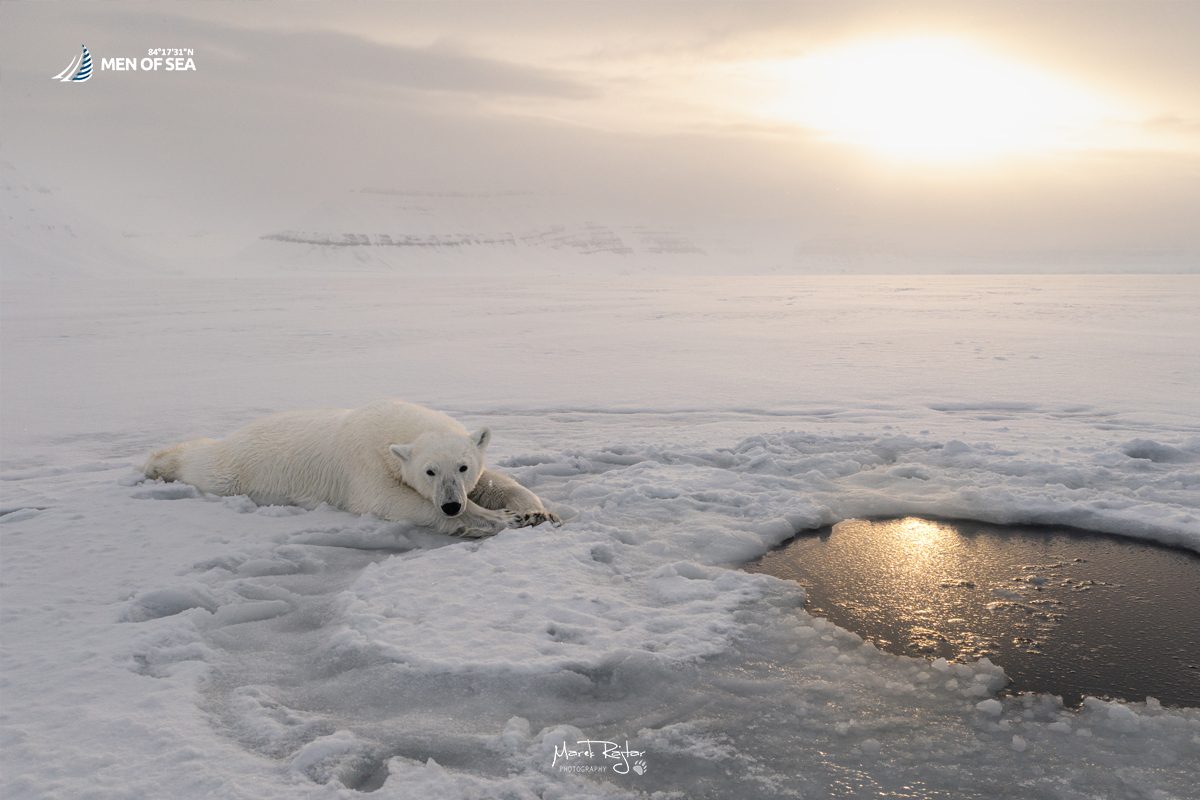
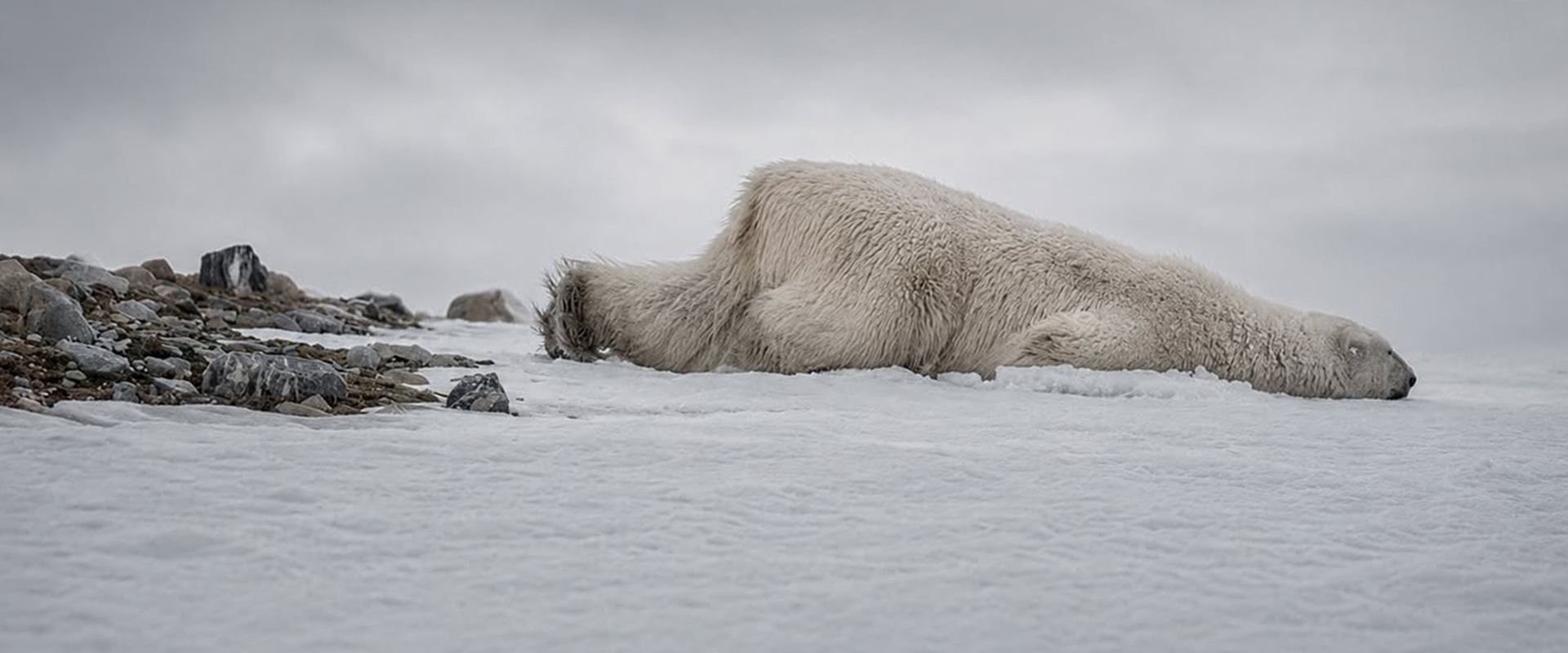
The polar bear (Ursus maritimus) is the largest land carnivore in the world and the undisputed king of the Arctic.
Seeing this majestic animal in its natural habitat is a dream for many travellers. However, organizing a polar bear expedition requires excellent preparation, knowledge of predator behaviour and strict compliance with safety regulations.
In this article, you will learn how polar bears live, what your realistic chances are of seeing one in the wild, and how our professional and safe Arctic expeditions in Svalbard are organized. You will also discover some fascinating polar bear facts that may surprise even experienced wildlife enthusiasts.
The King of the Arctic – what should you know about polar bears?
Polar bears are fascinating animals perfectly adapted to the extremely demanding conditions of the Far North. Interestingly, from a biological point of view, they are classified as marine mammals, because they spend much of their lives on the frozen Arctic Ocean.
-
Impressive size: Adult males can weigh up to around 700 kg and reach approximately 3 metres in length. Their shoulder height can reach about 1.5 metres.
-
Skin and fur: Although a polar bear’s coat appears white, its hairs are actually transparent and hollow. Beneath the fur is black skin, which helps absorb solar radiation and heat.
-
Genetic adaptation: Recent scientific research suggests that some polar bear populations, including those in south-eastern Greenland, show genetic differences that may help them survive in changing environmental conditions.
Interesting facts about polar bears
Polar bears are among the most specialized predators on Earth. Their entire anatomy, behaviour and hunting strategy have evolved around life in a world dominated by sea ice.
They are excellent swimmers, can travel considerable distances through icy Arctic waters and have an extremely well-developed sense of smell, allowing them to locate seals even when they are hidden beneath snow and ice.
For many visitors to the Arctic, observing a polar bear in the wild becomes one of the most memorable moments of the entire journey.

Where can you see polar bears? Your chances of a wildlife encounter
One of the best and most accessible places in the world to observe polar bears is the Svalbard archipelago, including Spitsbergen. Another famous destination is Churchill in Canada.
The Barents Sea and Svalbard region supports a significant polar bear population. However, the animals are constantly moving over enormous distances between islands, sea ice and hunting areas.
Is seeing a polar bear during an expedition guaranteed?
No – and no responsible expedition operator should guarantee a polar bear sighting.
Polar bears are wild animals that continually migrate across the Arctic. Your chances of seeing them depend on the season, sea-ice conditions, weather and the region being explored.
During expedition cruises in spring and summer: opportunities can be very good because yachts and expedition vessels allow us to explore remote areas. In addition, we can travel along regions where sea ice and wildlife occur.
During trekking around settlements such as Longyearbyen: encounters are much less predictable. Travelling outside the safer settlement areas also requires appropriate polar bear protection and compliance with local regulations.
The most important principle is simple: we adapt our expedition to wildlife and Arctic conditions – never the other way around.
Polar bear regulations in Svalbard – ethics and safety in the Arctic
Travelling with us means choosing responsible Arctic tourism.
In response to environmental pressures and growing tourism, Norwegian authorities have introduced strict regulations designed to protect polar bears and other Arctic wildlife.
It is prohibited to deliberately disturb, pursue, lure or otherwise interfere with polar bears.
Polar bear safety distances
When observing polar bears, we maintain the legally required safety distances and always prioritize the welfare of the animal.
Depending on the season, minimum distances may include:
- 300 metres during parts of the year..
-
500 metres during the particularly sensitive period from March to June.
These rules allow visitors to observe polar bears while reducing disturbance to their natural behaviour.
A good pair of binoculars or a telephoto lens is therefore one of the best tools you can bring on a polar bear expedition in Svalbard.
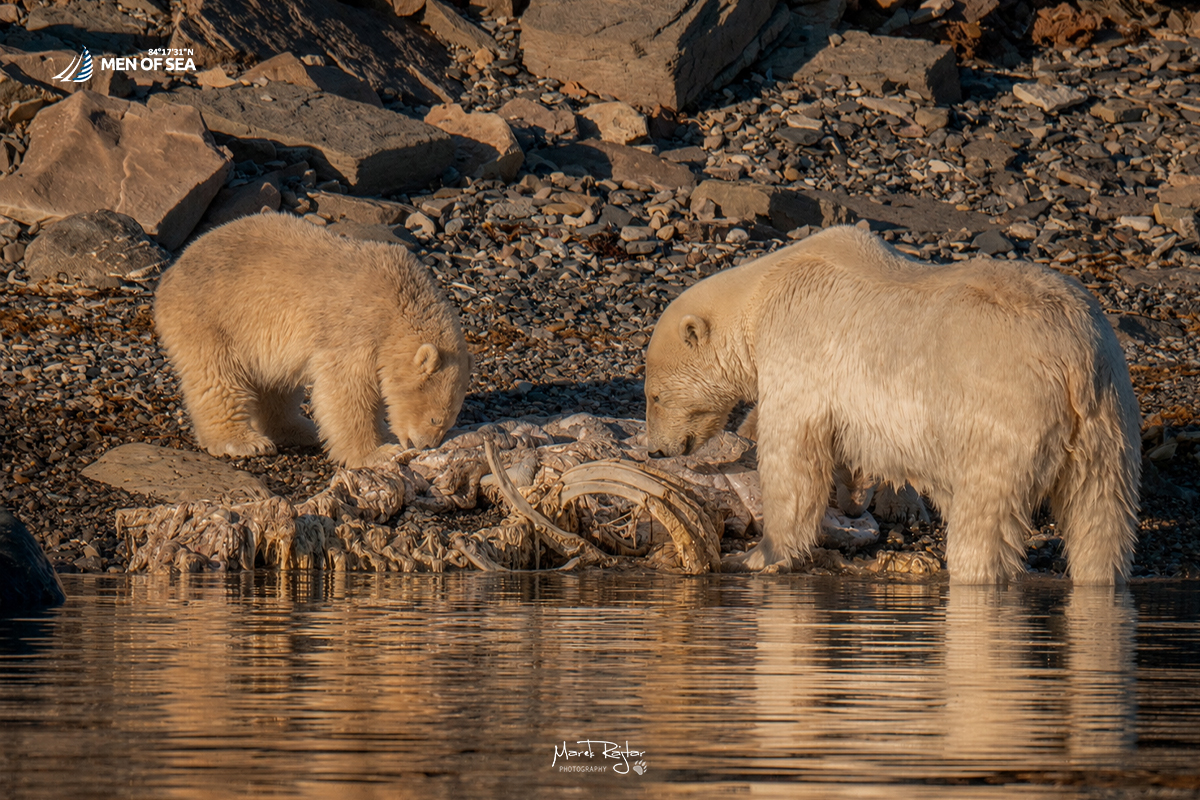
From a safe distance, it may be possible to watch a bear walking across sea ice, swimming between ice floes or searching for seals – without interfering with its natural behaviour.
Our polar bear expeditions – experience the Arctic safely
We organize small-group expeditions to some of the most remote parts of the Arctic, combining a passion for exploration with strict safety procedures.
Our team includes experienced Arctic guides trained in risk assessment, polar bear safety procedures and the use of deterrent systems such as flares and pyrotechnics. Firearms are carried as a last-resort means of protection in an emergency.
Safety is not an addition to an Arctic expedition. It is one of its foundations.
Why join a Men of Sea Arctic expedition?
- Small and flexible groups: We do not organize mass tourism. Travelling in a small group gives us much greater flexibility and allows the itinerary to be adapted to weather, sea-ice conditions and opportunities for wildlife observation.
- Arctic knowledge and experience: Our guides know how to observe the landscape, identify animal tracks and signs, assess potential risks and explain the extraordinary ecosystem of the Arctic. This experience becomes particularly important when travelling through remote areas of Svalbard and Spitsbergen.
- Professional safety equipment: We use professional expedition and safety equipment as well as satellite communication systems such as Garmin inReach and Iridium. Travelling far from settlements means being prepared to operate independently in an environment where normal mobile communication may not be available.
- Responsible wildlife observation: Our principle is simple: We are visitors in the Arctic and must respect its true inhabitants. We never want an animal to change its natural behaviour because of our presence.
See polar bears in Svalbard with Men of Sea
The polar bear is one of the greatest symbols of wild, untouched Arctic nature.
Seeing one walking across sea ice or along a remote Svalbard coastline is an experience. It is difficult to compare with anything else.
Our goal is to give participants the opportunity to discover this world in a way that is safe for people and respectful of wildlife.
Join us on an Arctic expedition and experience the kingdom of the polar bear from one of the most extraordinary perspectives possible.