ORCAS
Intelligent and Family-Oriented
ORCAS – Intelligent and Family-Oriented
Orcas in Northern Norway – where and when can you see them?
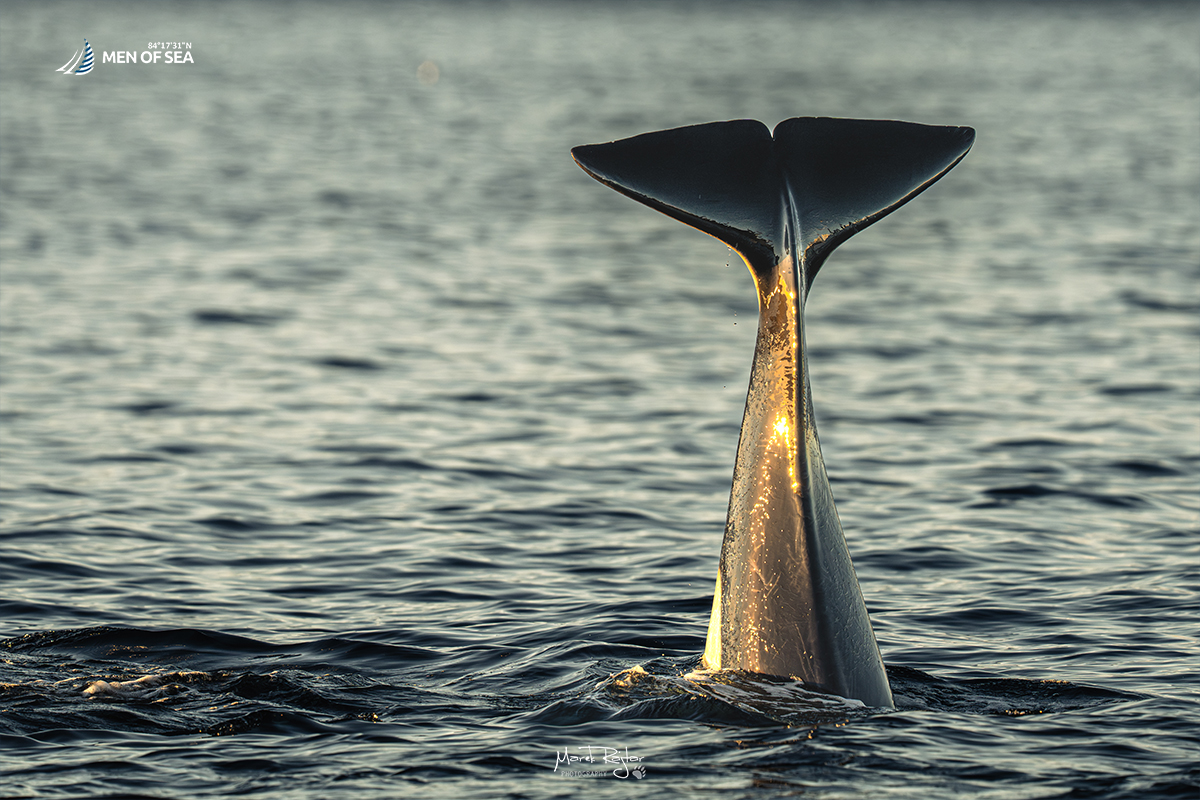
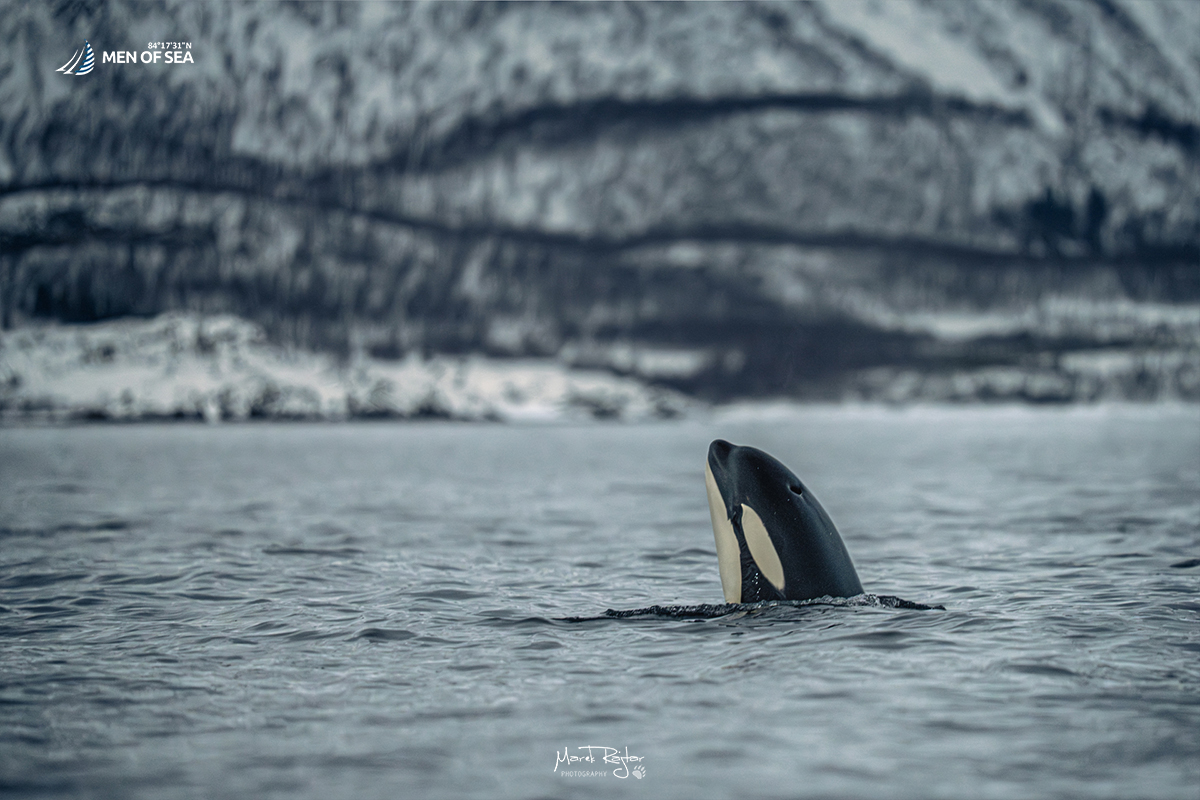
The orca (Orcinus orca) is the largest member of the dolphin family and one of the most fascinating predators in the ocean.
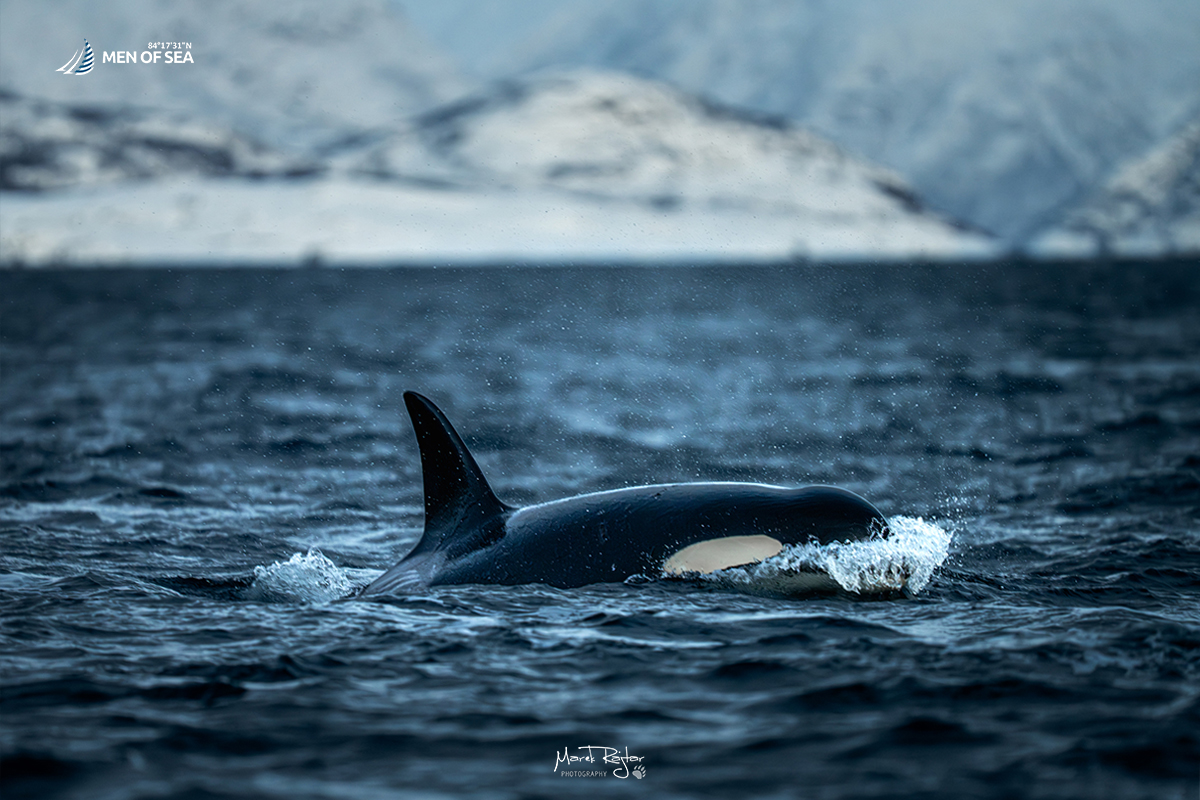
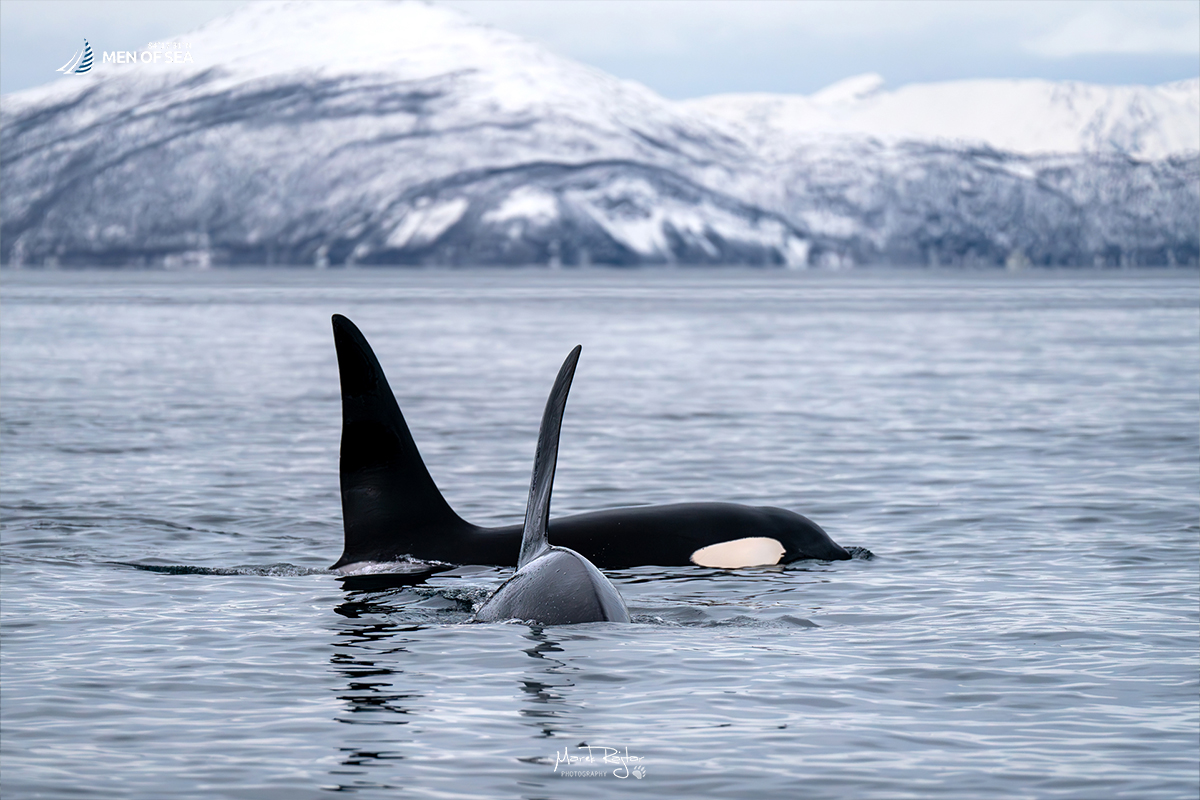
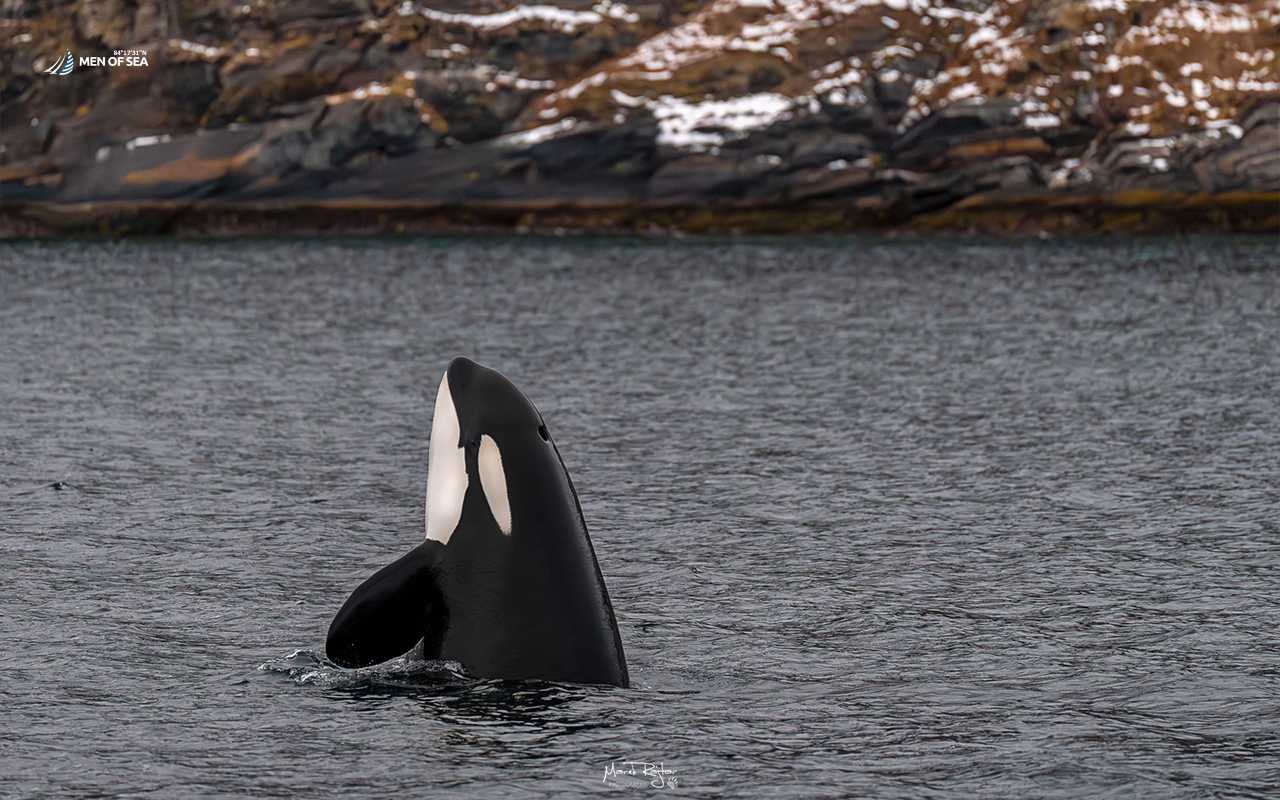
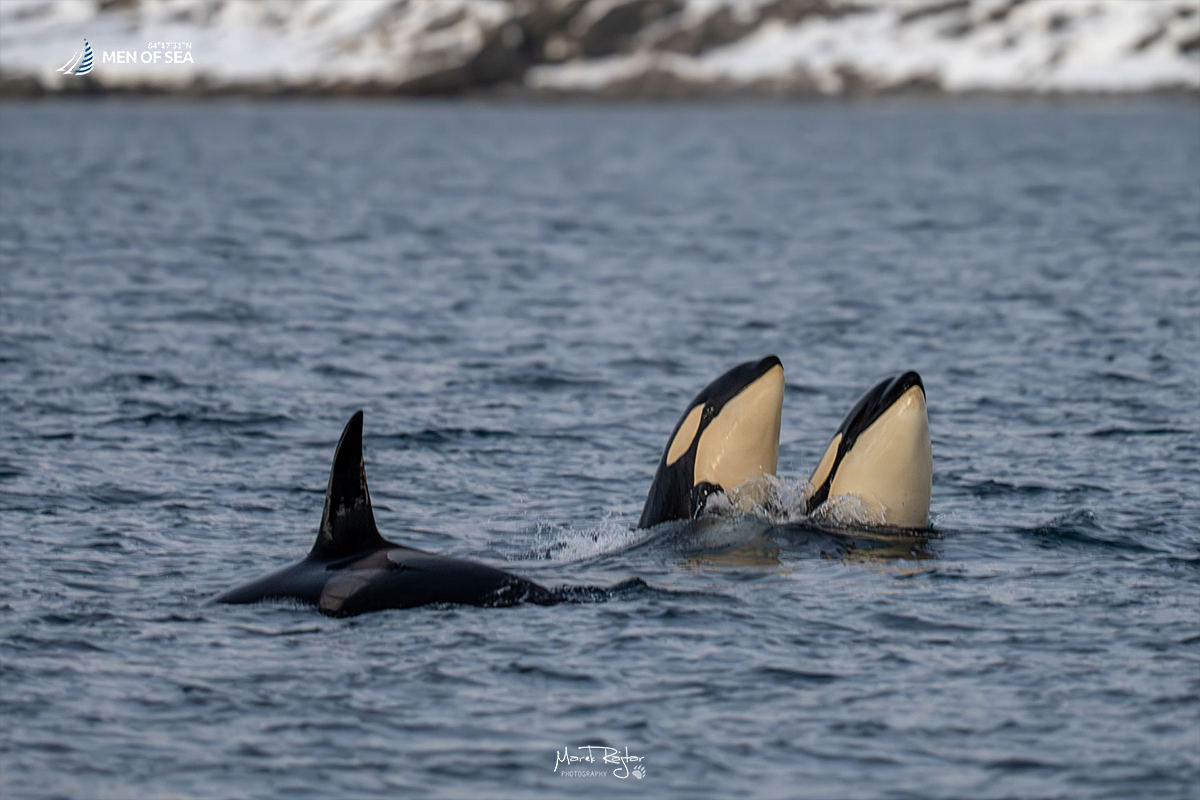
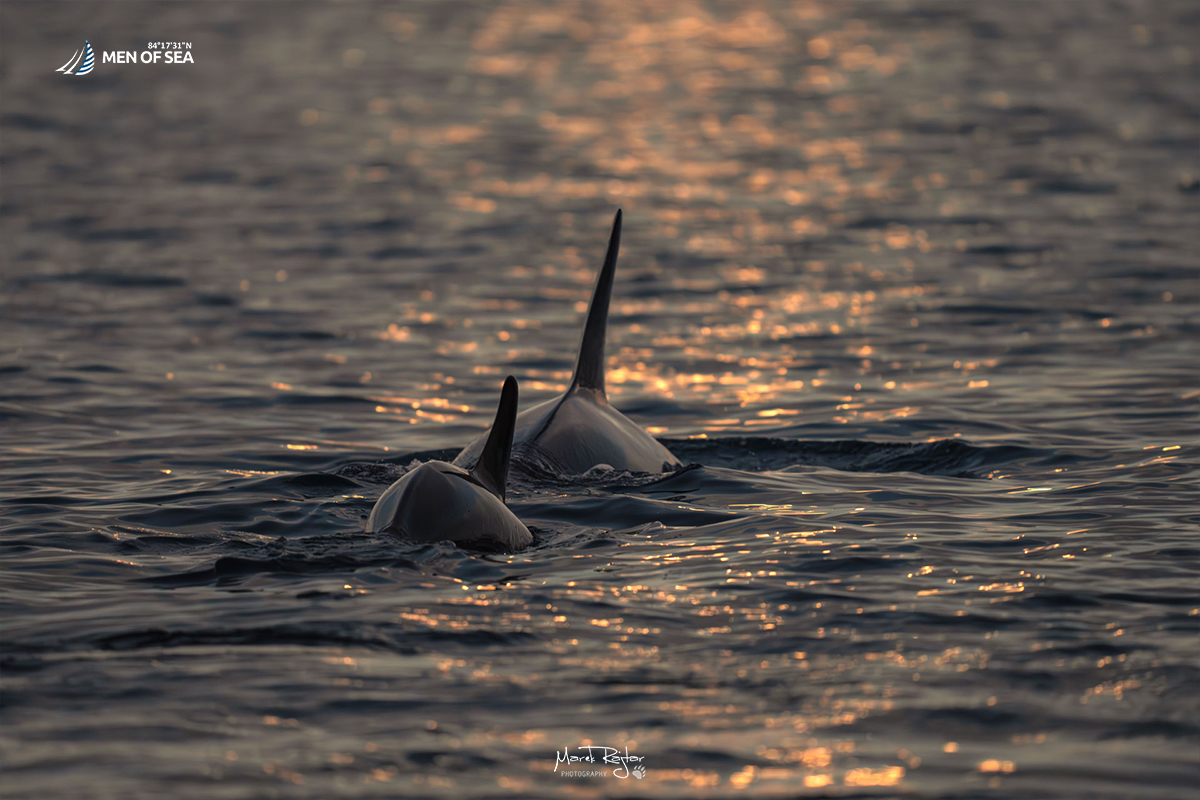
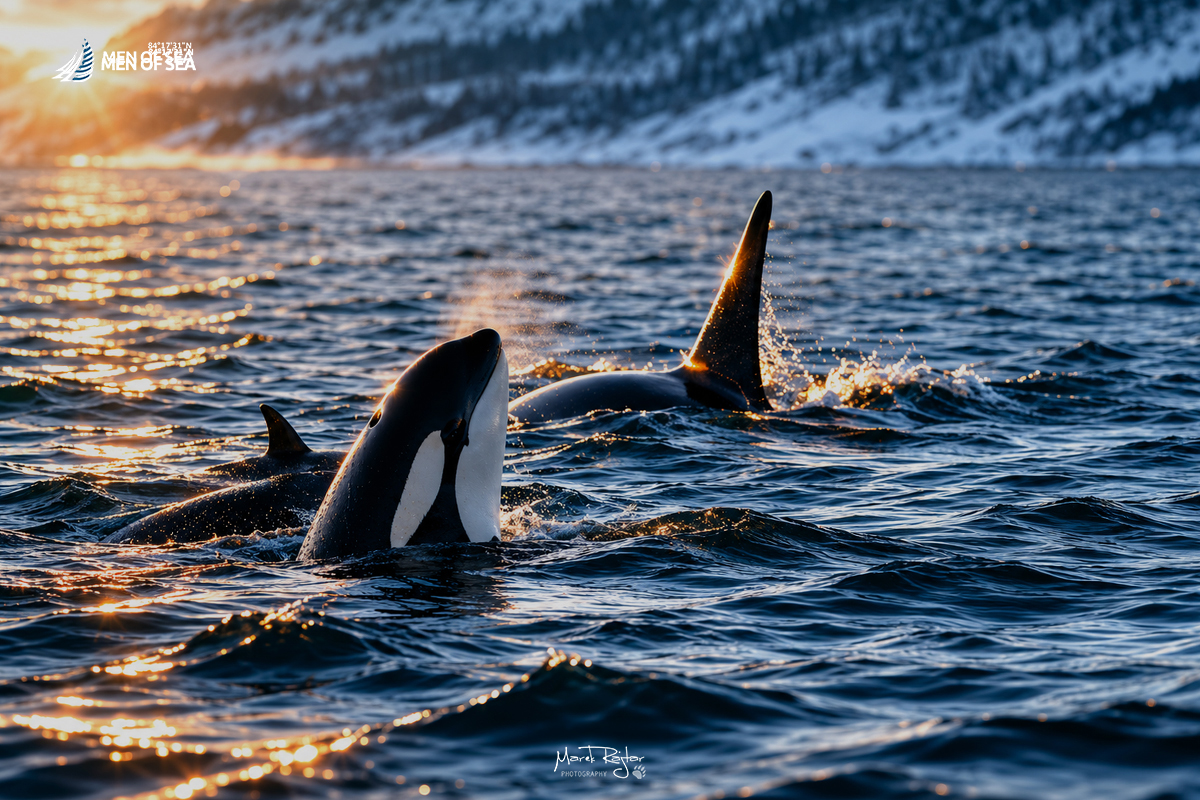
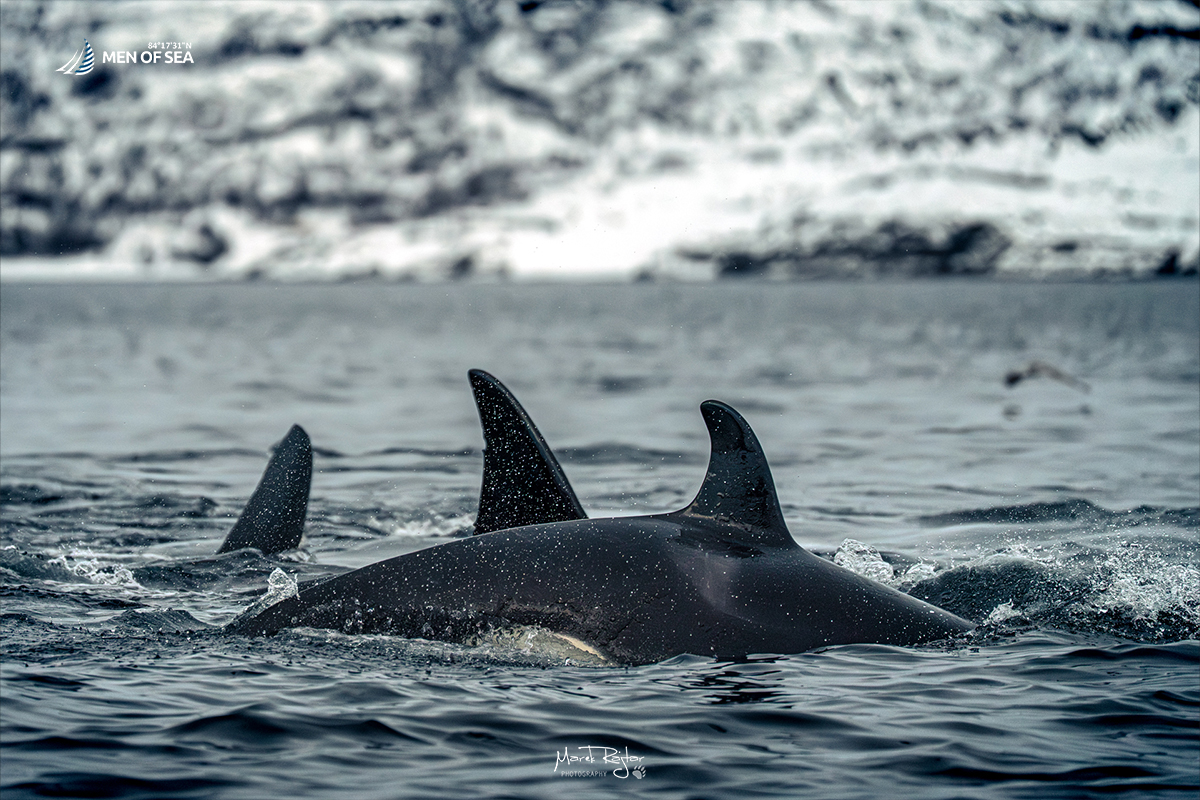
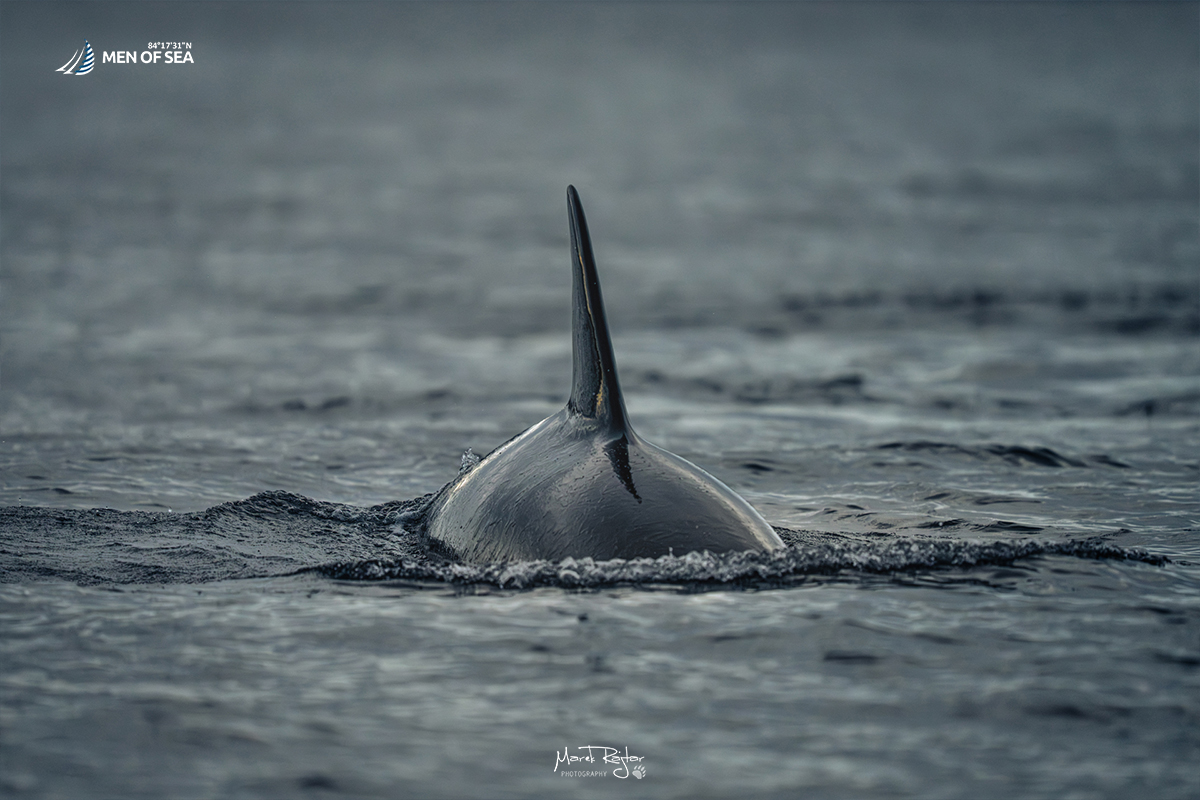
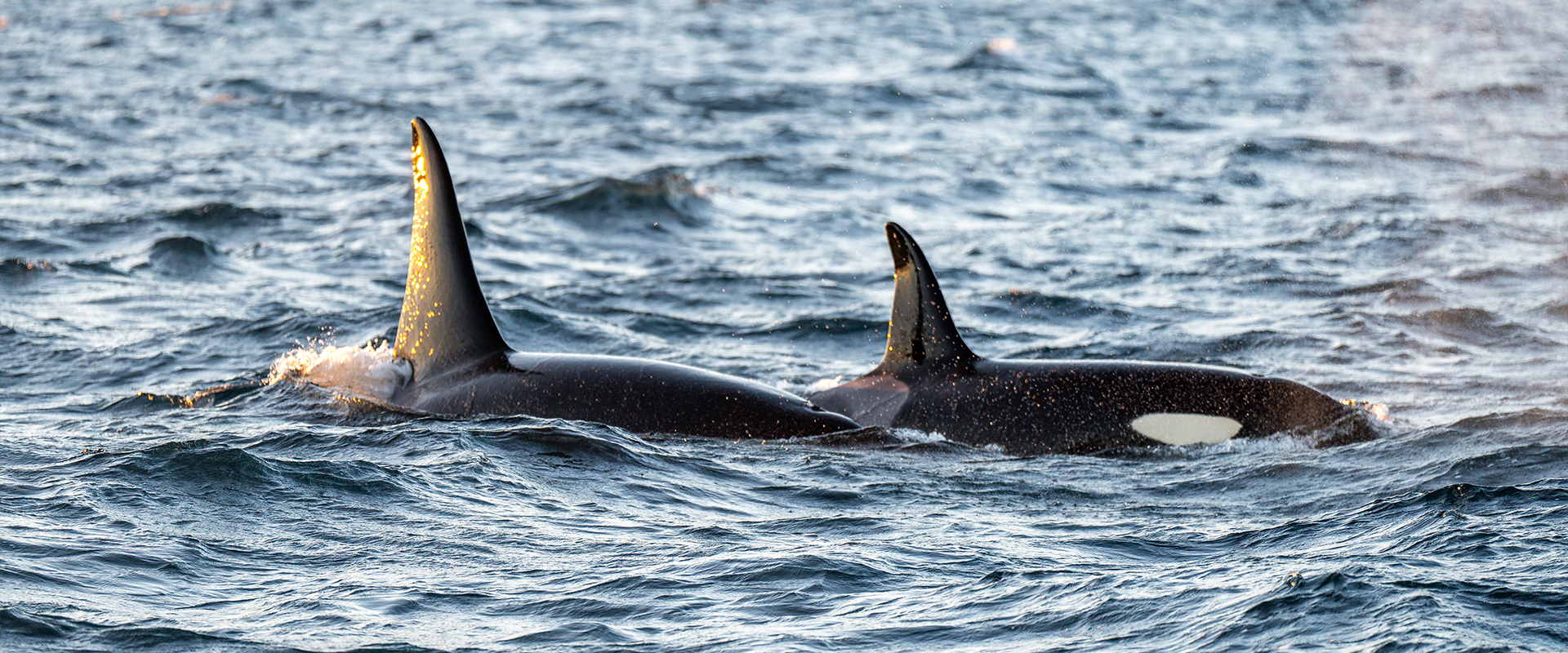
Its striking black-and-white coloration makes it almost impossible to confuse with any other marine mammal. Adult males can reach around 8–9 metres in length and weigh several tonnes. Females are smaller. Mature males are especially impressive because of their tall, almost vertical dorsal fins, which can approach two metres in height.
But appearance is only part of what makes orcas so extraordinary. What fascinates us most is their intelligence, family life, communication and cooperation.
During our winter Northern Lights and Whales expeditions, we spend many days observing orcas in the waters of Kvænangen, Skjervøy and around Spildra Island, north of Tromsø.
This is where whole groups of orcas arrive in autumn and winter, following vast shoals of herring. And this is where we have the chance not only to see them, but to really begin to understand them.
Key facts about orcas
Species: Orca (Orcinus orca), the largest member of the dolphin family
Length: Females usually around 5–7 m, males commonly around 6–8 m, with the largest individuals growing longer
Weight: Females usually around 3–4 tonnes, large males may weigh 5–6 tonnes or more
Diet: Depends on the population; fish, squid, seabirds and marine mammals. In Northern Norway in winter, herring is especially important
Distinctive features: Black-and-white coloration, white eye patch, powerful body and a high dorsal fin, especially in adult males
Behaviour: Highly intelligent, social, family-oriented, active and curious; often cooperate while hunting
Social life: Live in stable family groups that may include several generations
Communication: Use clicks, whistles and characteristic calls; different groups may have their own dialects
Hunting in Northern Norway: Often use carousel feeding, herding herring into dense schools and stunning fish with powerful tail strikes
Winter presence in Northern Norway: Closely linked to the migration and wintering of large herring shoals
Best season around Tromsø, Skjervøy and Kvænangen: Usually from late October or early November through January
Where we most often see them: Kvænangen, especially around Spildra Island and the Skjervøy area
Close encounters: Orcas sometimes approach yachts voluntarily, swim underneath them or surface right beside the hull
Listening underwater: During our expeditions we also use a hydrophone to hear the sounds and communication of orcas beneath the surface.
Why do orcas appear north of Tromsø?
The answer is similar to the reason humpback whales come here: herring. In winter, huge shoals of Norwegian herring gather in the fjords of Northern Norway. Predators follow them.
Among the most important are orcas and humpback whales.
In recent years, the Kvænangen fjord system and the waters around Skjervøy have become one of the key winter feeding areas for whales in this part of Norway.
Their exact location is never fixed. The herring moves. And the orcas move with it. That is why we never follow a rigid route during our expeditions.
We watch the water. We look for seabirds. We pay attention to where the fishing boats are working. We follow information about herring concentrations.
And above all, we rely on experience gained over many seasons in this region.
Where there is herring, orcas are often not far away.
When is the best time to see orcas near Tromsø?
People searching for orca safari Tromsø or whale watching Tromsø often imagine that whales can be found just outside the city.
In some earlier years this was sometimes the case, but today the situation is different. In recent seasons, the largest winter concentrations of orcas and humpback whales have usually been found much farther north, particularly around Spildra, Skjervøy and Kvænangen.
That means many day trips starting in Tromsø now require several hours of travel by boat or road before reaching the main whale-watching areas. The typical whale season runs roughly from late October or early November until the end of January, although nature never follows a fixed calendar.
Everything depends on the herring. Our Northern Lights and Whales expeditions take place precisely during this period.
Spildra – our base in the world of orcas
Our base is the small island of Spildra, located directly in Kvænangen. This is one of the biggest differences between our expeditions and a classic day trip or whale-watching tour from Tromsø. We do not come here for just a few hours. We live here for the whole week.
In the evening, we return with Azimuth to the small harbour on Spildra, and the next morning we head back out into the fjord. This means we are already in the area where the whales are. Sometimes we barely need to leave the island to find them.
Orcas can pass right beside Spildra, appear near the harbour, and occasionally we even see them from shore or during a hike across the island.
You can leave the yacht in the morning and see black dorsal fins moving across the fjord. A few hours later, you may be watching the same animals from the deck of Azimuth. That is why Spildra is much more to us than simply a place to stay.
It is our base in the heart of Kvænangen’s winter whale world.
Orcas live in families
Orcas are extraordinarily social animals. They live in stable family groups, often based around the maternal line. Mothers, daughters, sons and several generations may remain closely connected for many years.
During our expeditions, we are therefore not simply watching random animals gathered together.
We are watching families. We see females with calves. Large adult males. Young individuals staying close to their mothers.
Animals travelling together, resting, communicating and hunting. When you watch them long enough, you begin to notice details that are impossible to see during a short encounter.
You start to understand that every group has its own dynamics.
Among the most intelligent animals in the ocean
Orcas have highly developed brains and extremely complex social behaviour. But their intelligence is not simply about solving problems. One of the most fascinating aspects of orca life is their culture.
Different orca populations use different hunting strategies, have different prey preferences and develop their own learned behaviours.
Knowledge is passed between generations. Young animals observe older ones. They learn from them. And later they use the same techniques themselves.
The same applies to communication. Different groups of orcas use characteristic sets of calls that can be compared to family dialects.
The longer we observe them, the less we see “a pod of orcas”. Instead, we begin to see individual animals and their roles within the group.
For us, this is one of the most fascinating parts of spending several days among them.
How do orcas hunt herring?
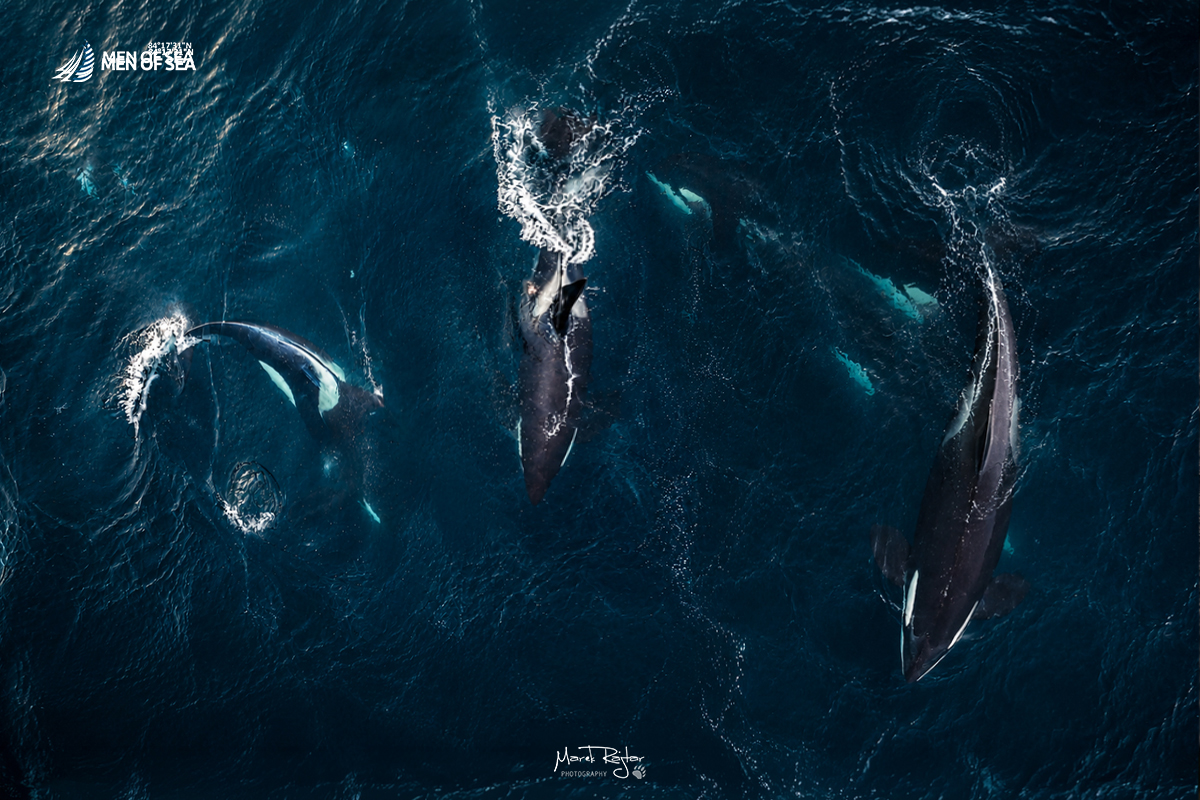
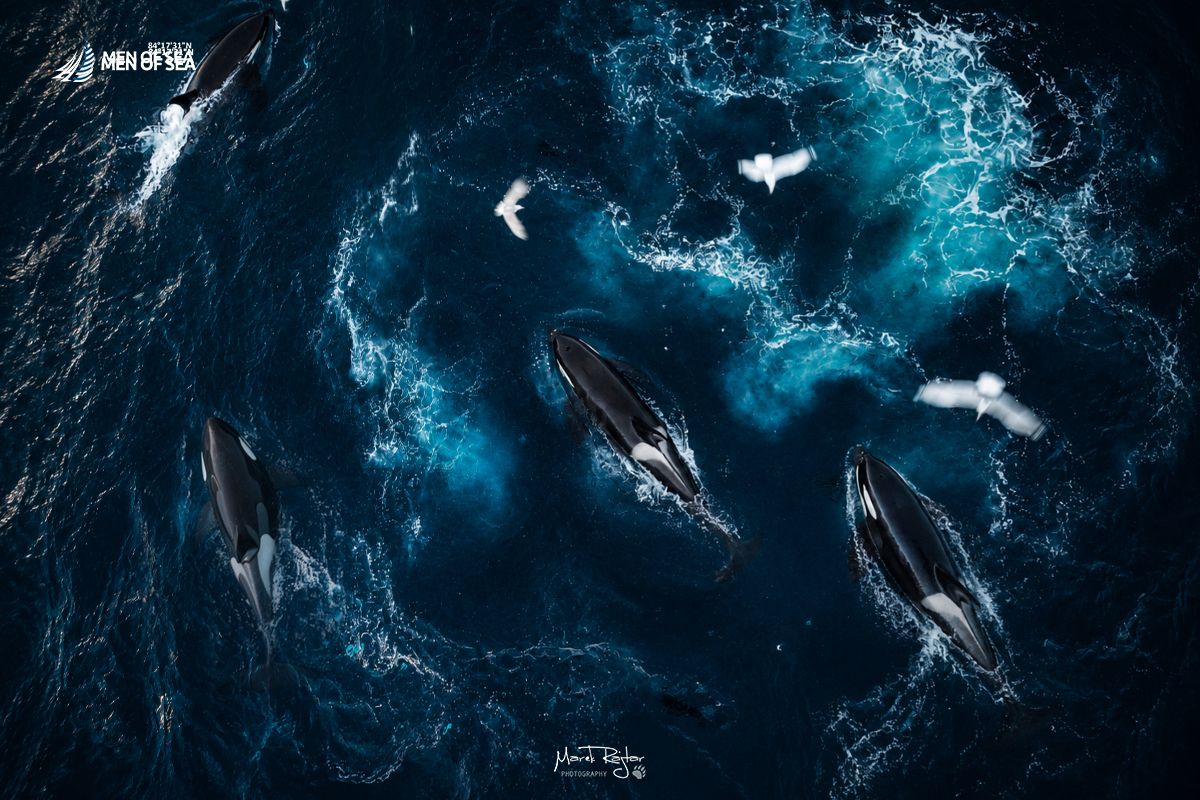
Watching orcas hunt herring in Northern Norway is one of the most remarkable wildlife experiences in the Arctic. The animals cooperate. First, they surround a school of herring and gradually force the fish into an increasingly tight group.
This technique is known as carousel feeding.
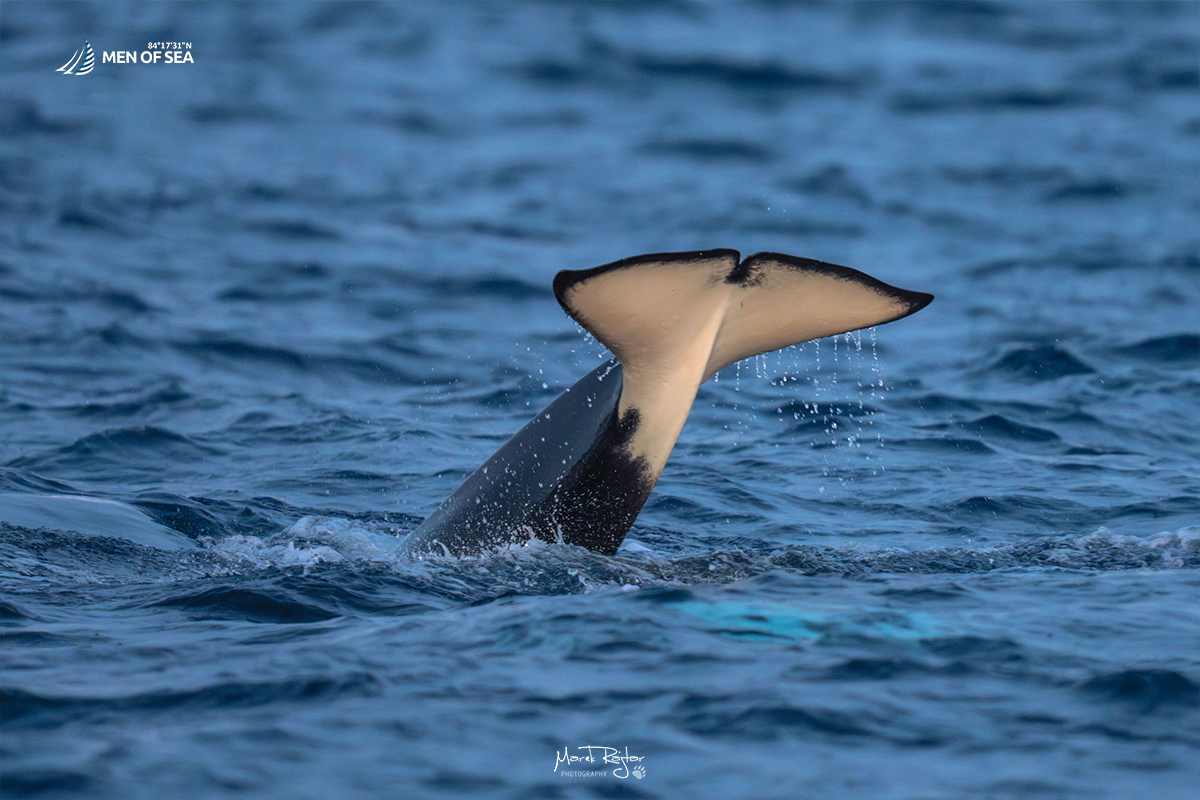
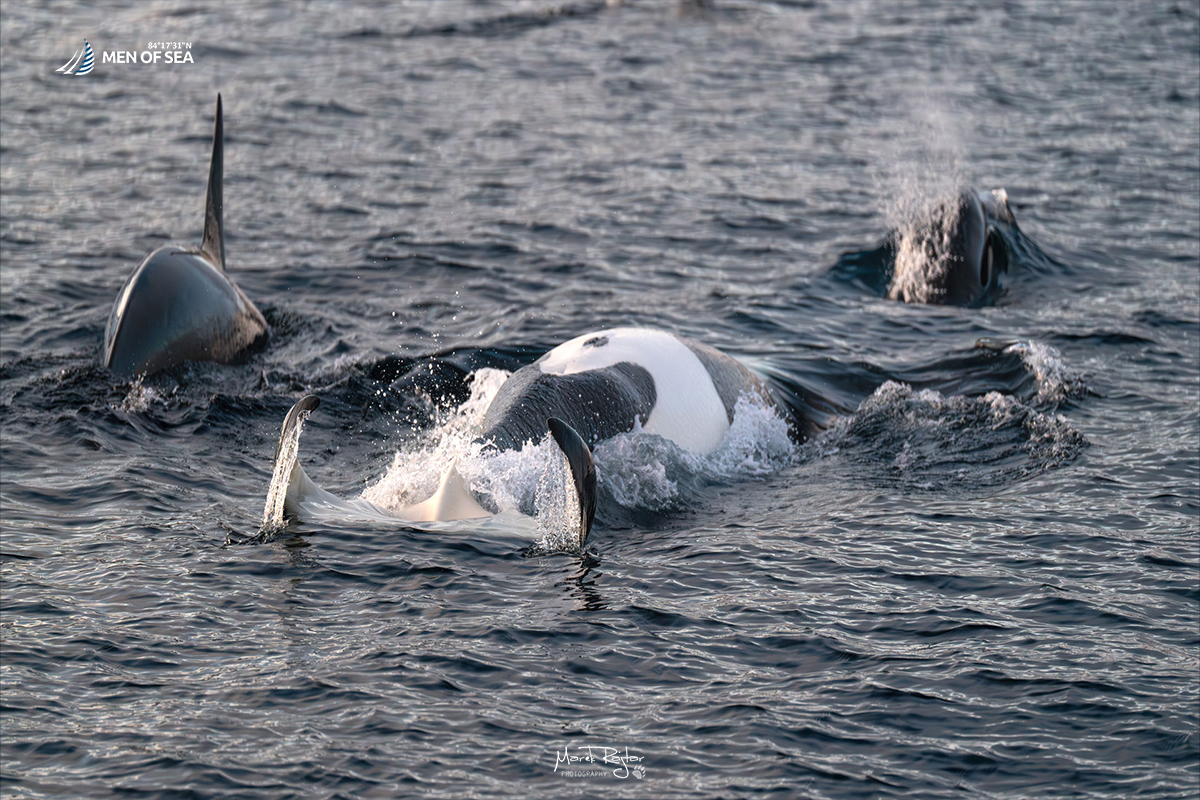
Once the herring are concentrated, the orcas attack. One of their most spectacular techniques is a powerful strike with the tail fluke.
We have watched this many times. The orcas work together to contain the fish, then some of them strike the school with their tails, stunning part of the herring before eating them.
Different animals can perform different roles during the hunt. Larger individuals may carry out the tail strike, while others help maintain the shape and position of the herring school. It is not a chaotic attack. It is coordinated social hunting.
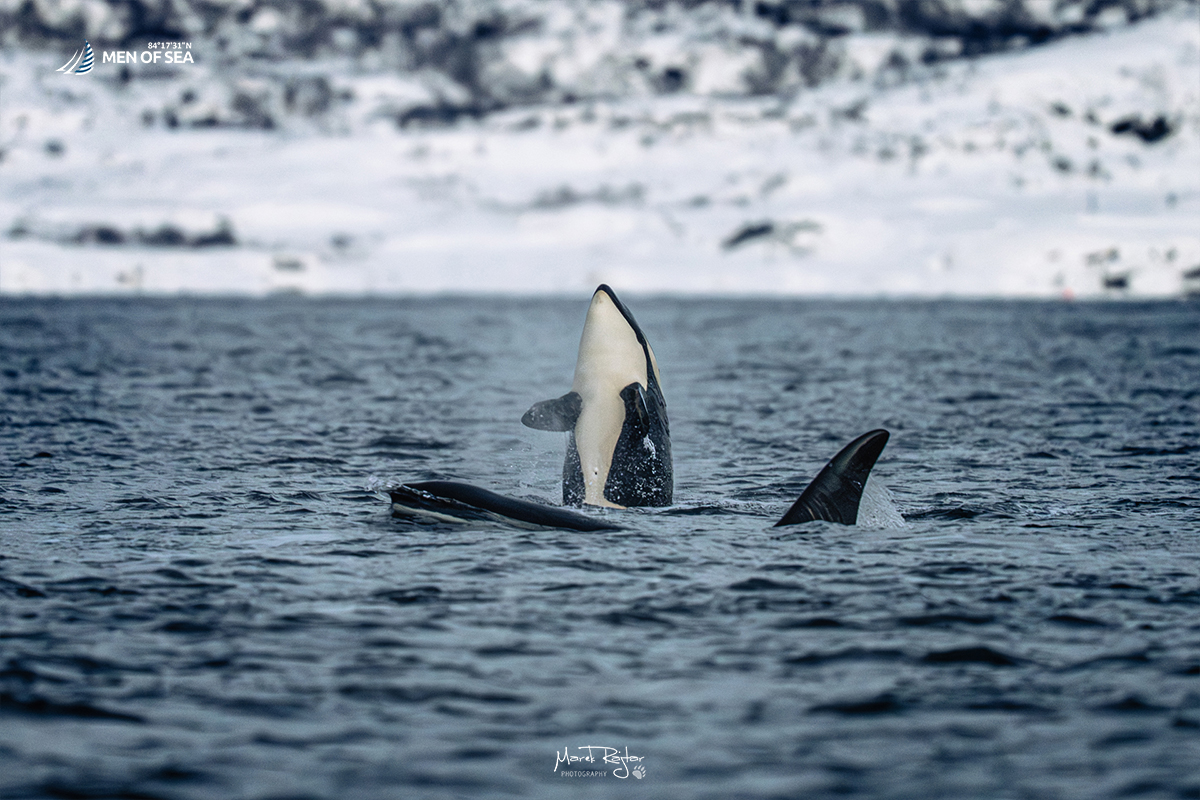
Watching young orcas learn
Young animals are especially interesting to observe. During hunts, they often remain close to adults. They watch. They imitate movements.
They take part in herding the fish. For us, being able to observe this process for a longer period is one of the most rewarding parts of the expedition.
After a few hours, the question: “How many orcas did we see?” becomes less important. A much more interesting question begins to emerge: “What are they actually doing?”
Orcas beside yacht Azimuth
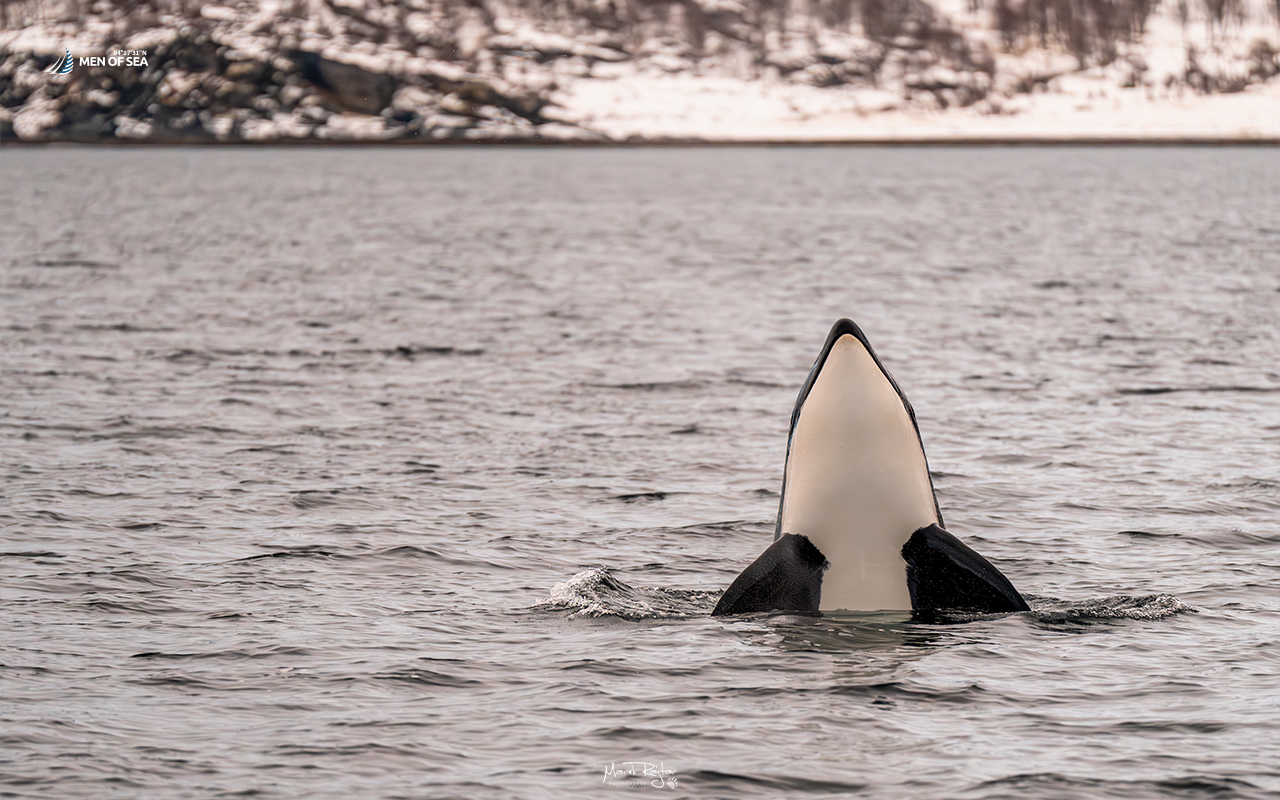
One of the most exciting moments is when a group of orcas chooses to approach our yacht. This happens regularly. They surface beside the hull. They swim across the bow.
They appear on one side and then moments later on the other. Sometimes they pass directly beneath Azimuth. Young animals can be particularly active and curious.
From the deck of a small yacht, we see them from a completely different perspective than from the upper deck of a large ship. We are almost at sea level. A large male surfacing only a few metres away is an unforgettable sight.
But there is one rule that is always important: the orca chooses the distance. We are not interested in chasing animals.
The most fascinating encounters are the ones where the animals themselves decide to come and investigate the yacht.
Why is it worth spending more time with orcas?
A typical whale safari from Tromsø or Skjervøy lasts only a few hours. It can be a wonderful first encounter. But it only gives you a brief glimpse into the animals’ lives. Our approach is different.
During our Northern Lights and Whales expedition, we spend seven days living in the area of their winter feeding grounds.
That means we have the chance to encounter orcas many times. One day we may watch them hunt. Another day we see a family travelling quietly through the fjord. On another occasion, young animals may be active near the surface.
Sometimes nothing happens for quite a while, and then suddenly the entire behaviour of the group changes. Only after spending more time with them do recurring patterns become visible. We begin to recognise when a group is travelling, searching for fish, resting or preparing to hunt.
It takes time to really observe orcas. And that time is one of the greatest advantages of a multi-day expedition.
Listening to orcas with a hydrophone
Orcas live in a world of sound. Underwater, they communicate with whistles, clicks and complex calls. They also use echolocation.
During our expeditions we carry a professional hydrophone, an underwater microphone. When conditions allow, we lower it into the water and listen.
Sometimes we can see a group of orcas at the surface while hearing their communication through our headphones at the same time. Clicks. Whistles. Series of characteristic calls.
Over the years, we have collected many hours of our own recordings of orcas and humpback whales. For us, this is one of the most fascinating ways to get to know these animals.
We watch them from the deck. We listen to them underwater. We observe the reactions of individual animals. And with every season, we learn a little more.
Where does the name “killer whale” come from?
The English name killer whale is often understood simply as “a whale that kills”. But that is not the original idea behind the name.
According to the commonly accepted explanation, early sailors and whalers saw orcas attacking other whales and described them as “whale killers”. Over time, the words were reversed and the expression killer whale became established.
Today, the scientific and increasingly common name is simply orca, from Orcinus orca.
Despite their formidable reputation, wild orcas are not animals that should automatically be viewed as a threat to humans. That does not mean they should ever be treated as tame.
They are powerful wild predators and should always be approached with respect.
Snorkeling with orcas – for the adventurous
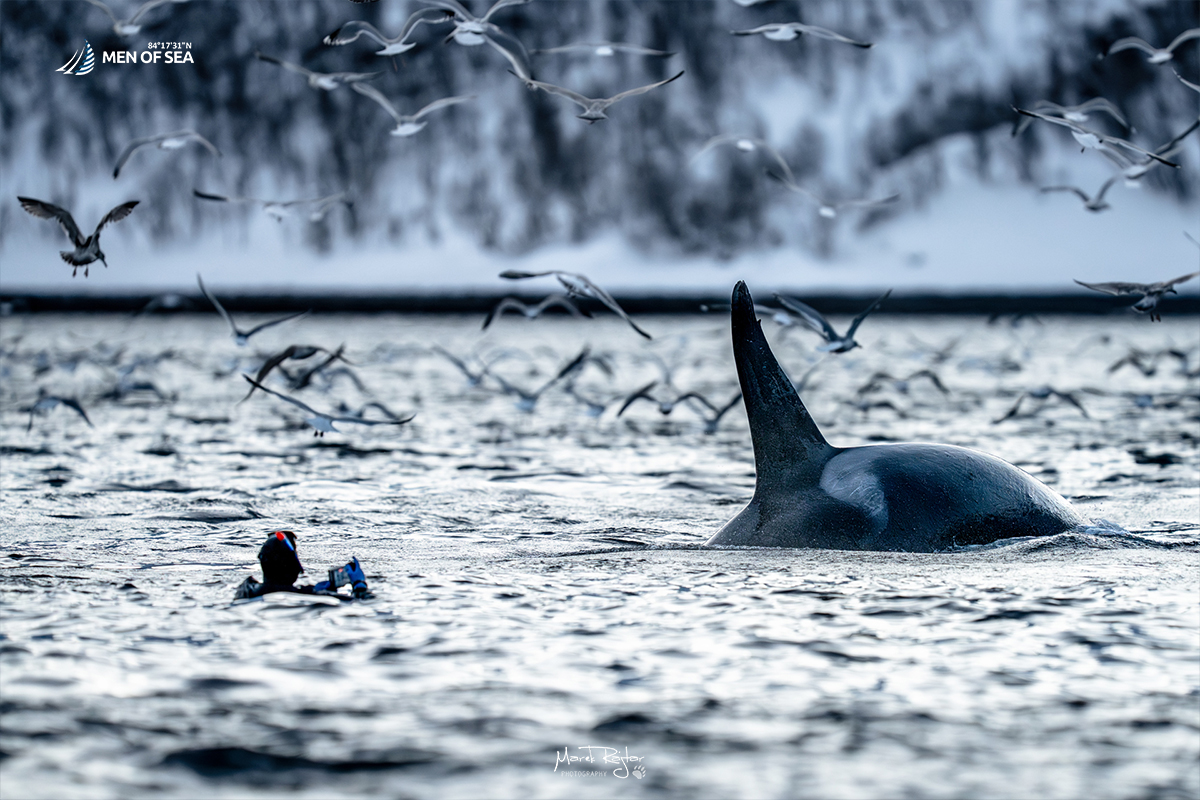
For some participants, the most extraordinary experience is the chance to see an orca beneath the surface. Snorkeling with orcas is also offered in Northern Norway during the autumn and winter season, especially around Skjervøy.
During our expeditions, interested participants may sometimes have the option to join such an experience if weather conditions, animal behaviour, local rules and safety considerations allow it. We cooperate with a highly experienced local operator specialising in orca snorkeling.
For this to be possible, there generally needs to be a group of at least 3–4 interested participants. Conditions must be suitable and the activity needs to be arranged in advance. For travellers who want a more dedicated experience, we also organise separate five-day snorkeling expeditions, independently of our Northern Lights and Whales trips.
Seeing several metres of black-and-white animal gliding through the water below you is a completely different experience from watching an orca from a boat.
Orcas and humpback whales together
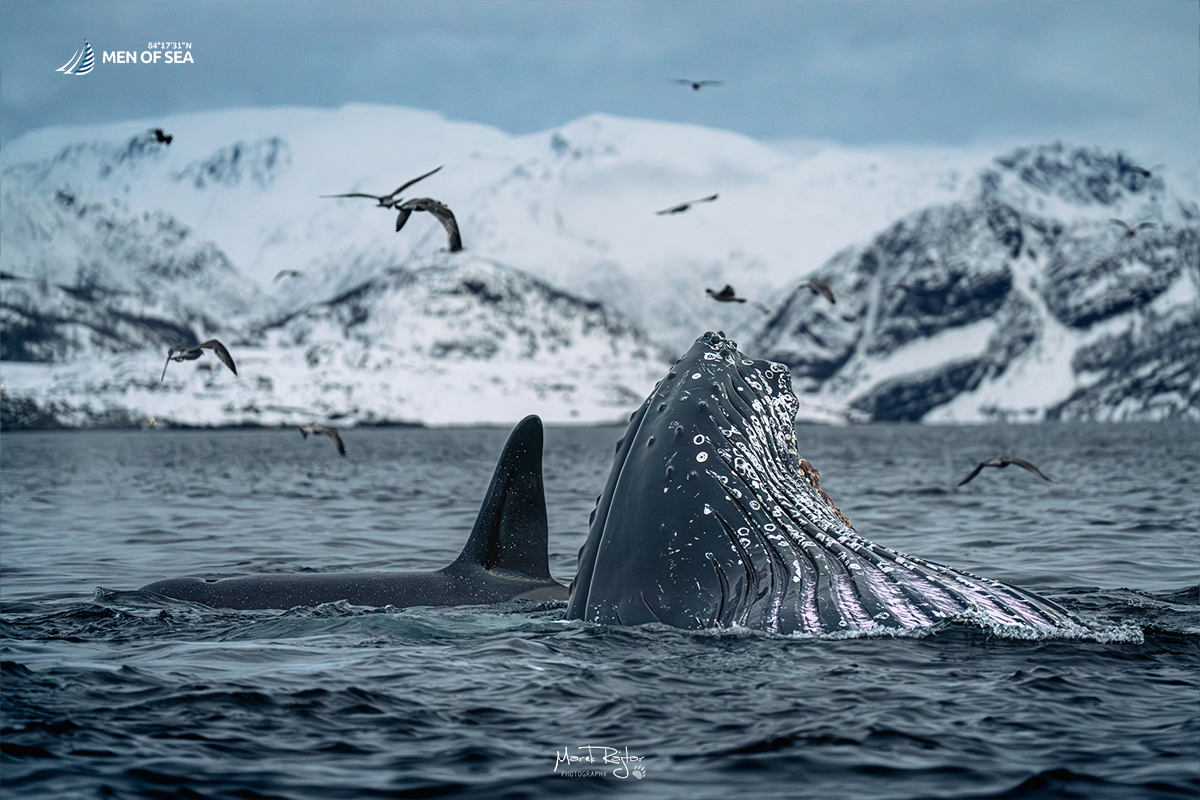
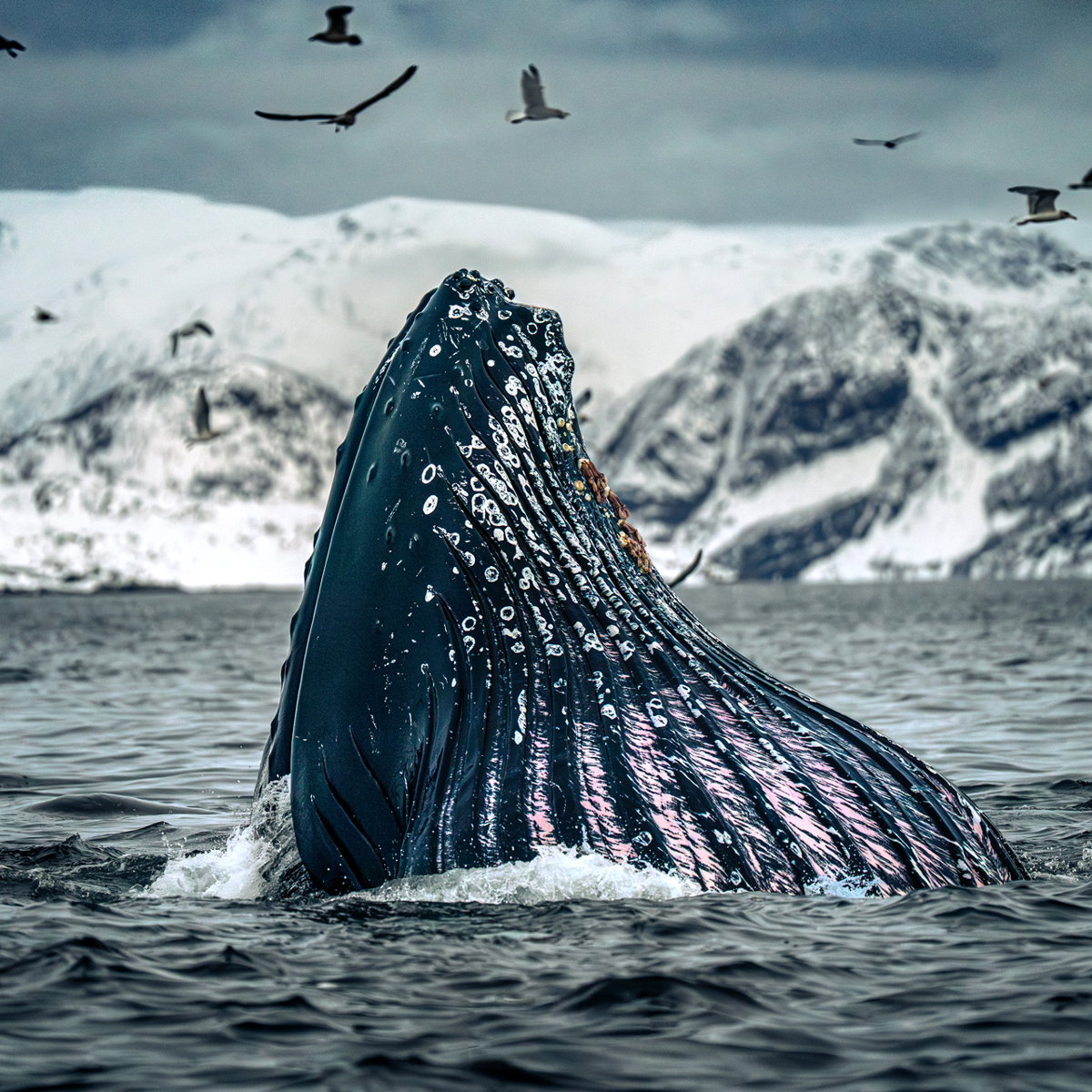
In Kvænangen, we very often see orcas and humpback whales at the same time. They are attracted by the same thing: herring.
Often, we first see a group of orcas actively hunting. A short while later, humpback whales appear. They begin feeding on the same concentration of fish. For a wildlife observer, the scene can be extraordinary.
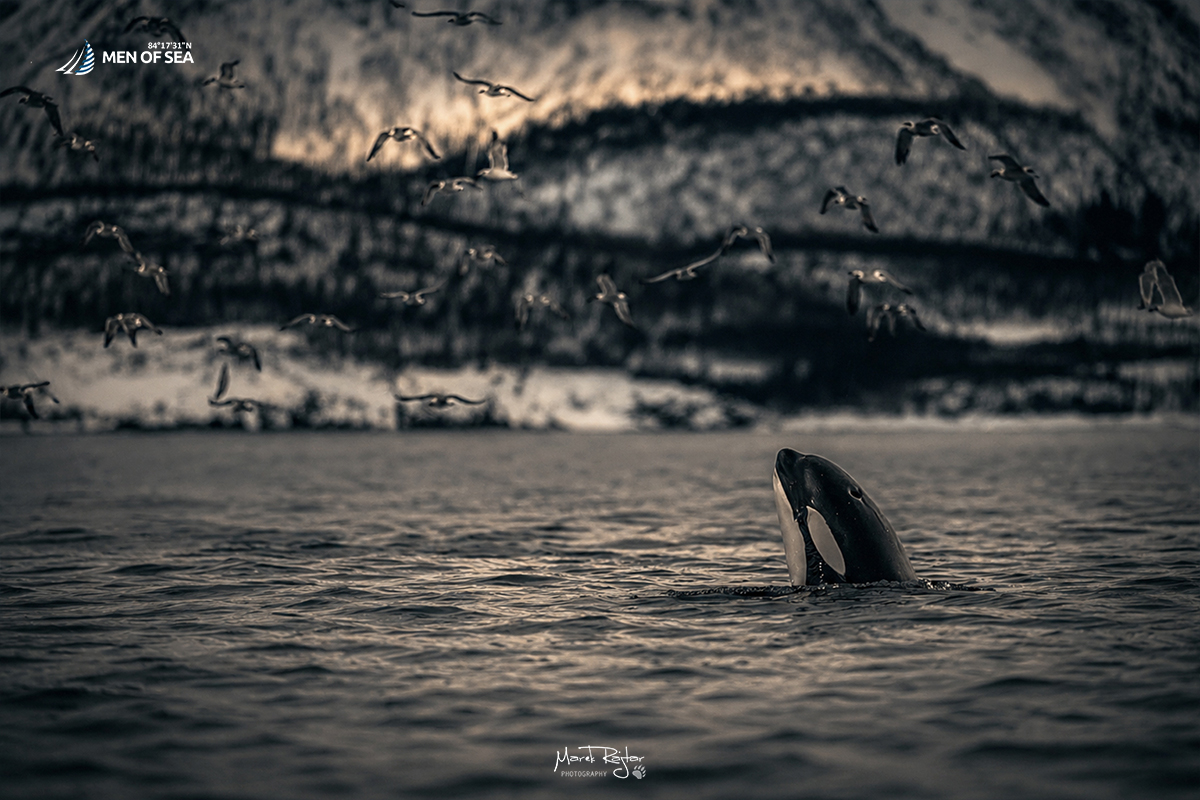
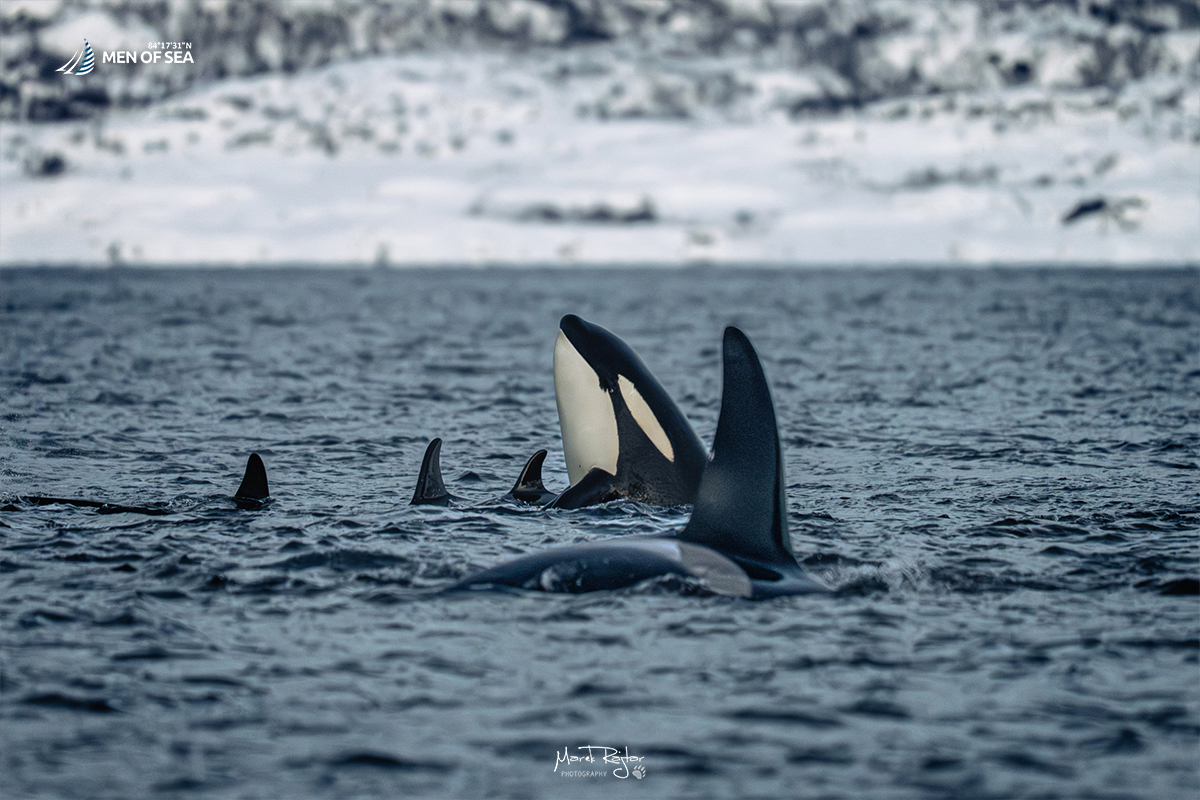
Tall dorsal fins of male orcas rise above the surface. Smaller females and young animals move between them. A few metres away, a huge humpback whale surfaces. Seabirds circle overhead. And beneath all of this is a massive school of herring.
These are exactly the moments we look for during our expeditions.
Orcas, whales and the Northern Lights
For many travellers, a winter trip to Tromsø is first associated with the Northern Lights. And for good reason. The Northern Lights season lasts much longer than the whale season, but late autumn and early winter offer a unique opportunity to combine both experiences during a single journey.
That is exactly why we created our expedition: Northern Lights and Whales.
During the day, we search for orcas and humpback whales. In the evening, we return to Spildra. And when the sky is clear and aurora activity is favourable, we head outside again.
This time, we are not looking at the water. We are looking at the sky. It is the chance to combine two of the most spectacular experiences Northern Norway can offer in winter:
wild whales and the Northern Lights.
Is seeing orcas guaranteed?
No. We never guarantee an encounter with a wild animal. The distribution of orcas depends mainly on the herring, and herring concentrations can change from day to day and from year to year.
But this is also why we spend an entire week in the area instead of arriving for a single short whale safari.
We have time. We can change the plan. We can sail farther. We can wait for better weather. We can use information from local residents and fishermen.
And most importantly, every day we are already staying in the area where winter whale activity is concentrated. We cannot promise orcas. But we can do a great deal to create the best possible conditions for finding them.
Why are we so fascinated by orcas?
At the beginning, everyone wants the same thing: to see an orca.
Then something changes. After several encounters, we start looking at them differently. We notice a young animal staying close to its mother. We recognise a huge male.
We see several animals positioning themselves around a school of herring. We hear their calls through the hydrophone. We notice that one orca is doing something different from another.
We begin to predict where the group may surface. We learn from them. And that is why, after many years of observing orcas, they have not become less interesting to us. Exactly the opposite has happened.
The more we learn about them, the more fascinating they become.
FAQ – Orcas in Tromsø and Northern Norway
Where is the best place to see orcas near Tromsø?
In recent years, the main winter whale-watching areas have been north of Tromsø, particularly around Skjervøy and in Kvænangen. The exact location changes with the distribution of herring.
When is the best time to see orcas in Northern Norway?
Usually from late October or early November until the end of January, although the season may begin or finish slightly earlier or later depending on the year.
Can you see orcas directly in Tromsø?
Sometimes whales have occurred closer to Tromsø, but in recent years the main winter concentrations have usually been farther north, especially around Skjervøy and Kvænangen.
Why do orcas come to Kvænangen?
Primarily because of the huge wintering shoals of Norwegian herring.
Are orcas intelligent?
Yes. Orcas have complex social structures, learn from one another, cooperate while hunting and use learned group-specific calls.
Do orca groups have their own dialects?
Yes. Characteristic calls can be learned and passed between members of a social group, which is why they are often described as culturally transmitted dialects.
How do orcas hunt herring?
In Northern Norway, they often use carousel feeding. They herd herring into a dense school and then stun fish with powerful tail strikes.
Can you listen to orcas?
Yes. With a hydrophone, it is possible to hear underwater calls, whistles and echolocation clicks.
Do orcas approach yachts?
Yes, sometimes they voluntarily approach boats very closely. Such encounters should never be forced – the animals should decide the distance.
Can you see orcas and humpback whales on the same expedition?
Yes. Both species use the same herring-rich waters of Northern Norway in winter, and we often observe them on the same day.
Can you combine orca watching with the Northern Lights?
Yes. Orca season overlaps with the dark season in Northern Norway, which creates the possibility of combining whale watching and Northern Lights viewing during the same trip. This is the idea behind our Northern Lights and Whalesexpeditions.