HUMBACKS
THE SINGING WHALES
HUMPBACK WHALES – THE SINGING WHALES
Humpback whales in Northern Norway – where and when can you see them?
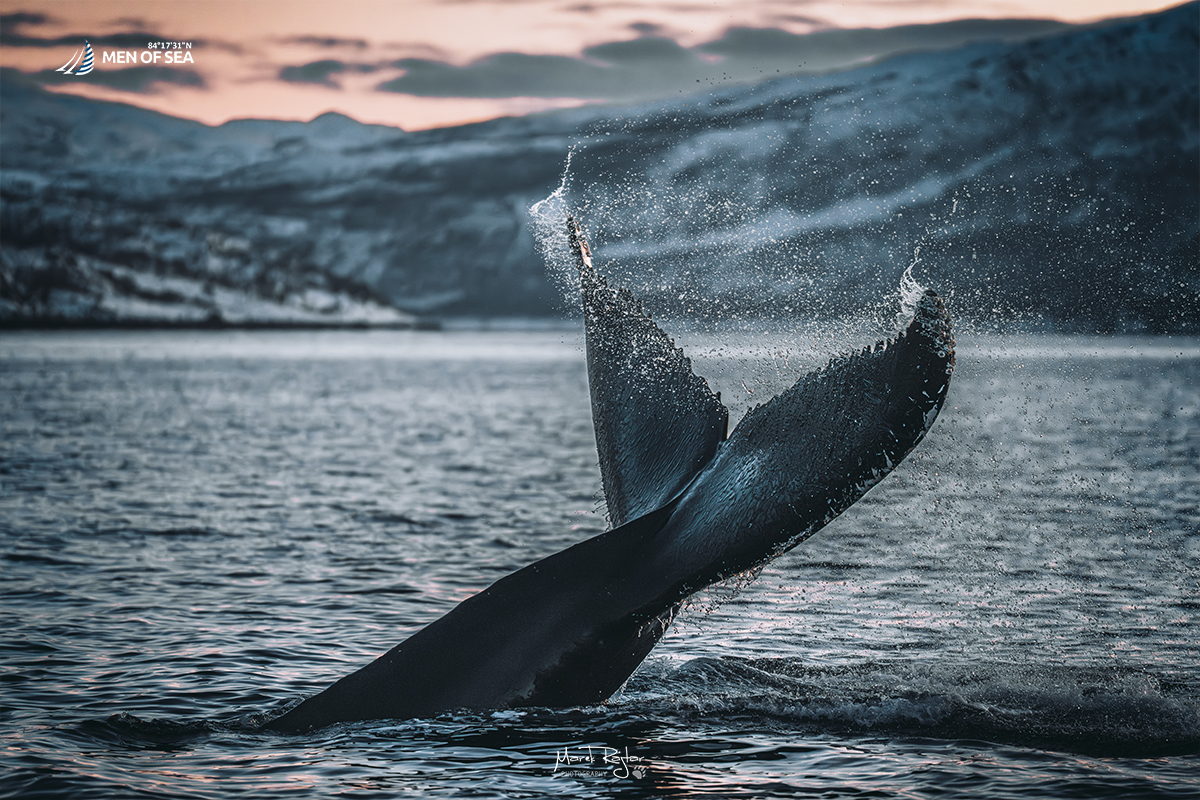
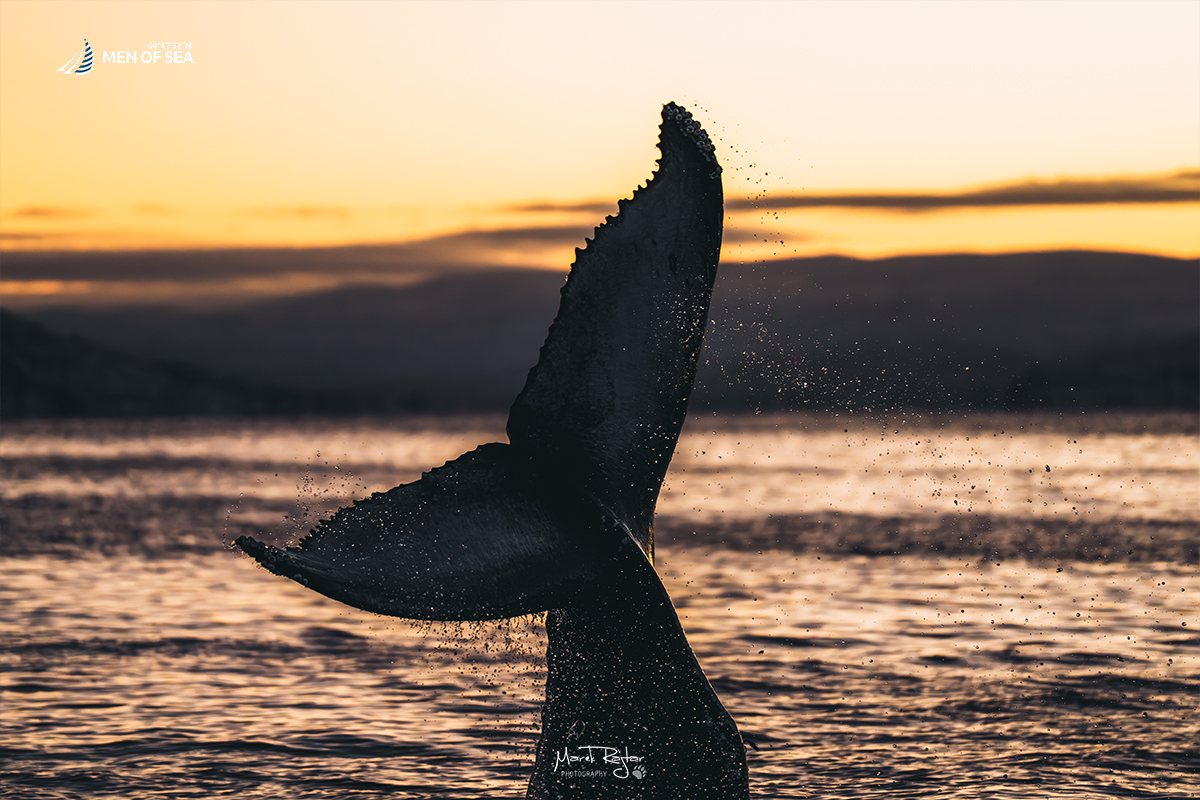
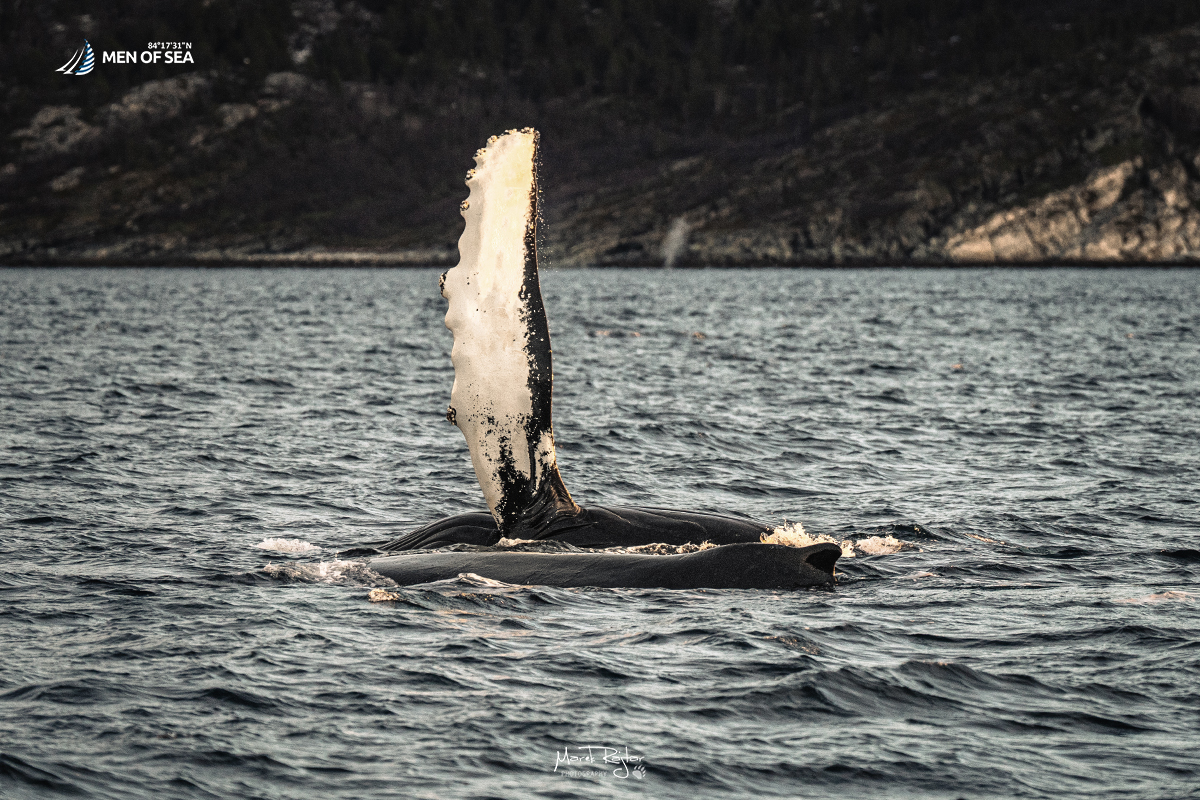
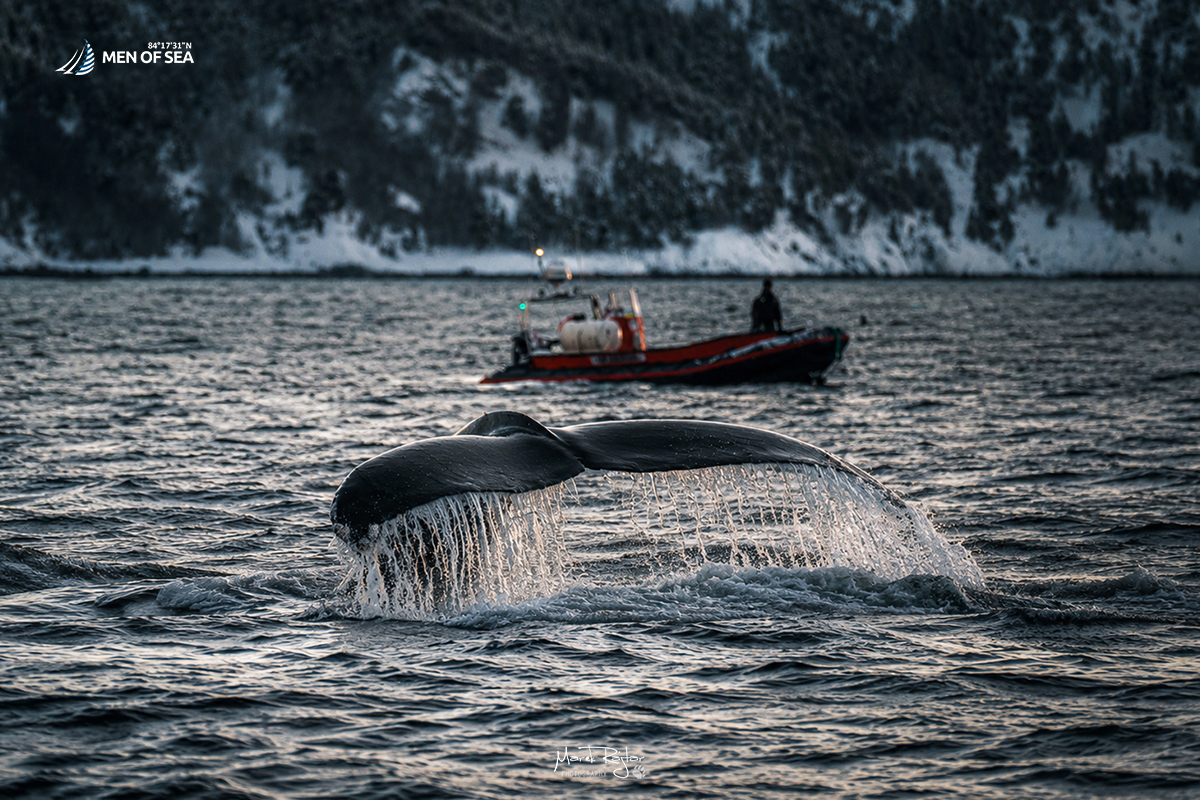
The humpback whale (Megaptera novaeangliae) is one of the most spectacular whale species found in Northern Norway. Adults usually reach around 14–17 metres in length and weigh several dozen tonnes. They are easy to recognise thanks to their exceptionally long pectoral fins, massive body and distinctive tail fluke. The underside of every humpback whale’s tail has a unique pattern of light and dark markings. For researchers, these patterns work almost like fingerprints, allowing individual whales to be identified.
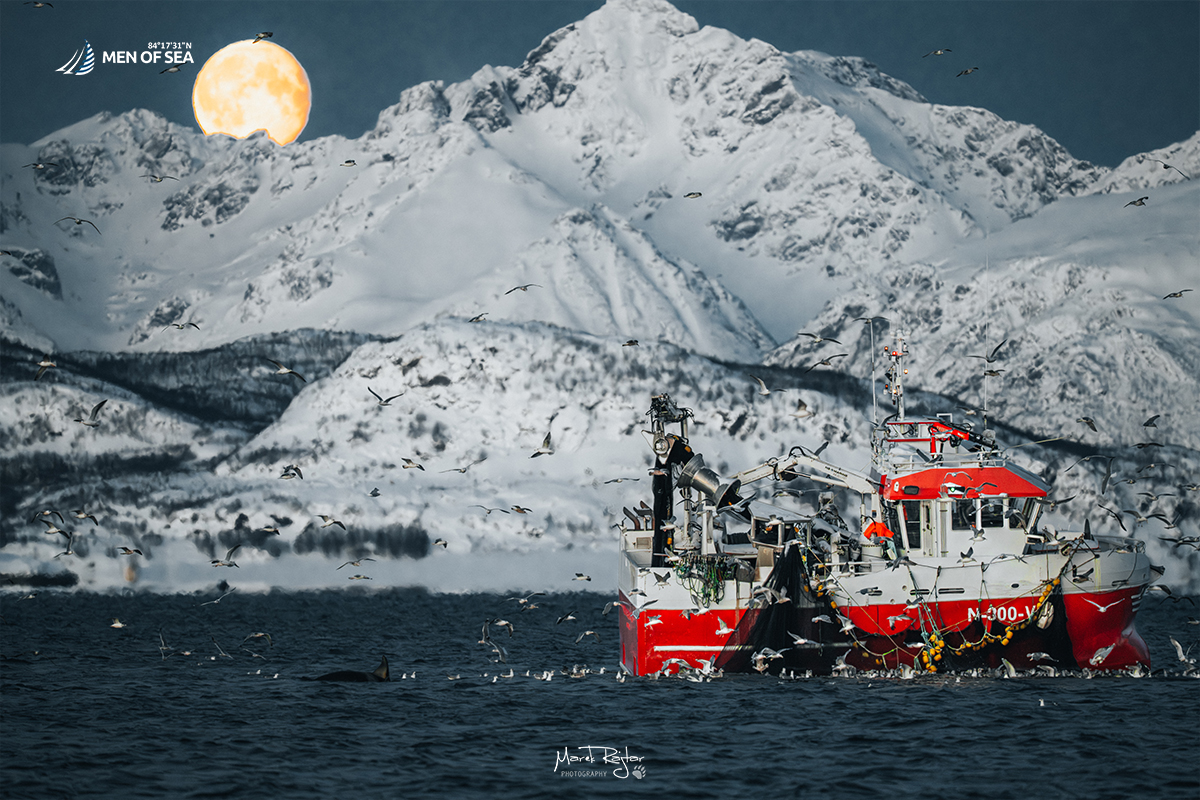
During autumn and winter, humpback whales regularly appear in Northern Norway, following huge shoals of herring. This makes Kvænangen, Skjervøy and the surrounding fjords some of the most exciting places in Europe for whale watching. Large numbers of herring have used the Kvænangen fjord system as a wintering area in recent years, although their exact distribution changes from season to season. And where the herring goes, the whales follow.
Key facts about humpback whales
Species: Humpback whale (Megaptera novaeangliae)
Length: Usually around 14–17 metres
Weight: Commonly around 30–40 tonnes, although large individuals can weigh more
Diet: Mainly schooling fish and krill
Distinctive features: Very long pectoral fins, massive body and individually patterned tail fluke
Behaviour: Active, curious and often spectacular at the surface
Northern Norway in winter: Their presence is strongly connected with migrating and wintering herring
Best whale-watching season around Kvænangen and Skjervøy: Usually from October to January.
Why do humpback whales come to Kvænangen?
The answer is simple: herring. In autumn, huge shoals of herring move into the fjords of Northern Norway to spend the winter. Predators follow them. Among them are humpback whales, orcas, other large whales and countless seabirds.
In recent years, Kvænangen has become one of the important wintering areas for Norwegian herring. However, whales are not found in exactly the same place every year. The herring moves. And the humpback whales move with it.
That is why whale watching always requires observation, patience and flexibility. During recent seasons, however, whales have been present in this region extremely regularly.
When is the best time to see humpback whales in Northern Norway?
The most interesting period is usually between October and January. This is when humpback whales, orcas and other marine predators gather in areas where large shoals of herring concentrate.
Our Northern Lights and Whales – Zorze i Wieloryby expeditions take place precisely during this period.
Every week is different. Most often, the whales are found deeper inside Kvænangen, particularly around Spildra Island. At other times they move closer to Skjervøy or into neighbouring fjords.
This is wild nature, so the itinerary always follows the whales rather than a fixed timetable.
How do humpback whales hunt herring?
One of the most fascinating aspects of humpback whale behaviour is the way they can cooperate while feeding. Humpbacks can concentrate fish into dense schools and then attack from below.
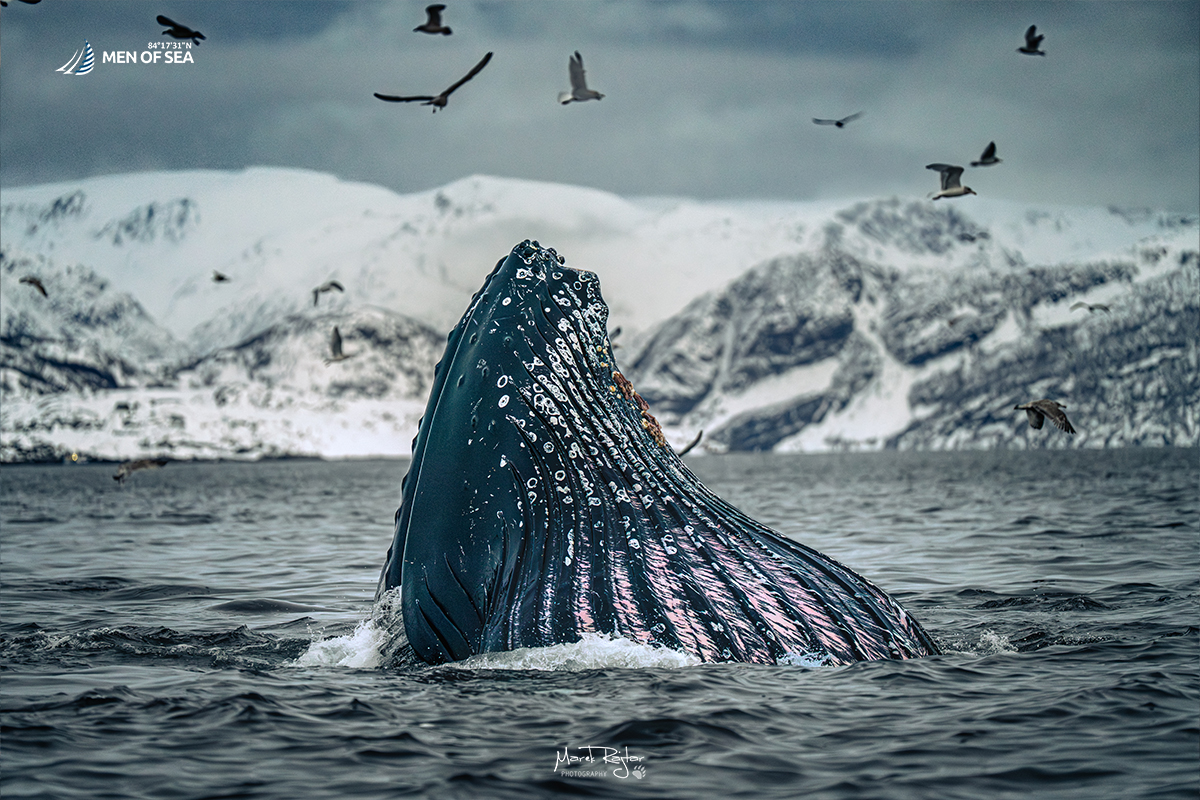
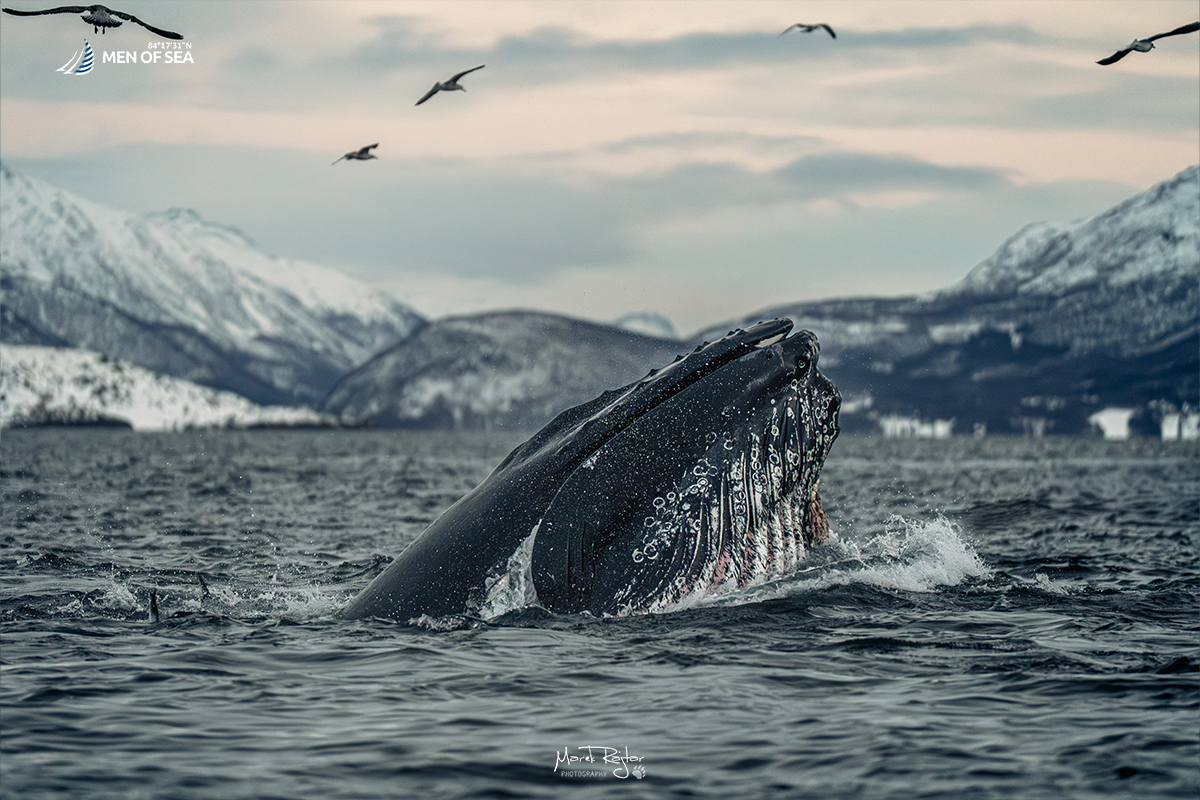
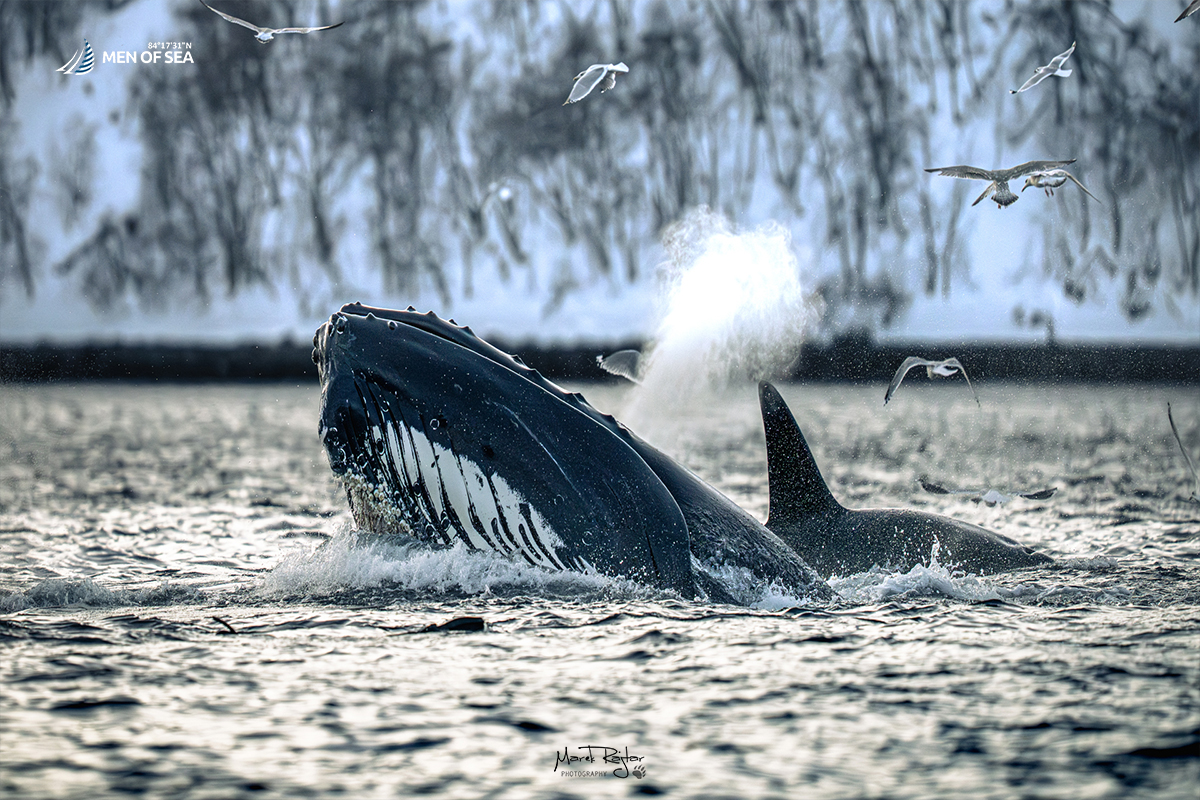
One of their best-known feeding techniques is bubble-net feeding. A whale, or sometimes several whales, dives beneath a school of fish and releases streams of air bubbles. The bubbles create a kind of barrier around the fish, helping to concentrate them into a dense mass. This can form what is known as a bait ball.
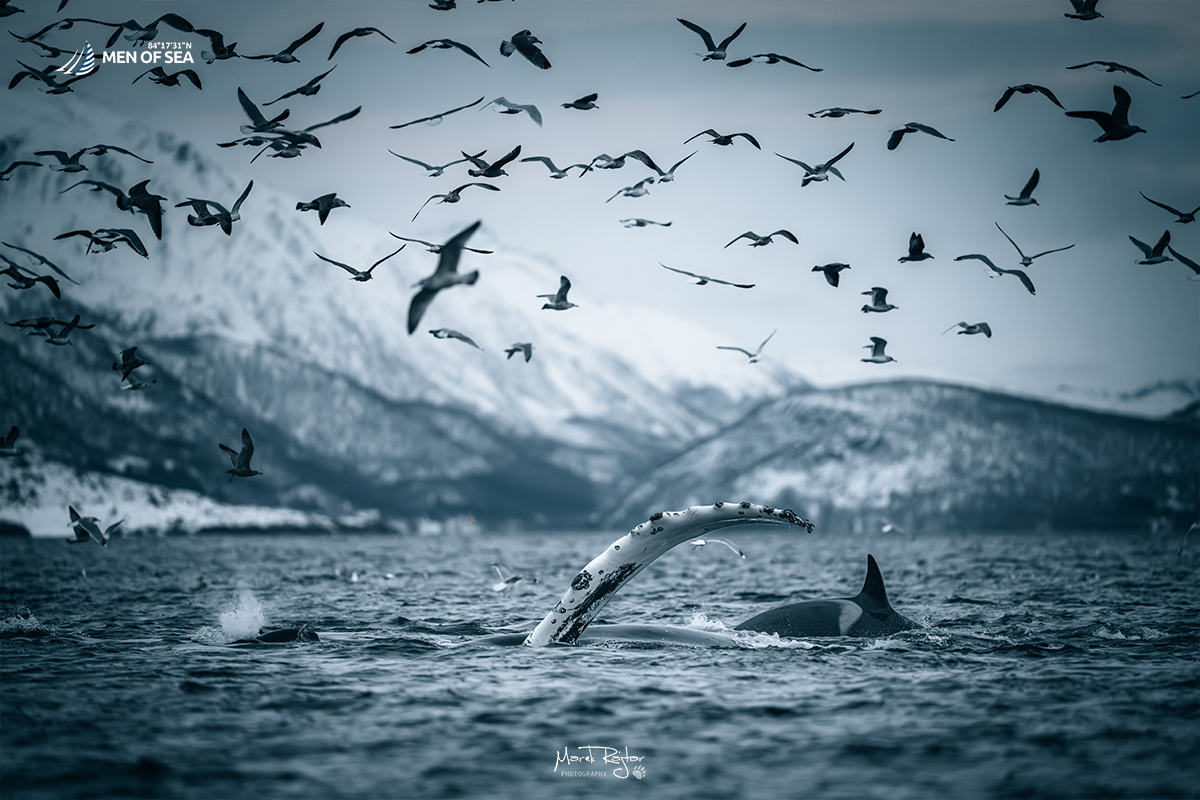
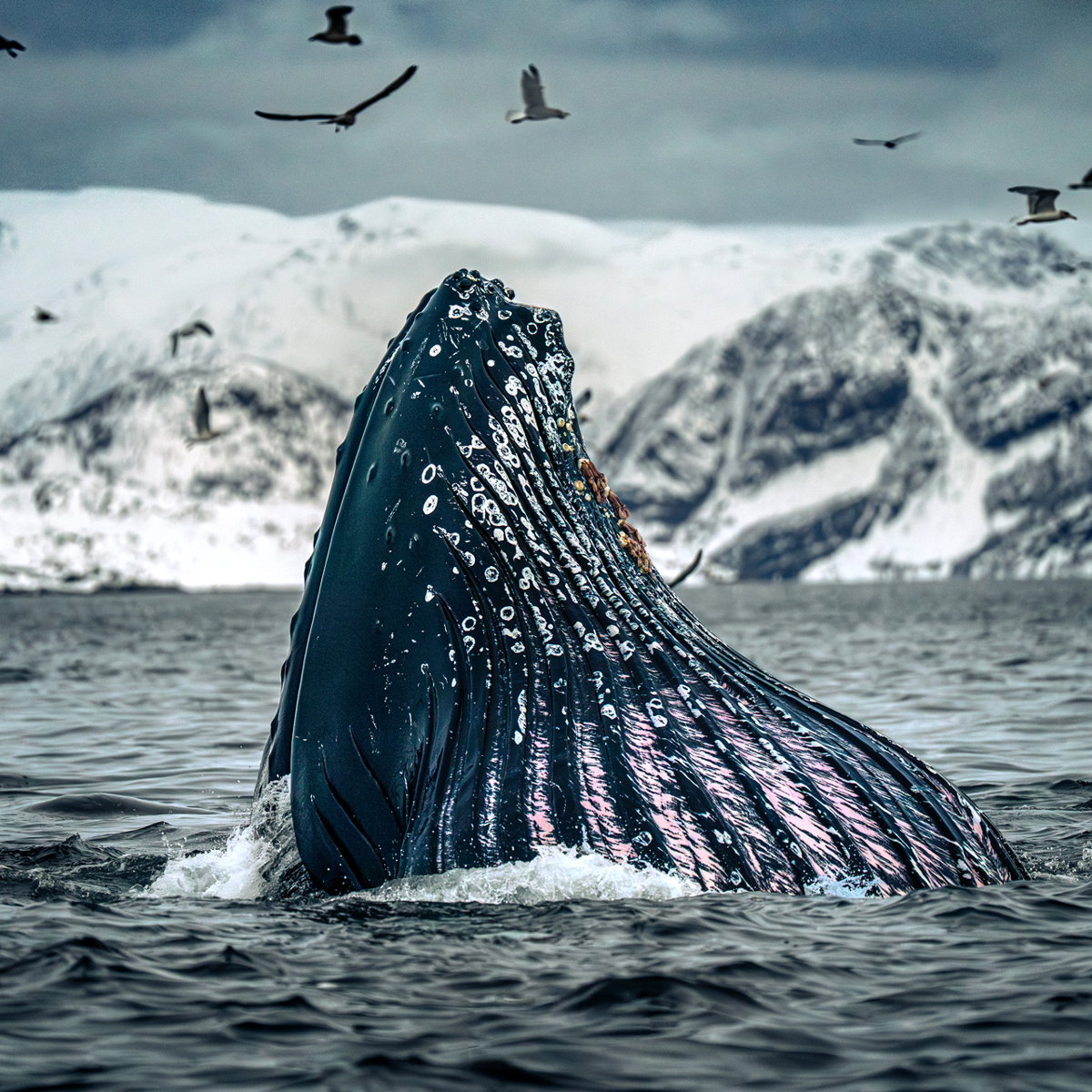
Moments later, humpback whales rise from below with their mouths wide open. Several enormous animals can surface almost simultaneously among thousands of herring. Seabirds circle overhead. Fish scatter across the surface. And among them appear humpback whales and orcas.
It is one of the most impressive feeding spectacles we can witness during our winter expeditions.
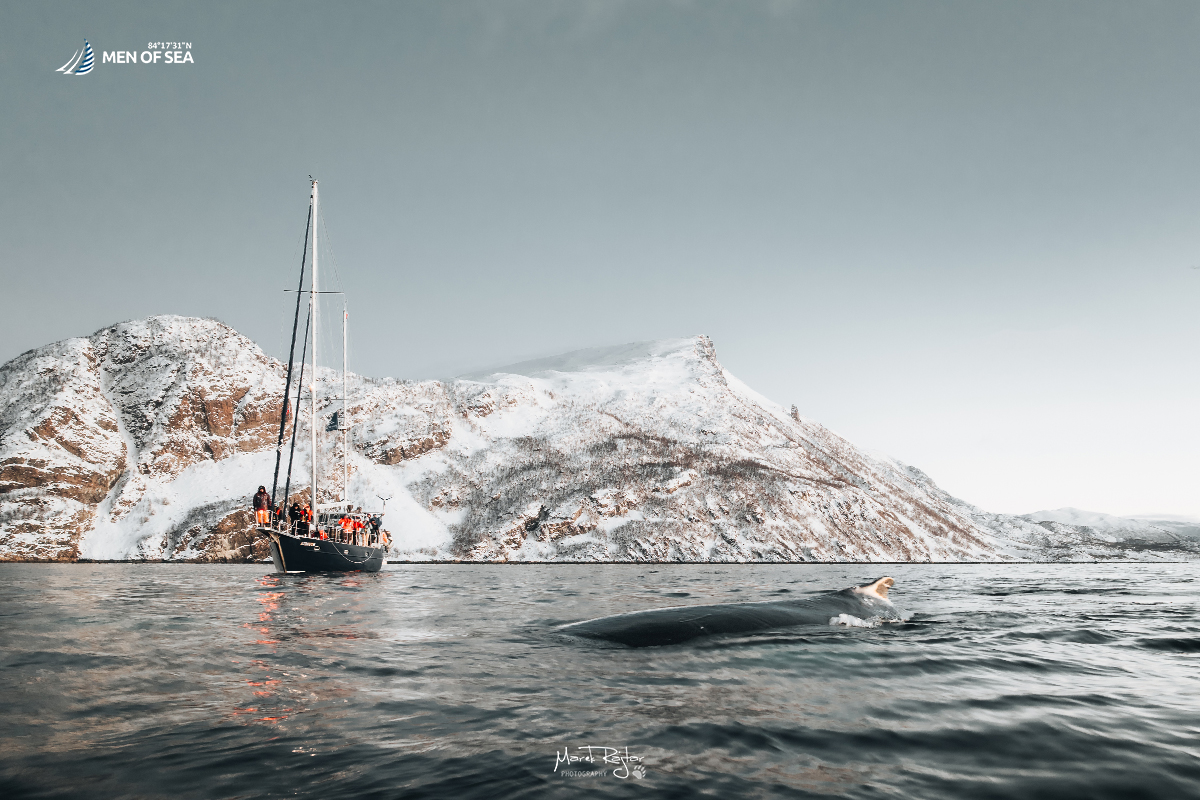
Humpback whales beside our yacht
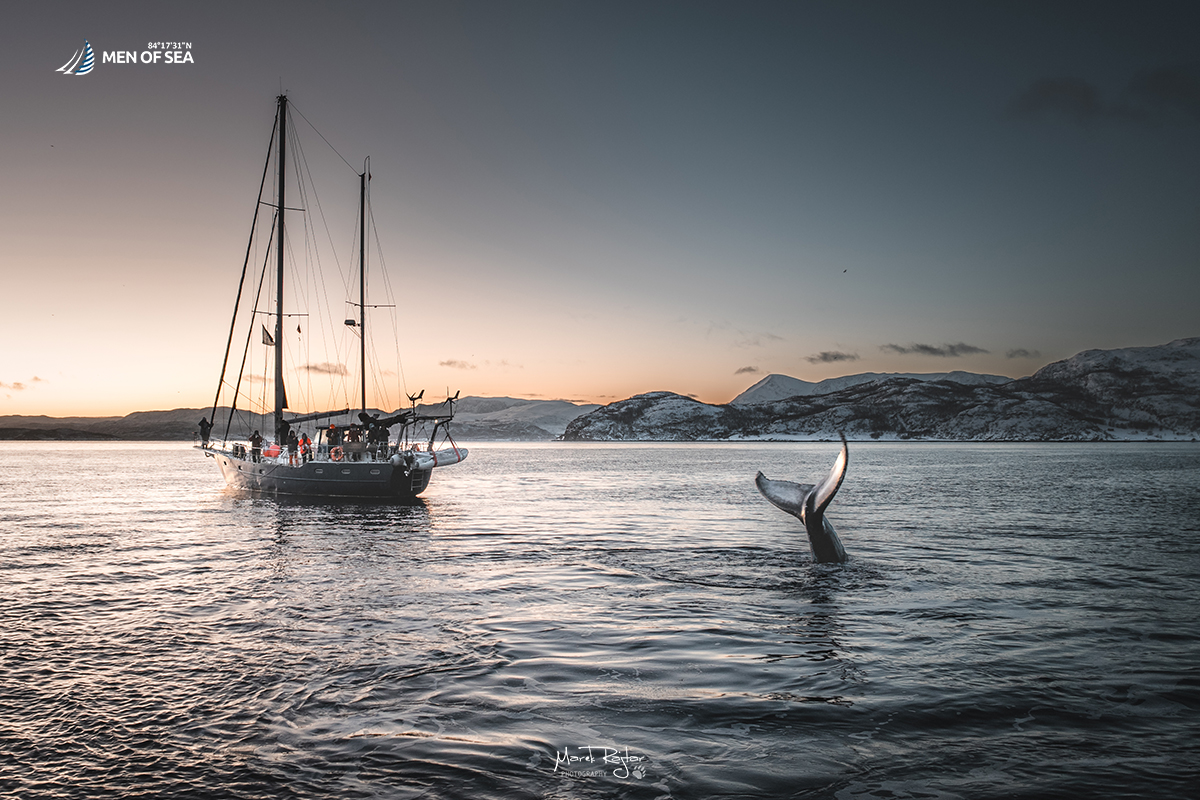
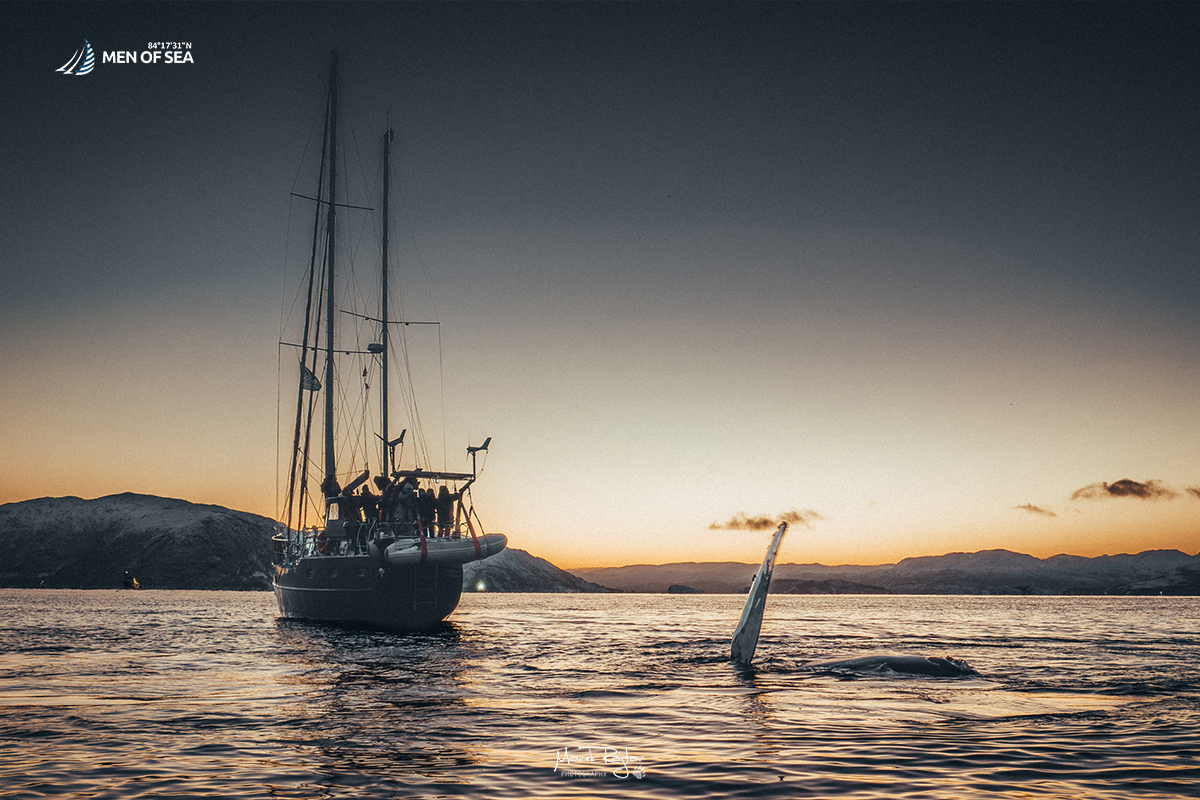
Some of the most memorable encounters are the ones that cannot be planned. During our expeditions, humpback whales have repeatedly approached Azimuth extremely closely.
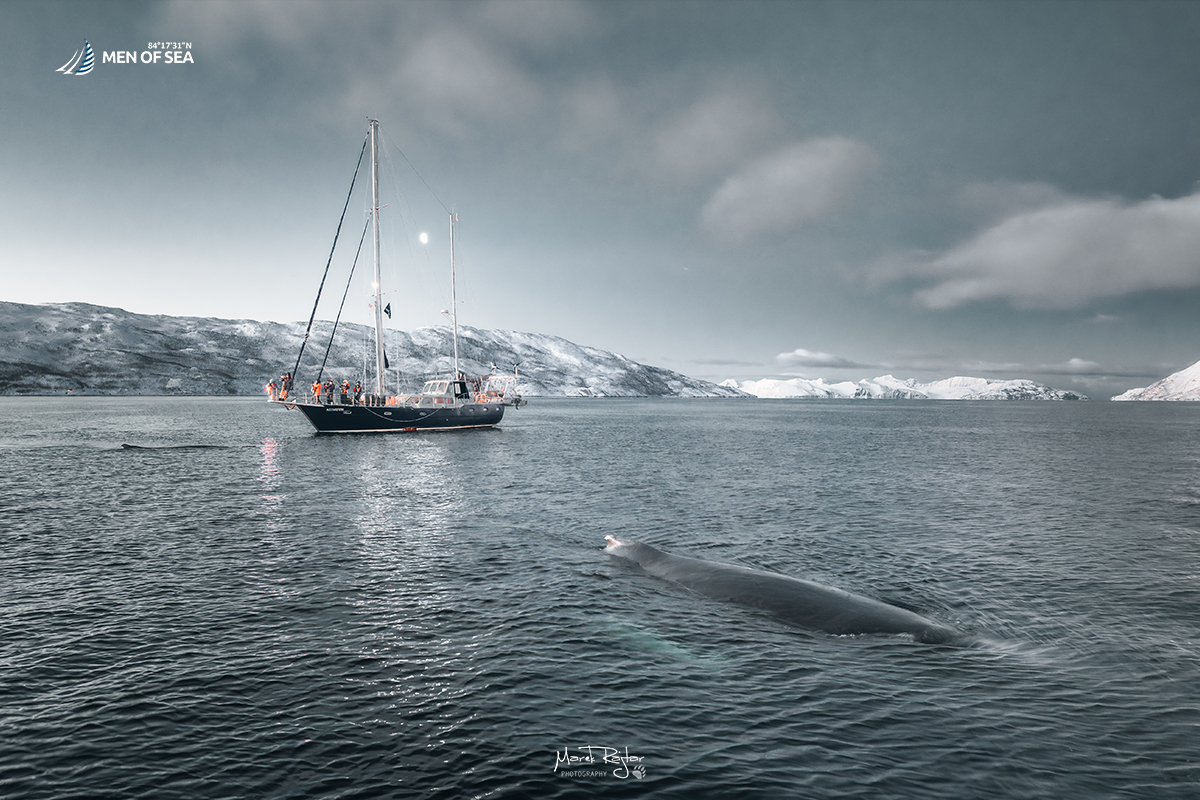
Sometimes they surface only a few metres from the side of the yacht. From this distance we can clearly see the whale’s back, pectoral fins, blow and enormous tail disappearing beneath the surface.
Watching a humpback from the deck of a yacht feels very different from seeing one from a large ship.
Suddenly you realise that the animal swimming beside you can be almost as long as the yacht itself. Sometimes humpbacks remain in the area for a long time. They pass beneath the yacht, appear on the opposite side or surface immediately beside us.
These encounters are among the most emotional moments of our winter voyages.
Are humpback whales curious?
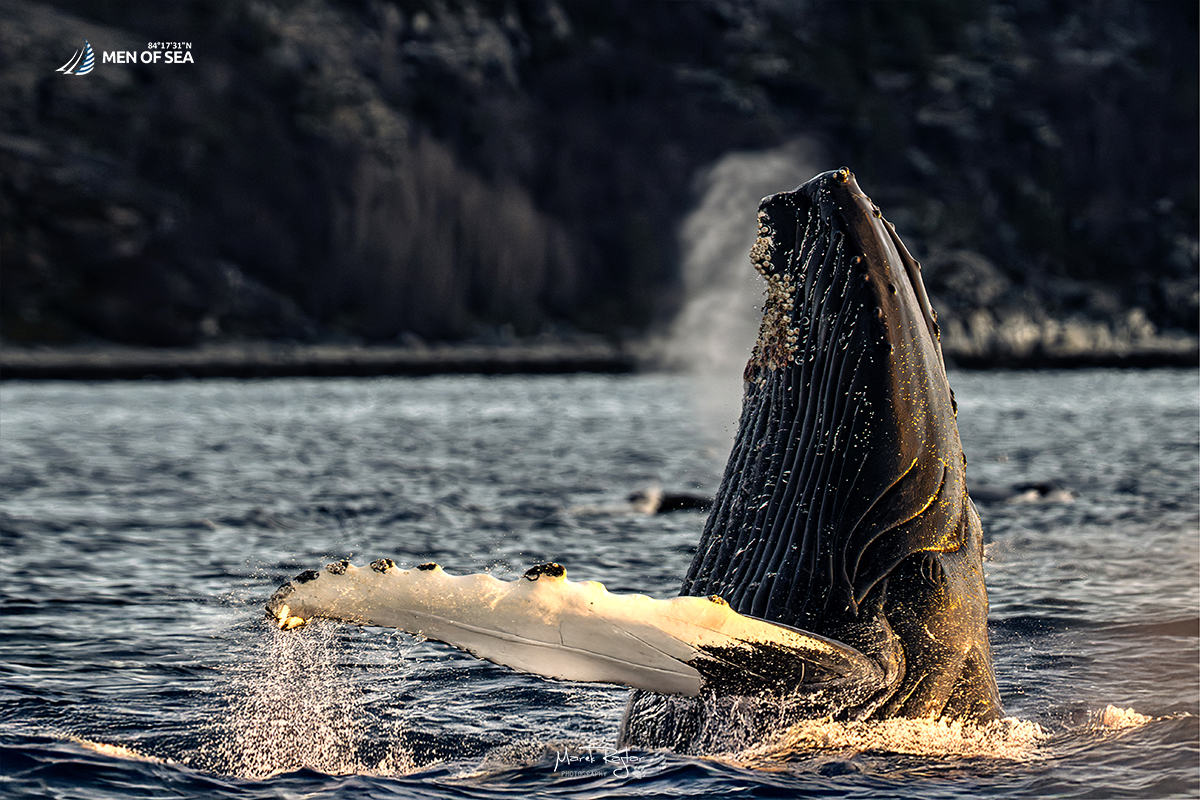
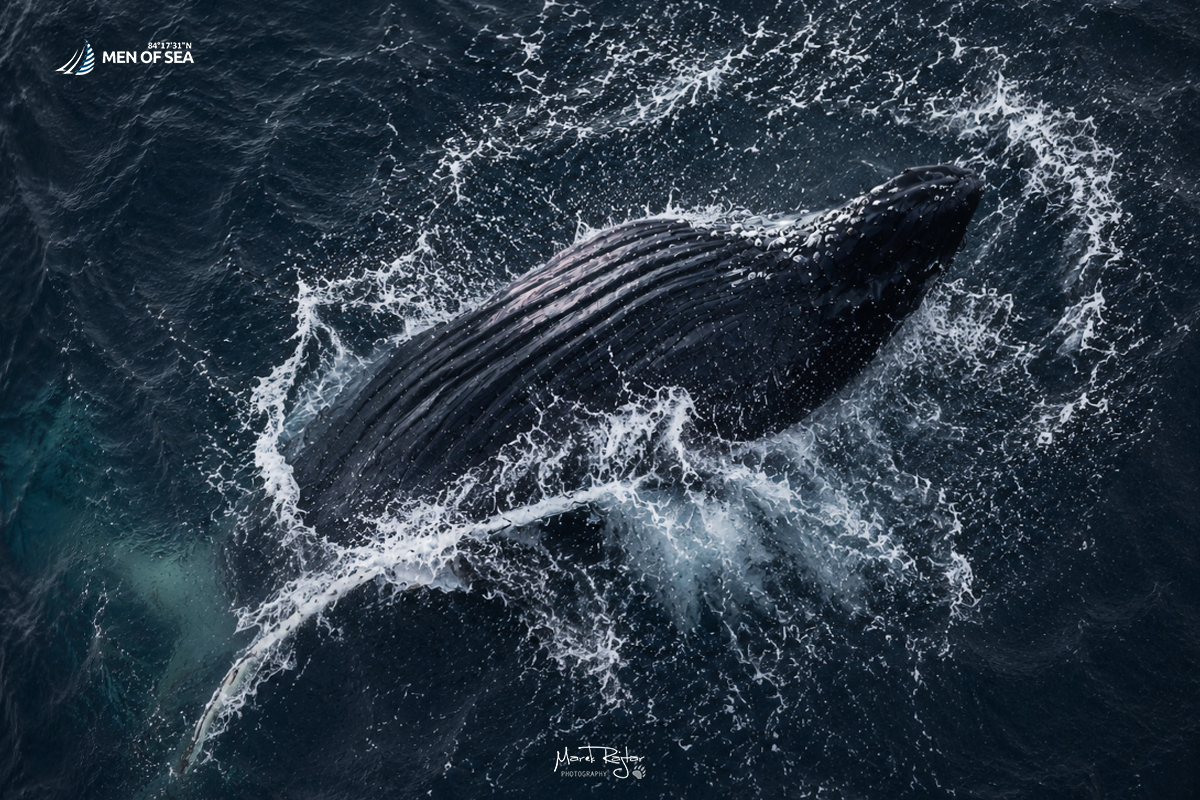
Humpbacks are among the whales that frequently display active surface behaviour. We often see them raising their heads, slapping the surface with their pectoral fins or tail, rolling onto their sides, feeding with their mouths open and, from time to time, launching almost their entire bodies out of the water.
They can also show noticeable interest in boats. However, we should not automatically interpret every close approach as the whale “playing” with people.
These are wild animals, and their behaviour can have many different causes. The most important rule is simple: the whale should decide the distance.
If a humpback approaches our yacht voluntarily, we remain observers and allow the animal to behave naturally.
Why are humpback whales called singing whales?
Humpback whales are famous for their remarkably complex vocalisations. Males in particular produce long, structured sequences of sounds known as humpback whale songs.
These songs can contain many different tones, moans, pulses and other sounds. They are particularly associated with the breeding season.
Scientists continue to study their exact function, although they are clearly connected with communication and reproductive behaviour. Humpbacks also produce many other sounds that are not part of their famous songs.
Sound plays a vital role in the underwater world, where visibility can be extremely limited.
Listening to humpback whales with a hydrophone
One of the most unusual experiences during our Northern Lights and Whales expeditions is that we can not only watch whales, but also listen to what is happening beneath the surface.
We use a professional hydrophone – essentially an underwater microphone. When we lower it into the fjord and connect it to our listening equipment, we can hear underwater sounds produced by whales and orcas. Over the years we have collected many hours of our own recordings of humpback whale sounds and orca vocalisations.
This completely changes the experience. The apparently quiet surface of the fjord suddenly becomes a gateway to an entire world of underwater sound. There are moments when a humpback whale is swimming close to the yacht and, at the same time, we can hear the sounds coming from beneath the water.
Those are experiences that are very difficult to forget.
Why do humpback whales breach?
One of the most spectacular humpback whale behaviours is breaching – when the whale launches all or a large part of its body above the surface. Why do humpbacks do it?
There is no single confirmed explanation. Breaching may be a form of communication. When a whale weighing several dozen tonnes crashes back into the sea, the impact produces a powerful sound that can travel a considerable distance underwater.
It may therefore help communicate with other whales. Breaching can also have a social function. It is observed during migration as well as in feeding and breeding areas.
Another hypothesis is that powerful impacts with the water may help remove parasites and organisms attached to the skin. And sometimes the explanation may be simpler: activity, social interaction or play.
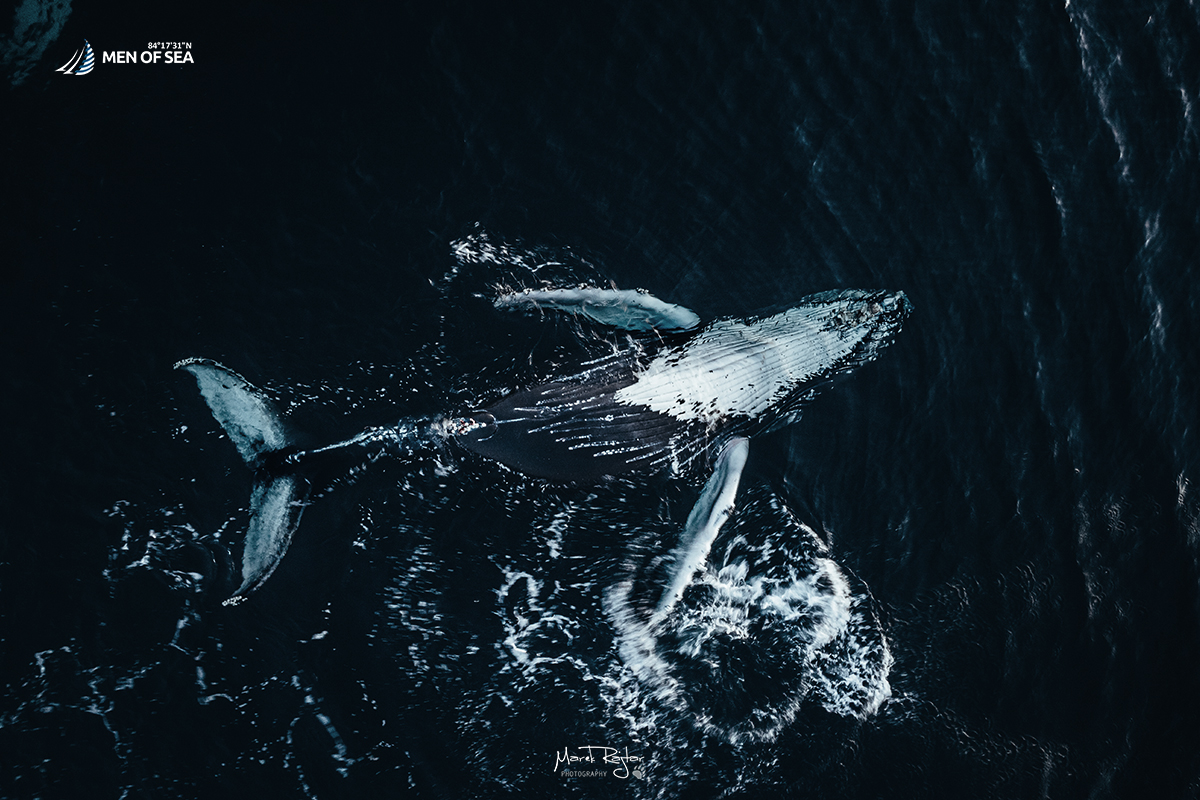
Young humpbacks in particular can be extremely energetic, repeatedly breaching, tail-slapping or striking the water with their pectoral fins. During our expeditions we have often observed young humpbacks behaving very actively around their mothers.
And every time a whale weighing tens of tonnes suddenly rises almost completely above the sea, it is impossible not to stop and watch.
Whale safari in Kvænangen
Watching humpback whales and orcas is one of the main elements of our Northern Lights and Whales expeditions. But this is not a typical whale safari where you leave a harbour for a few hours, watch whales and return.
For seven days, we stay in the heart of the whales’ winter feeding grounds. We live aboard the yacht, head out during the day to look for whales and return in the evening to our friendly small harbour on Spildra.
This means that for several days we are based right in the middle of one of Northern Norway’s most important winter whale areas.
It gives us several advantages. We can observe whales at different times of day, follow changing concentrations of herring, remain in an interesting area for longer, watch feeding behaviour, listen through our hydrophone and photograph whales from only a short distance above sea level. Sometimes whales are so close to our harbour that we barely need to leave Spildra before finding them. On one occasion, whales even followed us into the harbour.
We are not watching them from the upper decks of a large ship. We are almost at sea level. That changes the scale of every encounter.
Spildra – our base in the heart of whale country
Our base during the Northern Lights and Whales expeditions is the small island of Spildra, located in Kvænangen.
Only a small community lives on the island. We have known some of the residents for many years, and over time Spildra has become a place where we feel almost at home. Its location is exceptional.
The waters immediately surrounding the island lie in an area where whale activity can become intense during autumn and winter. When huge shoals of herring enter the fjords, humpback whales, orcas and other marine predators follow them.
Sometimes we do not even need to sail far from the harbour.
Humpback whales and orcas can appear just outside Spildra harbour.
At times they can be watched directly from the quay or shoreline, and occasionally even spotted during a hike across the island. It is one of those places where the boundary between everyday life and wild Arctic nature almost disappears.
You can step off the yacht in the morning and see whale blows rising from the fjord a few hundred metres away. During a walk across the island, you may see a group of whales moving through the water below.
A few hours later, you can board the yacht and find yourself among their feeding grounds. That is why Spildra is much more than simply a place where we moor for the night.
It is our base in the heart of Kvænangen’s winter whale world and an important part of the atmosphere of these expeditions. After a day on the water, we can also meet local residents, exchange stories and listen to people who have lived alongside these whales for decades.
Humpback whales and orcas
Humpbacks are not the only marine mammals attracted by the winter herring. We also regularly encounter orcas in exactly the same waters. Both species can feed around the same schools of fish.
It is therefore quite common for us to watch several humpback whales and a group of orcas during the same outing.
We often observe orcas arriving first around a herring school, followed by humpbacks seemingly appearing from nowhere. At times their feeding activity seems highly coordinated, or at least mutually tolerant, although we should be careful not to assume intentional cooperation in every case.
For photographers and wildlife observers, these moments can be extraordinary.
Sometimes the entire surface of the fjord seems to fill with dorsal fins, whale blows and feeding activity. We have also observed interactions in which orcas targeted young humpbacks, showing that the relationship between the two species can be complex.
Humpback whales, Polar Night and Northern Lights
A winter expedition in Northern Norway has another extraordinary dimension. The same period when humpbacks and orcas gather around the herring also coincides with the season of the Northern Lights.
That is why our expeditions are called: Northern Lights and Whales – Zorze i Wieloryby.During the day, we look for humpback whales, orcas and herring.
In the evening, after returning to a sheltered harbour or anchorage, we watch the sky. If the weather and solar activity cooperate, the Northern Lights appear above the fjord.
It combines two completely different Arctic experiences:wild whales and the Arctic sky.
Is seeing a humpback whale guaranteed?
No. These are wild Arctic animals.
Their presence depends primarily on the distribution of herring, and conditions can change even during the best part of the season. However, over recent years we have organised dozens of expeditions in this region and have seen humpback whales on every one of them so far.
We cannot promise wildlife sightings, but our experience shows that the probability of encountering whales during the right season is very high. Local knowledge makes a major difference.
Over the years we have learned how to recognise where herring concentrations are developing.
We also stay in contact with local fishermen and residents who provide us with current information about fish and whale activity. That allows us to change our plans quickly. Flexibility is essential.
We are not searching for one fixed location on a map. We are searching for herring. And where there are large concentrations of herring, whales may follow.
Humpback whales in Svalbard
We also encounter humpback whales during our summer expeditions around Svalbard. They can appear in many fjords, particularly where food is abundant. However, winter in Northern Norway often offers a very different kind of experience because large numbers of whales may concentrate around winter herring shoals.
For travellers whose main goal is watching humpback whales and orcas, our expeditions between October and January are among the most exciting wildlife trips in our season.
Why is seeing a humpback whale up close so special?
Many people who have never joined a whale safari imagine that whale watching means seeing a distant tail somewhere on the horizon. Our experience is often very different. We look for opportunities to spend time in the same area as the whales, to observe their behaviour and understand what they are doing.
We never want to force a close encounter. But when we handle the yacht calmly and give animals space, humpbacks sometimes choose to approach on their own.
Many participants naturally want to photograph or film them. A photograph can capture the shape of a whale. A video can show its movement. But neither can fully reproduce the moment when an enormous humpback surfaces beside the yacht.
First you hear the powerful exhalation. Then a cloud of vapour rises above the sea. A huge dark back moves alongside the boat. And finally the tail rises above the surface before disappearing into the fjord. Those encounters stay with you for a very long time.
For us, humpback whales are more than another species we meet during our expeditions. They have become one of the symbols of winter in Arctic Northern Norway.
FAQ – humpback whales in Northern Norway
Where is the best place to see humpback whales in Norway?
During autumn and winter, some of the best opportunities are found in Northern Norway, particularly around Kvænangen and Skjervøy, depending on the current location of the herring.
When is the best time to see humpback whales in Northern Norway?
Usually from October to January, when whales follow large concentrations of wintering herring.
Why do humpback whales come to Kvænangen?
They mainly come to feed on herring, which has used the Kvænangen fjord system as an important wintering area in recent years.
Do humpback whales hunt together?
Yes. Humpbacks can cooperate while feeding on schooling fish. One of their best-known techniques is bubble-net feeding, which uses bubbles to help concentrate fish.
What is a bait ball?
A bait ball is a dense concentration of schooling fish formed when they respond to predators. Humpback whales, orcas and other predators can take advantage of these tightly packed schools.
Do humpback whales really sing?
Yes. Male humpbacks produce long, complex sequences of sounds known as songs, particularly in connection with the breeding season.
Can you listen to humpback whales?
Yes. A hydrophone allows us to listen to underwater sounds produced by whales and other marine life.
Do humpback whales approach yachts?
They can. Sometimes humpbacks voluntarily approach boats very closely. The important principle is not to chase them or force an encounter – the whale should choose the distance.
Can you see humpback whales and orcas during the same expedition?
Yes. Both species use the same herring-rich waters of Northern Norway during winter, so they can often be observed during the same trip.
Can you see humpback whales in Svalbard?
Yes. Humpback whales are also seen in Svalbard during summer, although winter aggregations around herring in Northern Norway provide a different type of whale-watching experience.