ARCTIC FOX
The Little Spirit of the Arctic
Arctic Fox in Svalbard – Where It Lives, What It Eats and When to See It
A True Symbol of the Arctic
The Arctic fox (Vulpes lagopus) is one of the most characteristic animals of Svalbard. Small, light and remarkably resilient, it can survive conditions that would be extreme for most mammals: months of Polar Night, severe frost, sparse vegetation and long periods with limited access to food.
Unlike some Arctic animals, the Arctic fox does not hibernate. Arctic foxes remain active throughout the year.
In Svalbard, they can be found almost everywhere — from coastlines and bird cliffs to tundra valleys, mountain ridges, glaciers and even sea ice.
Arctic Fox Facts
Species: Arctic fox (Vulpes lagopus)
Weight: approximately 2.5–5 kg
Body length: around 55–60 cm, plus a tail of about 30 cm
Activity: year-round
Coat: extremely dense in winter, much shorter in summer
Distribution: throughout most of Svalbard
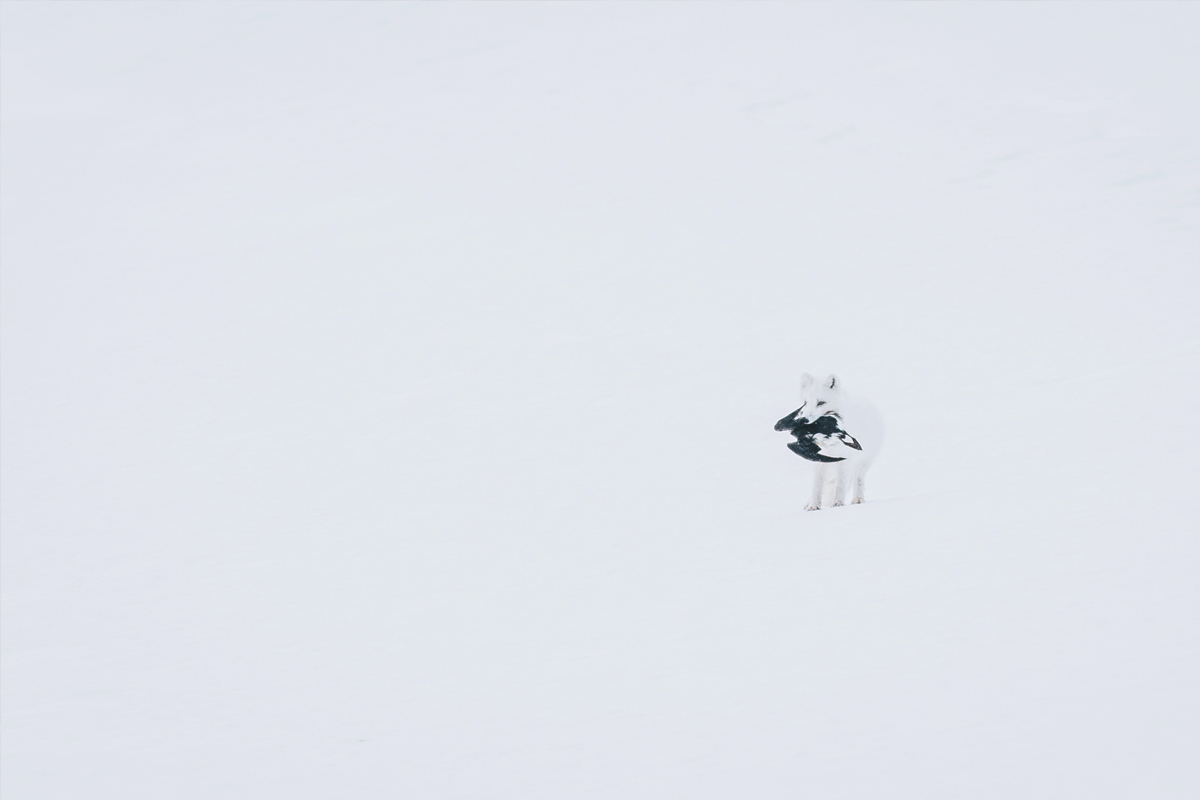
Diet: birds, eggs, chicks, carrion, leftovers from polar bear kills, reindeer carrion and young seals
Lifespan: often around 3–4 years in the wild, although much older individuals have been recorded in Svalbard.
How Does the Arctic Fox Survive the Svalbard Winter?
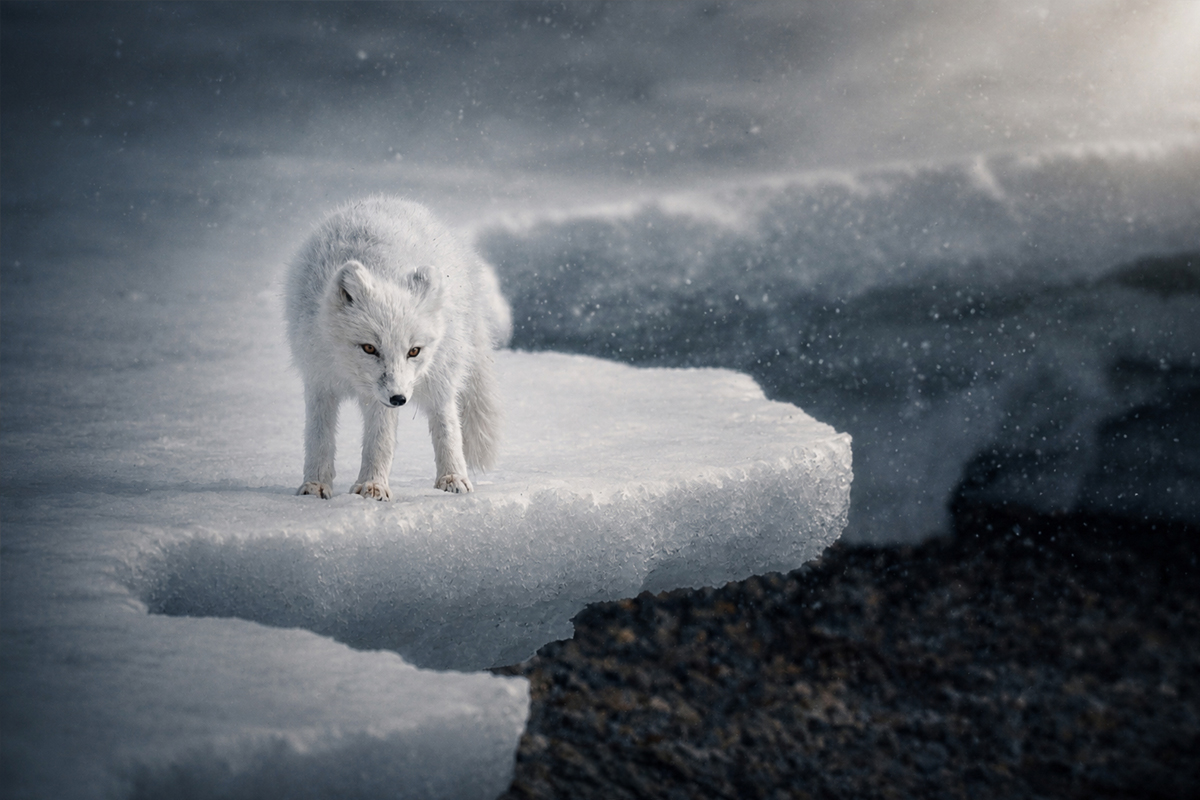
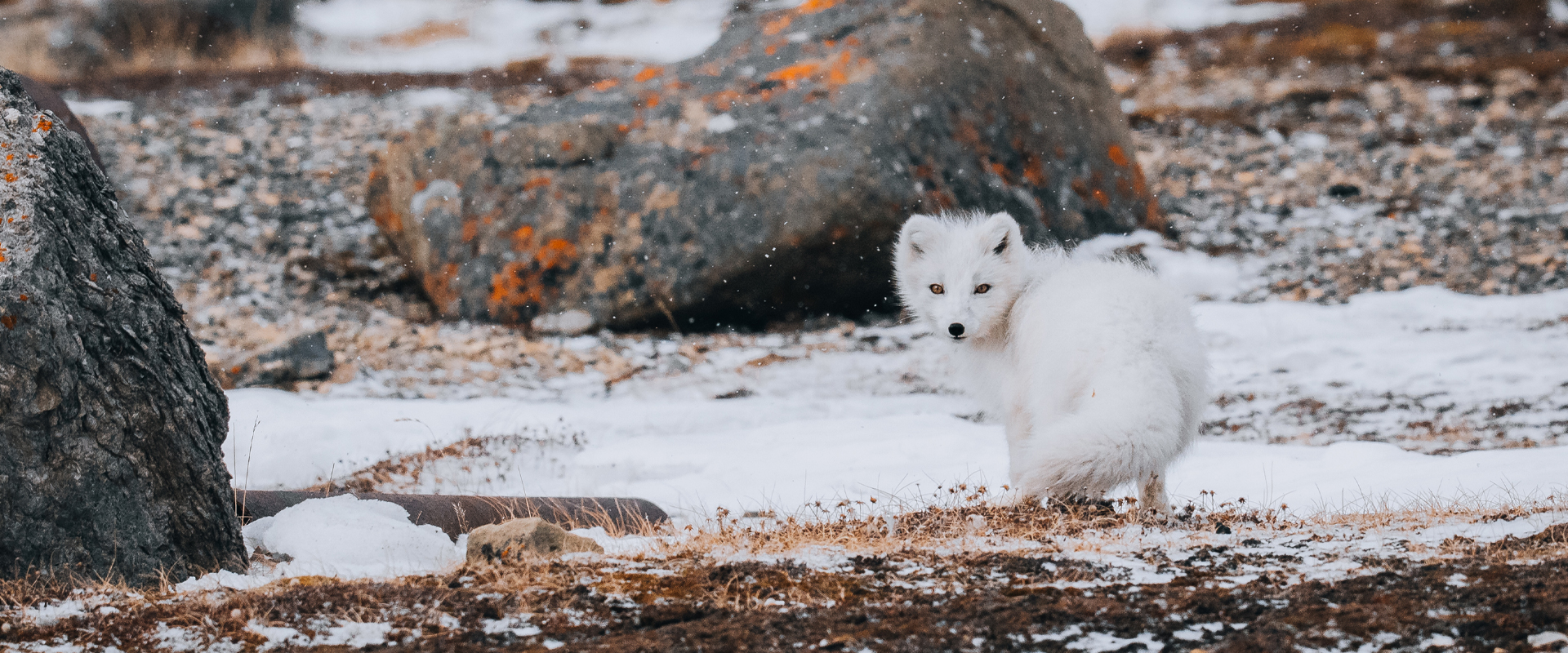
The most important adaptation of the Arctic fox is its fur. During winter, the coat becomes exceptionally dense and provides highly effective insulation. Its body shape also helps reduce heat loss.
Arctic foxes have:
- a short muzzle,
- small rounded ears,
- a compact body,
- fur-covered paws,
- a very dense undercoat.
These features make the Arctic fox one of the best cold-adapted land mammals in the world.
White and Blue Arctic Foxes
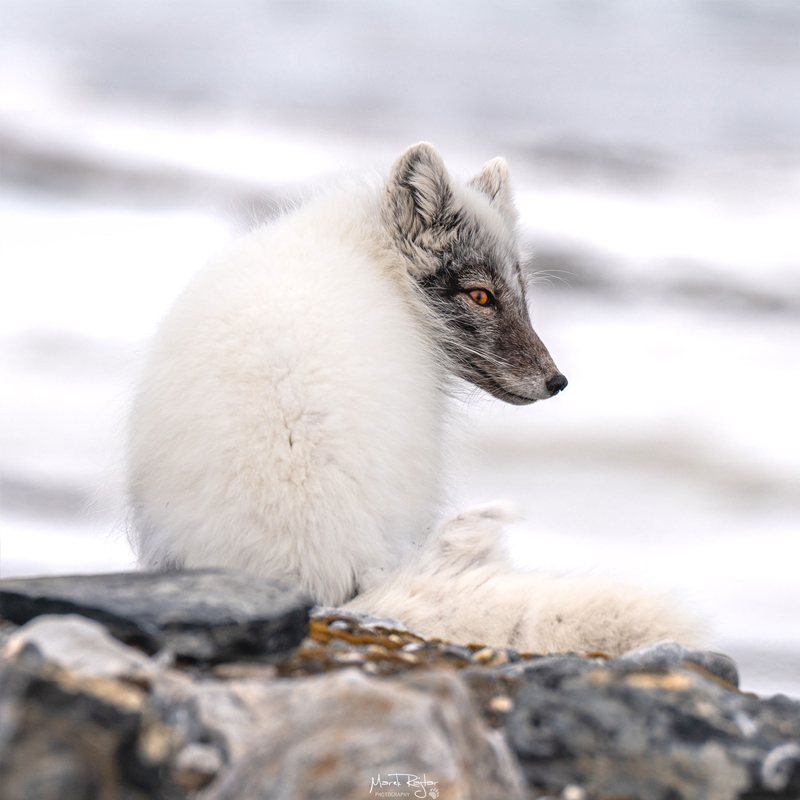
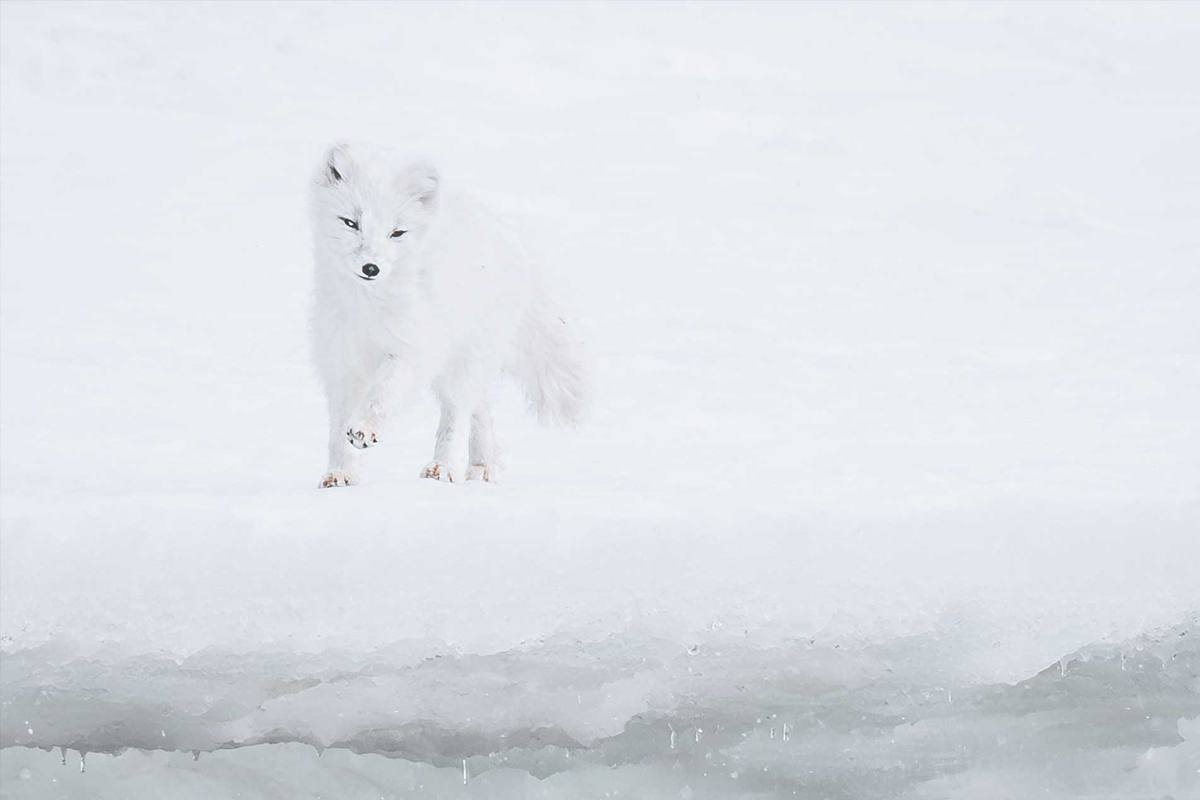
Not all Arctic foxes are white in winter. There are two main colour morphs: white morph and blue morph. In Svalbard, the white morph is by far the most common. Approximately 84–97% of Arctic foxes in Svalbard belong to the white colour morph.
The white morph:
- becomes almost completely white in winter,
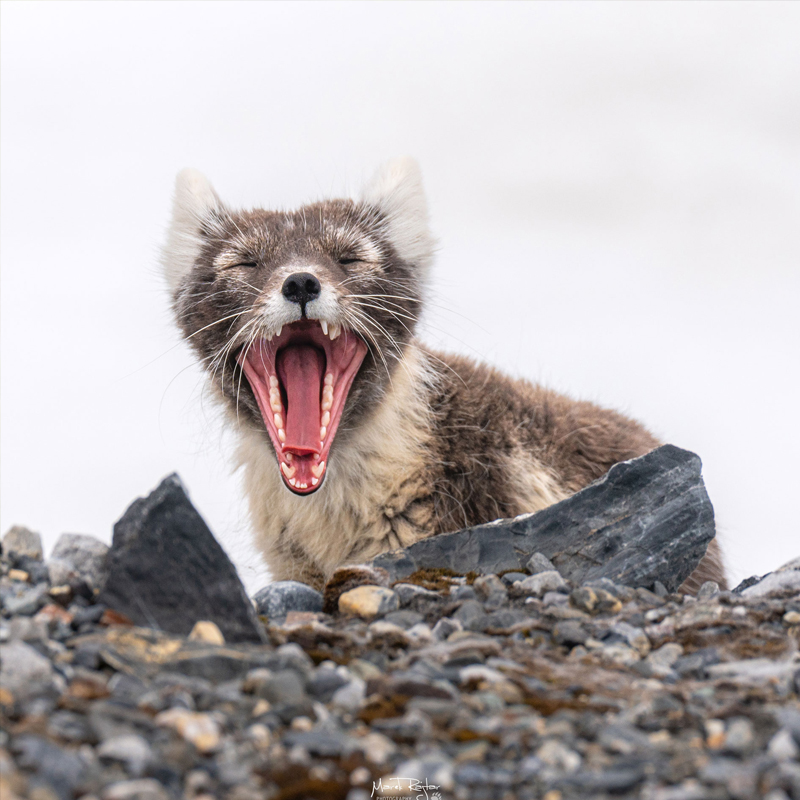
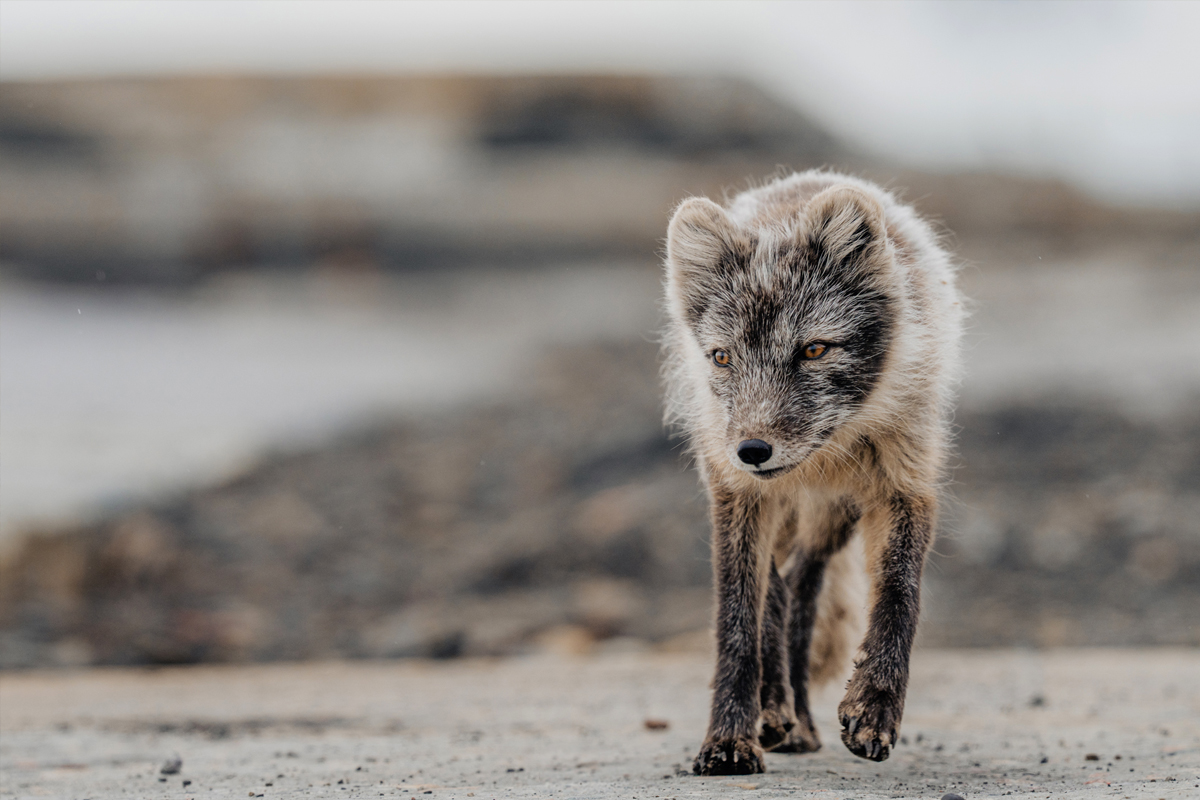
- changes to grey-brown during summer.
The blue morph remains darker throughout the year, although the exact shade changes seasonally.
When Does the Arctic Fox Change Its Coat?
Arctic foxes moult twice a year. The winter coat begins to shed in May. By July, the shorter summer coat is usually fully developed. From September onwards, the winter coat begins to grow again and is usually fully developed by November or December.
For photographers, this means:
March–April – full white winter coat
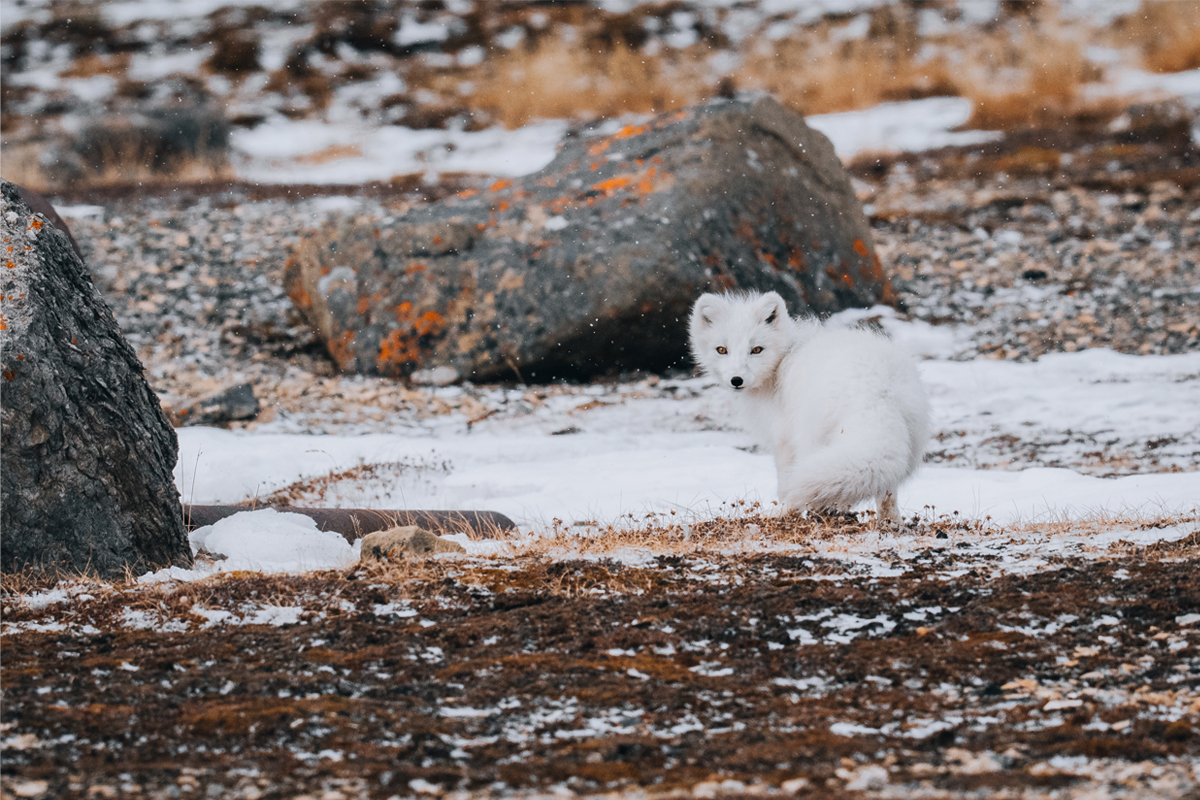
May – transitional coat
July–August – typical grey-brown summer coat
What Do Arctic Foxes Eat in Svalbard?
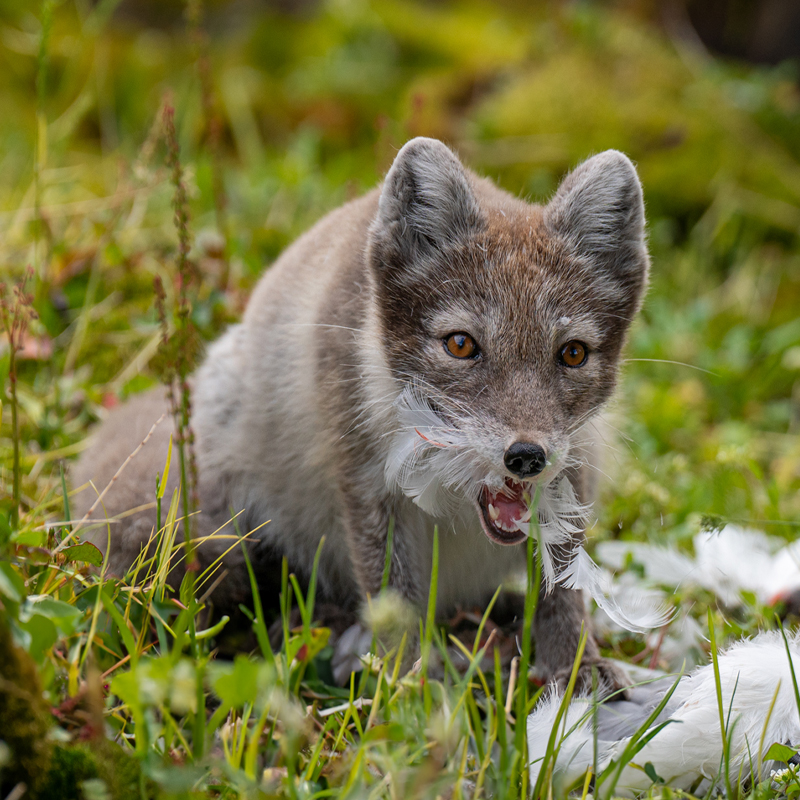
The Arctic fox is both a predator and a scavenger. Unlike Arctic regions with large lemming populations, Svalbard offers a different food environment, so foxes rely on a broad variety of food sources.
During spring and summer, their diet may include:
- seabirds,
- geese,
- eggs,
- chicks,
- ptarmigan,
- young ringed seals.
During winter, they rely more heavily on:
- reindeer carcasses,
- ptarmigan,
- cached food,
- seal remains,
- leftovers from polar bear kills.
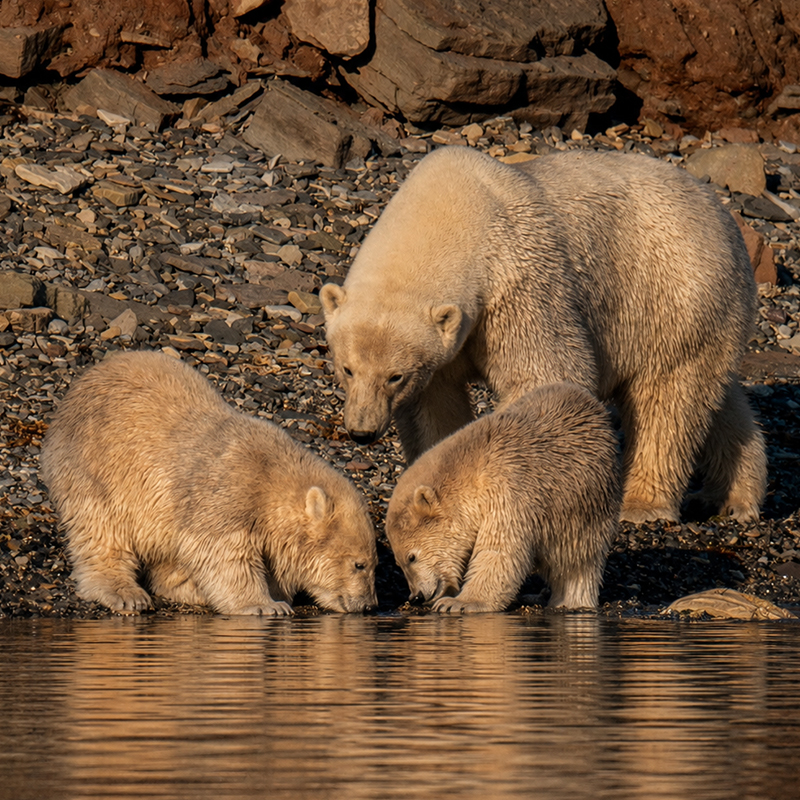
Why Do Arctic Foxes Follow Polar Bears?
This is one of the most fascinating Arctic feeding strategies. A polar bear may kill a seal and consume only the most energy-rich parts. An Arctic fox following at a safe distance may later feed on the remains.
For a small animal living through an Arctic winter, even a small amount of meat can be extremely valuable. This does not mean that every fox regularly follows polar bears, but it is one of several strategies they use to find food.
Do Arctic Foxes Store Food?
Yes. Food caching is an important survival strategy. During summer and autumn, when food is abundant, foxes may hide surplus food in many different locations.
They can cache:
- eggs,
- pieces of birds,
- meat,
- other food items.
They return to these food stores during winter. This behaviour is particularly important in Svalbard because food availability drops sharply after migratory birds leave the archipelago.
Where Do Arctic Foxes Live in Svalbard?
Arctic foxes occur across most of the archipelago. They can be found:
- along coastlines,
- below bird cliffs,
- in tundra valleys,
- near goose colonies,
- around glaciers,
- on high mountain ridges,
- on sea ice.
Some individuals travel enormous distances. Genetic research shows that Arctic foxes are capable of moving between islands and even Arctic landmasses, using sea ice as a natural bridge.
Where Is the Best Place to See Arctic Foxes in Svalbard?
Some of the best places are areas around bird cliffs. In summer, these locations provide a huge amount of food:
- eggs,
- chicks,
- adult birds,
- remains falling from nesting colonies.
Foxes patrol the base of bird cliffs and carefully search the surrounding terrain. Tundra valleys and areas with reindeer are also good places to look. In winter, foxes may be seen along coastlines and on sea ice, searching for carrion and remains left by larger predators.
When Is the Best Time to See Arctic Foxes in Svalbard?
Arctic foxes are active throughout the year. The best time depends mainly on what kind of Arctic fox experience you want.
March and April: This is one of the best periods for wildlife photography. Foxes still have their full, dense white winter coat, while the snow-covered landscape creates the classic Arctic setting.
May: The seasonal moult begins. Foxes may have a very distinctive mixed or transitional coat.
June and July: Food becomes abundant around bird cliffs. Foxes actively hunt for eggs and chicks.
August and September: Young foxes become more independent, while adults increasingly focus on building food reserves before winter.
How Do Arctic Foxes Reproduce?
Arctic foxes are generally monogamous during the breeding season. A pair occupies a territory around its den. The mating period usually runs from late February until around mid-April.
Pregnancy lasts approximately 52–54 days. Pups are usually born in May or early June. A typical litter in Svalbard contains around 5–6 pups.
After around three to four weeks, the pups begin to emerge from the den. By August, dens are usually abandoned and the young foxes become increasingly independent.
Why Do Arctic Foxes Often Live Near Bird Cliffs?
The answer is simple: food. Bird colonies provide one of the most reliable summer food sources. Because of this, fox territories near major bird cliffs can be much smaller than in inland areas.
Near bird cliffs, a fox pair may occupy only around 3–5 km², while in central valleys of Spitsbergen territories may reach around 60 km².
Do Arctic Foxes Have Natural Predators in Svalbard?
Interestingly, Arctic foxes in Svalbard have very few regular natural predators or competitors. One of the greatest threats is not predation, but winter starvation.
Are Arctic Foxes Dangerous to Humans?
Usually not. Arctic foxes are small animals and generally avoid people. However, foxes in Svalbard may carry rabies and parasites.
For this reason, visitors should never touch, feed or approach a fox that appears sick or behaves unusually. Rabies does occur periodically in the Svalbard Arctic fox population.
Arctic Fox Encounters on Men of Sea Expeditions
Encountering an Arctic fox in the wild is always one of the most memorable moments of a Svalbard expedition. Unlike polar bears or walruses, a fox may appear almost anywhere.
We encounter them:
- below bird cliffs,
- on beaches,
- across tundra,
- during hikes,
- near fjords,
- sometimes completely unexpectedly.
Some individuals can be very curious. They may stop and observe people or even approach relatively closely. However, they are still wild animals.
We never feed them and never deliberately reduce the distance. The best wildlife encounter is one where the fox continues behaving naturally.
Why Is the Arctic Fox a Symbol of Svalbard?
Svalbard is most often associated with the polar bear. But the Arctic fox represents a different side of the Arctic. It is small, intelligent, extremely resilient and capable of using almost every opportunity to find food.
It lives here throughout the year. It does not migrate south. It does not hibernate. It remains in Svalbard through the Polar Night, snowstorms and the hardest months of winter.
For us, that makes the Arctic fox one of the truest symbols of everyday Arctic life.
FAQ – Arctic Foxes in Svalbard
Are there Arctic foxes in Svalbard?
Yes. Arctic foxes occur across most of the archipelago, from coastlines and tundra to mountains and sea ice.
Do Arctic foxes hibernate?
No. They remain active throughout the year, including during the Polar Night.
What do Arctic foxes eat in Svalbard?
Their diet includes birds, eggs, chicks, ptarmigan, reindeer carrion, young seals and leftovers from polar bear kills.
When are Arctic foxes white?
The full white winter coat usually develops by November or December and remains through winter. Moulting begins in May.
When is the best time to photograph a white Arctic fox?
Usually March and April, when the winter coat is still full and white and the landscape remains snow-covered.
Are all Arctic foxes in Svalbard white?
No. The darker blue colour morph also occurs, but the great majority of Svalbard foxes belong to the white morph.
How much does an Arctic fox weigh?
Usually around 2.5–5 kg.
How many pups do Arctic foxes have?
A typical litter in Svalbard contains around 5–6 pups.
Where is the best place to see Arctic foxes?
Good places include bird cliffs, tundra valleys, coastlines and areas rich in birds or carrion.
Can Arctic foxes carry rabies?
Yes. Rabies occurs periodically in the Svalbard fox population, so wild foxes should never be touched or fed.