AURORA BOREALIS
NORTHERN LIGHTS
NORTHERN LIGHTS – THE LIGHT OF THE ARCTIC
What are the Northern Lights?
The Northern Lights, also known as Aurora Borealis, are one of the most extraordinary natural light phenomena visible in the northern sky. They are created when charged particles originating from the Sun interact with the Earth’s magnetic field and atmosphere. Particles carried by the solar wind travel towards Earth and are guided by the magnetosphere towards the polar regions. High in the atmosphere, they collide with atoms and molecules of gases.
During these collisions, energy is released as light. This is what we see as the Northern Lights.
What does the Sun have to do with the Northern Lights?
Everything begins with the Sun. The Sun continuously releases a stream of charged particles known as the solar wind. Its speed and density change depending on solar activity. Solar activity includes sunspots, solar flares and coronal mass ejections – CMEs.
If a large eruption of solar material is directed towards Earth, it can reach our planet several dozen hours later and trigger increased geomagnetic activity and potentially an intense aurora display.
The Sun also follows an approximately 11-year activity cycle.
During periods of higher solar activity, strong auroras can occur more frequently and the auroral zone can expand farther south. We are currently in Solar Cycle 25. Its maximum occurred around 2024–2025, but in 2026 the Sun remains highly active. This means strong solar wind streams and geomagnetic disturbances capable of producing spectacular Northern Lights are still common.
What is the auroral oval?
The Northern Lights do not usually appear directly above the geographic pole. Instead, they form a broad ring around the polar region known as the auroral oval.
Northern Norway lies in an excellent position beneath this oval. That is why Tromsø, Kvænangen and the far north of Norway are among the best regions in the world for seeing Aurora Borealis.
You do not need an extreme geomagnetic storm to see the Northern Lights here. Very often two other factors are more important: dark skies and a lack of clouds.
What colours can the Northern Lights have?
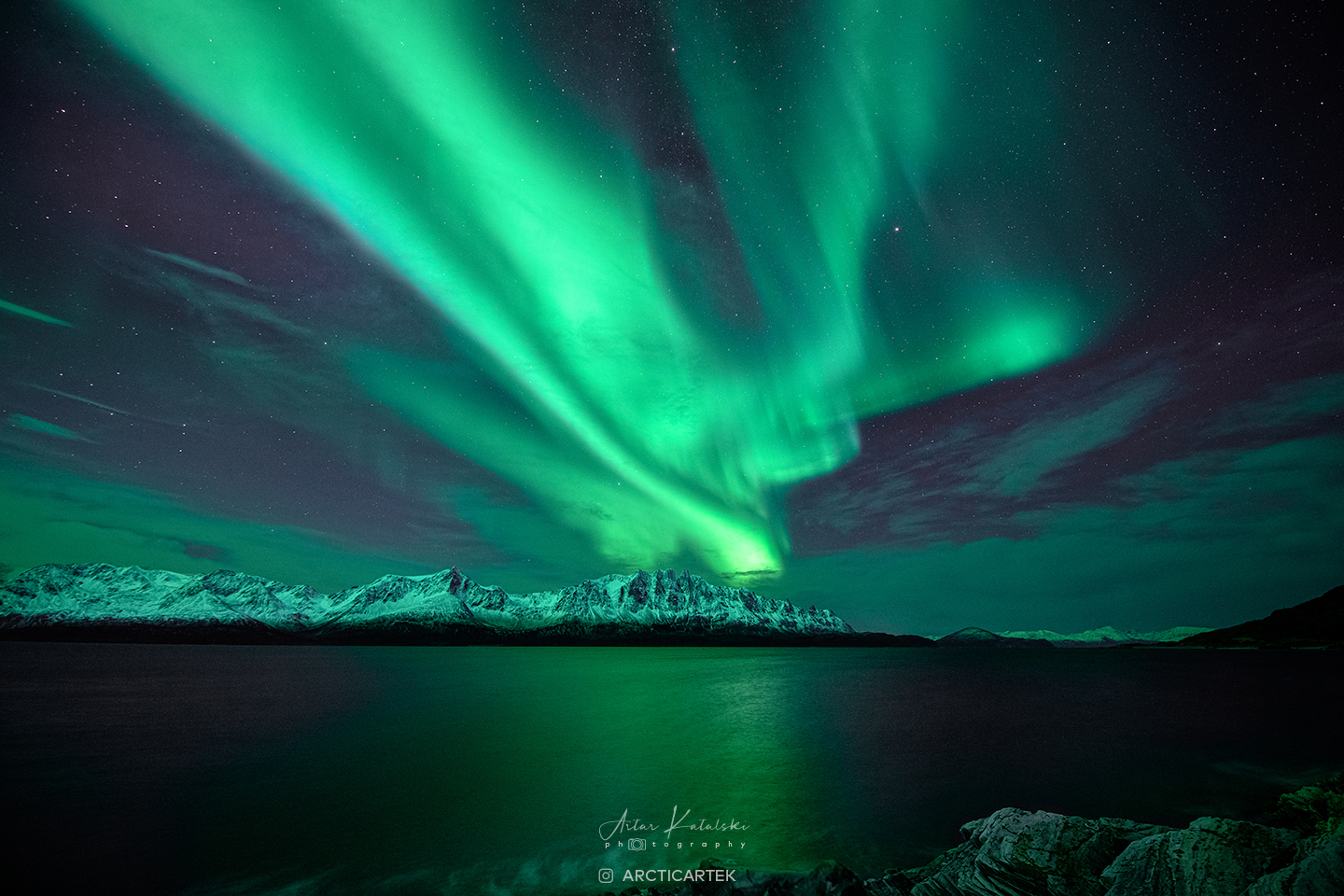
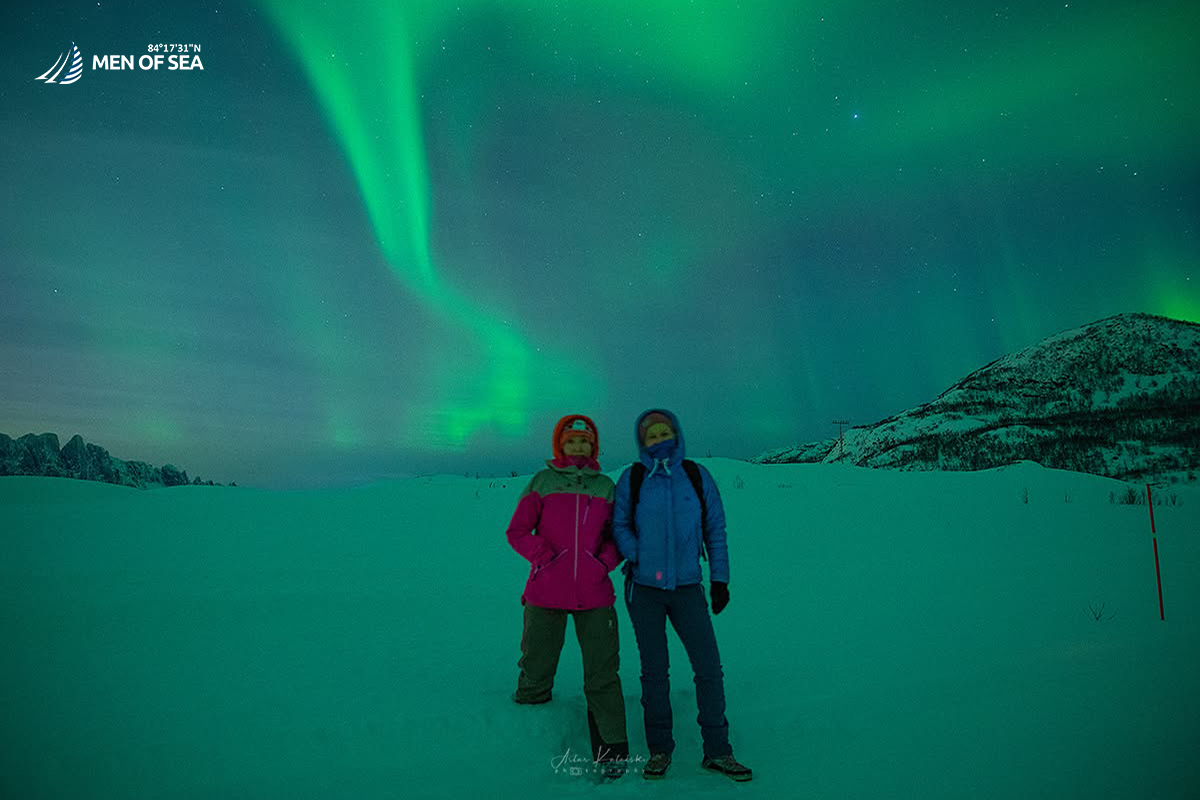
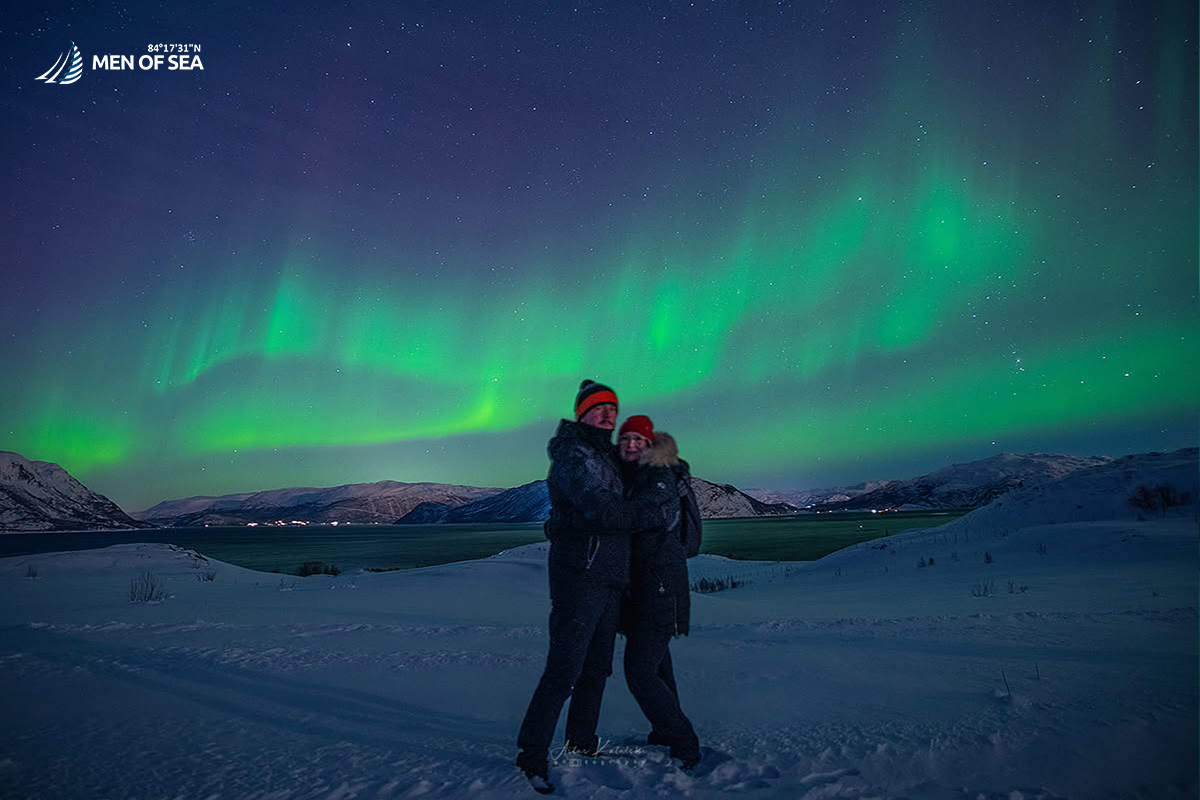
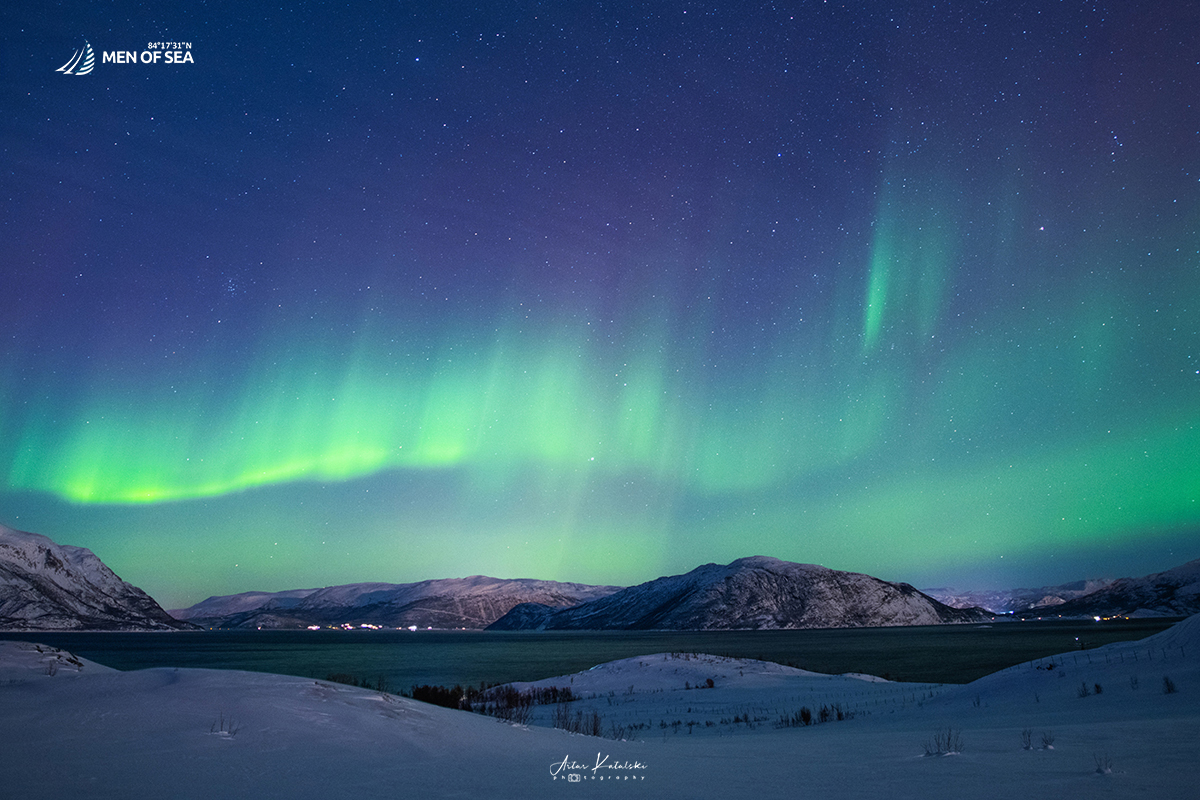
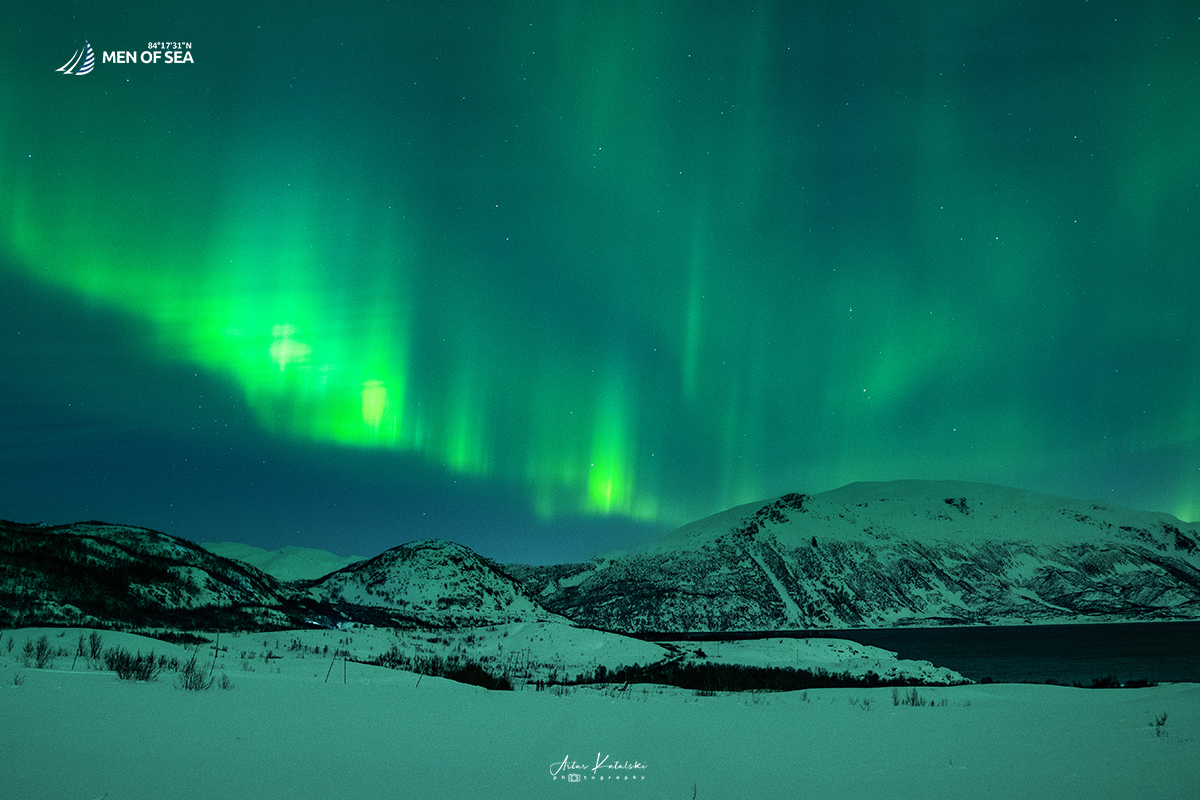
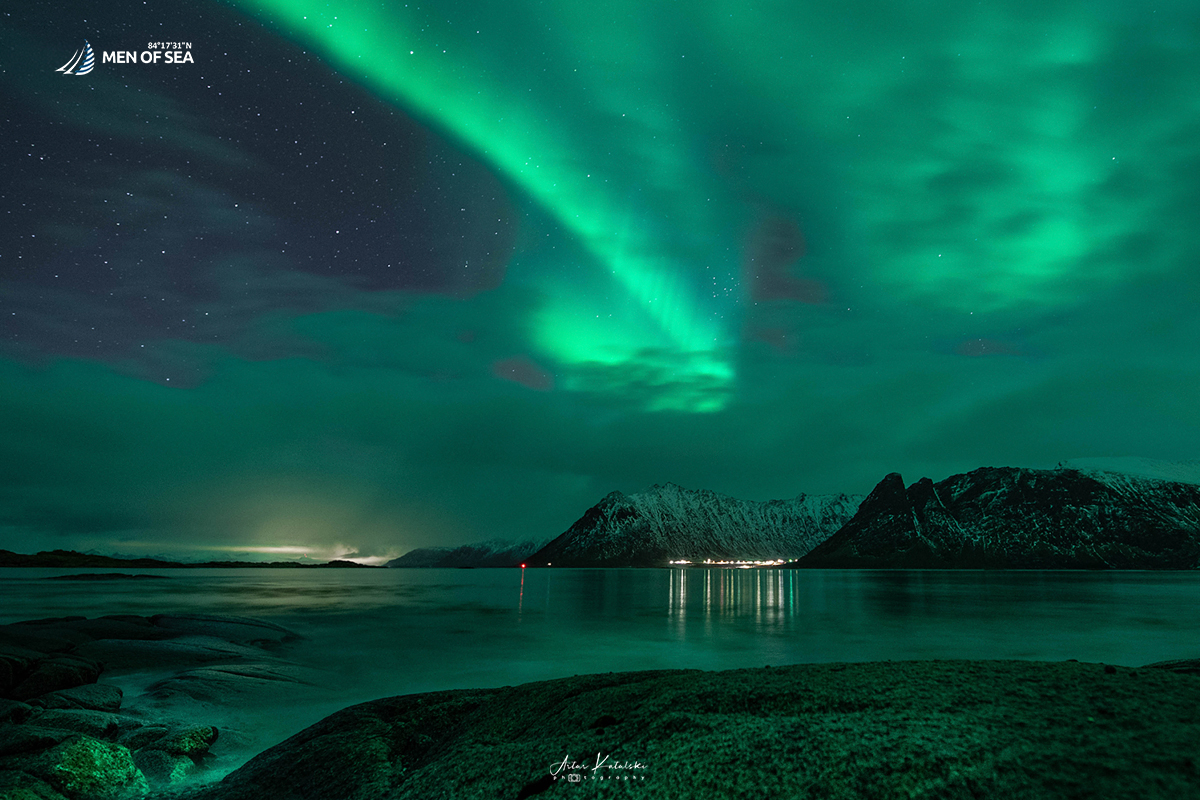
The most common colour is green. Green arches, bands and curtains are the classic image most people associate with Aurora Borealis.
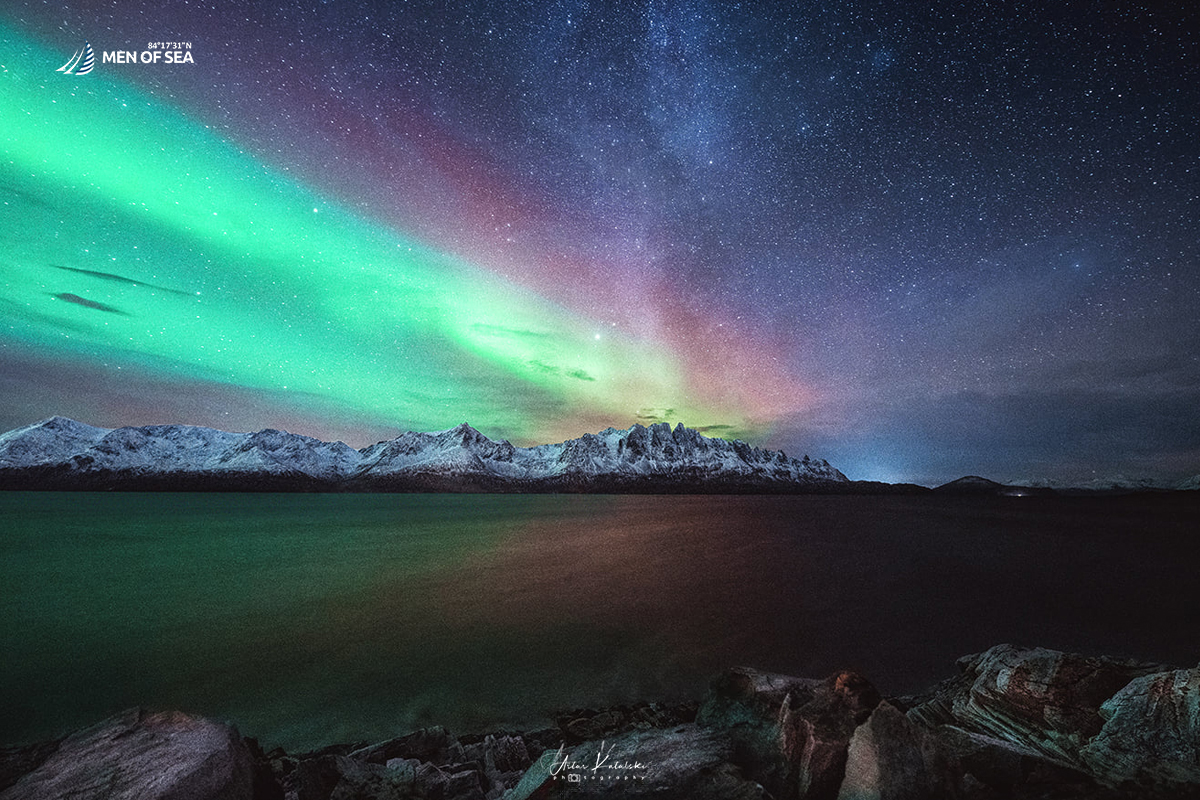
But the Northern Lights can also appear: red, pink, purple or blue, and sometimes several colours can be visible at the same time.
The colour depends mainly on which atmospheric gases interact with the charged particles and at what altitude the light is produced.
Green is primarily associated with oxygen. Red aurora generally occurs higher in the atmosphere. Blue and violet shades are associated mainly with nitrogen.
During strong activity, the aurora can become extremely complex, with colours and shapes changing from second to second.
Do the Northern Lights always look like they do in photographs?
No. This is one of the most important things to understand before your first Northern Lights trip. The human eye and a camera do not see the night sky in exactly the same way.
A weak aurora may look pale grey or only slightly green to the naked eye, while a camera using a longer exposure can record much more colour. During stronger activity, however, the difference can become much smaller.
Then bright green, pink or purple bands may be clearly visible with the naked eye as well.
Why do the Northern Lights move?
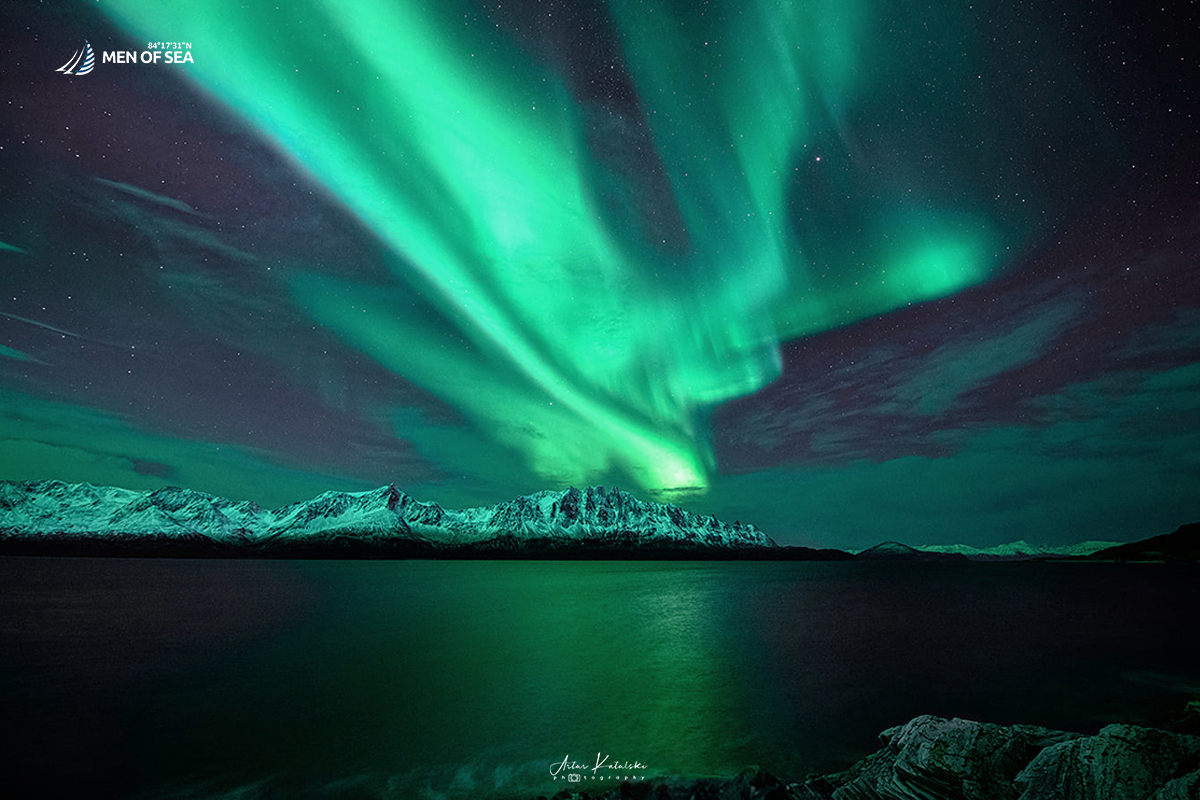
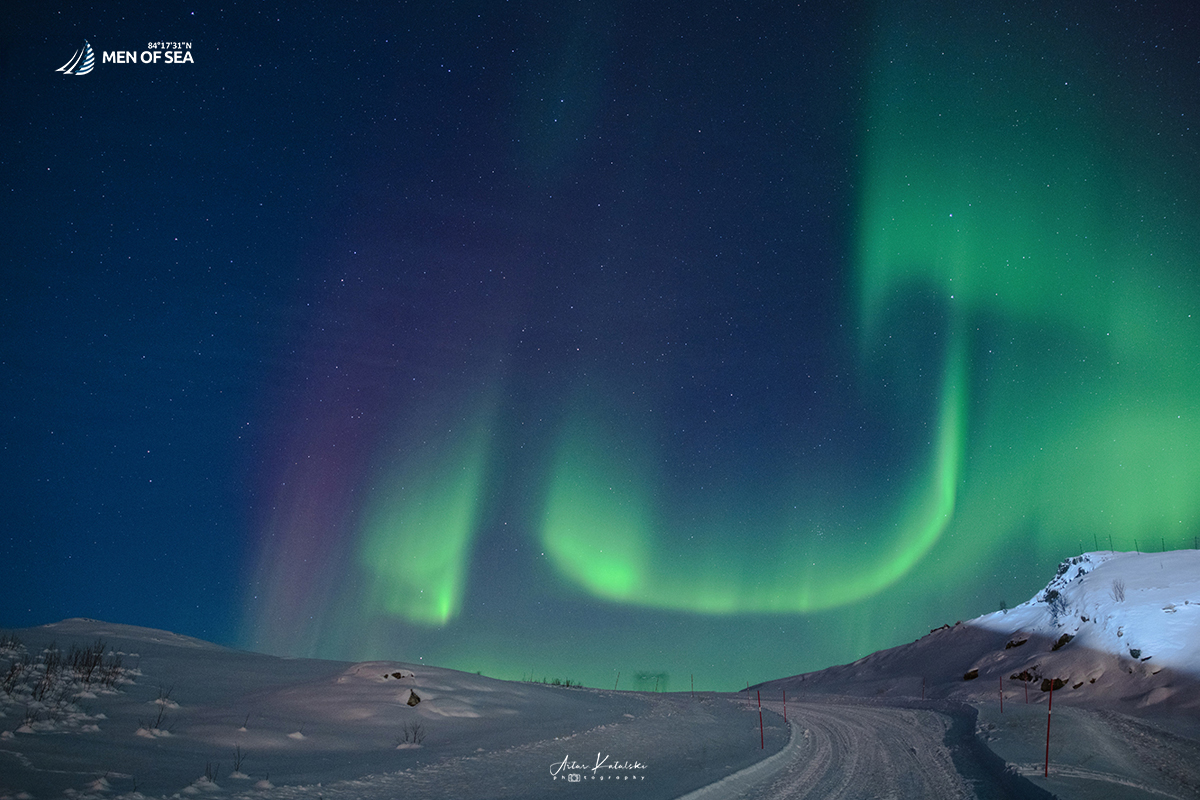
Aurora Borealis is not a static light. It can form arches, curtains, spirals and bands that move, ripple and pulse across the sky. During strong activity, the entire sky can change very quickly.
Sometimes the aurora remains faint and calm for a long time. At other times it suddenly becomes brighter, faster and more dynamic, stretching across a huge part of the sky.
This unpredictability is one of the reasons every Northern Lights experience is different.
Old beliefs and legends about the Northern Lights
The Northern Lights fascinated the people of the north long before science explained how they were formed.
In old Scandinavian stories, the lights in the sky were sometimes associated with the Valkyries, the female warriors of Odin. The shimmering light was said to resemble reflections from their armour.
In Sámi traditions, the aurora was also treated with great respect. It was not merely beautiful light in the sky. It belonged to a mysterious world that humans did not fully understand.
Today we know the physical mechanisms behind Aurora Borealis. But when you stand on Spildra at night and a huge green curtain begins to ripple above the mountains of Kvænangen, it is easy to understand why the Northern Lights inspired so many beliefs and legends for centuries.
How do we forecast the Northern Lights?
To forecast the aurora properly, it is worth looking at several parameters at the same time. Kp alone is not enough, especially in Tromsø and Kvænangen.
The most useful parameters include:
- Kp index – a measure of global geomagnetic activity from 0 to 9. The higher the Kp, the farther south the aurora may become visible. In Northern Norway, however, even Kp 1–2 can produce a beautiful display when you are beneath the auroral oval.
- Bz – one of the most important components of the solar wind magnetic field. For aurora activity, a negative or southward Bz is usually favourable. The stronger and longer-lasting the negative Bz, the greater the potential.
- Bt – the total strength of the interplanetary magnetic field. A higher Bt can increase the potential for geomagnetic activity, but the direction of Bz is also crucial.
- Solar wind speed – around 400 km/s is relatively calm; 500–600 km/s can produce more interesting conditions, while 700 km/s or more may create very dynamic conditions.
- Solar wind density – sudden increases can precede stronger geomagnetic activity.
- Interplanetary Magnetic Field / IMF – the magnetic field carried by the solar wind; Bt and Bz are among the values we monitor.
- Auroral Oval – a map showing where the active auroral zone is located and how intense it is.
- Hemispheric Power – an estimate of total auroral power, usually expressed in gigawatts.
- AE / AL index – more technical indicators of auroral electrojet activity.
- Dst index – a measure of geomagnetic storm strength; the more negative it becomes, the stronger the storm. It is especially useful during major geomagnetic events.
- Cloud cover – one of the most important local factors. You can have excellent Bz, Kp and solar wind conditions, but with complete cloud cover you may see nothing.
For practical Northern Lights hunting in Northern Norway, we usually look at the information in roughly this order: cloud cover → Bz → Bt → solar wind speed → auroral oval → Kp
The most important lesson is: low Kp does not mean there will be no Northern Lights in Northern Norway.
If the active auroral oval is overhead, Bz is favourable and the sky is clear, the aurora can be beautiful even at Kp 1–2.
Best apps and websites for Northern Lights forecasts
For Tromsø, Kvænangen and Spildra, the best approach is to use several sources at the same time.
One may be better for weather, another for solar wind parameters, and another for short-term aurora nowcasts.
1. Yr
Yr is extremely useful in Norway, particularly for: cloud cover and local weather. It also provides its own aurora forecast for up to three days and a shorter-term nowcast.
For us, one of its greatest advantages is simply understanding what the clouds are expected to do.
2. NOAA Space Weather Prediction Center
NOAA is one of the most useful sources for more technical space-weather information. It provides data including: Bz, Bt, solar wind speed and geomagnetic activity.
Its Aurora 30-Minute Forecast is particularly useful because it shows the predicted position and intensity of the auroral oval in the short term.
For anyone who really wants to understand what is happening, NOAA is one of the key sources.
3. SpaceWeatherLive
SpaceWeatherLive is very convenient for quickly checking: Bz, Bt, solar wind speed, solar wind density and Kp.
It is particularly useful for people who want something more advanced than a simple weather app while still having the information presented clearly.
4. NorwayLights
NorwayLights is aimed more at travellers. It combines weather information and aurora activity into simple recommendations. It can be useful for people who do not want to analyse Bz or solar wind data themselves.
However, from our own experience, we would not rely on it as the only source.
5. Windy
Windy is not primarily a Northern Lights app. But it is excellent for analysing: low, medium and high cloud cover, the movement of clouds and hourly forecasts.
During real aurora hunting, this can sometimes be more useful than another aurora app.
6. Meteoblue
Meteoblue is a useful additional source for comparing weather and cloud-cover models, especially when Yr and Windy show different scenarios.
How do we check the aurora forecast in practice?
Our practical workflow looks something like this:
Yr / Windy → will we have clear sky?
NOAA / SpaceWeatherLive → what are Bz, Bt and solar wind doing?
Auroral Oval / NOAA short-term forecast → is the active oval over us?
NorwayLights → quick additional reference for less technical users.
The key point is simple: do not trust an app just because it shows “72% aurora probability” or a high Kp value.
In Kvænangen, clear skies and favourable solar-wind conditions are often much more important.
When is the best time to see the Northern Lights in Northern Norway?
Aurora Borealis can be visible whenever the sky is sufficiently dark. In Northern Norway, the season usually begins around late August and continues until early April.
Autumn and winter provide long nights and therefore many hours of potential observation.
During our Auroras and Whales expeditions, we stay in Kvænangen during the autumn and winter period. This is the season when we can combine Northern Lights watching with encounters with whales.
In practical terms, September to March all offer good opportunities, and weather conditions are often more important than the difference between individual months.
Where is the best place to see the Northern Lights?
Three factors are especially important: darkness, a wide view of the sky and as little cloud cover as possible.
The Northern Lights can also be visible above towns and cities, but artificial light reduces contrast and makes both observation and photography more difficult. That is why the best locations are usually away from large concentrations of buildings and strong lights.
It is also worth monitoring cloud cover continuously and choosing the location where the sky is expected to be clearest.
Spildra – our Northern Lights base
The small island of Spildra, located in Kvænangen north of Tromsø, is our base during the Northern Lights and Whales expeditions. It is one of those places that is almost perfectly suited to Northern Lights watching and photography.
There is very little artificial light. There is no large town. There is no significant urban glow.
Walk only a short distance from the harbour and you can find yourself in almost complete darkness.
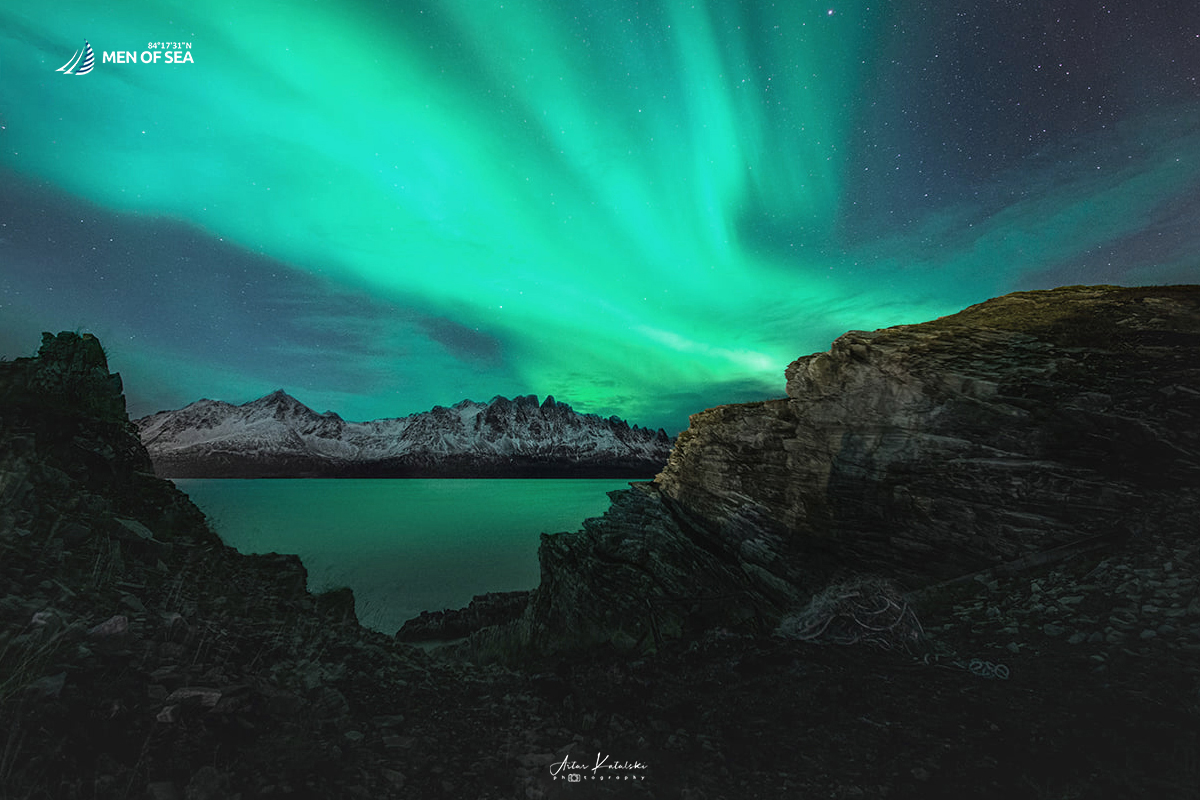
Around us we have: high mountains, sea, fjords, snow-covered shores and a huge Arctic sky.
That is an enormous advantage. We do not need to spend hours every evening driving away from Tromsø in search of a dark location.
We already live in one.
Northern Lights above mountains and sea
Aurora Borealis can be spectacular by itself. But for photographers, what lies beneath the aurora can be just as important. That is why Spildra is so special.
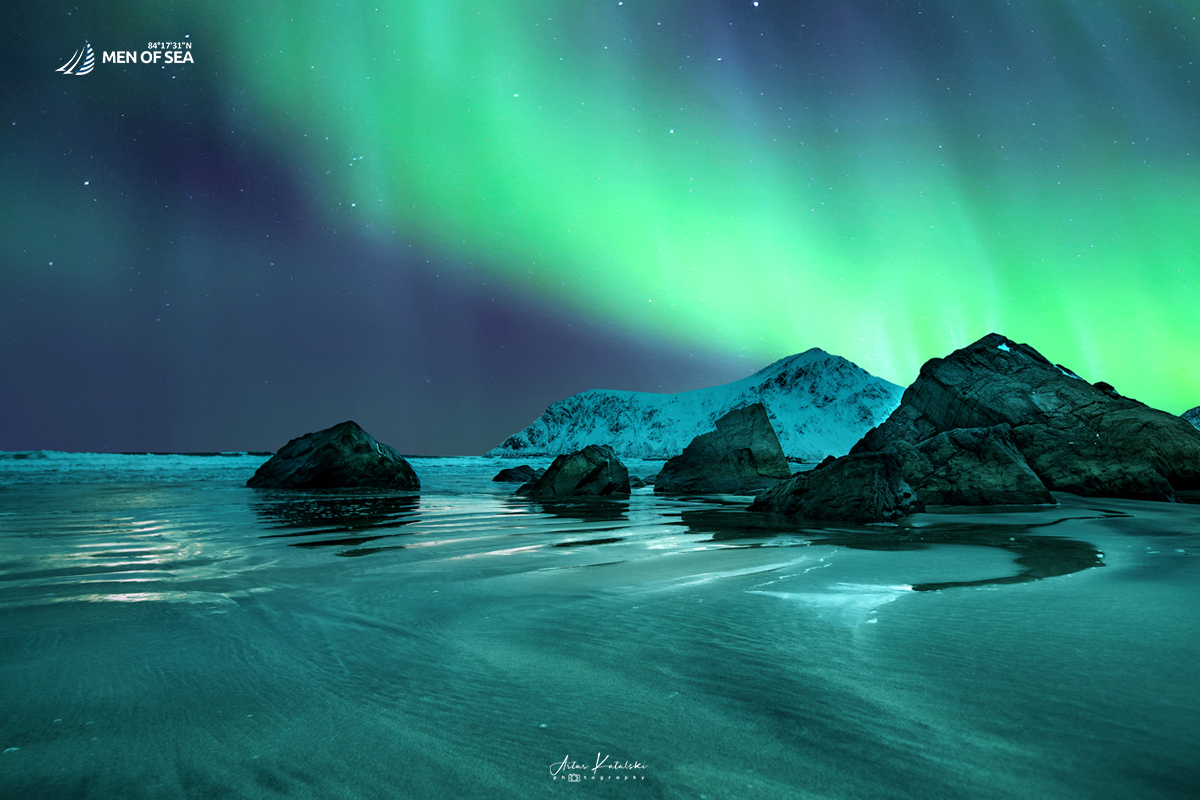
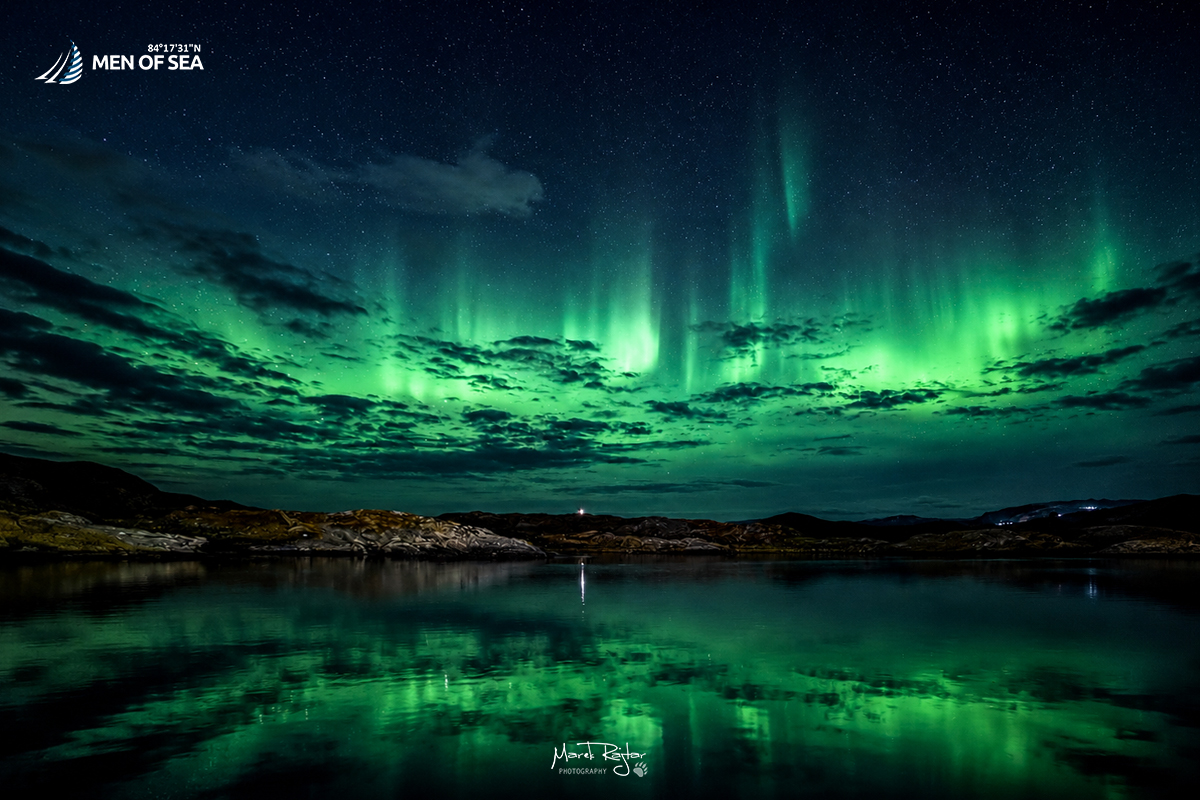
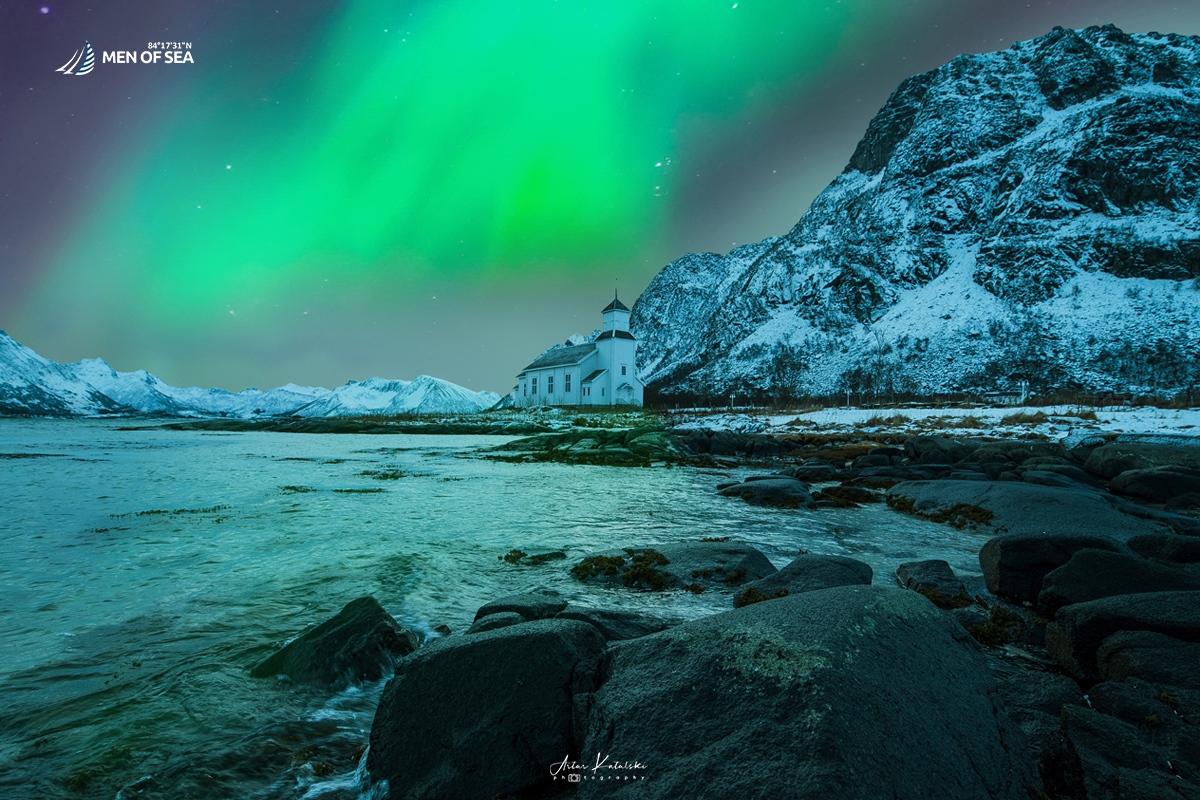
We can photograph the Northern Lights: above high mountains, above the sea and small bays, from beaches and snow-covered shores, with reflections in the water, and sometimes above our yacht Azimuth.
The photograph then shows more than just an aurora. It shows the location and the story of the entire expedition.
Photographing the Northern Lights
Photography is an important part of our expeditions. We have been photographing the Arctic for many years, and we help our participants take good Northern Lights photographs whether they bring a professional camera or simply a smartphone.
We help with settings such as: shutter speed, ISO, aperture, focus and white balance. We also advise where to place the tripod and how to compose the photograph.
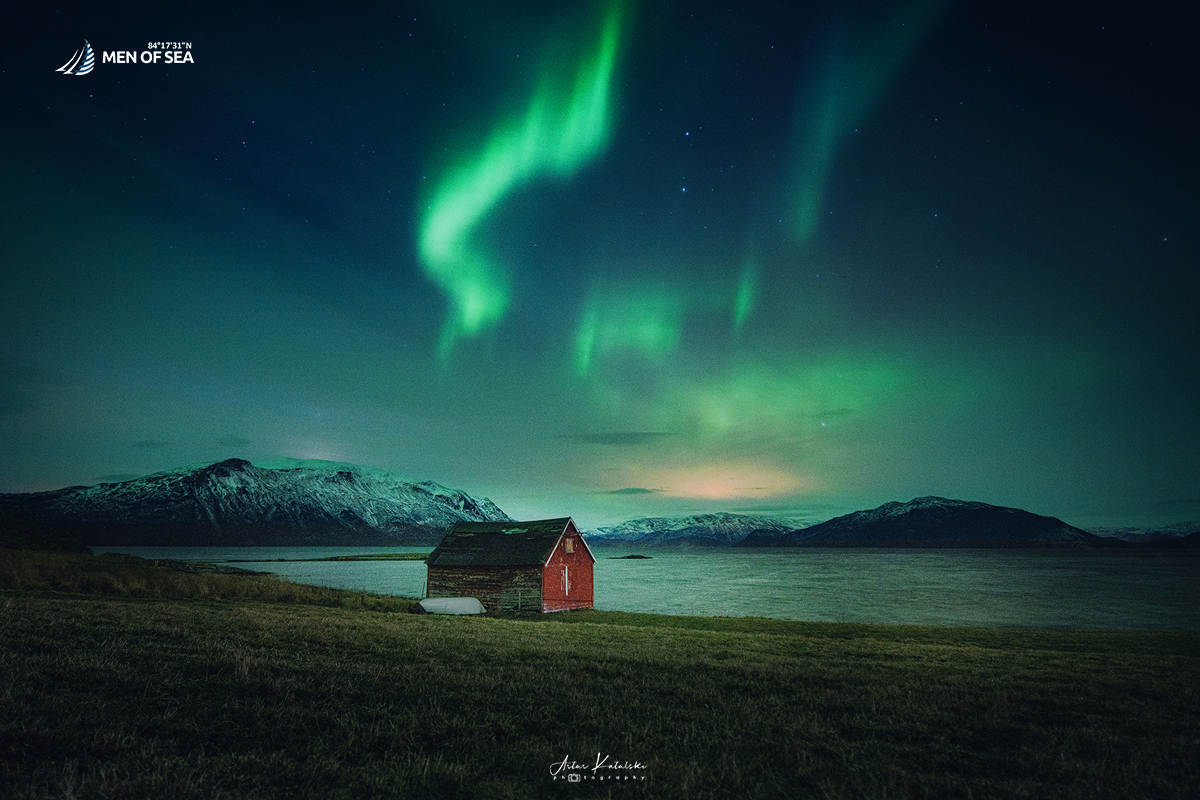
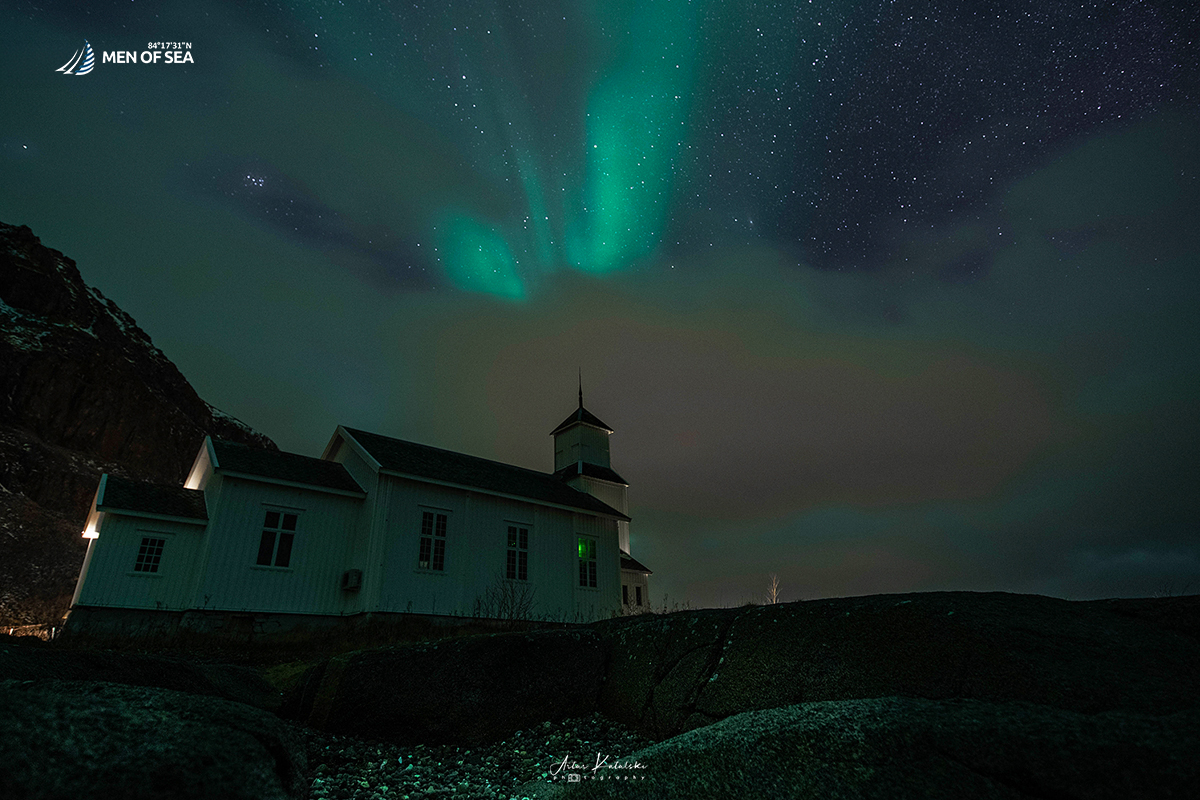
Because a good Northern Lights image is not just a green sky. Composition matters. A mountain. The sea. A person. A yacht. Reflections in the water.
The foreground often turns a photograph of the aurora into a photograph of an Arctic experience.
Can you photograph the Northern Lights with a smartphone?
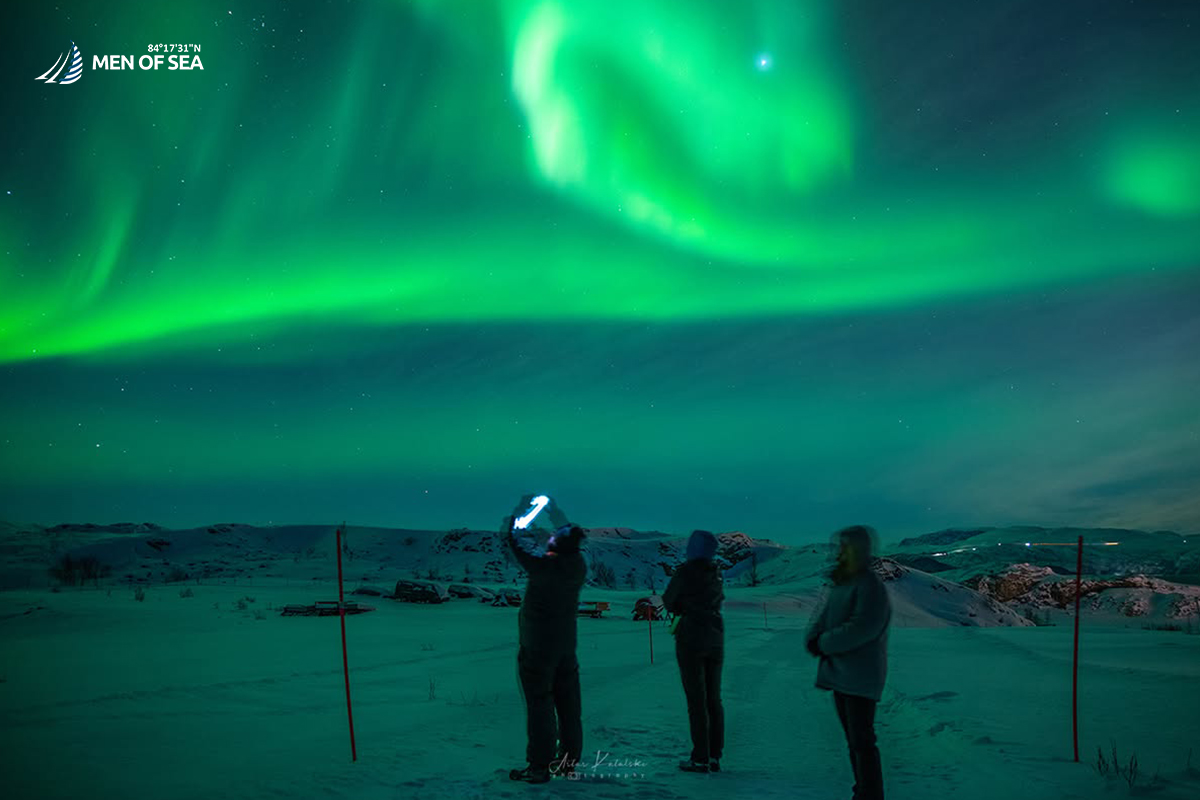
Yes. Modern smartphones are increasingly capable of producing very good night photographs. During a strong aurora, excellent results are possible even without a professional camera.
It can even be possible from a moving yacht, where setting up a conventional tripod is not practical. We help participants use night mode, stabilise the phone and choose a good composition.
Not everyone wants to return home with hundreds of photographs. But almost everyone wants one really good picture under the Northern Lights.
Barbecue under the Northern Lights on Spildra
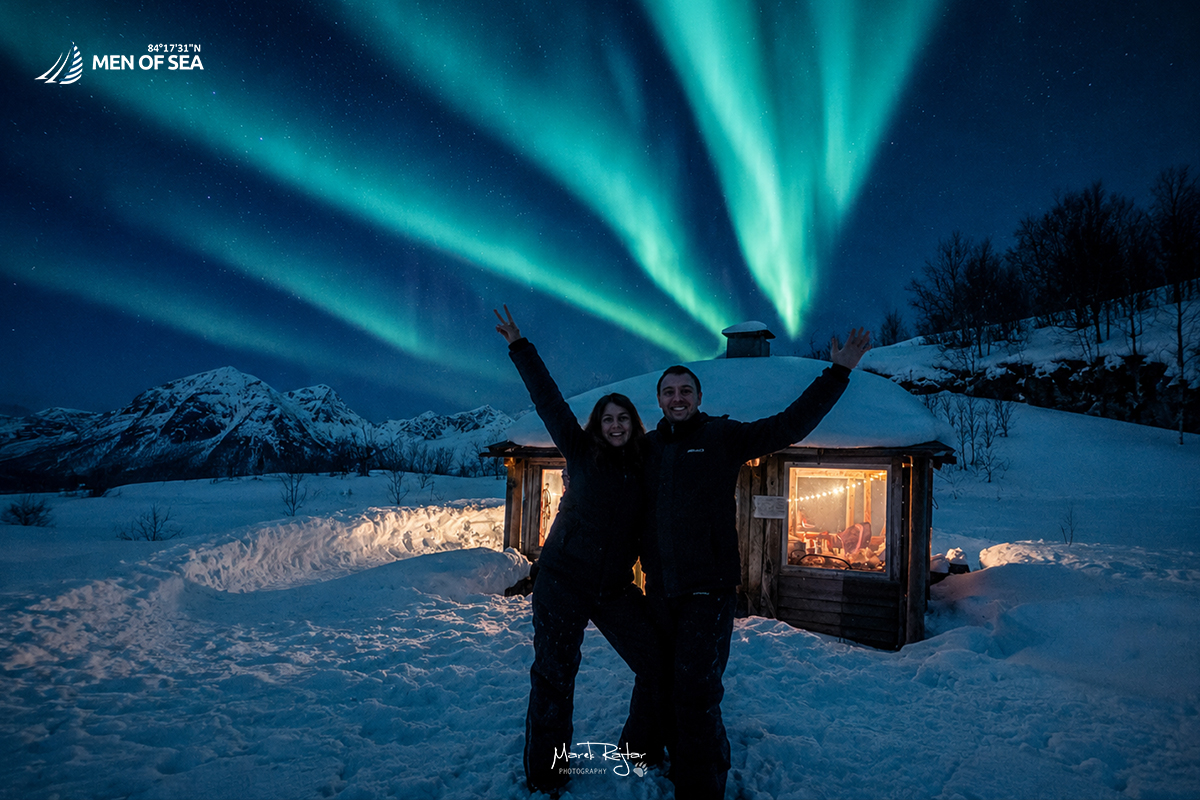
One of the most atmospheric evenings during our expeditions is our barbecue in a small glass-walled cabin located in a secluded part of the island.
It lies away from the brightest lights around the harbour. Around us there is darkness, silence and almost complete emptiness. We have mountains, sea and the Arctic night sky.
We light the grill, have dinner together and watch what is happening above us. If the Northern Lights appear, we simply step outside.
For us, this is one of the moments that best illustrates the difference between staying on a small Arctic island and joining a standard bus excursion from a city.
Real Northern Lights hunting
Aurora hunting requires patience. Arctic weather can change extremely quickly. Sometimes we have to wait. Sometimes walking a few hundred metres makes the difference. Sometimes we take advantage of a short opening between the clouds.
The Northern Lights may appear for only a few minutes and disappear. Or they may remain active for hours.
During our expeditions, the aurora is not treated as an accidental extra. We actively look for it.
A multi-day expedition also significantly increases the chances of seeing a good display. It is uncommon for the sky to remain completely covered by clouds every night for an entire week.
Northern Lights and whales on one expedition
This combination gave our expeditions their name: Northern Lights and Whales.
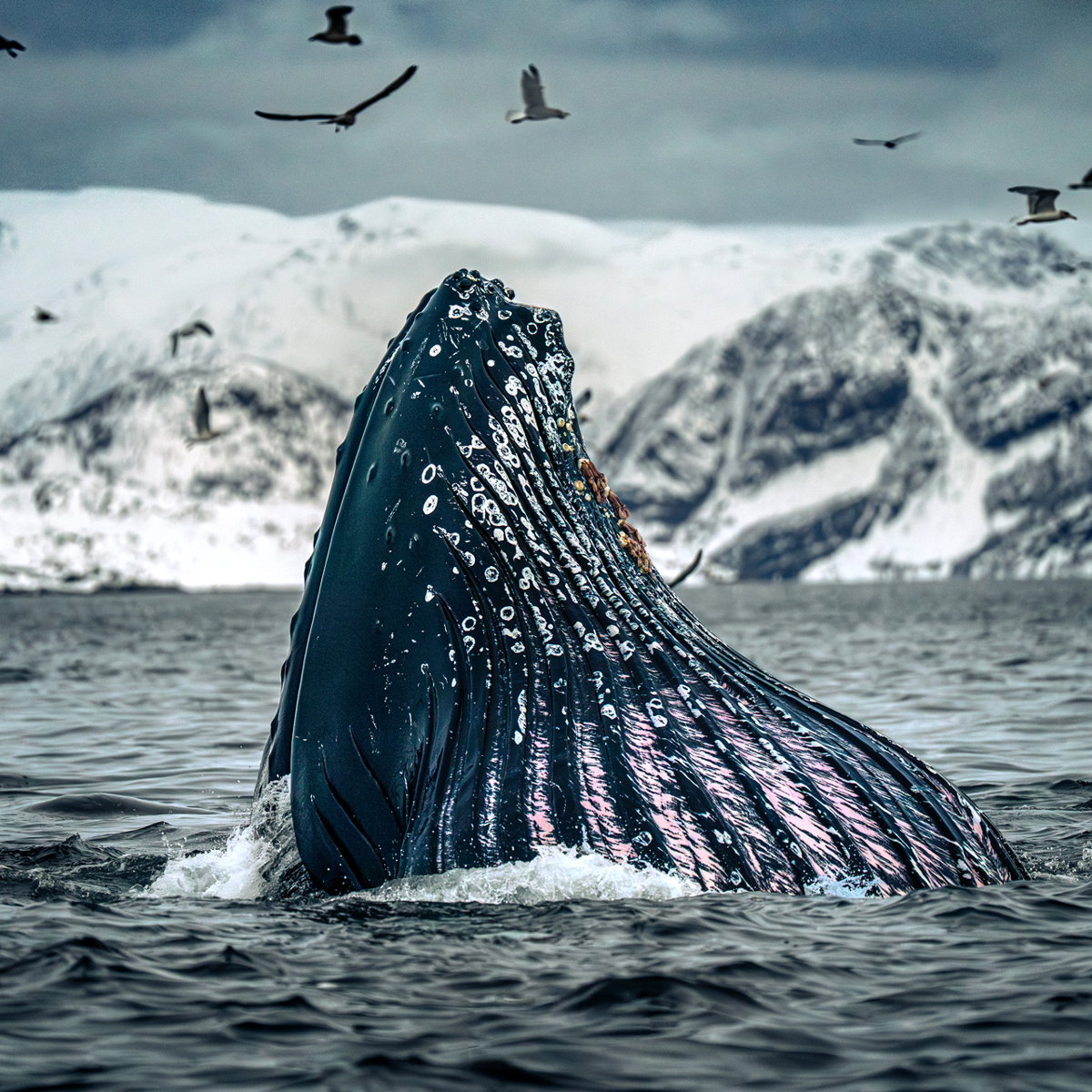
During the day, we search for orcas and humpback whales in Kvænangen. In the evening, we return to Spildra. Then we look at the sky. If conditions are favourable, we head out to hunt for the Northern Lights.
This allows us to combine two of the most extraordinary experiences of winter in Northern Norway during a single week: wild whales and Aurora Borealis.
Lofoten – Northern Lights in a completely different landscape
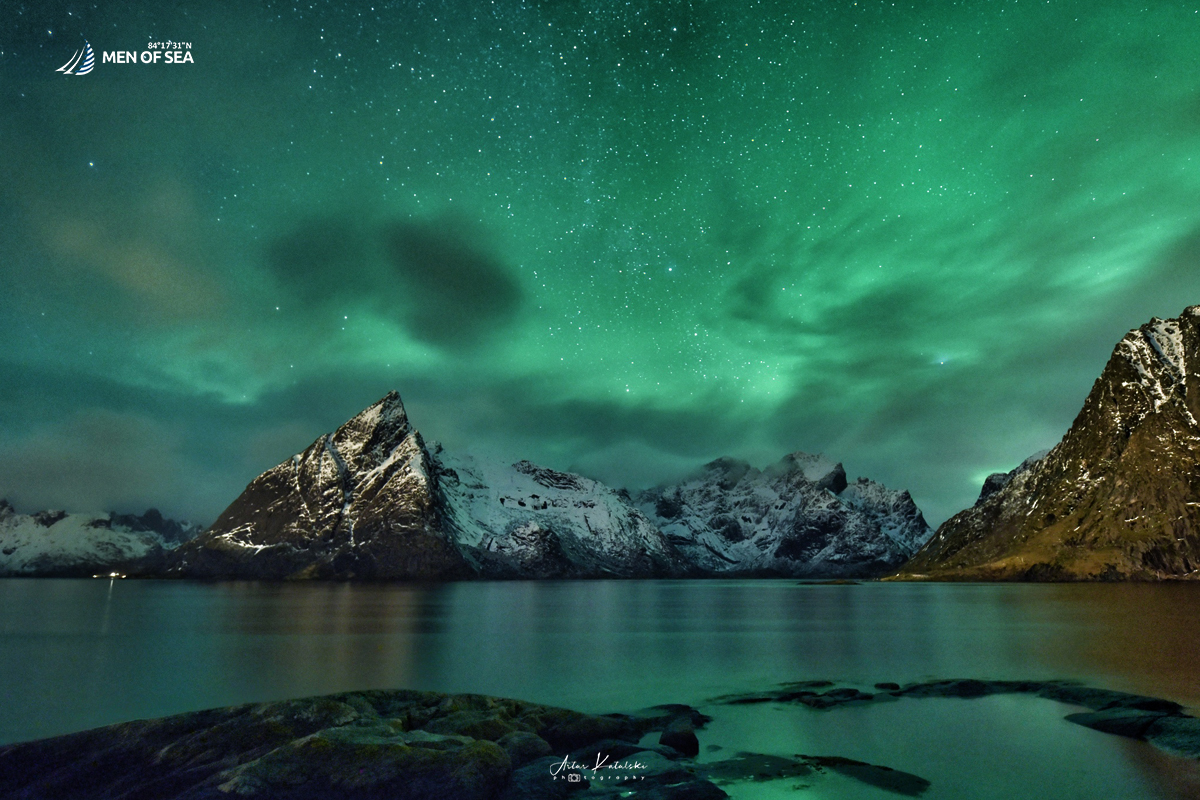
We also observe the Northern Lights during our autumn expeditions in Lofoten.
The landscape there is completely different. Sharp mountain peaks rise directly from the sea. There are fishing villages, beaches, bays and fjords. It is an outstanding destination particularly for people interested in landscape photography.
Travellers who want to concentrate on dramatic scenery and Northern Lights can choose our Magical Lofoten expeditions.
Those who want to combine Aurora Borealis with humpback whales and orcas can choose Northern Lights and Whales.
Are the Northern Lights guaranteed?
No. Aurora Borealis is a natural phenomenon. We need several factors to come together: sufficient geomagnetic activity, darkness, and above all reasonably clear skies.
But a multi-day expedition gives us a major advantage. We have several consecutive nights.
If one evening is cloudy, we try again the next night. If a short opening appears in the clouds, we can take advantage of it. And because we stay in a naturally dark location, we do not need to organise a long journey away from the city every time conditions improve.
We simply step outside the yacht and look at the sky.
FAQ – Northern Lights in Tromsø and Northern Norway
Where is the best place to see the Northern Lights near Tromsø?
The best location is somewhere with very little artificial light, a wide view of the sky and favourable cloud conditions. Areas outside Tromsø, including Kvænangen and small islands such as Spildra, can provide excellent conditions when the weather is suitable.
When can you see the Northern Lights in Tromsø?
The season generally runs from late August until early April, when the nights are dark enough.
Do you need a high Kp to see the Northern Lights?
No. Tromsø and Kvænangen are located beneath the auroral oval, so good Northern Lights can also be visible during moderate geomagnetic activity.
Clear skies are often more important than a high Kp value.
What time is best for seeing the Northern Lights?
Aurora Borealis can appear at any time during a sufficiently dark night.
In the Tromsø region, the period around 20:00–02:00 is often considered particularly favourable, although a strong aurora can appear earlier or later.
What colour are the Northern Lights?
Green is the most common colour, but Aurora Borealis can also appear red, pink, purple or blue.
The colour depends on the atmospheric gases involved and the altitude at which the light is emitted.
Can you photograph the Northern Lights with a smartphone?
Yes. Modern smartphones with night mode can take very good aurora photographs, particularly during strong activity.
We help participants choose settings and find a good composition.
Can you combine Northern Lights watching with whale watching?
Yes.
That is exactly the idea behind our Northern Lights and Whales expeditions.
During the day we watch orcas and humpback whales in Kvænangen, and in the evening we look for Aurora Borealis.
Are the Northern Lights guaranteed?
No.
Aurora Borealis depends on geomagnetic activity and local weather.
However, a multi-day expedition provides several consecutive nights and much more flexibility than a single evening tour.
Trips connected with AURORA BOREALIS

Magical Lofoten One Way Tromsø – Bodø

10 dni
Magical Lofoten One Way Bodø – Tromsø
10 dni
Auroras and Whales #01
8 dni
Auroras and Whales #02
8 dni
Auroras and Whales #05
8 dni
Auroras and Whales #07
8 dni
Auroras and Whales #09
8 dni
Auroras and Whales #10
8 dni